Energy efficiency is becoming a priority for hotels as energy costs rise and sustainability requirements become more demanding.
Hotels consume large amounts of energy across guest rooms, kitchens, laundry areas, and shared spaces, where inefficiencies quickly lead to higher operating expenses. Managing energy use now affects profitability, compliance, and long-term operational stability within the broader hotel industry.
Hotels are also expected to meet sustainability standards and green certification criteria that influence guest choice, corporate bookings, and brand perception. Investing in energy efficiency helps lower costs, improve guest comfort, and strengthen a hotel’s public image while supporting sustainability in the hospitality industry.
For many operators, the main challenge is funding these upgrades. Financing options provide structured ways to move forward without heavy upfront capital, making energy improvements more accessible and financially realistic.
The Importance of Energy Efficiency for Hotels
Energy efficiency delivers direct financial value for hotels by lowering ongoing operating expenses and reducing exposure to fluctuating utility costs.
Upgrades such as improved lighting, modern climate systems, and better insulation help limit unnecessary energy use across daily hotel operations and align with modern hotel operations management practices.
Research indicates that targeted efficiency improvements can reduce overall energy use in hotel buildings by up to 20%, creating meaningful reductions in energy demand before incentives or financing are considered.
In many regions, these improvements may also qualify hotels for tax incentives or rebates, strengthening the financial case for investment.
Energy upgrades also strengthen a hotel’s sustainability profile. Certification programs such as Energy Star and LEED place strong emphasis on efficient energy performance in green building design, assessing how well a property manages energy use across its infrastructure.
Meeting these standards can improve market positioning, assist with compliance requirements, and increase appeal to corporate clients with sustainability criteria.
Guest expectations around responsible operations influence booking decisions. Travelers often prefer hotels that align comfort with responsible resource use.
Clear steps to improve energy performance, supported by recognized certifications, position energy efficiency as a practical business strategy rather than a short-term operational adjustment.
Key Energy-Efficiency Upgrades for Hotels
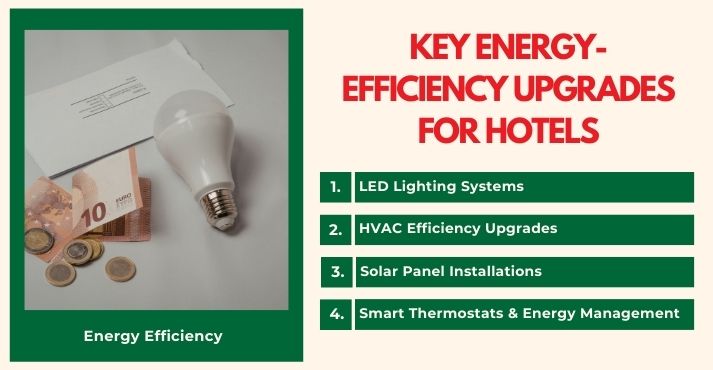
Hotels often achieve the strongest returns by prioritizing upgrades that deliver consistent efficiency gains while improving day-to-day operations.
Many of today’s energy-efficient technologies are widely adopted in hospitality due to predictable savings, scalable deployment, and relatively short implementation timelines.
1. LED Lighting Systems
LED lighting is one of the most cost-effective upgrades available to hotels. Compared to traditional bulbs, LEDs use significantly less electricity and last much longer, which reduces both energy use and replacement costs across guest rooms, corridors, and public areas.
A well-known example comes from Marriott International, which rolled out LED lighting upgrades across a large portion of its global portfolio. The initiative helped reduce lighting-related energy use and lower maintenance demands by extending fixture lifespans.
2. HVAC Efficiency Upgrades
Heating, ventilation, and air conditioning systems account for a significant share of hotel energy use. Upgrading components such as chillers, air handling units, and control systems helps hotels manage heating and cooling more efficiently while maintaining consistent indoor conditions for guests.
Many properties prioritize HVAC upgrades to address aging equipment and improve system control across guest rooms and shared areas.
Modern controls allow facilities teams to adjust settings based on occupancy patterns, aligning HVAC performance with smart energy management systems for sustainable hotels.
3. Solar Panel Installations
Solar panel installations allow hotels to offset grid electricity use and manage long-term energy costs, particularly in regions with strong solar exposure.
Rooftop systems are often installed after efficiency upgrades, helping hotels stabilize energy demand and reduce dependence on external electricity sources.
For eco hotels, on-site solar generation supports sustainability goals by lowering carbon intensity and improving energy self-reliance.
When integrated into existing building infrastructure, solar systems provide a reliable electricity source that complements other efficiency measures already in place across hotel operations.
4. Smart Thermostats and Energy Management Systems
Smart thermostats and energy management systems use sensors, automation, and real-time data to adjust energy use based on occupancy and demand.
These energy-saving innovations help prevent wasted energy in unoccupied rooms and improve system coordination across entire properties.
One practical example comes from Hyatt Place and other hotel properties that use smart energy management systems to optimize HVAC operations with occupancy-based controls.
In these case studies, installing smart thermostats helped significantly reduce runtime in unoccupied rooms, lowering energy use and operational costs while maintaining guest comfort.
Financing Energy-Efficiency Upgrades for Hotels

Financing determines how quickly hotels can move from planning to implementation. Global investment in building energy efficiency reached approximately $270 billion in 2023, indicating the scale of capital already being directed toward efficiency upgrades and the financing structures that support them.
With multiple options now available, energy improvements no longer require heavy upfront investment, provided hotels select approaches that align with cash flow, asset life, and ownership priorities.
1. Government Rebates and Incentives
Government rebates and incentives are often the first financing option hotels explore. Many national and regional programs offer rebates, tax credits, or co-funding for efficiency improvements, including lighting upgrades, HVAC modernization, and on-site energy systems.
Eligibility usually depends on meeting defined performance criteria, using approved equipment, and completing verified installations. Hotels can improve approval outcomes by conducting an energy audit and confirming program requirements before procurement begins.
2. Green Loans and Green Bonds
Green loans and green bonds provide dedicated funding for projects that improve environmental performance.
These instruments often offer lower interest rates and longer repayment periods than conventional financing, making them suitable for hotels planning multi-year upgrades or portfolio-wide initiatives.
Lenders generally require documentation showing how projects align with recognized sustainability standards and reporting frameworks.
3. Third-Party Financing and Energy Service Companies (ESCOs)
Third-party financing arrangements, including Energy Service Companies (ESCOs), allow hotels to fund upgrades through future energy savings rather than direct capital expenditure.
Under these models, the provider designs, finances, and installs the upgrades, with repayment connected to verified performance outcomes. This approach reduces financial exposure while allowing hotels to adopt modern sustainable energy solutions without disrupting operations.
4. Hotel-Specific Financing Programs
In some markets, hotel operators can access industry-specific financing programs developed through partnerships with utilities, development banks, or hospitality associations.
These programs are often structured around hotel operating patterns and seasonal cash flow, making them easier to integrate into existing financial plans than traditional lending options.
5. The Role of ROI Analysis in Financing Decisions
Before committing to any financing route, hotels should complete a structured ROI analysis. This involves estimating expected energy savings, understanding repayment schedules, and assessing how financing terms affect long-term operating costs.
Clear ROI projections help hotels align financing structures with performance expectations, ensuring upgrades remain financially viable throughout their lifecycle.
ROI and Cost-Effectiveness of Energy-Efficiency Upgrades
For hotel owners and operators, return on investment is often the deciding factor when evaluating energy upgrades.
While upfront costs vary by property size and system scope, many improvements deliver financial returns within a defined timeframe, particularly when applied across high-use areas such as guest rooms, climate systems, and shared spaces.
Over time, these returns align with lower operating risk and a reduced carbon footprint, both of which remain important considerations across the hospitality sector.
Short- and Long-Term ROI Across Common Upgrades
Different upgrades recover costs at different rates. Lighting retrofits often reach payback sooner due to lower installation complexity and immediate reductions in electricity use.
HVAC and automation upgrades typically require a higher initial investment but deliver steady returns over the long term through reduced energy demand and improved system control.
When applied together, these improvements form part of structured energy management strategies that help stabilize operating expenses over the property’s life.
How Hotels Can Calculate ROI
A basic ROI calculation helps hotels compare upgrade options before committing capital or entering financing agreements:
ROI = (Annual Energy Cost Savings − Annual Financing or Maintenance Costs) ÷ Initial Investment
To improve accuracy, hotels should rely on audited energy data, realistic occupancy assumptions, and verified utility rates. Including changes in maintenance costs and expected equipment lifespan supports a balanced view of financial performance over time.
Common ROI Calculation Mistakes to Avoid
One frequent mistake is overstating savings without accounting for actual usage patterns or interactions between building systems. Another is excluding ongoing costs such as maintenance, software fees, or performance verification.
Hotels can reduce these risks by commissioning professional energy audits, applying conservative savings estimates, and reviewing assumptions against properties with similar operating profiles.
When approached carefully, ROI analysis helps hotels prioritize upgrades that align financial outcomes with operational needs, ensuring energy investments remain viable throughout their service life.
Common Mistakes When Financing Energy-Efficiency Upgrades and How to Avoid Them

Hotels often face avoidable challenges when financing energy upgrades, especially when decisions are made without a full understanding of costs, performance, and contractual terms.
As energy efficiency and sustainability topics gain visibility at trade shows featuring hospitality technology, financing decisions are increasingly influenced by new solutions and models, making careful evaluation even more important. The following issues appear most often.
- Failing to properly assess energy savings: Many hotels rely on generic savings estimates instead of property-specific data. This leads to ROI projections that do not align with actual operating conditions. Conducting a detailed energy audit and using historical consumption data helps create realistic expectations before selecting a financing option.
- Not fully understanding financing terms: Financing agreements may include performance thresholds, shared savings clauses, or repayment structures that affect long-term cash flow. Without careful review, hotels risk committing to arrangements that limit flexibility. Reviewing contracts with advisors familiar with energy projects helps avoid surprises after implementation.
- Underestimating the true cost of upgrades: Equipment pricing is often considered in isolation, while installation, system integration, staff training, and monitoring requirements are overlooked. This is especially relevant when projects involve renewable energy integration, where structural reviews and grid connection requirements can affect total project cost.
- Overlooking available rebates and incentives: Many incentive programs require early application or specific documentation. Hotels that engage too late may miss eligibility windows entirely. Confirming requirements and timelines at the planning stage improves approval outcomes and reduces reliance on higher-cost financing.
By addressing these issues early, hotels improve their ability to secure financing arrangements that align with operational realities and long-term financial planning.
Conclusion
Energy efficiency upgrades offer hotels a clear path to lower operating costs while aligning with sustainability priorities across the hospitality sector. With flexible financing options now available, hotels no longer need to delay improvements due to upfront budget constraints.
A practical starting point is a professional energy audit, which helps identify priority upgrades and realistic savings opportunities.
From there, hotels can explore local incentive schemes, green financing programs, and specialist advisors to plan upgrades that fit operational and financial goals.
Hotels in Southeast Asia can begin by exploring regional guidance and financing frameworks from organizations such as the International Finance Corporation (IFC), which supports energy efficiency projects across emerging markets.
Taking early action helps hotels manage costs more effectively and prepare for long-term operational stability.