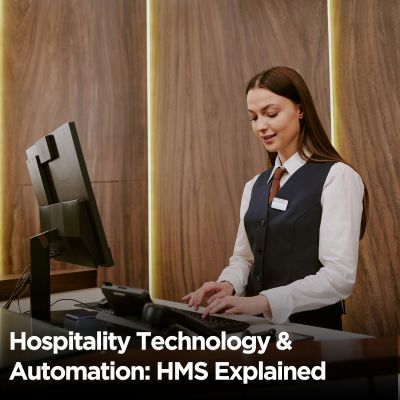
Technology is now a standard part of hospitality operations, supporting hotels, restaurants, and other HoReCa businesses in managing daily activities.
Guest expectations include a smooth booking process, efficient service delivery, and a convenient experience throughout their stay, while operators focus on consistency, cost control, and operational efficiency.
Hospitality Management Systems (HMS) and hotel automation support these requirements by integrating functions such as reservations, front desk operations, housekeeping, inventory management, and guest engagement into a single digital platform.
Automation also enables routine processes, real-time information sharing, and coordinated workflows across departments.
This article outlines the role of Hospitality Management Systems and hotel automation across hospitality operations. It covers HMS functionality, automation use cases, future technological developments, and their impact on guest satisfaction and operational performance.
What is a Hospitality Management System (HMS)?
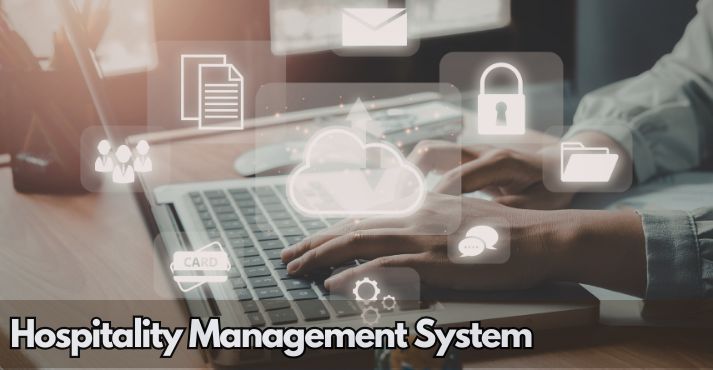
A Hospitality Management System (HMS) is an integrated technology solution that manages and coordinates multiple hotel operations on a single platform. It supports core functions, including front desk operations, reservation management, housekeeping coordination, inventory control, and guest engagement.
By consolidating these functions, an HMS replaces fragmented manual processes and disconnected systems with a unified workflow. Information entered in one area of the system is automatically updated across relevant departments, allowing teams to work with consistent and up-to-date data.
This integration helps reduce administrative effort, minimise errors, and improve coordination between operational teams. An HMS supports more efficient day-to-day operations while enabling hospitality businesses to respond more effectively to guest needs.
Benefits include improved operational efficiency, more consistent service delivery, better resource utilisation, and greater visibility into performance, which can support informed decision-making and revenue optimisation.
Comprehensive Integration: Streamlining Operations and Enhancing Efficiency
A defining feature of a Hospitality Management System is its ability to integrate multiple hotel functions within a single operational framework.
Departments such as the front desk, reservations, housekeeping, and inventory management operate on shared, real-time information rather than isolated systems.
Through this integration, updates made in one department are immediately visible to others. For example, when a guest checks out, room status changes are reflected instantly, prompting housekeeping schedules to update while inventory levels adjust based on usage.
Similarly, reservation changes are accessible to the front desk and housekeeping teams without requiring manual coordination.
This real-time connectivity reduces duplication of work, minimizes communication gaps, and supports smoother daily operations. Operational benefits include faster decision-making, more effective allocation of staff and resources, and clearer communication across departments.
By coordinating activities through a unified system, hospitality businesses can maintain operational consistency while managing higher guest volumes and services more efficiently.
Enhancing Guest Experiences with HMS: Personalization and Convenience

Hospitality Management Systems support personalised guest experiences by collecting and organising data such as preferences, booking history, and past interactions.
This information allows hospitality teams to prepare for guest needs in advance and deliver more consistent service across touchpoints.
Personalisation often begins before arrival. During the reservation process, guests can specify preferences such as room type, bedding options, dietary requirements, or special requests. These details are recorded within the HMS and made accessible to relevant departments ahead of check-in.
Once guests arrive, the system supports an environment that reflects previously shared preferences. Room settings, amenities, and service arrangements can be aligned with guest information, while requests, such as additional pillows, room temperature adjustments, or service scheduling, are logged and communicated efficiently across teams.
As data-driven and automated technologies expanded across hospitality operations, industry estimates in 2025 indicated that around 76% of hotels were implementing AI technologies, increasing the use of system-driven insights to anticipate guest needs.
By reducing the need for repeated requests and supporting timely responses, HMS contributes to smoother interactions and a more convenient stay, helping improve overall guest satisfaction.
Seamless Reservation Systems: Streamlining the Booking Process
Hospitality Management Systems support online reservations by integrating booking functions into a single operational platform.
Reservations made through a hotel’s website, mobile applications, or third-party platforms are captured within the same system, allowing consistent management across multiple channels and reducing the risk of discrepancies.
Real-time availability updates help simplify the booking process while dynamic pricing supports hotel pricing strategies.
At the same time, dynamic pricing tools within the HMS allow rates to adjust based on demand, occupancy levels, and booking timing, supporting revenue optimisation while maintaining clear and consistent pricing.
For last-minute reservations, the system provides immediate access to current availability and rates, allowing guests to complete bookings quickly while allowing properties to respond efficiently to short-notice demand without manual intervention.
Automating Housekeeping: Improving Cleanliness and Efficiency
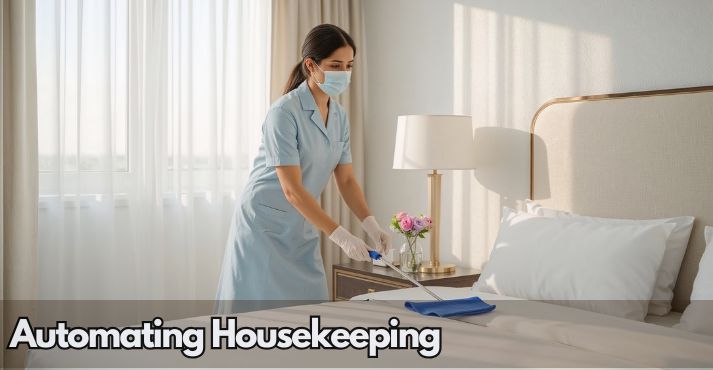
Housekeeping automation within a Hospitality Management System provides real-time visibility into room status, allowing teams to respond quickly when rooms become available for cleaning. Updates are shared instantly across departments, reducing delays and manual coordination.
The system assigns housekeeping tasks based on room occupancy, cleaning schedules, and staff availability, supporting more efficient workload distribution.
Guest preferences such as room setup or amenity requirements are also accessible to housekeeping teams, helping ensure rooms are prepared according to expectations.
By automating routine updates and task allocation, HMS reduces administrative effort, supports consistent cleanliness standards, and helps properties maintain room readiness, particularly during periods of high guest turnover.
Data-Driven Decision Making: Using Insights to Optimize Hotel Operations
Hospitality Management Systems collect and analyse data across guest interactions, room occupancy, and operational performance. Information from reservations, in-stay activity, service usage, and daily operations is consolidated into reports and dashboards that provide visibility into how the property is performing.
Dashboards and reports help managers monitor hotel KPIs such as occupancy, ADR, and service usage, enabling more precise adjustments to pricing, staffing, and service delivery.
These insights help identify guest preferences, usage patterns, and operational trends. For example, data may highlight peak booking periods, frequently requested services, or recurring guest preferences, allowing teams to better align services with demand.
Management can use this information to adjust strategies in real time, such as modifying room rates, introducing targeted promotions, or reallocating staff during busy periods.
Data-driven decisions support more effective revenue management while helping maintain service consistency, contributing to improved operational efficiency and guest satisfaction.
The Future of HMS: AI, Machine Learning, and IoT Integration
Advancements in artificial intelligence and machine learning are influencing how Hospitality Management Systems support guest personalisation and operational efficiency.
Industry investment in these technologies is evident, with the global AI market in hospitality growing from approximately $0.15 billion in 2024 to $0.23 billion in 2025.
Within HMS platforms, AI analyses data from past stays, booking behaviour, and service interactions to support more personalised service planning.
Machine learning supports continuous improvement by analysing guest behaviour patterns and feedback over time. As data accumulates, the system improves its ability to anticipate preferences, recommend services, and support more accurate operational planning across departments.
Internet of Things (IoT) integration also plays a role in HMS development. Smart room controls such as lighting, climate control, and energy management systems can be connected to central platforms to support guest comfort and operational monitoring.
Predictive analytics is expected to support more proactive service planning and personalised guest experiences based on anticipated needs.
Hotel Automation: Beyond HMS to Enhance Every Aspect of Operations
Hotel automation refers to the use of dedicated technologies that automate specific operational functions outside the core scope of a Hospitality Management System.
While HMS coordinates central operations, automation focuses on task execution through connected devices, self-service tools, and control systems.
Common applications include self-check-in kiosks, automated access control, smart room systems, energy management platforms, and security monitoring.
Technologies such as IoT sensors and AI-driven controls allow lighting, climate settings, and power usage to respond automatically to occupancy and usage patterns, reducing manual intervention.
From a guest perspective, automation supports convenience through features such as self-service check-in, mobile room access, and pre-set room preferences. Operationally, these systems help reduce queues, improve response times, and optimise energy consumption.
By handling routine and time-sensitive tasks automatically, hotel automation supports smoother operations while allowing staff to focus on service delivery and on-site guest interaction.
Integrating HMS with Other Systems: A Holistic Approach
Beyond internal coordination, Hospitality Management Systems are often connected with external operational systems such as customer relationship management (CRM) platforms, point-of-sale (POS) systems, inventory management tools, and staff scheduling software.
These integrations allow data to move across functions that are typically managed separately, supporting more coordinated planning and reporting.
When HMS is connected with systems such as POS and inventory platforms, transaction data and stock usage can be aligned with occupancy and service demand.
Integration with CRM systems allows guest profiles and interaction history to be referenced across departments, while staff scheduling tools can draw on occupancy and booking data to support more accurate workforce planning.
This connectivity helps reduce duplicated processes and manual reconciliation between systems.
By connecting operational, commercial, and workforce data, hospitality businesses gain a consolidated view of performance across the property.
This holistic visibility supports more effective resource allocation, cost control, and service coordination, allowing teams to respond more accurately to operational needs without relying on disconnected systems or manual data transfers.
The Role of Sustainability in Hotel Automation
Hotel automation supports sustainability by managing resource usage more precisely across daily operations.
Automated systems monitor and adjust energy consumption, water usage, and material flows based on occupancy, usage patterns, and operational needs, helping reduce unnecessary consumption without relying on manual oversight.
Examples include smart thermostats that regulate heating and cooling based on room occupancy, automated lighting systems using LED technology, and energy management platforms that track consumption across the property.
These systems are particularly relevant given that hotels account for roughly 1% of global carbon emissions.
Sustainability has become an important consideration for hospitality brands as guests factor environmental responsibility into accommodation choices.
By embedding sustainability into operational processes through automation, hotels can support responsible practices while maintaining brand credibility and long-term resource management.
Contactless Solutions: Adapting to New Guest Expectations
Contactless solutions have become a standard expectation in hospitality operations following the pandemic, with many guests continuing to prefer minimal physical interaction during their stay.
Hospitality Management Systems facilitate contactless workflows that reduce the need for in-person processes while maintaining service continuity.
Hotels can offer contactless check-ins, mobile room keys, and touchless payment options through HMS-connected tools. These features allow guests to complete arrival procedures, access rooms, and make payments using personal devices or on-site self-service systems, reducing queues and physical touchpoints.
QR codes, self-service kiosks, and digital menus are widely used across dining areas, guest services, and in-room information access.
These tools provide guests with direct access to services and information while supporting hygiene standards and efficient service delivery, making contactless solutions a lasting operational practice within the hospitality industry.
Real-Time Insights: Making Smarter Decisions
Real-time insights provided by a Hospitality Management System allow hotel teams to respond to operational conditions as they occur, rather than relying on historical reports alone.
Live data on bookings, occupancy, service usage, and operational status gives managers immediate visibility into current performance across the property.
These insights support day-to-day adjustments such as modifying room rates based on demand fluctuations, monitoring staffing levels during peak periods, and adjusting services to match occupancy patterns.
For example, live occupancy data can inform staffing schedules or prompt pricing changes during high-demand windows, while service usage data can guide operational priorities.
Real-time analytics can also improve guest interactions by enabling faster responses to requests and service issues.
When combined with revenue and operational metrics, this information supports more accurate revenue management decisions and helps properties maintain efficiency while responding to changing conditions throughout the day.
Trade Show Discoveries: Innovations Shaping the Future of HMS
Trade shows provide a platform for presenting new developments in Hospitality Management Systems and hotel automation technologies.
These events bring together technology providers, hospitality operators, and industry specialists, creating an environment to observe how emerging solutions are applied across hospitality operations.
For hospitality businesses, trade shows offer opportunities to review system capabilities through live demonstrations, compare different technology approaches, and assess how new tools integrate with existing workflows.
They also allow direct engagement with industry experts, enabling discussions around implementation considerations, operational use cases, and evolving technology standards.
Events such as FHA trade shows have showcased innovations including contactless service technologies, data analytics platforms, smart kitchen and room systems, and automation tools designed to support operational efficiency and guest service.
Firsthand exposure to these developments helps hospitality stakeholders stay informed about industry direction and evaluate technology adoption decisions more effectively.
Conclusion
Hospitality Management Systems and hotel automation have become integral to how hospitality businesses manage operations and deliver guest experiences.
By bringing together reservations, front desk activities, housekeeping, data analysis, and automation tools, HMS supports more coordinated workflows, clearer visibility into performance, and more consistent service delivery.
Automation further complements these systems by streamlining routine tasks, supporting contactless services, and improving resource management.
As guest expectations continue to centre on convenience, reliability, and efficiency, hospitality technology adoption remains an important consideration for hospitality businesses seeking to remain competitive.
Looking ahead, developments in artificial intelligence, IoT, and predictive analytics are expected to expand how systems support operational planning and guest services, enabling hospitality operators to manage complexity while responding more effectively to changing demands.