Sustainability has become a defining priority for the hospitality industry. Hotels are under increasing pressure to manage rising operational costs while also addressing their environmental impact.
Among the many factors in this effort, energy management stands out as one of the most critical areas.
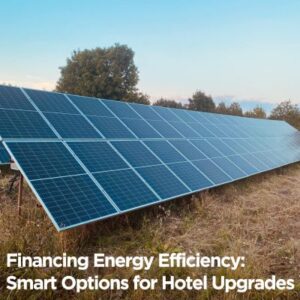
The International Energy Agency reports that the global market for key clean technologies is set to nearly triple by 2035, reaching more than $2 trillion, a value comparable to today’s crude oil market.
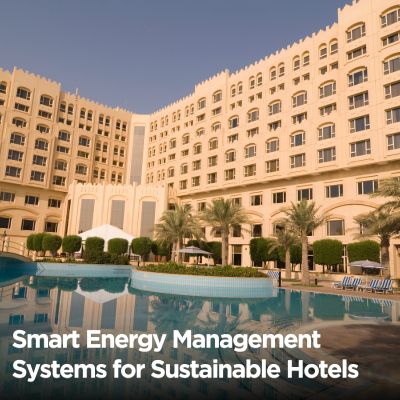
This makes the adoption of smart energy management systems for sustainable hotels essential rather than optional. These systems help optimise energy use, minimise waste, and meet the growing expectations of guests who value eco-friendly practices.
By integrating these solutions, hotels not only reduce expenses but also strengthen their reputation as responsible businesses. This balance of profitability and sustainability positions smart energy management as a long-term investment in both efficiency and guest loyalty.
What is a Smart Energy Management System (SEMS)?
A smart energy management system, often referred to as SEMS, is a digital platform that allows hotels to monitor, control, and optimise their energy use across different facilities.
It brings together connected systems, such as heating, ventilation, air conditioning, and lighting, into a central interface that can be managed in real-time. This integration ensures that energy is consumed only when and where it is needed, reducing unnecessary waste.
SEMS enables operators to set usage parameters, schedule equipment operation, and automatically adjust conditions based on occupancy levels.
By connecting data from sensors and building systems, hotels gain clear visibility into the amount of energy being used at any given moment.
When combined with hotel automation, SEMS improves both efficiency and guest comfort. Rooms can be pre-conditioned before arrival, and lights and temperature can be adjusted upon entry or exit.
Additionally, shared spaces can be managed to maintain comfort without overspending on utilities. This level of control enables hotels to reduce costs, extend the lifespan of equipment, and move closer to achieving sustainability targets.
Key Features of SEMS in Hotels
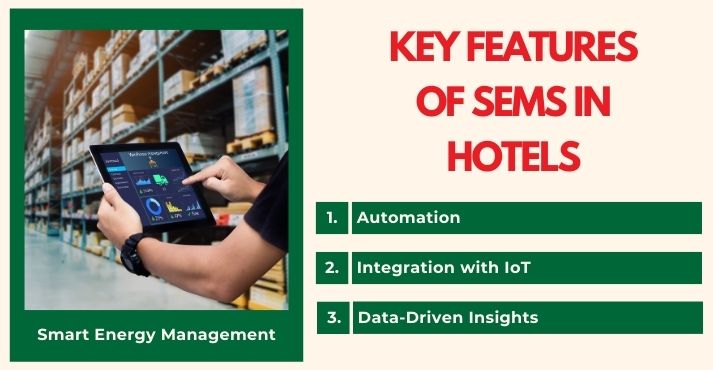
Smart energy management systems (SEMS) provide hotels with the tools to monitor energy use, enhance operational control, and gain practical insights. SEMS turns energy from a basic utility into a measurable and optimizable asset aligned with both cost and sustainability goals.
The following features are essential for understanding its value:
1. Automation
Smart thermostats, lighting controls, and occupancy sensors work together to adjust energy consumption in real time. If a guest room is empty, systems automatically reduce heating, cooling, and lighting.
When guests enter, comfort settings are restored. This ensures that energy supports guest experience without unnecessary use.
2. Integration with IoT
IoT energy management in hospitality connects sensors, meters, and control points across hotel operations. These connected devices feed live data into a central system, allowing staff to monitor patterns and coordinate control actions.
This may involve dimming lights in common areas or adjusting HVAC zones according to usage demands.
3. Data-Driven Insights
SEMS gathers and processes energy data to support more informed decisions. It tracks usage trends, highlights areas of inefficiency, and helps forecast needs, whether anticipating peak HVAC demand or flagging maintenance before equipment fails. These insights support clearer budgeting and more strategic energy policies over time.
The Role of IoT in Smart Energy Management
Internet of Things (IoT) devices enable hotels to monitor and control energy usage in real-time. Sensors and connected systems track how electricity, heating, and cooling are consumed throughout the property, allowing operators to make immediate adjustments.
This prevents unnecessary energy use and helps reduce operating costs without affecting guest comfort.
Smart thermostats and lighting systems are a common example. They adjust automatically based on room occupancy or guest behavior.
If a room is vacant, the system reduces power use, and when guests return, settings are restored to ensure comfort. This level of automation enhances energy use efficiency and reliability.
According to a report, the hospitality industry invested over $4.6 billion globally in energy management upgrades in 2023, representing a 38% increase from the previous year. Facilities that adopt these technologies achieve annual energy savings of between 22% and 35%.
IoT has become an important enabler of energy management for hotels, providing measurable savings and supporting long-term sustainability goals.
Benefits of SEMS for Hotels
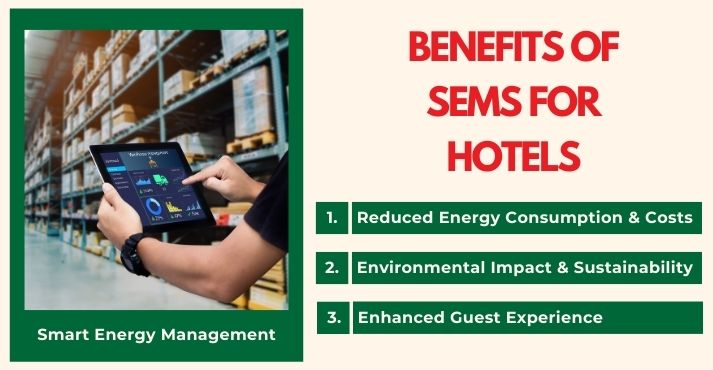
Smart energy management systems are becoming increasingly important for hotels, as they reduce costs, enhance comfort, and support sustainability goals. The following benefits highlight why SEMS are becoming standard in modern hospitality.
1. Reduced Energy Consumption and Costs
One of the most immediate advantages of SEMS is energy savings. By using connected sensors and automated controls, hotels can reduce unnecessary energy use in HVAC, lighting, and water heating.
A strong example comes from Hilton Hotels, which has reported saving over $1 billion in utility costs since 2008 through smart energy initiatives, including the implementation of automated energy management systems. These savings support profitability without compromising guest comfort.
2. Environmental Impact and Sustainability
Hotels that adopt SEMS help reduce greenhouse gas emissions and minimize energy waste. For instance, Marriott International has committed to reducing carbon intensity by 30% by the end of 2025, using SEMS and IoT-driven efficiency programs to help achieve these targets.
SEMS also enables hotels to track energy performance across different areas, identify inefficient systems, and implement targeted improvements.
This level of control allows operators to meet sustainability goals, optimize resource use, and demonstrate commitment to environmentally responsible practices.
3. Enhanced Guest Experience
Energy management also enhances guest comfort. SEMS allow visitors to control in-room lighting, temperature, and blinds while ensuring the systems operate efficiently in the background.
The Venetian Resort in Las Vegas uses occupancy-based energy controls that automatically adjust lighting and HVAC when guests leave the room. This not only lowers energy use but also ensures guests return to a comfortable environment.
These initiatives show how SEMS can balance operational efficiency with a superior guest experience.
How SEMS Work in Hotels: Key Applications
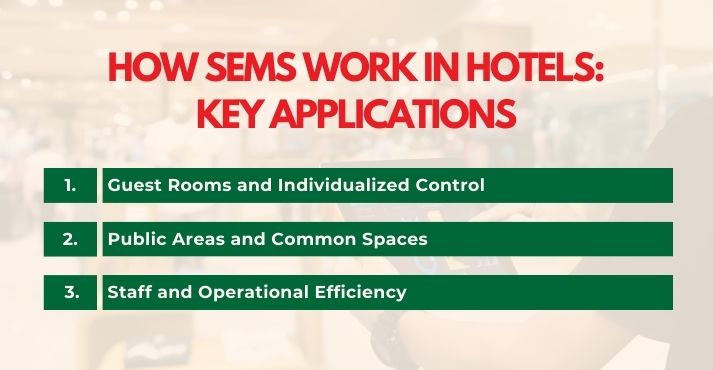
Smart Energy Management Systems (SEMS) are widely used to balance efficiency, sustainability, and guest comfort in hotel operations. They connect with existing infrastructure to provide hotels with greater control over energy use across various spaces.
This approach not only supports cost management but also advances sustainability in hospitality, which has become a priority worldwide.
1. Guest Rooms and Individualized Control
Guest rooms are among the highest energy-consuming areas in a hotel. SEMS make use of occupancy sensors, smart thermostats, and automated lighting systems to adjust room settings when guests arrive or leave.
For example, a room may dim the lights and lower the air conditioning when unoccupied, then restore its preferred settings once a guest returns.
This kind of system allows travelers to enjoy personalized comfort while helping hotels maintain energy efficiency without manual intervention from staff.
2. Public Areas and Common Spaces
Areas like lobbies, hallways, and meeting rooms often remain unoccupied but still consume energy. SEMS addresses this by using motion sensors for lighting and scheduled HVAC adjustments.
A 2025 study by Schneider Electric found that occupancy-based controls in meeting rooms reduced operational energy use by 22% through adjustments to lighting, HVAC, and plug loads. This demonstrates how targeted controls help limit waste while maintaining guest comfort.
3. Staff and Operational Efficiency
SEMS provide hotel managers with centralized dashboards to monitor and adjust energy use across multiple departments, including kitchens, laundry facilities, and housekeeping.
For instance, connected kitchen equipment can stagger power-intensive tasks to reduce peak load demand, while laundry operations can be scheduled to run during off-peak hours.
This integration of hospitality technology helps teams streamline daily operations, cut waste, and implement sustainable hotel energy solutions that align with corporate sustainability commitments.
Challenges in Implementing SEMS in Hotels
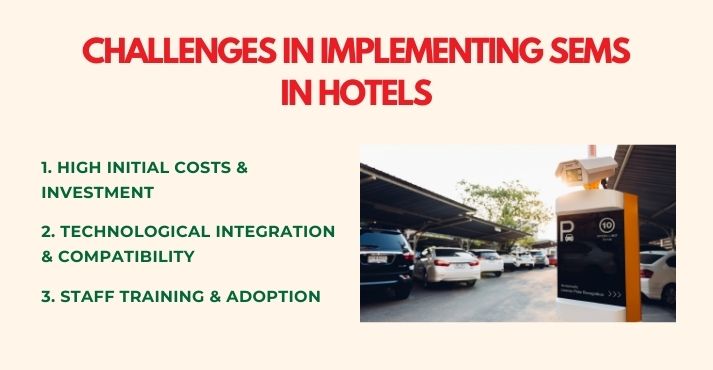
Hotels exploring SEMS often face several practical challenges. These include cost hurdles, outdated infrastructure, and the human element of technology adoption.
1. High Initial Costs and Investment
Installing SEMS requires a substantial upfront investment. Equipment like smart thermostats and energy-efficient lighting is only part of the expense. The remainder is allocated toward software, sensors, and system setup.
For small or independent properties, especially those looking to offer green hotel experiences, this initial cost can be a major barrier.
In a 2024 survey by Schneider Electric and UNLV Harrah College, 62% of hotel leaders identified initial costs as a primary obstacle to energy management investments.
2. Technological Integration and Compatibility
Many hotel buildings operate with legacy systems that are not compatible with modern smart building systems. Properties built before the 1990s often use pneumatic thermostats, which cannot interface with digital controls.
Integrating SEMS into such infrastructure typically requires extensive retrofitting, which complicates installation and increases costs.
3. Staff Training and Adoption
Even the best systems only work when people know how to use them. Training staff to operate SEMS, which includes understanding dashboards, schedules, and alerts, is essential.
Long-standing routines can be difficult to change. Hotels need to focus on using technology to solve staffing challenges, offering hands-on training and support to help staff adopt new energy management workflows smoothly.
Case Studies of Successful Implementation of SEMS in Hotels
Hotels that have adopted smart energy management systems show how these technologies deliver both environmental and business value.
From global chains to independent eco-hotels, the outcomes highlight energy savings, operational efficiency, and improved guest experience.
Marriott Hotels (Global)
Marriott has woven digital systems into its sustainability roadmap through its Serve 360 platform, which guides reductions in energy use, carbon emissions, and resource waste.
This involves conducting property-level audits, implementing energy reduction projects, and tracking energy performance using property-specific dashboards.
These efforts have resulted in a 9.8% reduction in energy intensity since 2016, demonstrating measurable improvements in both efficiency and environmental impact.
IHG Hotels & Resorts (Global)
IHG partnered with Anacove to roll out smart thermostats across select properties. Independent testing confirmed that these thermostats outperform all competitors by consistently saving energy, even when rooms are both occupied and unoccupied.
Installation across guestrooms has a payback period of under 12 months, helping operators control energy costs while maintaining guest comfort.
Hotel Verde (South Africa)
Hotel Verde, known as “Africa’s greenest hotel,” combines renewable energy with IoT-enabled energy management.
It uses solar photovoltaic panels, wind turbines, geothermal heating, and an intelligent building management system to run systems like climate control and lighting efficiently. These measures have helped Hotel Verde achieve significantly lower operational impact.
Reports indicate it operates about 70% more energy-efficiently than typical Cape Town hotels.
The Future of SEMS in Hotels
The next generation of SEMS will support sustainable hotel practices. As technology advances, hotels are adopting predictive, adaptive, and guest-centric solutions that enhance operational efficiency and promote environmental responsibility.
These innovations are becoming increasingly important for the hotel industry, which faces rising energy costs and growing demand for sustainability from travelers and regulators.
AI and Machine Learning Integration
Future SEMS will rely on predictive models to anticipate demand and automatically adjust systems such as HVAC, lighting, and water heating.
By analyzing historical data, occupancy patterns, and even weather forecasts, these systems can improve energy efficiency in hotels without reducing guest comfort.
Intelligent hotels are already testing algorithms that personalize in-room environments, providing comfort while reducing unnecessary energy use.
The Role of Renewable Energy Integration
As renewable energy adoption grows, SEMS will optimize usage across hotel facilities. Hotels equipped with solar panels, wind turbines, or geothermal systems will use smart grids to distribute and store energy more effectively.
This reduces reliance on traditional utilities and ensures consistent energy availability during peak demand. Combining renewable energy with SEMS supports long-term carbon reduction goals in hospitality operations.
Guest-Centric Sustainability
Future SEMS will give travelers greater transparency and control over their environmental impact. Mobile applications are emerging that allow guests to adjust room conditions remotely, select energy-saving preferences, and view their carbon footprint during a stay.
This approach combines comfort with responsibility, encouraging eco-conscious behaviors while benefiting both guests and operators.
Conclusion
Smart energy management systems are becoming an essential part of modern hotel operations. By reducing energy waste and improving efficiency, they help lower costs while supporting long-term sustainability.
These systems also improve the guest experience, offering comfort without unnecessary energy use. With rising utility expenses and growing expectations from travelers for environmentally responsible stays, hotels that adopt SEMS secure lasting benefits.
Starting small, such as upgrading to smart thermostats or lighting, can be a practical first step, while full-scale adoption delivers stronger outcomes.
Hotel managers who act now can achieve significant savings, meet sustainability targets, and establish more efficient and responsible operations that benefit both guests and the environment.