Technology is quietly changing the day-to-day experience in hotels. Guests no longer wait in long lines to check in, call the front desk for help, or flip through paper menus in their rooms.
With just a few taps on a phone, they can check in, order food, or adjust room settings with ease.
For hotel owners and managers, staying updated on hospitality technology trends is important. It helps improve service, manage operations more smoothly, and meet rising guest expectations.
These trends are not about showing off. They’re about making the guest experience more comfortable and simplifying daily tasks for staff.
In this blog, we’ll walk through ten trends that matter most in 2025. Each one offers a practical way to improve both guest satisfaction and the way hotels run behind the scenes.
Why Technology Is Reshaping the Hotel Industry
The hotel industry is under pressure to meet rising expectations without overextending resources. Guests today expect faster service, smooth check-ins, and more control over their stay.
Convenience is no longer a bonus, but a baseline. 71% of customers expect personalized experiences, and 76% feel frustrated when the service feels generic or disconnected.
At the same time, hotels are facing staff shortages, rising operational costs, and tighter margins. To keep up, many are turning to technology in hotel operations that reduce manual tasks and help teams work more efficiently.
Contactless check-ins, mobile keys, and digital service requests are becoming common. Some hotels have introduced smart rooms that adjust lighting, temperature, and entertainment options based on guest preferences.
These changes are not just upgrades, but a part of what makes a stay feel seamless and modern.
10 Hospitality Technology Trends
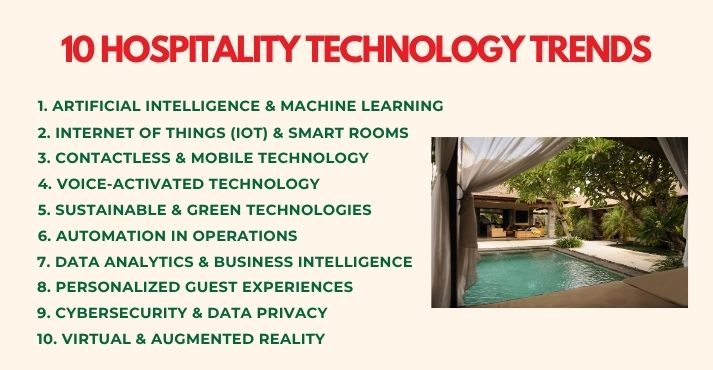
Hotels in 2025 are doing more than just offering a place to sleep. From the moment a guest books a room to the time they check out, technology is woven into every part of the experience.
These trends are helping the industry respond to rising guest expectations, staff shortages, and the need for smarter operations. Let’s take a closer look at what’s changing:
1. Artificial Intelligence and Machine Learning
Hotels are beginning to use machine learning and predictive systems to anticipate guests’ needs before they are even expressed.
These systems can track booking habits, local demand, and price changes to adjust rates in real time. They also help tailor services to individual preferences, making each stay more personalized.
A notable example is the chatbot concierge, “Rose,” at The Cosmopolitan in Las Vegas. Guests can text her for restaurant suggestions, entertainment tips, or hotel services. This improves response time and keeps front desk staff focused on more urgent needs.
This approach isn’t just about convenience. The market for AI technology in the hospitality industry was approximately $90 million in 2023. It is expected to grow by 60% annually, reaching over $8 billion by 2033.
Hotels are turning to these systems to improve accuracy, reduce wait times, and enhance hotel safety by flagging unusual patterns in real-time.
2. Internet of Things (IoT) and Smart Rooms
Many hotels are now using connected devices that communicate with one another. Lights, curtains, thermostats, and locks are part of a network that can be controlled through a mobile app or an in-room tablet.
This setup allows guests to adjust their environment exactly as they want, without needing to call the front desk.
For instance, Hilton’s Connected Room lets guests set their lighting, TV channels, and room temperature before arrival using the Hilton Honors app.
These smart hotel solutions also streamline operations. Staff can remotely monitor room issues, which speeds up repairs. Hotels can also cut energy costs by dimming lights or adjusting temperatures in unoccupied rooms.
With smart rooms in hotels, guests enjoy more control, and staff spend less time on routine maintenance. These benefits show how hotel automation systems are becoming part of everyday service.
3. Contactless and Mobile Technology
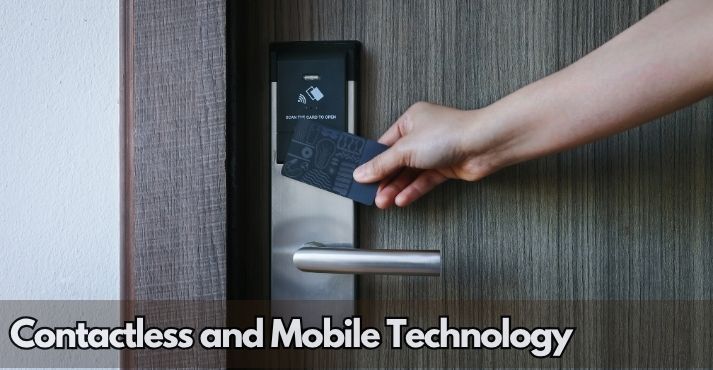
Hotels are moving away from traditional front-desk processes. Guests can now skip the line with contactless hotel check-in and check-out options through mobile apps.
Many properties also offer digital room keys, allowing guests to unlock their doors with a tap on their phones.
Mobile technology isn’t just for unlocking doors. Guests can use the hotel’s app to order room service, message the concierge, adjust the lighting or temperature, and book spa treatments or dinner reservations.
This reduces wait times and limits in-person interactions, creating a smoother and more private experience.
For many travelers, convenience is closely tied to peace of mind. About 65% of guests say contactless options match their health and safety expectations, especially in busy shared spaces.
Hotels are also seeing the payoff. Keyless room access has been shown to boost guest satisfaction by an average of 7%, proving that seamless digital features can make a noticeable difference in the stay.
As contactless hospitality becomes more prevalent, mobile-based systems are becoming a core part of technology in hotel operations, enabling properties to offer faster, safer service while reducing pressure on front-desk teams.
4. Voice-Activated Technology
Voice-activated technology lets guests control hotel room settings using simple spoken commands.
With smart speakers or in-room systems, travelers can adjust lighting and temperature, request fresh towels, or ask for local recommendations without needing to pick up a phone or search for remotes.
Hotels are integrating voice assistants, such as Amazon Alexa or Google Nest, to support both convenience and accessibility. This is especially helpful in accessible hotel rooms, where hands-free control can improve comfort for guests with mobility limitations.
The demand is growing. Studies show that 57% of travelers prefer voice assistants for in-room controls and 48% use them for service requests. It’s not just a novelty, but is quickly becoming a preferred option.
For example, the Wynn Las Vegas was one of the first major hotel brands to install Amazon Echo devices in every room. Guests can say, “Alexa, close the curtains” or “Alexa, what’s the Wi-Fi password?” to get immediate results.
Voice technology not only improves convenience but also saves staff time, streamlines requests, and creates a more personalized stay.
5. Sustainable and Green Technologies

Sustainability is now a major concern for both travelers and hotel operators. Many properties are investing in energy-saving upgrades like LED lighting, motion sensors, smart thermostats, and water-efficient fixtures. These features help lower utility bills while reducing environmental impact.
Hotels are also using monitoring systems to track water usage, energy consumption, and food waste. Some properties rely on solar panels, incorporate green roofs, offer refillable toiletry stations, or install air purification systems.
These choices appeal to guests who actively seek eco-friendly hotel options and are often willing to pay more for sustainable stays.
A strong example is Veranda Resort Pattaya Na Jomtien in Thailand. It uses solar panels and LED lighting to reduce electricity consumption by up to 10% per month.
Recycled wastewater is used for landscaping, and the hotel sources food locally to reduce transport emissions.
In the hotel industry, adopting smarter, greener operations helps meet guest expectations while improving efficiency and brand reputation. These changes show how technology can support both environmental goals and long-term cost savings.
6. Automation in Operations
Automation helps hotels run more smoothly by automating routine tasks such as cleaning, luggage handling, and food delivery.
Service robots can deliver meals to rooms, carry bags to guest floors, or clean public spaces without supervision. This shift allows staff to focus on personal service instead of repetitive tasks.
Robots and automated systems help reduce labor costs and improve efficiency. They also reduce wait times and increase reliability for guests.
A standout example comes from the Park Avenue Rochester Hotel in Singapore, which introduced Techi, a housekeeping robot that delivers linen across guest floors. Techi uses built-in sensors and maps to navigate autonomously, even calling and riding elevators.
Since its rollout, staff have reported improved time management, and guests have consistently enjoyed clean common areas. This move shows how using technology to solve staffing challenges can deliver both operational and guest satisfaction benefits.
Emerging innovations like these are often showcased at events such as the Food Service Trade Show, where hospitality professionals explore the latest in automation, smart equipment, and service technologies designed for modern hotel operations.
7. Data Analytics and Business Intelligence
Data analytics and business intelligence help hotels make better decisions about room pricing, staffing, and marketing strategies. Analyzing booking patterns, guest behavior, and spending habits enables hotels to tailor offers and allocate resources more efficiently.
The impact is measurable — companies that use big data for marketing and sales see 5-6% higher productivity and profitability.
For hotels, this can mean more accurate forecasts, better use of resources, and stronger results from each campaign.
In a competitive market, these insights provide hotels with the clarity they need to plan ahead, respond to changing trends, and enhance their day-to-day operations.
8. Personalized Guest Experiences
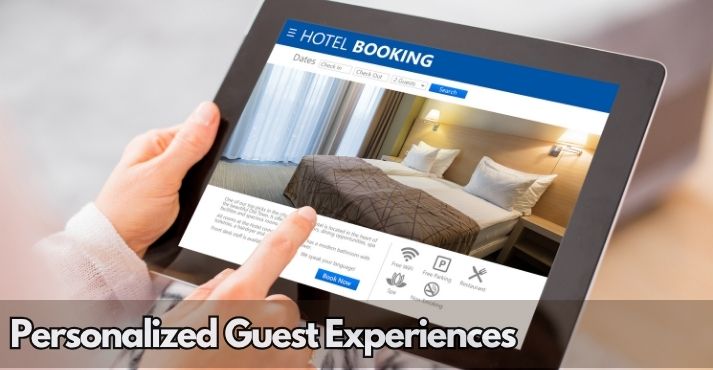
Personalization helps hotels build guest loyalty and boost satisfaction. When hotels remember preferences, from pillow firmness to favorite dining options, guests feel understood and valued.
In fact, 80% of consumers prefer to do business with companies that personalize their experience.
Marriott International is a strong example. Through their Bonvoy loyalty app, guests can select amenities and pillows before arrival. This data-driven approach has led to higher engagement and stronger brand loyalty.
Guests often receive customized offers, such as suggestions for spa treatments based on their prior bookings.
When hotels combine comfort, attention, and choice, they enhance the guest experience, inspiring repeat visits and positive reviews.
9. Cybersecurity and Data Privacy
With hotels handling sensitive information, including passports and credit card numbers, as well as loyalty data, concerns over cybersecurity and data privacy are more important than ever.
Protecting guest information and complying with data protection regulations must be a priority.
Security measures, including encryption, secure payment systems, multi-factor authentication, and regular system audits, help prevent breaches. Staff training on phishing and password hygiene is also essential for maintaining resilience.
For example, the cost of reacting to breaches can be steep. Marriott agreed to a $52 million settlement in 2024 after data breaches from 2014 to 2020 exposed the data of over 300 million guests.
Regulators found that poor password controls and a lack of multi-factor checks contributed to the issue. Marriott has since strengthened its information security program to prevent repeat incidents.
In the future of hotel technology, securing guest data is essential for building trust and staying compliant, not just for peace of mind, but to ensure a safe guest journey from check-in to checkout.
10. Virtual and Augmented Reality
Virtual and augmented reality are making waves in hospitality by offering immersive experiences long before guests arrive. Virtual reality provides prospects with a 360-degree 3D walkthrough of rooms, amenities, and facilities.
Augmented reality overlays digital content, such as maps, menus, or virtual guides, onto the real world through guests’ smartphones or tablets.
Hotels use these technologies for virtual tours, room previews, and interactive marketing campaigns. For instance, Holiday Inn launched an AR campaign around the 2012 London Olympics that allowed guests to see athletes appear in hotel spaces via their phone camera.
Premier Inn’s Hub Hotels in the UK added AR-enabled wall maps that guests can scan for local highlights.
VR and AR improve guest engagement and can directly influence booking decisions. They support digital transformation in hospitality by offering immersive previews and interactive experiences.
This helps hotels stand out while giving guests a clearer idea of what to expect before they arrive.
Conclusion
The hospitality industry is changing quickly. From mobile check-ins to energy-saving tech and virtual tours, these ten trends show how hotels are using smarter ways to improve guest experiences and daily operations.
Keeping up with these changes isn’t just helpful but also necessary to stay competitive. Hotels that take the time to review their systems and adopt solutions that fit their needs will be in a stronger position moving forward.
It’s about being more efficient, meeting guest expectations, and running a better business overall.