Beverages such as coffee, tea, and kombucha are more than everyday drinks. They function as rituals that express identity, hospitality, and craftsmanship. Across cultures, the preparation and sharing of beverages support social connection, storytelling, and community life.
From the ceremonial Ethiopian Buna to Italy’s daily espresso rituals and the disciplined precision of Japanese tea ceremonies, global beverage traditions reflect long-established cultural values. These practices give meaning to simple ingredients through heritage, respect, and shared participation.
Modern beverage culture includes contemporary practices such as cold brew, nitro coffee, fermented teas, and latte art. These approaches reflect changes in consumer preferences, technology, and service formats across cafés and restaurants.
This guide examines global beverage rituals, craftsmanship, sustainability challenges, business insights for F&B owners, and the future trends influencing coffee, tea, and fermented drinks worldwide.
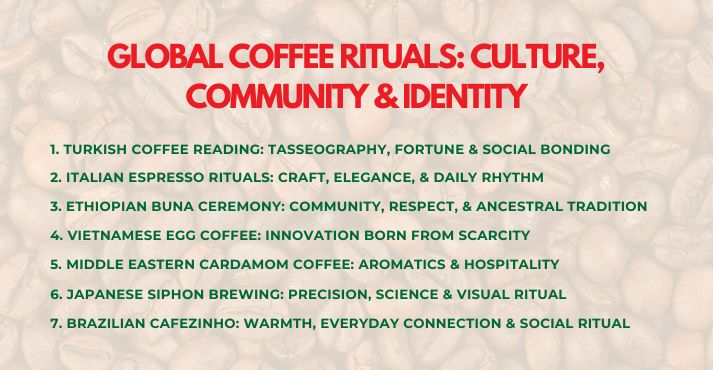
Global Coffee Rituals: Culture, Community & Identity
Across societies, coffee functions as a shared practice that brings people together. Whether served ceremonially or casually, coffee rituals often mark moments of pause, conversation, and hospitality.
These traditions reflect how different cultures use coffee to express social values, reinforce identity, and create communal bonds.
Turkish Coffee Reading: Tasseography, Fortune and Social Bonding
Turkish coffee reading, known as tasseography, centres on a thick brew prepared with finely ground coffee that leaves sediment at the bottom of the cup.
After drinking, the cup is inverted, allowing patterns to form that are later interpreted as symbols such as rings, animals, or paths. These symbols become prompts for conversation, reflection, and storytelling.
The practice shares similarities with tea leaf reading in other cultures, where everyday rituals serve as sources of interpretation.
Within homes and social gatherings, coffee reading encourages dialogue, strengthens hospitality, and supports interpersonal connections. Today, cultural workshops and community events continue efforts to sustain this tradition amid changing lifestyles.
Italian Espresso Rituals: Craft, Elegance, and Daily Rhythm
In Italy, espresso is associated with routine rather than indulgence. Consumed quickly at café counters, espresso punctuates the day through brief but intentional moments.
These “espresso moments” occur in the morning, after meals, and during short breaks, offering time for reflection and social exchange.
Italian café culture emphasizes standing at the bar rather than takeaway service. Elements such as crema, aroma, and cup presentation signal attention to craftsmanship.
Despite global shifts toward convenience-driven coffee habits, many Italians continue to favour café-based consumption, reinforcing espresso’s role in national identity and everyday social life.
Ethiopian Buna Ceremony: Community, Respect, and Ancestral Tradition
The Ethiopian coffee ceremony, known as Buna, is a structured communal practice involving roasting, grinding, and brewing coffee in a traditional vessel called a jebena. Each step is carried out deliberately, engaging the senses through aroma, sound, and visual cues.
Buna serves as a setting for storytelling and social interaction, bringing together family members, neighbours, and guests. Pouring and serving coffee signifies respect and hospitality, while shared participation reinforces community ties.
Cultural festivals, family gatherings, and intergenerational teaching continue to support the practice within modern Ethiopian society.
Vietnamese Egg Coffee: Innovation Born from Scarcity
Vietnamese egg coffee combines strong coffee with a mixture of whipped egg yolks and condensed milk. The beverage originated in Hanoi during the 1940s when milk was scarce, leading to creative adaptation using available ingredients.
Prepared by layering the creamy egg mixture over robust coffee, egg coffee reflects resourcefulness within Vietnamese culinary culture.
Over time, it has gained recognition beyond Vietnam and is now available in cafés worldwide. Its continued presence demonstrates how local solutions can develop into enduring cultural practices.
Middle Eastern Cardamom Coffee: Aromatics and Hospitality
In Middle Eastern cultures, coffee infused with cardamom is closely associated with hospitality. Cardamom contributes warm, aromatic notes that complement coffee’s intensity and signals care in preparation.
Serving cardamom coffee is a customary gesture offered to guests during gatherings, ceremonies, and daily visits. The practice remains common across homes and cafés, maintaining its role as a symbol of welcome, respect, and social exchange within the region.
Japanese Siphon Brewing: Precision, Science and Visual Ritual
Japanese siphon brewing uses a vacuum-based apparatus that relies on temperature control and precise measurements. The method requires careful timing as water moves between chambers under pressure before returning as brewed coffee.
Often prepared in view of guests, siphon brewing introduces a visual element that encourages attention and anticipation. The process reflects Japan’s focus on precision and craftsmanship, turning coffee preparation into a shared observational experience between brewer and drinker.
Brazilian Cafezinho: Warmth, Everyday Connection, and Social Ritual
Cafezinho refers to a small, sweet, and strong coffee served throughout the day in Brazil. Commonly offered in homes, workplaces, and social visits, it accompanies conversation rather than formal occasions.
Serving cafezinho functions as a gesture of friendliness and inclusion. Its frequent presence encourages short pauses for interaction, reinforcing social ties through simple, repeated acts.
As part of daily life, cafezinho supports informal connections across personal and professional settings.
The Craft Behind Coffee – Roast Profiles, Flavour Chemistry & Brewing Artistry
Coffee craftsmanship begins with roasting. The way coffee beans are roasted determines flavour balance, aroma, and mouthfeel, while also influencing how a café defines its style and quality standards.
Roast profiles guide how heat, time, and airflow interact with the chemical structure of coffee beans, shaping the final sensory outcome.
The importance of roasting craftsmanship is reflected in market trends. The global roasted coffee market was valued at $50.28 billion in 2025, with growth driven by increasing demand for quality coffee, café culture, and differentiated flavour profiles across global markets.
Roast Profiles Explained – Light, Medium, and Dark
Roast level directly affects acidity, sweetness, bitterness, and aroma.
Light roasts tend to preserve higher acidity and origin-specific notes, often associated with citrus, floral, or fruity characteristics. Medium roasts offer a more balanced profile, combining moderate acidity with sweetness and body.
Dark roasts produce stronger bitterness, lower acidity, and deeper flavours such as chocolate, smoke, or spice, often reducing origin distinction.
The chosen roast level determines whether origin characteristics are emphasised or subdued, influencing how coffee is positioned on menus and perceived by customers.
The Four Elements of a Roast Profile
A roast profile is defined by four core variables:
- Roast level, which determines overall flavour direction
- Time, which controls flavour development and balance
- Temperature, which drives chemical reactions inside the bean
- Airflow, which affects heat distribution and roast consistency
Adjusting these elements allows roasters to manage sweetness, acidity, bitterness, and aroma with precision.
Tasting Notes and Sensory Language
Coffee evaluation follows a structured process that includes visual assessment, aroma, palate, and aftertaste. Sensory language such as citrus, nutty, chocolatey, or floral, helps standardise communication between roasters, baristas, and customers.
Clear tasting notes support quality control, menu clarity, and staff training, while helping cafés communicate flavour expectations and maintain consistency across service.
Coffee Craftsmanship – Brewing Methods, Technology & Modern Aesthetics
Modern coffee craftsmanship includes brewing techniques, equipment, and visual presentation. Brewing methods influence texture, flavour clarity, and consistency, while technology and aesthetics affect how coffee is perceived and served in cafés and restaurants.
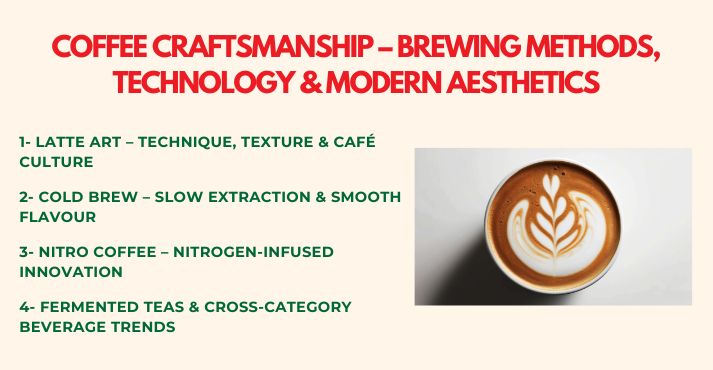
Latte Art – Technique, Texture and Café Culture
Latte art depends on properly textured microfoam, created by steaming milk to produce fine, uniform bubbles that integrate smoothly with espresso. Microfoam supports contrast and definition while maintaining drink balance.
Common tools include an espresso machine, milk pitcher, and well-extracted espresso made from quality beans. Baristas apply techniques such as free pouring, etching, and layering to create familiar motifs, including hearts, tulips, and rosettas.
Beyond appearance, latte art signals technical skill, consistency, and attention to detail, reinforcing café identity and customer expectations.
Cold Brew – Slow Extraction and Smooth Flavour
Cold brew is produced by steeping coffee grounds in cold water for 12 to 24 hours. This extraction process results in lower perceived acidity and a smoother flavour profile compared to hot-brewed coffee.
Cold brew can be prepared using immersion brewers, French presses, or dedicated cold brew systems. Its characteristics include mild flavour, higher caffeine concentration, and longer shelf life, supporting batch preparation and takeaway service.
The global cold brew coffee market is projected to grow at a 22.7% CAGR between 2024 and 2031, driven by demand for ready-to-drink and café-based cold coffee.
Nitro Coffee – Nitrogen-Infused Innovation
Nitro coffee is created by infusing cold brew with nitrogen gas, producing a creamy mouthfeel and a cascading visual effect when served. Unlike iced coffee or standard cold brew, nitro coffee is usually served without ice and has a smooth texture without added dairy.
Nitro systems range from commercial kegs to compact at-home setups using nitrogen cartridges. The format is used by cafés seeking differentiation through texture and presentation.
The global nitrogenated (nitro) coffee market is projected to grow from $741.2 million in 2025 to $1,272.4 million by 2035.
Fermented Teas and Cross-Category Beverage Trends
Fermented beverages such as kombucha, pu-erh, jun tea, and water kefir are increasingly featured alongside coffee in modern cafés. Fermentation uses microbial activity to convert sugars into organic acids, resulting in distinct flavour profiles.
Cafés are adding fermented drinks to diversify menus, address wellness-oriented preferences, and offer non-coffee options aligned with craft-focused beverage programs.
Specialty Tea – Artistry, Varietals & Global Traditions

Specialty tea refers to teas produced with attention to origin, processing, and quality rather than volume. These teas are often sourced from specific regions, harvested in limited quantities, and processed using methods that preserve varietal character. The category places emphasis on craftsmanship, provenance, and controlled production.
What Makes Tea “Specialty”
Specialty tea is typically identified by its single-origin sourcing, where terroir, climate, and cultivation methods influence flavour and aroma. Limited harvests and careful leaf selection contribute to consistency and traceability.
Processing is often carried out by skilled producers using handcrafted or small-batch techniques. Decisions made during withering, oxidation, rolling, and drying directly affect the final profile, requiring experience and technical knowledge.
Tea Varietals – White, Green, Oolong, Black and Pu-erh
Tea varietals are defined by differences in processing and oxidation rather than plant type.
- White tea is minimally processed, producing light flavours with subtle sweetness.
- Green tea undergoes heat treatment to limit oxidation, resulting in fresh, vegetal, or nutty notes.
- Oolong tea is partially oxidised, offering a wide range of floral, fruity, or roasted characteristics.
- Black tea is fully oxidised, producing a stronger body and flavours such as malt, spice, or cocoa.
- Pu-erh tea is fermented and aged, developing earthy and complex profiles over time.
These varietals cater to different preferences and service contexts, from light, aromatic teas to robust, full-bodied brews.
Tea Ceremonies and Cultural Rituals
Tea rituals are practiced across many cultures. Japanese Sado focuses on precision, etiquette, and presence. Chinese Gongfu tea preparation emphasises technique, multiple infusions, and attention to aroma.
Moroccan mint tea is associated with hospitality and communal serving, while Indian chai culture integrates spiced tea into daily social interaction.
Across regions, tea ceremonies provide structured moments for hospitality, attentiveness, and shared experience.
Brewing Specialty Tea – Temperature, Steeping, and Teaware
Brewing parameters vary by tea type. Lower temperatures are used for white and green teas, while oolong, black, and pu-erh teas tolerate higher heat. Steeping times influence balance and intensity, with some teas prepared through multiple short infusions.
Teaware also affects preparation and service. Clay vessels retain heat and absorb flavour over time, porcelain offers neutrality, and glass allows visual observation of leaf expansion. These choices influence both brewing outcomes and presentation.
Kombucha & Fermented Beverages – Culture, Health & Culinary Creativity
Fermented beverages have become a distinct category within modern beverage culture, combining traditional fermentation practices with contemporary flavour development and menu applications.
Kombucha, in particular, bridges tea craftsmanship and fermentation, while related beverages such as pu-erh, jun tea, and water kefir expand cross-category offerings in cafés and restaurants.
What Kombucha Is – SCOBY, Fermentation and Flavour Formation
Kombucha is produced by fermenting sweetened tea using a SCOBY, or symbiotic culture of bacteria and yeast. During fermentation, yeast converts sugars into alcohol and carbon dioxide, while bacteria transform the alcohol into organic acids such as acetic and gluconic acid.
This process alters tea compounds, including polyphenols and amino acids, contributing to kombucha’s tangy flavour, light effervescence, and aromatic complexity. Fermentation differs from tea oxidation by relying on microbial activity rather than exposure to oxygen.
Probiotics and Wellness Benefits (Non-Medical)
Fermented beverages are commonly associated with probiotic content, which may support gut microbiome balance. Organic acids produced during fermentation contribute to flavour development and preservation, while tea-based antioxidants remain present in varying concentrations.
Kombucha is often consumed for perceived associations with digestion support, energy balance, and general wellness. These associations are non-medical and vary depending on fermentation time, ingredients, and individual consumption patterns.
Kombucha’s Flavour Spectrum and Brewing Innovations
Kombucha flavours range from fruity, herbal, spiced, and floral to botanical profiles. Brewers frequently experiment with secondary fermentation using ingredients such as ginger, citrus, berries, herbs, and spices.
Green tea kombucha, seasonal blends, and regionally inspired recipes are increasingly common, allowing producers to adjust acidity, sweetness, and aroma. These variations support menu differentiation and appeal to changing consumer preferences.
DIY Kombucha and Culinary Uses
Basic kombucha brewing involves preparing sweetened tea, introducing a SCOBY, and allowing fermentation to proceed under controlled conditions. Secondary fermentation is often used to introduce additional flavours and carbonation.
Beyond beverages, kombucha is used in culinary applications such as cocktails, mocktails, salad dressings, marinades, and glazes. Its acidity and aromatic qualities make it suitable for pairing with light dishes, fermented foods, and plant-forward menus.
Ethical & Sustainable Sourcing in Coffee & Tea
Coffee and tea sourcing face growing pressure from environmental, economic, and social challenges.
Climate change, deforestation, monoculture farming, low farmer income, and child labour continue to affect producing regions, particularly where cultivation relies on smallholder farmers.
Addressing these issues requires responsibility across the supply chain, from cultivation to consumption.
Ethical Sourcing Principles – Fair Pay, Transparency, and Humanity
Ethical sourcing prioritises fair wages, safe working conditions, and the elimination of child labour. It also depends on transparent trading relationships that provide income stability for farming communities.
Certification schemes such as Fairtrade and Rainforest Alliance define minimum social and environmental standards, while direct trade models focus on closer buyer–producer relationships and negotiated pricing.
Each approach aims to improve accountability and long-term sustainability, though they differ in structure and enforcement.
Inside the Coffee Supply Chain – From Seed to Cup
The coffee supply chain includes farmers, processors, exporters, roasters, retailers, and consumers. Despite the scale of the global coffee market, value distribution remains uneven.
Producers usually receive only about 7–10% of the final retail price of coffee, leaving many exposed to price volatility and rising production costs.
Labour risks persist within this structure. In Vietnam alone, an estimated 34,131 children aged 5 to 17 are reported to be working on coffee farms, associated with economic vulnerability in rural communities.
Environmental Impact and Shade-Grown Coffee
Conventional sun-grown coffee farming often involves deforestation, chemical fertilisers, and monoculture systems. While these methods can increase short-term yields, they place long-term strain on ecosystems.
Shade-grown coffee offers an alternative approach. Coffee plants are cultivated beneath tree canopies, supporting biodiversity, improving soil health, and reducing dependence on chemical inputs.
These systems also help moderate temperature and moisture, which is increasingly relevant as climate conditions become less predictable.
Organic and Certified Coffee: What Consumers Should Know
Organic coffee production avoids synthetic pesticides and fertilisers, supporting soil regeneration and long-term land health. Certification frameworks such as USDA Organic and Rainforest Alliance assess environmental practices alongside labour and sourcing standards.
While certifications do not eliminate all risks, they provide traceability, independent verification, and minimum benchmarks for social and environmental responsibility.
Supporting Coffee-Growing Communities
Sustainable sourcing includes investment in training, education, and inclusive economic participation. Programmes focused on agronomy support, women’s empowerment, and access to markets help strengthen long-term resilience.
Initiatives such as Starbucks Farmer Support Centers provide on-the-ground technical assistance, sustainable farming techniques, and productivity resources to coffee growers across key producing regions worldwide. Traceability programmes further improve transparency between producers and buyers.
Sustainable Sourcing Challenges
Ethical sourcing remains complex. Logistics, cost pressures, supply consistency, and fragmented global supply chains present challenges, particularly for smaller businesses. Limited consumer awareness can also reduce demand for responsibly sourced products.
Best Sustainability Practices for Hotels and Restaurants
Hospitality businesses can support ethical sourcing through practical measures such as local and seasonal purchasing, packaging reduction, composting, and supplier audits. Transparent sourcing policies improve accountability and strengthen brand credibility.
Over time, these practices can support cost efficiency, supply stability, and customer trust, aligning business performance with environmental and social responsibility.
Crafting the Modern Coffee Shop Menu (For F&B Owners)
A coffee shop menu functions as both a product list and a decision-making tool. Effective menus balance customer preferences, operational capability, and brand positioning while responding to evolving beverage trends.
Understanding Audiences Through Personas and Flavour Profiling
Menu design benefits from identifying key customer segments and aligning flavour profiles accordingly.
Younger consumers often seek bold or unconventional drinks, including flavoured lattes, cold brews, and fermented options. Business professionals typically prefer familiar, balanced flavours suited to daily routines.
Regional preferences also influence menu composition. Middle Eastern markets often favour strong, aromatic coffees, Southeast Asian consumers show openness to iced and milk-based formats, and European cafés continue to prioritise espresso-based classics.
Flavour profiling using aroma, acidity, and body helps structure menus that accommodate varied expectations without unnecessary complexity.
Designing a Menu with Classics and Innovation
A balanced menu combines core offerings with limited innovations. Essentials such as espresso, Americano, and cappuccino provide consistency and operational stability.
Innovative drinks such as Vietnamese egg coffee, lavender lattes, or chai cold brew introduce variety and seasonal interest. Maintaining “brew diversity” allows cafés to serve both traditional customers and those seeking novelty, while managing inventory and preparation efficiency.
Showcasing Bean Origins and Coffee Varieties
Menus can communicate value by clearly presenting bean types and origins. Arabica and Robusta offer different flavour and caffeine profiles, while specialty micro-lots appeal to customers interested in provenance and quality.
Stories linked to origins such as Ethiopia, Colombia, Brazil, and Sumatra help contextualise flavour characteristics. Using clear sensory language on menus supports customer understanding and informed selection.
Beverage and Food Pairings for a Complete Experience
Pairing beverages with food enhances the overall service offering. Effective pairings follow principles of contrast and complementarity.
For example, dark roasts pair well with chocolate-based desserts, while fruity Ethiopian coffees align with citrus pastries. Pairings can encourage add-on purchases and support menu cohesion across food and beverage categories.
Seasonal and Trend-Based Specials
Limited-time offerings allow cafés to introduce seasonal relevance and test new products without permanent menu changes. Seasonal drinks create anticipation and repeat visits.
Examples include autumn spiced cold brew, summer citrus-based beverages, and festive peppermint espresso. Using formats such as nitro coffee, kombucha, and other fermented drinks supports trend responsiveness while keeping core offerings intact.
Global Beverage Trade Shows – Innovation, Exchange & Industry Growth
Global beverage trade shows serve as platforms for industry exchange, product discovery, and professional development. For cafés, roasters, and hospitality operators, these events provide direct exposure to emerging flavours, technologies, and sourcing practices shaping the beverage sector.
In Asia, beverage-focused showcases such as Food & Hotel Asia (FHA) bring together international producers, equipment manufacturers, and hospitality professionals, offering insights into regional and global beverage trends.
Exploring Global Flavours and Rare Beans
Trade shows provide access to micro-lots, experimental processing methods, and rare coffee and tea origins that are not widely available through standard distribution channels.
Producers present limited-harvest beans, fermentation trials, and region-specific profiles to buyers and operators.
Cafés attend these events to refine menus, identify differentiation opportunities, and respond to growing interest in provenance, flavour complexity, and seasonal offerings.
Cultural Exchange and Knowledge Sharing
Trade shows also facilitate cultural exchange through live demonstrations and knowledge-sharing sessions.
Examples include Ethiopian Buna ceremony showcases and Turkish coffee preparation booths, which introduce traditional service formats alongside contemporary interpretations.
These interactions help connect growers, roasters, baristas, and brands, strengthening collaboration across the beverage value chain.
Equipment Innovations and Technology Trends
Beverage trade exhibitions highlight advances in equipment and operational technology, including siphon brewing setups, smart brewers with programmable controls, and automated cold brew systems designed for consistency and scale.
Sustainability-driven innovations are increasingly visible, such as water-saving espresso machines, energy-efficient systems, and AI-supported roasting technology that improves precision while reducing waste and resource use.
The Future of Coffee & Beverage Culture
Coffee and beverage culture continue to respond to changing lifestyles, technological capability, and consumer expectations. Future developments are influenced by how traditions are adapted, how technology is applied, and how values guide purchasing decisions.
Modernising Traditions for Contemporary Lifestyles
Traditional beverage practices are presented in ways suited to urban and time-conscious settings. Examples include Buna-inspired cafés that simplify ceremonial steps and egg coffee bars that adjust preparation for faster service.
These approaches retain essential cultural elements while adjusting scale, setting, and service flow to suit modern consumption habits. The emphasis is on continuity, allowing long-established practices to remain relevant within contemporary hospitality environments.
Technology’s Transformative Role
Advances in technology support consistency, sourcing transparency, and operational efficiency. AI-based flavour analysis, smart grinders, and precision brewers support repeatability and help reduce material waste.
Blockchain-based systems support traceability by recording sourcing data across supply chains. Together, these technologies contribute to efficiency and sustainability goals across cafés and beverage businesses.
Rise of Ethical, Organic, and Experiential Beverage Demand
Consumer demand shows a stronger interest in authenticity, transparency, and meaningful engagement. Preference for organic production, traceable sourcing, and experience-led service continues to expand across global markets.
These expectations influence how beverages are sourced, presented, and communicated, contributing to higher baseline standards within the industry.
Ethical considerations and experience-focused offerings are now closely linked to long-term competitiveness in coffee and beverage service.
Conclusion
Across cultures and regions, beverages such as coffee, tea, and fermented drinks serve as expressions of identity, hospitality, and craftsmanship.
From ceremonial preparation to everyday service, these practices create shared moments that support connection, storytelling, and community life.
Ancient rituals continue alongside contemporary approaches, as traditional methods are adapted to modern settings, technologies, and service expectations. This coexistence allows heritage to remain present while encouraging innovation in flavour, presentation, and sourcing.
Global beverage culture represents a collective human experience built on tradition, guided by ethical responsibility, and supported by creative expression.
Through mindful preparation and shared participation, beverages continue to bring people together across borders, generations, and evolving lifestyles.