Every memorable meal ends on a high note when the dessert is paired with the right drink. Matching beverages with seasonal desserts enhances flavors, balances textures, and leaves a lasting impression on guests.
According to a study, menus that include pairing suggestions can increase wine sales by up to 50%, showing the strong connection between drink pairings and perceived quality.
When restaurants and hotels pair drinks with seasonal desserts, they bring out the best in both elements. Flavors change throughout the year, from citrus and berries in spring and summer to apples, nuts, and spices in cooler months.
Choosing drinks that complement these changing profiles adds purpose and refinement to the menu, turning dessert into a highlight guests remember long after the final bite.
Why Drink Pairing Matters with Seasonal Desserts

Pairing drinks with seasonal desserts is more than a finishing touch. It’s a way to bring out the best in both the food and beverages. The right pairing can balance flavors, cleanse the palate, and make each bite more enjoyable.
Whether it’s a tart fruit sorbet or a rich spiced cake, pairing the dessert with a well-chosen drink brings the entire menu together.
Restaurants that curate thoughtful dessert and drink pairings often create a more immersive dining experience. Guests notice when their final course has been carefully considered, and that impression lingers long after the meal.
1. Balancing Sweetness and Acidity
A successful pairing respects the natural balance between sweetness and acidity. Too much sugar in both dessert and drink can overwhelm the palate, while excessive acidity in either can create sharpness.
For example, a tart lemon tart benefits from a lightly sweet Moscato d’Asti, which softens the citrus bite, while a rich chocolate torte pairs beautifully with a ruby port that matches its sweetness without tipping into excess.
2. Complementing or Contrasting Flavors
Pairing can either mirror flavors for harmony or contrast them for interest. A pumpkin pie with spiced chai echoes warm, autumnal notes, while a creamy panna cotta with a bright, citrus-forward Prosecco offers a refreshing contrast.
The choice depends on the desired dining effect, whether it’s comfort through similarity or intrigue through difference.
3. Elevating the Dining Experience
The right pairing brings more than just flavor enhancement. It adds refinement to the dessert course and completes the meal with intention. Guests notice when there is thought behind each element of the menu, especially when the final course includes a carefully matched drink.
Whether it’s a small café or a fine-dining restaurant, offering pairings for seasonal desserts can add value and strengthen the overall presentation. For businesses, this also creates opportunities to boost sales and offer curated experiences that feel thoughtful and tailored.
Ultimately, the goal is not just to serve dessert but to make it memorable. A well-executed pairing turns the end of a meal into a moment that leaves a lasting impression.
Best Drink Pairings for Popular Seasonal Desserts

Crafting seasonal dessert pairings adds depth to your menus and enhances the overall dining experience.
Matching textures, flavors, and temperatures between a dessert and its accompanying drink creates a satisfying balance, while allowing chefs and beverage teams to get creative.
These curated combinations also tap into what diners crave each season, from cozy comfort to refreshing brightness.
Autumn Desserts
Autumn is a season of warmth, spice, and nostalgia. Earthy ingredients and slow-cooked textures call for drinks that are either spiced, fruit-forward, or just dry enough to cut through sweetness.
Pumpkin Pie
Creamy and spiced, pumpkin pie pairs beautifully with a chai latte or even spiced tea. These types of coffee and tea drinks feature prominent notes of cinnamon and nutmeg.
For those seeking something bolder, try a medium-bodied Zinfandel as its dark fruit flavors work well with the pie’s texture.
Apple Crisp
This baked dessert has buttery layers and soft, tart apples. A dry cider makes a natural beverage pairing with desserts that feature apples. Or, opt for a Pinot Noir, which is light enough to complement the fruit with just enough acidity to balance its richness.
Winter Desserts
Winter desserts are dense, chocolatey, or spiced, perfect for sipping with warmth, body, or a hint of sweetness.
Chocolate Lava Cake
Pair with a glass of Port or an espresso-based drink like Irish coffee. The deep, concentrated flavors of Port complement the molten center, while the bold, roasted notes of Irish coffee enhance the dessert’s intensity and add a cozy finish.
Gingerbread Cake
This dessert’s molasses and clove notes shine alongside a spiced rum cocktail or a warm glass of mulled wine. The sweetness and heat in both drinks amplify the cake’s complexity, while hints of citrus and spice create a festive, lingering finish.
Spring Desserts
Spring desserts lean on citrus, berries, and airy textures. Drinks here should be fresh and light to match.
Lemon Meringue Pie
A citrusy Sauvignon Blanc keeps things crisp and sharp. For something more playful, a gin fizz with botanical notes and bubbles complements the tartness, adding a lively twist to the experience.
Strawberry Shortcake
A fruity rosé highlights the natural sweetness of the strawberries, while a freshly made strawberry daiquiri brings both acidity and chill. These combinations work beautifully in spring seasonal menus that celebrate fruit-forward simplicity.
Summer Desserts
Summer is all about cool, fruity treats and drinks that refresh without overwhelming.
Peach Cobbler
A chilled Moscato pairs perfectly with the ripe peaches and buttery crust. For something bolder, a bourbon-peach smash adds depth while staying light enough for warm weather.
Berry Tarts
Berries pair naturally with bubbles, making Prosecco an easy choice. A raspberry mojito introduces mint and citrus, lifting the tartness and keeping things crisp.
Creative Drink Pairings: Thinking Outside the Box
Unconventional drink pairings allow you to showcase creativity while enhancing the flavors of your dessert menu. By offering guests unexpected options, both alcoholic and non-alcoholic, you can transform familiar desserts into standout experiences.
Innovative Cocktail Pairings
Rethink traditional pairings by introducing cocktails that highlight complementary or contrasting elements in the dessert. This approach works exceptionally well for cocktail pairings with desserts that feature herbs, spices, or unexpected textures.
Matcha Green Tea Cake
Pair with a matcha mojito or a light gin cocktail infused with green tea. The herbal notes in both the drink and dessert create a clean, layered finish.
Pavlova
Serve with a citrus-forward gin and tonic or a sparkling citrus soda. The bubbles cut through the meringue’s sweetness and amplify the fruit topping, offering one of the best drinks for desserts with tropical or berry notes.
Non-Alcoholic Pairing Ideas
Non-alcoholic options are just as capable of enhancing cakes and pastries when thoughtfully matched. They can mirror flavors, add contrast, or introduce warmth and spice.
Chocolate Mousse
A rich hot chocolate or a spiced vanilla chai latte complements the mousse’s deep flavor. These options either match the richness or add warming spice without overpowering the dessert’s texture.
Fruit Sorbet
Iced herbal teas like hibiscus or mint enhance the sorbet’s tart, fruity notes. Their light and aromatic profiles keep the overall experience refreshing, making them ideal for frozen desserts on warm days.
Experimenting with Regional Flavors
Desserts from around the world offer unique pairing opportunities. Matching regional drinks with local desserts enhances cultural authenticity and creates memorable menu moments.
Mango Sticky Rice (Asia)
Thai iced tea or a coconut-based cocktail works beautifully with this dish. The creamy sweetness amplifies the tropical notes in the mango and softens the rich texture of the sticky rice.
Baklava (Middle Eastern)
Turkish coffee adds a bitter contrast to the dessert’s syrupy, nut-filled layers. For a lighter, non-alcoholic option, rosewater lemonade highlights the floral essence already present in this traditional treat.
Tips for Creating a Seasonal Dessert and Drink Pairing Menu
A thoughtful seasonal dessert and drink pairing menu can enhance the dining experience, increase check averages, and showcase the creativity of your kitchen and bar team.
For restaurants and hotels, aligning desserts and drinks with the season not only keeps the menu fresh but also uses ingredients and flavors that guests are already craving.
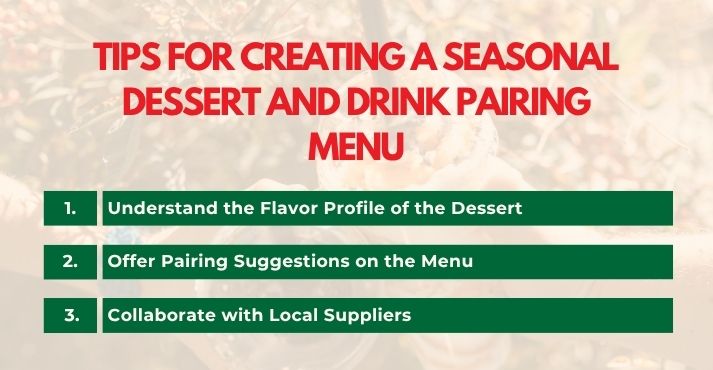
1. Understand the Flavor Profile of the Dessert
Start by evaluating each dessert’s core ingredients, texture, and sweetness level. A citrus tart in summer, for instance, brings brightness and acidity that pair naturally with dry sparkling wines or crisp herbal infusions.
On the other hand, rich and creamy desserts, like winter puddings or chocolate tortes, benefit from drinks that cut through the density, such as fortified wines with acidity or coffee drinks with defined roast profiles.
Understanding how the dessert interacts with sweetness, bitterness, acidity, and texture helps you match it with complementary or contrasting drinks.
This approach creates more impactful wine pairings with seasonal desserts, especially when balancing regional ingredients or limited-time specials.
2. Offer Pairing Suggestions on the Menu
Design the menu to guide guests without overwhelming them. A separate section labeled “Seasonal Dessert Pairings” can help guests quickly see which drink complements each dessert. Include both alcoholic and non-alcoholic choices.
For example, list a dark chocolate tart paired with a ruby port or an espresso tonic, providing guests with clear options.
Using menu psychology techniques, place these pairings near high-margin or signature desserts to increase their visibility and encourage upsells. Make it easy for servers to suggest pairings by training them on flavor logic and giving them a quick-reference guide during service.
3. Collaborate with Local Suppliers
Sourcing drinks from local suppliers not only supports the community but also allows for more distinctive pairings. Local vineyards may offer limited-edition wines that complement desserts built around regional produce.
Coffee roasters can provide insight into beans with specific roast profiles that match desserts like stone fruit tarts or nut-based pastries.
Consider hosting seasonal tasting events or rotating one featured dessert and drink pairing monthly to highlight local collaborations.
For instance, pairing a honey-drizzled fig tart with a small-batch mead or a locally blended chai can draw attention to both your menu and your partners.
Conclusion
Thoughtful drink pairings can transform a simple dessert into a memorable highlight of the dining experience. The right beverage, whether a bold coffee, a crisp wine, or a refreshing mocktail, brings out the best in seasonal desserts, adding depth and contrast to every bite.
For restaurants and hotels, this is more than a finishing touch; it’s an opportunity to leave a lasting impression. Incorporating curated pairings on seasonal menus shows attention to detail and a commitment to guest satisfaction.
Businesses should explore and rotate drink options that reflect the seasonal ingredients and flavors. Encourage staff to recommend pairings and share the story behind them, turning each dessert course into a reason to return. It’s a simple, effective way to stand out.