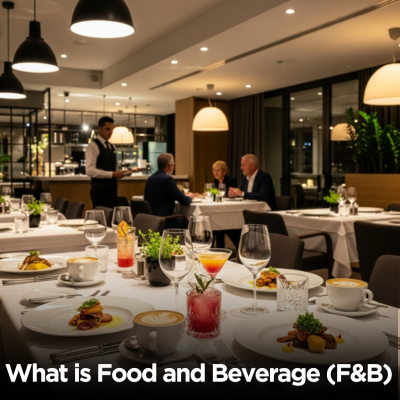
F&B short for food and beverage is one of the most widely used terms across the hospitality, restaurant, and catering industries. Whether you’re applying for a hotel job, planning a restaurant concept, reading an industry report, or booking a catering service, you’ll encounter F&B at every turn.
At its core, F&B encompasses every business, operation, and process involved in producing, preparing, serving, and selling food and drinks. This ranges from a street food stall at a hawker centre to the multi-outlet dining operation of a five-star resort and everything in between.
This guide explains exactly what F&B means, how it’s used in different contexts (restaurants, hotels, catering, and institutions), how the food industry is structured globally, and how technology is changing what food and beverage businesses look like today. Whether you’re a general reader who stumbled across the term, a student considering a hospitality career, or a business professional exploring the sector, this is your complete reference.
What is F&B?
F&B, short for Food and Beverage, involves a variety of food and drink options in eateries like restaurants and cafes. In Singapore, where food is celebrated, F&B is at the heart of the dining scene.
From bustling hawker centers serving local delights to upscale restaurants offering fine dining experiences, F&B establishments cater to varied tastes and preferences. Beyond merely providing sustenance, F&B contributes significantly to Singapore’s tourism industry and creates job opportunities for many.
Understanding F&B is essential for fully appreciating Singapore’s rich culinary heritage and exploring its vibrant food culture. It allows individuals to understand the city’s bustling dining arena and enjoy its unique flavors and experiences.
F&B Full Form: What Does F&B Stand For?
F&B stands for Food and Beverage. The ampersand (&) simply replaces “and,” making the abbreviation faster to write and speak a practical shorthand that became standardised across the hospitality industry.
In some regions and informal contexts, you may also encounter the spelling FNB (Food ‘N’ Beverage) or the written-out form food & beverage. All three refer to the same industry and operational category. In hotel management documentation, job titles (e.g., F&B Manager, F&B Director), and industry trade events, F&B is the dominant form.
Origin of the Term
The term food and beverage originated within the traditional hospitality sector hotels, resorts, and restaurants where it was used to categorise the department responsible for all dining and drink services. Over decades, its use expanded from an internal hotel operations term to a descriptor for an entire global industry encompassing agriculture, manufacturing, logistics, catering, and retail.
FNB Meaning vs F&B — Is There a Difference?
The short answer is no. FNB (sometimes written as F’n’B or F ‘N’ B) is simply an informal variant of F&B, with the “and” replaced phonetically by an apostrophe-N. Both mean exactly the same thing: food and beverage.
In formal business documents, hotel management literature, and industry trade publications, F&B is the standard form. FNB appears more commonly in informal usage, social media, and certain regional markets. If you see a job posting for an FNB Manager or a reference to FNB service, it refers to food and beverage management and service no difference in meaning or scope.
Overview of the F&B Industry in Singapore

Singapore’s F&B scene is a bustling hub of culinary delights, offering something for every palate. With a market value surpassing SGD 13.6 billion annually, it’s clear that dining out is a favorite pastime. The diversity of options is remarkable, from humble hawker stalls serving popular local dishes to upscale eateries offering world-class cuisine.
Various factors fuel the industry’s growth, including a rising number of tourists, a growing affluent population, and the increasing popularity of food delivery services; this growth has led to the rise of a wide range of establishments, from cozy cafes to bustling food courts, all contributing to the vibrant food culture of the city-state.
Singapore’s government actively supports culinary innovation and entrepreneurship, promoting an environment conducive to culinary excellence. As a result, Singapore has become a magnet for both local and international chefs and food businesses, further enhancing its culinary industry and cementing its status as a global food destination.
F&B Industry Market Size and Growth
The food and beverage industry is one of the largest economic sectors on the planet. The global foodservice market was valued at approximately USD 2.52 trillion in 2021 and is projected to reach USD 5.5 trillion by 2028, reflecting a compound annual growth rate (CAGR) of around 4.8% (GlobalData, Foodservice Country Report, 2025).
In the United States alone, the foodservice industry contributes over USD 900 billion annually to the economy, accounting for approximately 4% of GDP. In the Asia-Pacific region, where food culture is deeply embedded in daily life and tourism, the F&B market is forecast to surpass USD 3.3 trillion by 2034 (Fortune Business Insights).
Growth drivers include rising disposable incomes, urbanisation, increased travel and tourism, the expansion of food delivery platforms, and growing consumer demand for health-conscious, plant-based, and sustainably produced options. Digital transformation from AI-powered ordering systems to data-driven menu planning is creating new revenue streams and reshaping how F&B businesses operate worldwide.
What Is F&B Service? Types and Styles
Food and beverage service refers to the processes and methods used to deliver food and drinks to customers. The term covers not only the physical act of serving but also the systems, staff, environments, and standards that shape the dining experience.
F&B service is broadly divided into two categories:
On-premise service — food and drinks are prepared and consumed at the same location. Restaurants, cafes, hotel dining rooms, and bars are the most common examples. The customer visits the venue and is served within that environment.
Off-premise service — preparation happens at one location, but service takes place elsewhere. Catering for events, banquets, corporate functions, and food delivery are all forms of off-premise F&B service.
Common F&B Service Styles
Within on-premise settings, a range of service styles exists, each suited to different types of establishments and dining occasions:
Table service — staff take orders and bring food and drinks directly to seated guests. This is the standard format for most restaurants. Sub-styles include silver service (à la russe), where each course is plated tableside, and American service, where food is pre-plated in the kitchen.
Buffet service — food is displayed on a service counter and guests serve themselves. Common in hotels, catering events, and institutional dining.
Counter service / QSR — guests order and collect food at a counter. Fast food chains and quick-service restaurants (QSRs) operate this way.
Room service — food and beverages are delivered directly to hotel guests in their rooms, a key component of hotel F&B operations.
Cafeteria service — guests move along a service line and select items. Common in corporate cafeterias, hospitals, and school canteens.
For a detailed breakdown of service styles used in restaurants and hotels, see our guide: Types of Services in Food and Beverage.
Components of Food and Beverage
Let’s learn more about the different kinds of food and beverages that make Singapore’s dining scene so exciting.
Food
Singapore’s F&B scene offers a tempting array of culinary delights, reflecting the nation’s multicultural fabric. From iconic local dishes like Hainanese chicken rice and laksa to international cuisines such as Japanese sushi and Italian pasta, there’s something to satisfy every craving.
With their bustling atmosphere and affordable fare, Hawker centers are beloved destinations for sampling authentic Singaporean flavors. Additionally, fine dining establishments showcase the creativity and craftsmanship of chefs and offer fine culinary experiences.
Beverage
In addition to diverse cuisines, Singapore’s F&B landscape claims a wide variety of beverages to complement meals or enjoy on their own. Traditional drinks like Teh Tarik (pulled tea) and Kopi (local coffee) are beloved staples, while specialty coffees brewed with precision and care have gained popularity among coffee lovers.
Singapore’s cocktail scene is booming for those seeking a refreshing blend. Noveloctions inspired by local flavors and global trends are available, whether a classic Singapore Sling or a creative craft cocktail; the city’s bars and lounges offer an attractive selection of drinks to suit every taste.
Types of F&B Services Operations
Let’s explore the various types of F&B service operations and how they make dining experiences unique.
1. Commercial
Commercial F&B operations are all about making tasty food and drinks while making a profit. Examples include restaurants, cafes, bars, food trucks, and catering services. They focus on offering delicious meals and drinks to customers in exchange for money.
Whether it’s a cozy café, a bustling restaurant, or a food truck serving treats on the go, commercial F&B operations work hard to create enjoyable dining experiences that keep customers coming back for more.
2. Non-commercial
Non-commercial F&B operations are different they’re more about providing food and drinks for service rather than profit. These places include institutional dining, like in hospitals or schools, where the main goal is to feed people well.
Healthcare facilities ensure patients get nutritious meals, while schools serve lunches to students.
Military installations also have non-commercial F&B operations to keep soldiers fueled up. In these places, the focus is on serving good food to fulfill needs rather than making money.
What Is F&B in a Hotel?
In the hotel industry, F&B refers to the entire department responsible for all food and drink services within the property. This is typically one of the most revenue-significant departments in a hotel, alongside rooms and events.
A hotel’s F&B department may oversee:
- Restaurants and dining outlets — from all-day dining restaurants to specialty or fine dining venues
- Bars and lounges — lobby bars, rooftop bars, pool bars, and cocktail lounges
- Room service — in-room dining available 24 hours or during set service windows
- Banqueting and event catering — food and beverage services for conferences, weddings, and private events
- Minibars — pre-stocked in-room beverage amenities
- Breakfast service — often a major touchpoint for guest satisfaction scoring
Role of the F&B Department in Hotels
The F&B department is central to the guest experience. Research consistently shows that dining quality is one of the top factors influencing hotel reviews and repeat bookings. For resort properties and business hotels with conference facilities, F&B can account for 25–40% of total revenue.
The F&B Director or F&B Manager is responsible for menu development, staff management, cost control, vendor relationships, regulatory compliance, and ensuring consistent service quality across all outlets. In large properties, individual outlet managers report to this senior role.
Importance of F&B in Singapore’s Hospitality Sector
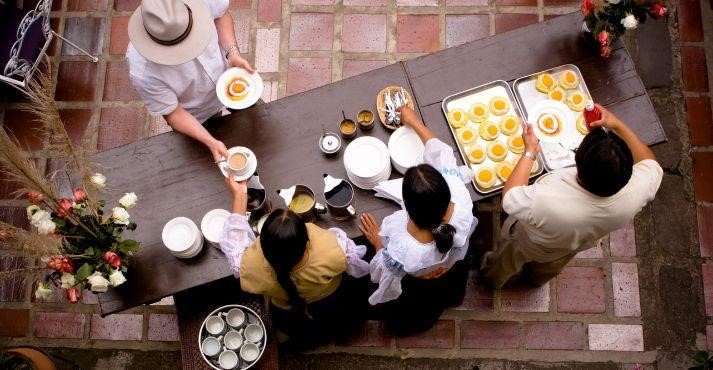
In Singapore’s hospitality world, where hotels, restaurants, cafes, and bars are everywhere, Food and Beverage (F&B) plays a huge role. Picture this: when you stay at a hotel or dine out, you want a comfy bed and tasty food and drinks, right? Well, that’s where F&B comes in!
Here’s something cool: tourists spend lots of money on food and drinks in Singapore about 30% of their total expenses! This helps the economy grow and brings in more visitors. Plus, F&B spots support local businesses and preserve our culture by serving traditional dishes.
F&B Operations and Management in Singapore
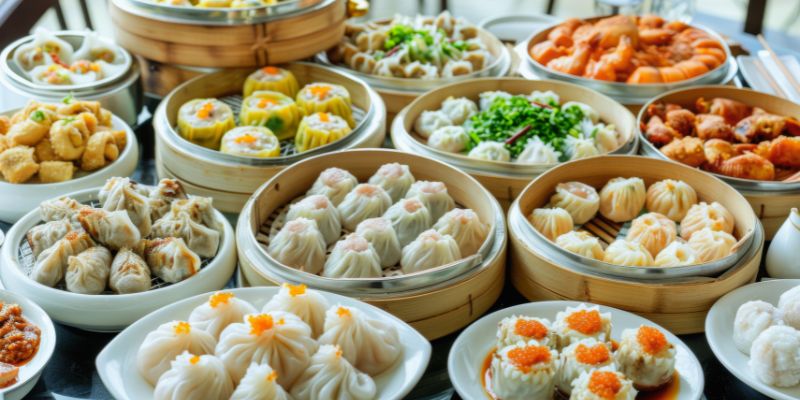
Running a food and beverage (F&B) business in Singapore involves several essential tasks to ensure everything runs smoothly. Here’s an overview to help you understand:
Menu Planning
- Menu planning is like creating a list of dishes and drinks that a restaurant or cafe will offer to customers.
- It involves choosing recipes, pricing items, and ensuring various options for different tastes.
Food Sourcing
- Food sourcing is about finding the best ingredients for cooking.
- It includes buying fresh produce from suppliers, checking for quality, and ensuring everything is safe to eat.
Kitchen Operations
- Kitchen operations are all the activities behind the scenes to prepare and cook food.
- Chefs and kitchen staff work together to follow recipes, cook food properly, and keep everything clean and organized.
Customer Service
- Customer service is how staff treat and interact with customers.
- Being friendly, helpful, and attentive is essential to ensure customers have a good experience.
Regulations and Standards
- In Singapore, there are rules and regulations that F&B businesses must follow to ensure food safety and hygiene.
- These include getting the proper licenses and permits, following food handling and storage guidelines, and keeping the premises clean.
Hygiene Standards
- Hygiene standards are essential to ensure the food served is safe.
- F&B businesses in Singapore must meet strict hygiene standards set by authorities to prevent foodborne illnesses and keep customers healthy.
Careers and Roles in the F&B Industry
The food and beverage industry is one of the world’s largest employers. From kitchen staff and baristas to executive chefs and F&B directors, the sector offers an exceptionally wide range of career paths.
Front-of-House vs. Back-of-House
F&B roles are typically divided into two areas:
Front-of-house (FOH) roles involve direct customer interaction. These include servers and waitstaff, bartenders and mixologists, hosts and reservations staff, sommeliers, and event coordinators. Front-of-house staff are the primary face of any F&B operation and play a critical role in shaping guest experience.
Back-of-house (BOH) roles operate behind the scenes to prepare and support service. These include head chefs, sous chefs, line cooks, pastry chefs, kitchen porters, and purchasing and inventory staff. BOH roles require precision, speed, and technical culinary skill.
F&B Management — Skills and Career Path
An F&B Manager is one of the most senior operational roles in a restaurant, hotel, or catering company. Key responsibilities include:
- Menu development and pricing strategy
- Staff hiring, training, and scheduling
- Inventory management and cost control (food cost percentage, beverage cost percentage)
- Health, safety, and regulatory compliance
- Guest satisfaction and service quality oversight
- Revenue planning and P&L management
Pursuing a career in F&B management typically involves a combination of hands-on operational experience and formal study in hospitality management, culinary arts, or business. Institutions such as EHL (École hôtelière de Lausanne) and Glion Institute of Higher Education offer recognised programmes in this field.
Sustainability and Ethical Practices
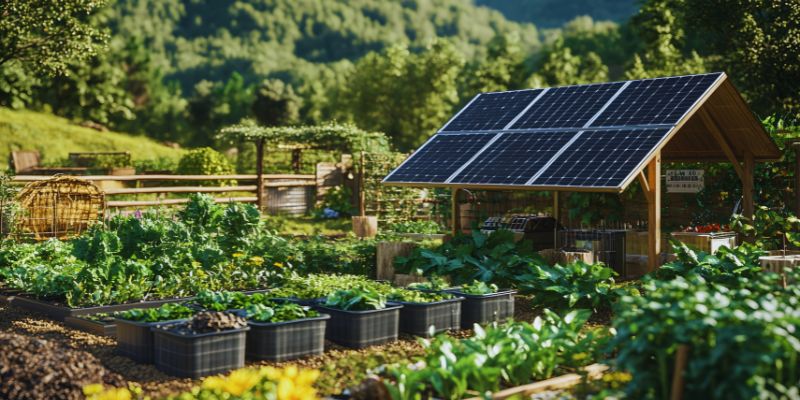
The F&B industry is changing, and more and more people are choosing to do things that are friendly to our planet. Imagine a restaurant that uses ingredients that are grown in ways that don’t harm the earth.
That’s what responsible sourcing is all about. It’s like ensuring that the things on your plate are also good for the planet. And that’s not all – many restaurants are also trying to use less plastic and be more eco-friendly. Ethical practices are also a big deal. This means treating everyone fairly, from the farmers who grow the food to the workers in the restaurants. It’s like making sure that everyone is happy and treated well.
Why does all of this matter? Well, there are many people who care about the environment and want to support businesses that do too. When you choose to eat at sustainable and ethical places, you’re making a difference.
AI and Technology Reshaping the F&B Industry
The food and beverage industry is undergoing a significant technological transformation, with artificial intelligence (AI) moving from a niche experiment to a core operational tool.
How AI Is Used in Food and Beverage Today
According to BCC Research, the global AI in food and beverage market was valued at approximately USD 10.8 billion in 2024, and projections suggest it will reach USD 67.73 billion by 2030. The pace of adoption is accelerating across every segment of the industry.
Key applications of AI in F&B today include:
Demand forecasting and inventory management — predictive analytics tools analyse sales data, seasonality, and local events to forecast ingredient demand, helping F&B businesses reduce waste and avoid stockouts.
Food safety and quality control — computer vision systems and machine learning models can detect product defects, contamination, and labelling errors on production lines faster and more accurately than human inspectors.
Personalised dining and recommendations — hotel and restaurant platforms are using AI to analyse guest preferences and dining history to offer personalised menu suggestions, special offers, and targeted upselling.
AI-assisted product development — major F&B brands are using AI to analyse consumer feedback, social media trends, and market data to develop new products faster. Nestlé, Coca-Cola, and others are actively deploying AI in their R&D pipelines.
Restaurant operations technology — AI-powered POS systems, kitchen display systems (KDS), and robotic food preparation equipment are improving kitchen efficiency and reducing reliance on manual labour.
Online ordering and delivery platforms — digital transformation through food delivery apps and cloud kitchens has created new revenue models and extended F&B businesses beyond their physical footprints.
A 2025 survey by Ingredient Communications found that 42% of UK and US consumers hold a positive view of AI in food and beverage production and design indicating consumer openness to technology-driven F&B innovation.
What This Means for F&B Businesses in Asia
In the Asia-Pacific region, where the F&B market is growing rapidly, AI and digital tools are becoming competitive necessities. Hotels and restaurants that adopt data-driven menu planning, dynamic pricing, and automated inventory systems are gaining measurable advantages in operational efficiency and guest satisfaction.
Events like Food & Hotel Asia (FHA), held biennially in Singapore, increasingly spotlight AI and robotics in dedicated showcase zones, reflecting how central technology has become to the future of the regional F&B industry.
Digitalization and Technology
Some apps allow you to order food online and have it delivered right to your door. It’s like having a restaurant come to you! And have you ever seen those cool machines that recommend what to order based on what you like? That’s AI – artificial intelligence – at work. It’s like having a super-smart helper guide you through the menu. But technology isn’t just for at-home dining.
When you go out to eat, you might find interactive menus on tablets that let you see pictures of the dishes and even customize your order. It’s like choosing exactly what you want with just a tap. And guess what? All these technological breakthroughs often make their debut at food service trade shows.
These events are like big parties for people in the food business. They show off the latest technologies, machines, and ideas that are changing how we serve, eat, and drink.
Global Influence on Local Palates

Imagine tasting a pizza topped with flavors from a faraway land. That’s what global influence on local palates means. Sometimes, foods from different countries become so popular that they mix with our own traditional dishes. It’s like having a little taste adventure right on our plates. Think about your favorite meal.
Now, imagine if someone added a twist from another country to make it even more exciting. That’s what’s happening in the F&B world. Chefs are taking familiar foods and giving them a global makeover.
It’s like combining the best of both worlds in a single bite! So, how does this happen? Well, just like people bring back souvenirs from their trips, chefs bring back new cooking ideas. And sometimes, these exciting flavors show up at food service trade shows, where everyone can get a taste of the delicious fusion!
Sustainability and the Future of F&B
Sustainability has moved from a niche value to a mainstream business imperative for F&B companies. Consumer demand for environmentally responsible practices is driving change across the entire value chain.
Key sustainability trends shaping the F&B industry include:
Sustainable sourcing — traceability of ingredients from farm to table, with growing demand for locally sourced, certified, and fair-trade products.
Food waste reduction — AI-powered inventory tools, portion control systems, and surplus food redistribution programmes are helping businesses cut the significant economic and environmental cost of food waste.
Plant-based alternatives — the rapid growth of plant-based food and drink products is reshaping menus and product development pipelines globally.
Sustainable packaging — food and beverage companies are transitioning to recyclable, compostable, and reduced-plastic packaging formats.
For F&B businesses in Asia, sustainability is also increasingly tied to regulatory compliance and export market access, as international buyers and retailers raise their environmental standards.
Frequently Asked Questions (FAQs)
What does F&B stand for?
F&B stands for Food and Beverage, referring to businesses involved in preparing, serving, and selling food and drinks.
What is the full form of F&B?
F&B stands for Food and Beverage. The ampersand (&) replaces “and,” and the abbreviation is standard across the global hospitality, hotel, restaurant, and catering industries. In some informal contexts, it is also written as FNB (Food ‘N’ Beverage).
What is QSR (Quick Service Restaurants)?
QSRs are fast-food restaurants where food is prepared, served, and consumed quickly. Examples include McDonald’s and Subway, focusing on convenience as the main factor.
What is FSR (Full Service Restaurants)?
FSRs are dining establishments where customers are seated and served by waitstaff. These restaurants offer a wide food and beverage menu and emphasize customer satisfaction and experience.
What is F&B meaning in a restaurant?
In a restaurant context, F&B refers to the full range of food and drink items that an establishment produces, prepares, and serves to customers, as well as the operational systems and staff that support this service. An F&B Manager in a restaurant oversees menus, costs, service quality, and staff.
Is F&B part of hospitality?
Yes, F&B (Food and Beverage) is significant to hospitality. It includes providing food and drink services in various settings, such as hotels, restaurants, and bars, ensuring guests have enjoyable dining experiences during their stay or visit.
What are examples of F&B services?
Examples include restaurants, hotel dining, catering, cafes, bars, and food delivery services.
What is the F&B business?
An F&B business is any business that earns revenue by selling food and/or beverages, such as restaurants, cafes, hotels, catering companies, and food delivery services.
What Is F&B in a Hotel?
F&B is important because it directly impacts guest satisfaction, hotel reputation, and revenue generation. High-quality food and service can significantly enhance a hotel’s overall performance.
What is the difference between F&B and FNB?
There is no meaningful difference. FNB is simply an informal spelling variant of F&B both stand for Food and Beverage and refer to the same industry, operations, and job roles. F&B is the more widely used and professionally recognised form.
What does an F&B Manager do?
An F&B Manager is responsible for overseeing all food and beverage operations within a hotel, restaurant, or catering company. This includes menu planning, staff management, cost control, supplier relationships, food safety compliance, and ensuring consistent service quality. It is one of the most senior operational roles in the hospitality industry.
How big is the global food and beverage industry?
The global foodservice market was valued at approximately USD 2.52 trillion in 2021 and is projected to grow to USD 5.5 trillion by 2028 (GlobalData, 2025). The broader F&B market, including retail, manufacturing, and production, is significantly larger. In the Asia-Pacific region alone, the F&B market is forecast to surpass USD 3.3 trillion by 2034.
Is F&B a good career?
Yes, the F&B industry offers a wide range of rewarding career paths, from front-of-house roles like serving, bartending, and hosting, to back-of-house positions in culinary arts, and management roles in restaurant and hotel operations. The industry is large, global, and continuously growing, offering good career mobility for those with the right combination of passion and skills.
Conclusion
Food brings people together from all over the world. It’s a way to share stories, traditions, and cultures. When we sit down to enjoy a meal, we’re connecting with each other in a special way.
And don’t forget about how F&B boosts economies too! Restaurants, cafes, food trucks – they all create jobs and opportunities.
So, the next time you munch on something delicious, remember that you’re also part of this big, flavorful world that’s always changing and evolving. Whether it’s trying out innovative dishes, exploring new trends, or simply enjoying your favorite meal, the F&B universe is full of surprises waiting to be savored.