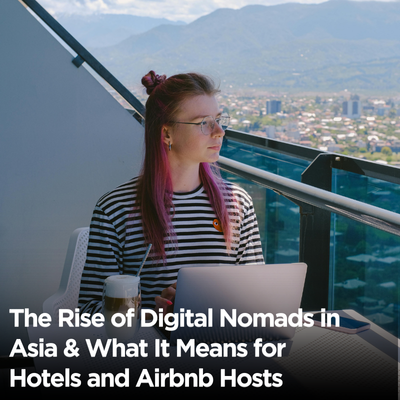
Can you imagine working from a beach in Bali, a café in Chiang Mai, or a coworking space in Tokyo? Not long ago, this sounded like a gap-year dream, reserved for backpackers and bloggers.
Today, it’s a real way of life for millions.
Asia is fast becoming a magnet for digital nomads, remote workers, and entrepreneurs who travel while they work. The shift makes sense: the pandemic made remote work the norm, many companies kept flexible policies, and surveys show the trend is sticking.
At the same time, governments across Asia have introduced long‑stay digital‑nomad visas; 60+ economies worldwide offer them to capture this mobile talent.
This shift is not merely about travellers; it’s fundamentally changing how the hospitality industry operates. These work‑from‑anywhere professionals aren’t booking short vacations; they’re securing a functional home office.
As a result, hotels, boutique properties, and Airbnb hosts must rethink design, pricing, marketing, and guest experience.
In this guide, you’ll learn:
- Why Asia attracts digital nomads and remote workers
- How long these long‑stay travellers typically remain, and what they value
- How hotels and Airbnb hosts compare when serving this market
- Strategies to capture the growing demand and redefine guest experience in hotels
Let’s explore how this trend is reshaping hospitality across Asia and how your property can capitalize on it.
What’s Driving the Rise of Digital Nomads in Asia?

Asia’s rise as a digital nomad hub is part policy shift, part lifestyle economics, and part infrastructure catch-up.
For example, Thailand expanded long-stay options and introduced a multi-year remote-worker visa (with longer per-visit stays). These policy moves, along with a growing global pool of remote workers, are driving longer stays across Asia.
Cost of Living Arbitrage
One of the biggest draws of Asia is the ability to enjoy a Western‑level salary while living at a much lower cost of living.
This means that the same paycheck typically buys a bigger, nicer apartment and a higher standard of living here than in many US or Western European cities.
To put cost-of-living arbitrage into context, Bali is a common benchmark for digital nomads in Asia. A solo remote worker can live comfortably on an estimated USD 1,100–1,800 per month, depending on lifestyle choices.
For example, a typical monthly breakdown looks like this:
Accommodation: USD 500–1,000
Private apartment, simple villa, modern co-living space, or a shared mid-range villa (often including electricity and internet).
Dining Out (local + Western): USD 300–500
A mix of local warungs and international cafés or restaurants.
Transport: USD 60–100
Scooter rental, fuel, or app-based transport.
Gym, Yoga, and Fitness: USD 100–200
Access to gyms, yoga studios, and wellness classes.
Shopping, Social Life, and Weekend Trips: USD 300+
Covering leisure, short getaways, and everyday spending.
These numbers highlight an enormous value‑for‑money proposition compared with European or U.S. cities, where monthly rents easily exceed US$1,500 and remote workers still struggle to find reliable fibre connections.
That gap (cost of living Asia) is a primary draw: affordable cities for digital nomads offer attractive monthly rentals Asia-wide, from shared apartments and long-stay Airbnb units to serviced apartments with fast Wi-Fi.
Lifestyle, Culture, and Infrastructure
Affordability alone isn’t enough; Asia’s lifestyle and infrastructure seal the deal. It is less “rough travel” and more plug-and-play for people who need to work reliably while exploring.
What nomads find attractive:
- Great food and local culture that make long stays enjoyable
- Perceived safety and wellness options (yoga, spas, outdoors)
- Warm climate in many regions (seasonal exceptions apply)
- Ready-made work environments with reliable internet
Such infrastructure reduces friction for long‑stay travellers, allowing them to focus on work rather than logistics.
Visa Policies and Long-Stay Flexibility
Visa flexibility is another catalyst. Asia’s governments have introduced digital‑nomad visas to attract high‑spending remote workers.
For example, Malaysia’s DE Rantau Nomad Pass grants an initial stay of 3–12 months and is extendable for another year. Income requirements are modest, about US$24,000 per year, and applicants enjoy perks such as discounted coworking hubs and family‑friendly policies.
Similarly, Japan followed with a six‑month digital‑nomad visa that requires an annual income of ¥10 million or more.
Given this, visa competition is heating up, signalling that digital nomads are not a passing fad but a demographic governments want to attract for the long term.
Best Cities for Digital Nomads in Asia
Asia is home to some of the world’s most established digital nomad hubs. These cities combine fast internet, affordable living, visa accessibility, and strong coworking communities.
🇮🇩 Bali (Canggu & Ubud), Indonesia
Why nomads choose it:
-
Large remote worker community
-
Affordable villas & coliving
-
200+ Mbps fiber in top areas
-
Strong wellness culture
Best for: Entrepreneurs, freelancers, creators
Watch out for: Rising rents, traffic congestion
🇹🇭 Chiang Mai, Thailand
Why nomads choose it:
-
One of Asia’s lowest cost bases
-
Mature coworking ecosystem
-
Calm lifestyle, strong café culture
Best for: First-time digital nomads
Watch out for: Burning season (air quality)
🇻🇳 Da Nang, Vietnam
Why nomads choose it:
-
Beach + city balance
-
Lower cost than Bangkok or Bali
-
Growing expat community
Best for: Slomads and couples
Watch out for: Language barriers outside expat zones
🇯🇵 Tokyo, Japan
Why nomads choose it:
-
Ultra-reliable infrastructure
-
Excellent public transport
-
Premium lifestyle
Best for: Corporate remote employees
Watch out for: High rent & income visa requirements
🇲🇾 Kuala Lumpur, Malaysia
Why nomads choose it:
-
Strong visa program (DE Rantau)
-
English widely spoken
-
Modern serviced apartments
Best for: Professionals seeking stability
Watch out for: Car-centric areas outside the city core
Digital Nomad City Score Criteria
To rank destinations objectively, evaluate:
-
Internet speed (download & upload Mbps)
-
Cost of living (monthly baseline USD)
-
Visa flexibility (months allowed)
-
Safety index
-
Coworking density
-
Community size
-
Air quality
Adding a data table here increases featured-snippet eligibility.
Comprehensive Digital Nomad Visa Guide (Asia)
Visa flexibility is one of the strongest ranking search intents for remote workers.
Thailand Digital Nomad Visa
Thailand’s Destination Thailand Visa (DTV) allows multi-year access with extended per-entry stays.
Key facts:
-
Long validity
-
Income threshold required
-
Remote work allowed for foreign employers
Malaysia DE Rantau Nomad Pass
Malaysia offers one of Asia’s most accessible digital nomad visas.
-
3–12 month stay
-
Extendable
-
~US$24,000 annual income requirement
-
Family-friendly policy
Best for mid-income remote professionals.
Japan Digital Nomad Visa
Japan introduced a 6-month digital nomad visa.
Requirements:
-
Approx. ¥10M annual income
-
Private health insurance
-
No local employment allowed
Ideal for high earners seeking infrastructure reliability.
Vietnam & Philippines
While not fully structured nomad visas yet, both offer relatively flexible tourist extensions that remote workers often utilize.
Always verify the latest immigration policies.
Who Are Today’s Digital Nomads? (Not Backpackers)

Today’s digital nomads are typically professionals who travel with a stable income and clear work expectations, not backpackers hunting the cheapest hostel.
They treat each destination like a temporary home and expect reliable Wi-Fi, a quiet place to work, and conveniences that support a professional routine.
The New Nomad Profile
According to the Global Digital Nomad Report 2025, 79% of digital nomads earn more than US$50,000 per year, with an average salary of about US$124,416.
Only 6 % make under US$25,000. Nearly half are in their 30s, 47% are between 30 and 39, and 90% have completed higher education.
These location‑independent professionals choose Asia for quality of life rather than to pinch pennies.
Many are full‑time employees of Western companies who simply work remotely; 51% hold traditional full‑time positions, while 18% freelance and 14% are startup founders. They expect professional service, fast internet, and transparent pricing.
Common profiles you’ll meet include:
- Remote tech workers (developers, product managers, SREs)
- Freelancers and consultants (marketing, design, copywriting)
- Startup founders and small-team founders working across time zones
- Location-independent executives or corporate remote hires
Unlike backpackers, they travel with laptops and monitors rather than just backpacks; some bring partners or families. They seek good coffee, ergonomic workspaces, and a community of peers, not just cheap dorms.
How Long Do Digital Nomads Stay?
The 2026 State of Digital Nomads shows that in a sample of over 395,000 stays, 47% of nomads spend less than seven days in one city, 33% stay between 7 and 30 days, 14% stay 30–90 days, and 6% remain for more than 90 days.
However, the average stay in a city is 63 days, roughly two months. When looking at countries rather than cities, stays are longer: 60% of nomads stay in a country for 7–30 days, 27% for 30–90 days, and 13% for over 90 days, yielding an average stay of 122 days (4 months).
These statistics reveal the rise of “slomads,” digital nomads who live for weeks or months in one place, often returning seasonally.
Longer stays translate into higher lifetime value for hosts and significantly impact the average length of stay metric. Someone booking for a month or two will spend more on accommodation and local services than a weekend tourist.
For property owners, this means focusing on extended‑stay packages and building relationships can pay off handsomely.
What Digital Nomads Actually Look for in Accommodation
Digital nomads choose places that feel like functional home offices, not just rooms. Their requirements fall into two categories: non‑negotiable essentials and value‑adding comforts.
Non-Negotiable Essentials
These aren’t perks; they’re table stakes:
- Fast, Reliable Wi‑Fi: Fiber‑optic speeds (>200 Mbps) are now expected
- Dedicated Work Area: An ergonomic chair, a proper desk, decent lighting, and enough space to set up a laptop and monitor.
- Quiet Environment: Soundproofing or quiet hours to prevent clients from hearing roosters or motorbikes during calls.
- Reliable Electricity and Backup: Frequent power cuts can ruin meetings. Backup generators or uninterruptible power supplies are highly valued.
Without these basics, nomads simply won’t book, or they’ll leave scathing reviews.
Value-Adding Comforts That Drive Longer Stays
Once the essentials are met, small touches encourage longer stays and justify higher rates:
- Weekly or Bi‑weekly cleaning: Extended‑stay guests appreciate professional housekeeping comparable to hotel standards.
- Laundry Access: In‑unit washing machines or on‑site laundry services allow nomads to pack light and stay longer without hassle.
- Kitchen or Kitchenette: Even a simple kitchenette enables healthier cooking, reduces eating‑out costs, and increases stickiness.
- Community Spaces: Rooftop gardens, lounges, or coworking lounges encourage social interaction, reducing loneliness and fostering peer networks.
If your property is missing desks, high‑speed internet, or comfortable chairs, nomads will look elsewhere.
Hotels vs Airbnb for Digital Nomads in Asia
Many hosts wonder whether digital nomads prefer hotels or Airbnbs. The answer depends on individual needs, but clear patterns are emerging.
Where Hotels Win
Hotels excel in consistency and service:
- Professional Housekeeping and Maintenance: Daily or weekly cleaning, fresh linens, and immediate repairs are standard. Nomads appreciate the hygiene and convenience.
- Front‑Desk Support: 24/7 concierge services handle package deliveries, emergency calls, and local recommendations, which are valuable for travellers working odd hours.
- Amenities like Gyms, Cafés, and Lounges: Access to fitness centres, pools, spas, and on‑site restaurants provides lifestyle perks without leaving the property. Many hotels also partner with coworking brands or convert unused conference rooms into coworking spaces.
- Consistent Services: Business‑class hotels and serviced apartments specialise in extended stays, offering kitchenettes, laundry rooms, and meeting rooms.
In major Asian cities, extended‑stay hotels boast occupancy rates surpassing those of traditional hotels because they cater to long‑stay corporate travellers and digital nomads.
Where Airbnb Hosts Win
Airbnb and serviced apartments offer different advantages:
- More Space and Privacy: Whole apartments with separate bedrooms and living areas enable nomads to live and work comfortably with partners or families.
- Kitchen Access: Having a full kitchen and dining area encourages healthier habits and saves money.
- Residential Feel: Staying in a local neighbourhood rather than a tourist district creates an authentic “live like a local” experience.
- Flexible Monthly Pricing: Many hosts offer discounted long‑stay rates or negotiate directly.
- Personalised Touches: Host recommendations, bikes or scooters, and local welcome baskets build loyalty.
The Convergence: Hotels Acting Like Airbnbs (and Vice Versa)

As digital nomad demand grows, the line between hotels and Airbnbs is blurring.
Hotels are adding work‑friendly desks, converting rooms into micro‑apartments, and offering long‑stay pricing packages. Many chains now promote “workation” packages with coworking memberships and free coffee.
Meanwhile, Airbnb hosts are adopting hotel‑like standards, professional cleaning, digital check‑in, and even concierge services.
This convergence signals that the future of hospitality is hybrid: a place that feels like home with the service of a hotel.
Accommodation Types for Digital Nomads in Asia
Digital nomads compare housing based on workspace quality, flexibility, and lifestyle alignment.
1. Extended-Stay Hotels
Best for:
-
Corporate remote employees
-
Those needing consistent service
Pros:
-
Housekeeping
-
On-site gym & amenities
-
Reliable utilities
Cons:
-
Higher cost than apartments
2. Airbnb & Serviced Apartments
Best for:
-
Couples
-
Families
-
Slomads
Pros:
-
Kitchen access
-
Residential feel
-
Monthly discounts
Cons:
-
Workspace quality varies
3. Coliving Spaces
Coliving blends hotel convenience with community living.
Features:
-
Shared kitchens
-
Organized events
-
Built-in networking
Highly popular in Bali and Chiang Mai.
Checklist Before Booking
-
Wi-Fi speed proof (>200 Mbps ideal)
-
Dedicated desk + ergonomic chair
-
Power backup
-
Quiet hours policy
-
Monthly discount availability
What This Means for Hotels: How to Capture the Nomad Market

To attract digital nomads, hotels must undergo a digital transformation, combining technology, service innovation, and flexible pricing.
Here are practical recommendations:
1. Create Long‑stay Packages
Offer discounted monthly rates that include weekly cleaning, laundry access, and workspace amenities. Encourage guests to book directly on your website as part of a structured hotel marketing plan to avoid OTA fees; highlight perks and guarantee the best price to drive direct hotel bookings.
2. Redesign Rooms For Work‑first Layouts
Dedicate a portion of inventory to “work‑ready” rooms with ergonomic chairs, adjustable desks, multiple power outlets, and strong Wi‑Fi. Market these as intelligent hotels or “work suites.”
3. Transparent Wi‑Fi Marketing
Advertise actual upload and download speeds in listings. Provide speed tests on arrival. With average speeds of 200+ Mbps in top Asian hubs, transparency builds trust.
4. Promote Coworking Partnerships
Turn under‑utilised meeting rooms into coworking spaces or partner with local coworking operators. Offer bundled packages with memberships.
5. Invest in Automation and Contactless Technology
Self‑check‑in kiosks, mobile keys, and chatbots to reduce reception time, freeing staff to focus on personalized service.
6. Embrace Data Analytics
Use business‑intelligence tools to forecast occupancy, adjust rates through dynamic hotel pricing, and personalise guest experiences. Hyper‑personalised marketing, powered by AI, tailors services based on guest preferences.
7. Prioritise Sustainability and Wellbeing
Many nomads choose properties aligned with eco-friendly practices and broader sustainability in the hospitality industry. Add filtered water stations, energy‑efficient devices, and partnerships with local wellness providers.
Collectively, these actions redefine guest experience in hotels and position your property as a pioneer in Asia’s booming digital nomad market.
What This Means for Airbnb Hosts in Asia
Independent hosts and small boutique hotel owners can also capture this segment by making simple, high‑impact improvements:
1. Invest in Workspace Setups
Provide a sturdy desk, ergonomic chair, task lighting, and an extra monitor or monitor stand. Add multiple sockets and extension cables.
2. Offer Discounted Monthly Rates
Publish a “28‑day stay” rate and highlight savings compared with nightly pricing. Remember, flexibility is key; allow date changes and longer extensions without penalty.
3. Highlight Internet Speed and Reliability
Include screenshots of speed tests and information about backup generators or power banks.
4. Implement Self-check-in and Flexible Cleaning Schedules
Smart locks and keypad codes cater to late‑night arrivals. Let guests choose the cleaning frequency; some prefer weekly, while others prefer bi‑weekly to minimise disruption.
5. Encourage Longer Stays through Messaging and Photos
Use your listing description to speak directly to remote workers. Show images of the workspace, kitchen, nearby cafés, and coworking hubs.
6. Provide Local Community Recommendations
Create digital guidebooks with coworking spaces, gyms, cafés, and events. Nomads appreciate insider knowledge and may extend their stay if they feel integrated.
By focusing on these upgrades, Airbnb hosts can compete effectively with larger hotels while maintaining a personalized, residential feel.
SEO & Content Strategy: How to Attract Digital Nomads Organically
Search engines and AI‑powered summaries favour well‑structured content and varied phrasing. To ensure your property or blog posts rank for digital‑nomad queries:
1. Lexical & Intent Optimization
Digital nomads search with many terms, such as:
- Remote workers traveling in Asia
- Work‑from‑anywhere professionals
- Digital Nomad Tourism in Asia
- Remote workers in Asia
- Digital Nomad Market Asia
Mix these lexical variations naturally across headings and paragraphs to capture different search intents.
Consider adding an FAQ section answering questions like:
- How long can remote workers stay in Thailand
- What is the cost of living for digital nomads in Kuala Lumpur?
These are the questions that travellers actually type into search engines.
2. Entity & Attribute Mapping
Structure your content so that entities (digital nomads, hotels, Airbnbs) clearly connect to their attributes. For example:
| Entity | Key Attributes |
| Digital nomads | Stay duration (average city stay of 63 days), income (>US$50k), occupations (tech, marketing), needs (Wi‑Fi, workspace, quiet, power) |
| Hotels | Amenities (housekeeping, front‑desk support, gyms), service consistency, long‑stay packages, coworking partnerships |
| Airbnb/Serviced apartments | Residential feel, kitchen access, privacy, flexible pricing, personalized recommendations |
What’s Next: The Future of Digital Nomads in Asia
The momentum shows no sign of slowing. Several forces will drive continued growth:
Remote‑First Companies and Flexible Work Policies
Research shows that 68% of APAC firms already have more than 70% of their staff working remotely, and 78% plan to fill over 60% of new roles with remote workers.
As companies compete for talent, flexible work becomes non‑negotiable, turning millions of employees into potential digital nomads.
Visa Competition
Countries are vying for globally mobile earners. For example, Thailand’s 5‑year DTV exemplifies a regional arms race.
Expect more nations to launch programmes with lower income thresholds and clear tax rules to capture this market.
Younger Professionals Choosing Mobility Over Ownership
Millennials and Gen Z value experiences and freedom more than property ownership.
With nearly half of digital nomads in their 30s and remote work adoption rising, Asia will see increasing streams of long‑stay travellers.
Growth of Ecosystem Services
Coworking markets are expanding at mid‑teens compound annual growth rates.
Co‑living spaces, eSIM providers, cross‑border fintech, and relocation services are professionalizing, making it easier to live and work across borders.
Local Economic Impacts
Digital nomads bring foreign income and skills. However, they also contribute to rising rents and gentrification, as seen in Bali, where rents skyrocketed, and authorities reported a 40% increase in nomads in 2024 compared with 2023.
Thus, policymakers must balance attracting nomads with protecting local communities.
The impact of digital nomads on hospitality is clear: Early adopters who adapt their product and marketing to this segment will capture a durable source of revenue and stay ahead of competitors.
Frequently Asked Questions About Digital Nomads in Asia
1. Which Asian country is best for digital nomads?
The best country for digital nomads in Asia depends on budget, visa flexibility, and lifestyle preferences.
-
Thailand is popular for affordability and community.
-
Malaysia offers one of the most structured digital nomad visas.
-
Japan appeals to high-income professionals seeking premium infrastructure.
-
Indonesia (Bali) attracts entrepreneurs and creatives.
For first-time nomads, Thailand and Bali are often the easiest starting points.
2. How much does it cost to live in Asia as a digital nomad?
Monthly living costs vary by city and lifestyle. On average:
-
Budget hubs like Chiang Mai: USD 900–1,500/month
-
Mid-range hubs like Bali or Da Nang: USD 1,100–1,800/month
-
Premium cities like Tokyo: USD 2,500–4,000/month
Costs typically include accommodation, food, transport, coworking, fitness, and leisure. Asia offers strong cost-of-living arbitrage compared to most U.S. or Western European cities.
3. Do digital nomads need a special visa in Asia?
It depends on the country and length of stay.
Several Asian countries now offer dedicated digital nomad visas, including:
-
Malaysia (DE Rantau Nomad Pass)
-
Thailand (Destination Thailand Visa)
-
Japan (6-month remote worker visa)
Some nomads use tourist visas with extensions, but this may not be legally appropriate for long-term remote work. Always check official immigration policies.
4. How reliable is the internet infrastructure in Asia for remote work?
Internet infrastructure in major digital nomad hubs is generally excellent.
Cities like:
-
Tokyo
-
Kuala Lumpur
-
Chiang Mai
commonly offer fiber speeds exceeding 200 Mbps.
However, reliability may vary by neighborhood. Remote workers should confirm actual Wi-Fi speeds and check for power backup before booking accommodation.
5. Are hotels or Airbnb better for digital nomads in Asia?
Both options serve different needs.
Hotels are better for:
-
Professional housekeeping
-
On-site amenities (gyms, cafés)
-
24/7 front-desk support
Airbnb and serviced apartments are better for:
-
Kitchen access
-
Larger living space
-
Monthly rental discounts
Many digital nomads choose hybrid solutions, such as serviced apartments that combine hotel services with residential comfort.
6. How long do digital nomads usually stay in one place in Asia?
Digital nomads are increasingly becoming “slomads.”
Average stays:
-
Around 1–2 months in a city
-
3–4 months in a country
Longer stays are more common in established hubs like Bali and Chiang Mai, where strong communities encourage seasonal returns.
7. Is Asia safe for remote workers and long-stay travelers?
Most major digital nomad hubs in Asia are considered relatively safe, especially compared to many large Western cities.
Cities such as:
-
Singapore
-
Kuala Lumpur
-
Tokyo
As with any destination, safety varies by neighborhood. Digital nomads should research local areas, secure appropriate health insurance, and follow standard travel precautions.
Conclusion: Adapt Now or Miss the Opportunity
The rise of digital nomads is not a passing trend; it’s a structural shift in how people work and travel.
Asia’s affordability, lifestyle, infrastructure, and visa openness have made it the epicentre of this movement. Remote work adoption is surging: 68% of APAC firms already employ mostly remote staff, and digital nomad visas are proliferating.
Modern nomads are mid‑career professionals earning good incomes, staying for weeks or months, and expecting a functional home office with community.
For hotels, capturing this demand means embracing hotel digital transformation, from long‑stay packages and work‑friendly rooms to AI‑driven personalization and direct hotel bookings.
Whereas Airbnb hosts can compete by offering solid workspace setups, flexible monthly rates, reliable connectivity, and self‑check‑in.
Given this, those who act now will benefit from higher occupancy rates, longer average stays, and word‑of‑mouth within a growing global community. Adapt your property to meet their needs, and you’ll turn a transient trend into a lasting competitive advantage.