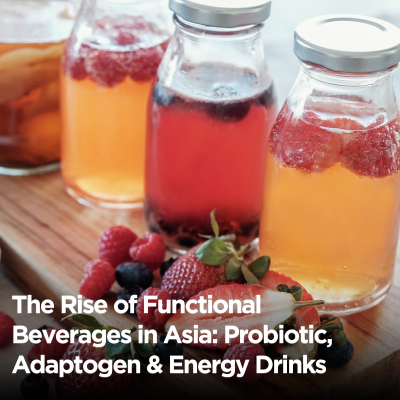
Asia’s drinks aisle is changing fast. Sugary sodas are losing shelf space to bottles and cans that promise something more – better digestion, calmer minds, sharper focus.
This shift is what the industry calls functional beverage trends, and nowhere is the movement stronger than in Asia.
Numbers show that the Asia-Pacific functional beverages market was worth USD 107.37 billion in 2025 and is expected to climb to USD 116.19 billion in 2026, on its way to USD 172.49 billion by 2031.
Consumers across the region are rethinking what they drink every day. Instead of reaching for high-sugar carbonated drinks, they’re choosing beverages built around real health outcomes.
Three categories are leading this change:
- Probiotic drinks – built for gut health
- Adaptogen beverages – built for stress relief and calm
- Functional energy drinks – built for focus and clean energy
Asia is one of the most dynamic markets for this shift because of rising health awareness, fast-aging populations, packed urban lifestyles, and a wellness-obsessed younger generation that treats what it drinks as part of its identity.
What Are Functional Beverages?
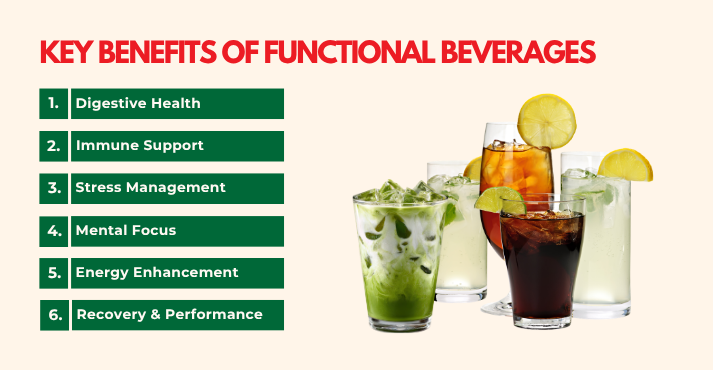
Functional beverages are drinks designed to do more than quench thirst. They’re formulated with active ingredients, probiotics, adaptogens, vitamins, aminoacids, that target specific health outcomes.
Common benefits include:
- Digestive health
- Immune support
- Stress management
- Mental focus
- Energy enhancement
- Recovery and performance
| Functional Beverage Type | Primary Benefit | Common Ingredients |
| Probiotic Drinks | Gut Health | Lactobacillus, Bifidobacterium |
| Adaptogen Drinks | Stress Support | Ashwagandha, Reishi, Ginseng |
| Energy Drinks | Energy & Focus | Caffeine, Guarana, L-Theanine |
| Functional Water | Hydration & Wellness | Electrolytes, Vitamins |
| Kombucha | Digestion & Immunity | Fermented Tea Cultures |
In many ways, functional beverages sit in the middle ground between an everyday soft drink and a nutritional supplement.
They’re convenient and enjoyable like a soda, but they’re formulated with a therapeutic purpose in mind, which is exactly why the category is becoming a favorite for gut health beverages and everyday wellness routines alike.
Why Functional Beverages Are Growing Rapidly Across Asia

Functional beverages have evolved from a niche wellness category into a mainstream segment driven by changing consumer expectations. Today’s consumers want beverages that deliver multiple health benefits while fitting seamlessly into their daily routines.
This shift is encouraging manufacturers to develop products that combine functionality with great taste, clean-label ingredients, and convenient ready-to-drink formats.
Rising Health Consciousness
Preventive healthcare is now a mindset, not just a trend. Consumers are reading ingredient labels more carefully than ever and gravitating toward natural energy drinks and clean-label products. Interest in nutrition science and gut health has moved from niche wellness circles into mainstream shopping habits.
Millennials and Gen Z Are Reshaping Beverage Consumption
Younger consumers are actively replacing sugary sodas with healthier alternatives. Social media, fitness culture, and biohacking trends have made wellness aspirational. For this generation, a drink isn’t just refreshment – it’s a small daily investment in mental performance and long-term health.
Urbanization and Fast-Paced Lifestyles
Busy professionals in cities like Singapore, Shanghai, and Seoul want convenient nutrition they can grab on the go. This urgency has fueled demand for functional coffees, adaptogen beverages, enhanced waters, and quick wellness shots that fit into a packed schedule.
Aging Populations and Preventive Health
Japan, South Korea, Singapore, and China all have rapidly aging populations, and older consumers are actively seeking beverages that support digestion, immunity, and cognitive health.
Data shows that by 2050, 25.9% of the total population in Asia is projected to be 60 years or over, a demographic shift that’s quietly becoming one of the strongest long-term demand drivers for wellness beverage trends in the region.
Probiotic Drinks Leading the Functional Beverage Revolution
Gut health has become the anchor of modern wellness thinking. Consumers now understand that digestive wellness connects directly to immune strength and even mood, thanks to growing public awareness of the gut-brain connection.
Most Popular Probiotic Beverage Categories in Asia
Manufacturers are introducing probiotic ingredients across a variety of beverage formats to meet different consumer preferences and consumption occasions.
The region’s most popular categories include:
- Cultured Dairy Drinks: Brands like Yakult and Vitagen have built decades of consumer trust, especially in Japan and Southeast Asia.
- Drinking Yogurts: A daily staple across much of Asia, blending taste with digestive benefits.
- Kombucha: Fermented tea is gaining fast traction among younger, wellness-focused consumers.
- Probiotic Functional Waters: A newer, lighter alternative for consumers who want gut support without dairy.
- Fermented Traditional Beverages: Local fermented drinks are being reintroduced with modern branding and packaging.
Leading Asian Markets for Probiotic Drinks
Several markets are driving probiotic beverage innovation in Asia, each shaped by distinct consumer behaviors, health trends, and product preferences.
Key markets include:
- Japan, with its long history of probiotic consumption
- South Korea, a leader in functional food innovation
- China, where premium probiotic beverages are gaining momentum
- Southeast Asia, supported by rising health awareness and middle-class spending
Emerging Opportunities in Gut Health Beverages
The future of probiotic beverages is expanding beyond traditional formulations as manufacturers explore next-generation functional drink ingredients and personalized health solutions.
Key areas of opportunity include:
- Personalized nutrition
- Synbiotic beverages combining probiotics and prebiotics
- Postbiotic ingredients
- Plant-based probiotic drinks
Adaptogen Beverages and the Rise of Stress Management Drinks
As mental well-being becomes a greater consumer priority, adaptogen beverages are emerging as one of the fastest-growing segments within the functional beverage market.
What Are Adaptogens?
Adaptogens are natural herbs, roots, and mushrooms believed to help the body adapt to physical, mental, and environmental stress while supporting overall balance.
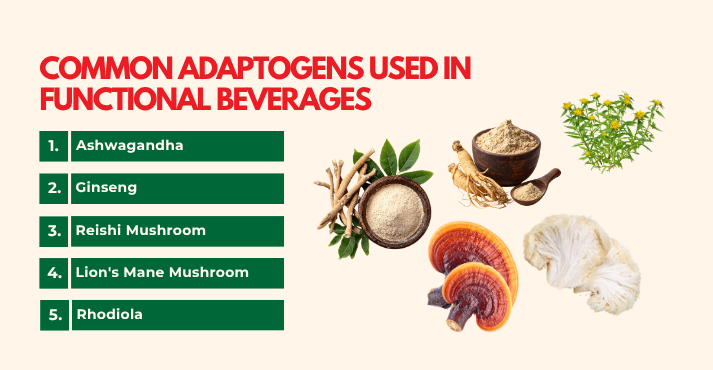
Common adaptogens used in functional beverages include:
- Ashwagandha
- Ginseng
- Reishi mushroom
- Lion’s Mane mushroom
- Rhodiola
Why Adaptogens Are Trending in Asia
Several lifestyle and health trends are driving demand for adaptogen-infused beverages across Asia, including:
- Rising workplace stress and demanding work schedules
- Greater awareness of mental wellness and emotional health
- Increasing sleep challenges linked to modern lifestyles
- Growing concerns about burnout and daily fatigue
These factors are encouraging consumers to seek convenient beverages that support stress management and cognitive well-being throughout the day.
Popular Adaptogenic Ingredients in Asian Beverage Innovation
| Ingredient | Perceived Benefit | Common Beverage Applications |
| Ginseng | Energy & Vitality | Functional teas |
| Reishi | Stress Support | Wellness drinks |
| Lion’s Mane | Cognitive Focus | Nootropic beverages |
| Ashwagandha | Relaxation | Adaptogen shots |
| L-Theanine | Calm Focus | Functional energy drinks |
How Traditional Asian Wellness Practices Influence Modern Beverage Innovation
Many of today’s adaptogen beverages draw inspiration from centuries-old wellness systems while using modern formulations and convenient ready-to-drink formats.
Key influences include:
- Traditional Chinese Medicine and its use of medicinal herbs and mushrooms
- Ayurveda and its emphasis on holistic balance through botanicals
- Regional herbal wellness traditions across Asia
These practices continue to shape ingredient selection, allowing beverage brands to commercialize trusted traditional remedies in products that appeal to today’s health-conscious consumers.
Energy Drinks Are Evolving Beyond Caffeine
The energy drink category is shedding its old image of sugar-heavy, artificial formulas and moving toward genuine functional wellness products.
The New Generation of Functional Energy Drinks
Modern energy drinks are being reformulated to deliver sustained performance without the crash associated with traditional products. Key trends shaping this evolution include:
- Natural caffeine sources such as tea and plant extracts
- Clean-label formulations with minimal artificial additives
- Reduced sugar or sugar-free formulations
- Increased use of plant-based functional ingredients
Ingredients Powering Modern Energy Drinks
A wide range of natural and functional ingredients are being used to enhance energy, focus, and endurance in next-generation beverages. Common examples include:
- Guarana
- Green tea extract
- Yerba mate
- L-theanine
- B vitamins
- Electrolytes
- Adaptogens
Focus, Productivity and Cognitive Performance Beverages
Consumer demand is expanding beyond physical energy toward mental performance and cognitive enhancement.
This is driving growth in:
- Nootropic beverages designed to support brain function
- Focus drinks that improve attention and concentration
- Productivity-enhancing formulations for work and study routines
- Hybrid products combining energy support with cognitive performance benefits
How Functional Energy Drinks Appeal to Younger Consumers
Younger demographics are a key driver of innovation in the functional energy drink space, with products increasingly aligned to modern lifestyles and performance needs.
Strong demand is being fueled by:
- Gaming culture and long-duration screen use
- Remote work and digital productivity demands
- Fitness and active lifestyle trends
- Growing interest in mental performance and cognitive optimization
Key Functional Beverage Trends Shaping Asia in 2026 and Beyond

The functional beverage market in Asia is entering a more mature and innovation-driven phase, shaped by evolving consumer expectations and stronger regulatory attention.
These trends are pushing manufacturers to rethink formulation strategies while expanding into more premium and science-backed beverage solutions.
Clean Label Formulations
Clean label demand is becoming a core expectation rather than a niche preference in Asia’s functional beverage market. Consumers are increasingly scrutinizing ingredient lists and preferring products that feel natural, simple, and easy to understand.
This shift is encouraging brands to reduce artificial additives and focus on ingredient transparency across all product categories.
- Natural ingredients sourced from recognizable food and plant origins
- Greater transparency in labeling and marketing claims
- Reduction of artificial flavors, colors, and preservatives
Low Sugar and Sugar-Free Innovation
The push toward low sugar and sugar-free beverages is accelerating due to both health awareness and tightening regulatory frameworks across multiple Asian markets.
Consumers are actively seeking healthier alternatives without sacrificing taste, prompting manufacturers to invest in alternative sweeteners and improved flavor balancing techniques.
Plant-Based Functional Beverages
Plant-based functional beverages are expanding rapidly as consumers shift toward dairy alternatives and botanical nutrition sources.
This category blends sustainability concerns with functional health benefits, creating opportunities for innovation in both traditional and modern beverage formats.
- Oat-based drinks offering creaminess and digestive comfort
- Coconut-based beverages with natural hydration appeal
- Botanical wellness drinks infused with herbs, flowers, and plant extracts
Personalized Nutrition
Personalized nutrition is emerging as a major frontier in functional beverages, driven by advancements in data analytics, AI, and health tracking technologies.
Consumers are increasingly expecting products tailored to their specific health goals, lifestyle patterns, and biological needs.
Functional Beverage Premiumization
Functional beverages are moving upmarket as consumers show a willingness to pay more for scientifically formulated, high-quality products.
This premiumization trend is reshaping brand positioning and encouraging the use of advanced ingredients and research-backed formulations.
- Growing consumer willingness to pay premium prices for health benefits
- Increased use of high-quality, science-backed functional ingredients
- Development of advanced formulations targeting specific wellness outcomes
Sustainability and Ethical Sourcing
Sustainability is becoming a defining factor in purchasing decisions, particularly among younger consumers in Asia. Beverage brands are responding by improving packaging design and ensuring more responsible sourcing of ingredients throughout their supply chains.
Which Asian Markets Are Leading Functional Beverage Growth?
Asia is the global epicenter of functional beverage growth, driven by rising health awareness, rapid urbanization, and expanding middle-class populations.
While some markets are highly mature with established functional food trends, others are experiencing fast adoption fueled by e-commerce, modern retail, and lifestyle-driven consumption.
China
China is the largest and most influential functional beverage market in Asia, supported by its massive consumer base and highly developed digital commerce ecosystem.
The China functional beverages market is projected to grow from 14.41 USD Billion in 2025 to 21.79 USD Billion by 2035, exhibiting an annual growth rate (CAGR) of 4.2% during the forecast period 2025 – 2035.
Growth is strongly driven by premiumization trends, increasing health awareness, and rapid product innovation across energy, probiotic, and functional water categories.
Japan
Japan represents one of the most mature and structured functional beverage markets globally, with a long-established culture of health-oriented drinks. The Japan functional drinks market generated a revenue of USD 8,273.1 million in 2025 and is expected to reach USD 16,655.3 million by 2033.
The market is highly regulated and innovation-driven, particularly in categories targeting aging population needs such as digestion, stress reduction, and metabolic health.
South Korea
The South Korean functional beverages market size is expected to grow at a CAGR of around 6.49% from 2024 to 2035. It is a highly trend-sensitive market where functional beverages are closely linked with beauty, wellness, and lifestyle positioning.
Consumers quickly adopt new formats, especially those combining health benefits with cosmetic or aesthetic appeal.
Singapore
The Singapore Functional beverages market stood at USD.53 billion in 2025 and is anticipated to grow to USD 1.06 billion by 2034.
Singapore acts as a premium testbed market for functional beverages in Southeast Asia, driven by high purchasing power and strong regulatory standards. Brands often launch here to validate product positioning before scaling across the region.
Indonesia, Thailand and Vietnam
Indonesia, Thailand, and Vietnam are among the fastest-growing functional beverage markets in Asia, supported by demographic expansion and rising health awareness. Increasing retail modernization is also improving accessibility across urban and semi-urban areas.
Opportunities for Beverage Brands, Manufacturers and Investors
The functional beverage market in Asia is expanding rapidly, creating strong opportunities across food innovation, niche positioning, and scalable manufacturing.
Fastest Growing Product Categories
The fastest-growing functional beverage categories in Asia are being shaped by rising health awareness, urban lifestyles, and increasing demand for targeted wellness benefits.
Probiotic beverages continue to gain momentum due to their role in digestive and immune health, while adaptogen-based drinks are expanding rapidly as consumers look for natural solutions to manage stress and mental balance.
White Space Opportunities
Beyond established functional categories, several emerging segments present strong untapped potential as consumer needs become more specific and lifestyle-driven.
Mental wellness beverages are gaining attention as stress, anxiety, and cognitive fatigue become more common in urban populations.
Also, women’s health drinks are emerging, focusing on hormonal balance, energy support, and targeted nutrition needs.
Innovation Opportunities
Innovation in the functional beverage sector is increasingly driven by collaboration, technology integration, and localization strategies.
Ingredient partnerships between beverage manufacturers and biotech or nutraceutical companies are enabling the development of more scientifically validated formulations with stronger health positioning.
Moreover, co-manufacturing models are helping brands scale production more efficiently while reducing operational costs and accelerating time-to-market.
Challenges Brands Must Address
Despite strong growth potential, the functional beverage market also presents significant challenges that brands must navigate to build trust and sustain long-term success.
Key barriers include:
- Regulatory compliance across different Asian markets with varying health claim standards
- Consumer education to improve understanding of functional ingredients and benefits
- Scientific substantiation to validate health claims and build credibility
- Intense competition from both global beverage giants and emerging startups
The Future of Functional Beverages in Asia
Looking ahead, gut health will remain the dominant driver of innovation, while adaptogens move from niche to mainstream.
Energy drinks will keep evolving into genuinely functional wellness products, and personalized nutrition will expand as brands use data and AI to tailor formulations to individual needs.
Across the board, wellness beverages will continue to outperform traditional soft drinks in growth rate, market share, and consumer loyalty.
What makes Asia unique is the way old and new are merging. Centuries-old traditions, fermented foods, herbal tonics, and Ayurvedic remedies are being reimagined through modern science, sleek packaging, and digital marketing.
This combination of deep cultural roots and fast-moving innovation gives Asia a genuine edge that other regions simply don’t have.
The numbers back this up. The Asia-Pacific functional beverages market is on track to nearly double by the early 2030s, and probiotics, adaptogens, and functional energy drinks are all posting strong growth.
For brands, manufacturers, and investors watching this space, the message is clear: Asia is fast becoming the world’s innovation hub for functional beverage development, and the opportunities here are only getting bigger.
Frequently Asked Questions About Functional Beverages in Asia
What are functional beverages?
Functional beverages are drinks formulated with added ingredients such as probiotics, adaptogens, vitamins, minerals, or plant extracts that provide specific health benefits beyond basic hydration. These beverages are designed to support areas like digestion, immunity, energy, focus, and overall wellness.
Why are functional beverages growing in Asia?
The rapid growth of functional beverages in Asia is driven by a combination of lifestyle and demographic factors. Key factors include:
- Growing health consciousness among consumers
- Busy urban lifestyles increasing demand for convenient nutrition
- Aging populations seeking preventive health solutions
- Millennials and Gen Z prioritizing wellness-oriented consumption
What are the most popular probiotic drinks in Asia?
Popular probiotic beverages in Asia include long-established fermented dairy drinks as well as newer functional formats. These products are widely consumed for digestive health and immunity support, with strong cultural acceptance in several markets.
What are the most popular probiotic drinks in Asia?
Popular probiotic beverages in Asia include long-established fermented dairy drinks as well as newer functional formats. These products are widely consumed for digestive health and immunity support, with strong cultural acceptance in several markets.
How are modern energy drinks different from traditional energy drinks?
Modern energy drinks differ significantly from traditional formulations by focusing on cleaner, more functional ingredient profiles. Instead of relying on high sugar and artificial additives, they emphasize natural caffeine sources and added wellness benefits.
- Natural caffeine from tea or botanical sources
- Reduced sugar or sugar-free formulations
- Clean-label ingredients with fewer artificial additives
- Added functional compounds like L-theanine and adaptogens
Which countries lead the functional beverage market in Asia?
China, Japan, South Korea, and Singapore are the leading functional beverage markets in Asia due to their strong consumer demand and innovation ecosystems. Meanwhile, Indonesia, Thailand, and Vietnam are emerging markets due to high growth driven by expanding middle-class populations and modern retail access.
Are functional beverages replacing sugary soft drinks?
Yes, functional beverages are increasingly replacing traditional sugary soft drinks, particularly among younger consumers. Millennials and Gen Z are shifting toward drinks that offer added health benefits such as immunity support, energy balance, and digestive wellness instead of empty calories.
What ingredients are trending in functional beverages?
Key ingredients driving innovation in functional beverages include a wide range of natural and science-backed components used to support different health needs.
- Probiotics for gut health
- Adaptogens such as ashwagandha and reishi
- Natural caffeine sources like green tea and yerba mate
- Electrolytes for hydration
- Plant-based ingredients for clean-label positioning
What opportunities exist for beverage brands in Asia?
Opportunities for beverage brands in Asia exist in the following areas:
- Mental wellness beverages for stress and cognitive support
- Women’s health-focused functional drinks
- Healthy aging and longevity beverages
- Children’s functional nutrition drinks
What is the future outlook for the functional beverage market in Asia?
The functional beverage market in Asia is expected to continue strong growth, supported by innovation in gut health, adaptogens, and personalized nutrition. Future products will likely focus on science-backed formulations, cleaner labels, and highly targeted health benefits tailored to specific consumer lifestyles and needs.