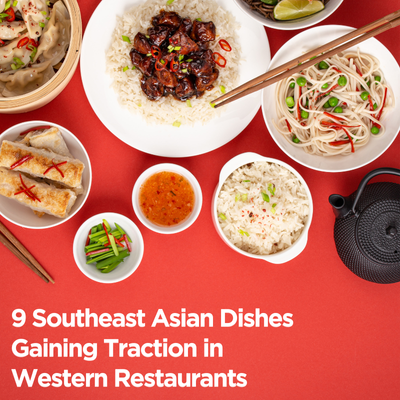
For decades, Southeast Asian cuisines sat quietly in the “ethnic food” corners of Western cities, loved by insiders but rarely mainstream.
Today, that’s changing fast. From casual lunch spots to high-end dining rooms, Southeast Asian flavors are reshaping Western menus and redefining what everyday global food looks like across the global food service industry.
This shift isn’t a fad. It reflects deeper Southeast Asian food trends driven by migration, global travel, and nonstop social media exposure.
As diners explore new cultures through travel and digital platforms, their palates have evolved. They’re seeking food that feels real, layered, and expressive, without being intimidating, a behaviour closely linked to changing consumer food preferences.
A major driver behind this rise is the global street food influence.
The bold energy of Bangkok’s night markets, Singapore’s hawker centres, and Hanoi’s roadside stalls has captured worldwide attention.
These cuisines deliver bold combinations of spicy, sour, sweet, and umami flavors, yet often come in familiar formats such as noodles, rice bowls, and sandwiches, aligning well with modern menu engineering strategies.
In this blog, we take a closer look at nine Southeast Asian dishes that are making their way onto Western menus, and why diners can’t get enough of them.
What Makes a Southeast Asian Dish Successful in Western Markets?

The journey of a Southeast Asian dish from a local specialty to a staple on Western menus is not accidental. Its success is often the result of fulfilling specific “jobs” for both the diner and the restaurant.
These dishes meet key needs: they offer a thrilling yet approachable experience for curious palates and provide a viable, profitable addition to kitchen operations, especially within restaurant operations.
This strategic alignment explains the rise of popular Southeast Asian cuisine in the West.
The Formula for Cross-Cultural Success
The most trending Asian dishes in Western restaurants combine a few essential elements:
1. Masterful Flavor Contrast
Diners crave a “kaleidoscope of tastes,” sweet, sour, salty, spicy, and umami in one bite. Dishes like tamarind-based pad Thai or the herb-forward Vietnamese bánh mì deliver a memorable sensory experience.
2. Built-In Customization
Options for proteins (tofu, chicken, shrimp) or adjustable spice levels let diners tailor meals to their preferences, encouraging repeat visits and broader appeal.
3. Familiar Formats with a Twist
Rice bowls, noodle soups, lettuce wraps, and skewers provide a comfortable entry point for bold flavors. A recognizable format makes trying a Filipino sisig rice bowl or a Vietnamese noodle salad approachable and fun.
4. Instagram Appeal
Vibrant colors, fresh herbs, and glossy sauces create visually striking dishes that drive social sharing and organic buzz.
5. Operational Simplicity
Batch-cooked bases, efficient prep, and quick assembly allow restaurants to scale dishes without compromising flavor or consistency.
Success lies in intelligent adaptation. This means adjusting ingredients or presentation to local tastes, such as swapping herbs or offering chili oil on the side, while preserving the dish’s core flavors.
Respectful fusion keeps authenticity intact and ensures the dish resonates with both new diners and returning fans.
The 9 Southeast Asian Dishes Gaining Traction in Western Restaurants

From street-food staples to chef-driven favorites, Southeast Asian dishes reflect what modern diners want: authenticity, comfort, and a sense of discovery. These dishes reflect what modern diners want: authenticity, comfort, and discovery, reinforcing global cuisine trends.
Here are the nine Southeast Asian dishes gaining traction in Western restaurants:
1. Banh Mi (Vietnam)

Banh mì originated in Vietnam during French colonial rule, when a crisp baguette was paired with local ingredients, pickled vegetables, fresh herbs, and bold condiments.
It’s a street-food staple that blends Vietnamese technique with a European loaf, created as a portable, affordable meal for busy city crowds.
Flavor Profile
Each bite delivers a complex yet harmonious experience:
- Savory & Rich: From the proteins, which can include grilled pork, chicken, Vietnamese cold cuts like chả lụa, or rich pâté.
- Tangy & Sweet: From the essential quick-pickled carrots and daikon radish (đồ chua), providing a crunchy, bright counterpoint.
- Fresh & Aromatic: From crisp cucumber slices and a generous topping of fresh cilantro.
- Creamy & Spicy: From a swipe of mayonnaise and a dash of chili sauce or fresh chiles, allowing diners to customize the heat.
This structured format maps onto familiar sandwich expectations while delivering authentic Southeast Asian flavors.
Why Western Diners Love It
It’s a Vietnamese sandwich that they can eat with one hand, perfect for lunch, commuting, or casual dining. The texture and flavor contrasts feel adventurous but not intimidating.
It is also highly customizable (protein, spice level, veg), so groups with diverse tastes can all find something they like.
How Restaurants Are Adapting It
The banh Mi popularity in the West has led to creative adaptations that honor its essence while appealing to local tastes and trends:
- Protein Innovations: While traditional fillings remain staples, many menus now feature fried chicken banh mi, Korean-inspired bulgogi or samgyupsal (grilled pork belly), and even upscale versions with Wagyu beef.
- Vegetarian & Vegan Expansion: The classic bánh mì chay (vegetarian) has been widely embraced, with restaurants offering sophisticated versions featuring marinated tofu, seitan, or mushroom-based fillings, catering to the growing plant-based demand.
- Format Fusion: The dish’s core concept is being adapted into other formats, including Asian fusion sandwiches on various breads, banh mi bowls, and banh mi-inspired tacos or salads.
Trend Signal
Bánh Mì has decisively moved from ethnic niche to mainstream culinary staple. Appearing on casual cafés, food trucks, and fast-casual chains across major cities (e.g., New York, London, Sydney).
2. Pho (Vietnam)

Pho originated in northern Vietnam in the early 20th century and later evolved into the national comfort soup enjoyed across the country.
It was street food and home food, simple, restorative, and built around a slow-simmered broth that carries regional and family signatures.
Flavor Profile
Each bowl delivers warmth and depth without overwhelming intensity:
- Savory & Umami-Rich: From long-simmered beef or chicken bones, infused with fish sauce and natural marrow.
- Aromatic & Gently Spiced: Star anise, cinnamon, clove, charred onion, and ginger add fragrance rather than heat.
- Fresh & Bright: Lime wedges, bean sprouts, Thai basil, and cilantro let diners enhance and personalize the flavor.
- Light Yet Satisfying: Compared to richer noodle soups, pho feels clean and restorative, making it approachable for a wide range of palates.
This balance makes pho stand out among modern Southeast Asian fusion dishes for diners seeking depth without overly spicy heat.
Why Western Diners Love It
Its broth-forward profile appeals to health-conscious eaters, while its warmth makes it especially popular in colder Western climates. Also, customizable proteins and garnishes allow diners to tailor each bowl to their preferences.
How Restaurants Are Adapting It
The growing popularity of pho in Western markets has led to thoughtful adaptations:
- Protein Variations: Classic rare beef and brisket remain staples, joined by chicken pho and slow-braised cuts for deeper flavor.
- Vegetarian & Vegan Options: Plant-based broths made with mushrooms, roasted vegetables, and kombu now appear widely on menus.
- Modern Formats: Pho is offered in fast-casual concepts, takeout-friendly packaging, and seasonal winter features, aligning with urban dining habits.
Trend Signal
Pho has seen the strongest growth in cold-weather cities such as New York, Toronto, Chicago, and London, where it’s positioned as both a nourishing everyday meal and a refined comfort classic.
3. Pad Thai (Thailand)

Pad Thai is often a diner’s first encounter with Thai food, so it works perfectly as a gateway dish.
Born in mid-20th-century Thailand as a street-food staple, it was popularized as a quick, flavorful stir-fry featuring readily available rice noodles, eggs, and a tangy-sweet sauce.
Flavor Profile
Each plate balances sweet, savory, and tangy elements with a satisfying noodle texture:
- Sweet & Sour: Palm sugar and tamarind provide the signature sweet-tang backbone.
- Savory & Umami: Fish sauce (or soy for veg versions) and light soy add depth without heaviness.
- Crunch & Brightness: Crushed peanuts, bean sprouts, and lime give contrast in texture and lift.
- Noodle Familiarity: Flat rice noodles offer a comforting, slurpable base familiar to Western diners accustomed to pasta or stir-fried noodles.
This sweet-savory balance plus familiar noodles makes Pad Thai an easy, approachable introduction to authentic Southeast Asian flavors.
Why Western Diners Love It
It’s instantly recognizable as one of Thailand’s most prominent exports and feels both comforting and exotic. The balance of flavors is bold yet not challenging, appealing to mainstream tastes.
How Restaurants Are Adapting It
Restaurants are treating Pad Thai as a menu anchor dish, a dependable bestseller on lunch and dinner menus. In addition to this:
- Offering protein-forward versions (grilled prawns, fried chicken) and plant-based takes (tofu, mushrooms) with vegan sauces.
- Streamlining prep with premade Pad Thai sauce bases for speed and consistency in busy kitchens.
- Pad Thai bowls, deconstructed plates, and fusion versions (Pad Thai tacos, Pad Thai-inspired salads) to fit different service styles.
Trend Signal
Pad Thai appears across casual Thai restaurants, fast-casual noodle bars, food halls, and even chef-driven menus in major Western cities (New York, London, Los Angeles, Sydney).
4. Som Tum (Thai Green Papaya Salad)

Som Tum is a traditional Southeast Asian street food made from an iconic green papaya salad. It originates from Thailand’s northeastern Isan region, where fresh produce and bold seasoning define everyday cooking.
Usually eaten alongside grilled meats or sticky rice, it reflects a street-food culture built on balance, speed, and vibrant flavor.
Flavor Profile
Each serving delivers sharp contrast and refreshing intensity:
- Crunchy & Fresh: Shredded unripe papaya provides a crisp, hydrating base that feels light and clean.
- Chili-Lime Tang: Lime juice and fresh chilies create a bright, mouthwatering acidity that wakes up the palate.
- Savory & Slightly Sweet: Fish sauce and palm sugar round out the sharpness with depth and balance.
- Herbaceous & Aromatic: Garlic and tomatoes add fragrance and juiciness.
The result is bold yet refreshing, appealing to diners who enjoy strong flavor without heaviness.
Why Western Diners Love It
Som Tum resonates with adventurous yet health-focused diners seeking fresh, low-carb, flavor-driven dishes.
Its raw vegetables, minimal oil, and vibrant seasoning align well with wellness-minded eating, while its bold flavor adds excitement beyond typical salads.
How Restaurants Are Adapting It
To bridge the gap between authentic intensity and mainstream palates, Western restaurants employ smart adaptations:
- Spice Control: Heat levels are clearly labeled or customizable, allowing diners to enjoy the chili-lime punch without being overwhelmed by heat.
- Protein Add-Ons: Grilled chicken, shrimp, or tofu are often added to turn the salad into a satisfying main.
- Ingredient Adjustments: Some kitchens substitute locally available produce or reduce fermented elements to suit Western palates while preserving the dish’s core profile.
Trend Signal
Som Tum is increasingly appearing on Thai restaurant menus, modern Asian fusion spots, and health-driven eateries in major Western cities.
It’s often positioned as a refreshing counterpoint to richer noodle and curry dishes, signaling growing demand for bold, fresh, and lighter Southeast Asian options.
5. Khao Soi (Northern Thailand)

Khao Soi is a delicious symbol of Northern Thailand’s cultural crossroads, with roots influenced by the trade routes between China, Myanmar (Burma), and the ancient Lanna Kingdom.
Traditionally a comforting street-and-home noodle curry, it pairs a fragrant, turmeric-spiked coconut broth with soft egg noodles and a crown of crisp fried noodles, finished with pickled mustard greens, shallots, and a squeeze of lime.
Flavor Profile
Each bowl layers creamy, spicy, and tangy notes with contrasting textures:
- Coconut-Curry Richness: A mellow coconut base flavored with curry paste and warm spices (turmeric, coriander).
- Savory & Aromatic: Aromatics and umami from shallots, garlic, and occasionally shrimp paste or fish sauce.
- Textural Contrast: Tender egg noodles beneath a crunchy nest of fried noodles on top.
- Bright Counterpoints: Pickles, lime, and fresh herbs cut the richness and add lift.
This combo, coconut curry + noodles, feels familiar to curry or ramen lovers while offering an exotic regional profile.
Why Western Diners Love It
Positioned as a “next-wave Thai dish,” khao soi hits the sweet spot between comfort and discovery.
Diners get the broad appeal of curry and noodles, with layered textures and bright finishes that make it feel both indulgent and approachable.
It also photographs well and reads as a chef-driven specialty, perfect for curious, experience-minded guests.
How Restaurants Are Adapting It
As Khao Soi enters Western markets, chefs are presenting it with thoughtful adaptations:
- Protein Variations: While chicken and beef are traditional, restaurants may offer premium versions with short ribs, duck confit, or even lobster to cater to upscale dining.
- Balancing Spice Levels: The heat from the dried chili paste is often calibrated, sometimes offering a choice of spice levels to welcome newcomers while maintaining the dish’s essential character.
- Vegetarian & Vegan Interpretations: Chefs create rich plant-based broths with mushrooms and coconut milk, using tofu or soy protein as a substitute.
Trend Signal
Khao soi is rising on chef-led Thai menus, modern Asian spots, and food-hall vendors in cities known for food innovation.
It’s often showcased as a signature or seasonal special, a clear signal that diners and chefs are embracing deeper regional Thai dishes beyond the familiar staples.
6. Chicken Adobo (Philippines)

Chicken adobo is often called the Philippines’ national dish.
Rooted in home cooking and preservation techniques from Spanish and indigenous influences, adobo is a humble braise, meat slowly cooked in vinegar, soy, garlic, and black pepper, designed for durability and deep, layered flavor.
Flavor Profile
Each serving balances bold, savory notes with bright acidity:
- Vinegar-Soy Umami: A tangy backbone from vinegar brightens deep soy-based savory goodness.
- Garlicky & Peppery: Generous garlic and cracked black pepper add warmth and aromatics.
- Tender, Braised Texture: Long braising yields fall-apart chicken and concentrated pan juices.
- Subtle Sweetness (optional): A touch of brown sugar or coconut can round the edges for balance.
This combination makes adobo a clear example of Southeast Asian comfort food, familiar, hearty, and intensely flavorful.
Why Western Diners Love It
Adobo reads as both homey and exciting: the braised texture and bright vinegar cut through restaurant richness, while the savory depth satisfies comfort-food cravings.
Its straightforward seasoning profile translates well to non-Asian palates, and its aromatic, slightly tangy finish makes it craveable and memorable.
How Restaurants Are Adapting It
To integrate Adobo into Western dining ecosystems, chefs are creatively leveraging its versatile nature:
- The Bowl Format: The most common adaptation is the “Adobo Bowl,” where the shredded or whole-braised chicken and sauce are served over rice, often with a side of pickled vegetables (atchara) and a fried egg.
- Fusion Applications: The flavorful, shreddable meat is a perfect filling for Adobo Tacos or Adobo Sliders, often topped with crunchy slaw and cilantro. It also appears in sandwiches, pasta (Adobo cream sauce), and even as a topping for fries or loaded nachos.
- Premium Interpretations: Upscale restaurants might use heritage-breed chicken, duck, or short ribs as the protein, and present the dish with artistic plating, emphasizing its gourmet potential while staying true to its soulful character.
Trend Signal
Chicken adobo has emerged as the breakout Filipino dish on Western menus, appearing in casual Filipino spots, modern Asian fusion kitchens, and food halls.
Its presence in rice bowls, tacos, and sandwiches indicates operators favor versatile, high-appeal items that adapt well to fast-casual and chef-driven concepts.
7. Nasi Goreng (Indonesia)

Nasi Goreng, meaning “fried rice” in Indonesian and Malay, is much more than a simple leftover dish; it is a national culinary icon and a daily staple.
Considered Indonesia’s unofficial national dish, it is deeply woven into the fabric of home cooking and street food culture.
Every region and household has its own variation. Still, the common thread is the transformation of simple ingredients into a fragrant, savory, and deeply satisfying meal, often enjoyed at any time of day.
Flavor Profile
Nasi Goreng is flavorful, based on a familiar format elevated by specific ingredients:
- Savory-Sweet Umami Base: The defining ingredient is kecap manis, a thick, sweet, and aromatic soy sauce that gives the rice its characteristic dark color, sticky glaze, and rich, caramelized sweetness.
- Aromatic Foundation: It is typically fried with a paste of shallots, garlic, and sometimes shrimp paste (terasi), creating a powerful and enticing fragrance.
- Spicy Kick: Heat is provided by sambal, a chili paste or sauce, which can be mixed in during cooking or served on the side, allowing for customizable spice levels.
- Complex Textures & Toppings: It is commonly served with a fried egg (telur), crispy shallots (bawang goreng), cucumber slices, and prawn crackers (krupuk), adding varying textures and flavors that make each bite interesting.
This combination allows Western diners to recognize the comforting format of fried rice while discovering a new, more layered taste experience.
Why Western Diners Love It
Nasi Goreng succeeds because it perfectly fulfills the demand for flavorful, convenient, and customizable meals. The “fried rice” concept is a global comfort food, making it an easy and non-intimidating choice.
As a complete meal with carbohydrates, protein, and vegetables in one dish, it aligns with modern desires for hearty, efficient dining.
How Restaurants Are Adapting It
To integrate Nasi Goreng into Western menus, chefs are making thoughtful adaptations:
- Brunch & All-Day Menus: Served with a runny fried egg and pickles, nasi goreng pairs well with brunch and daytime bowls.
- Protein Swaps & Bowls: From shrimp and chicken to vegan tempeh or mushroom options, operators adapt proteins to accommodate diverse diets.
- Smaller Plates & Shareables: Deconstructed or skillet versions appear as tapas-style items or weekend specials.
- Sauce-forward Prep: Pre-made kecap manis blends and sambal variants let kitchens deliver consistent flavor quickly.
Trend Signal
Nasi goreng is showing up beyond Indonesian restaurants, in brunch cafes, Asian-fusion spots, and food halls in cities like London, Sydney, Los Angeles, and New York.
Its adoption on brunch menus and all-day dining formats signals that operators value its familiarity, flexibility, and strong flavor profile as a reliable crowd-pleaser.
8. Beef Rendang (Indonesia/Malaysia)

If the story of Southeast Asian food in the West is about the elevation of humble dishes to global prestige, then Beef Rendang is its crowning chapter.
Beef rendang originates from the Minangkabau people of Indonesia and is also deeply rooted in Malaysian cuisine.
Its creation was born of practicality and respect: the slow-cooking process, which involves stewing beef in coconut milk and spices until all liquid evaporates and the meat browns in its own oils, was a method of preserving meat in a tropical climate without refrigeration.
Flavor Profile
Rendang delivers intensity through patience rather than heat:
- Deeply Rich & Savory: Long reduction concentrates coconut milk, spices, and meat juices into a thick, clinging sauce.
- Warm Spice Complexity: Galangal, lemongrass, ginger, garlic, chilies, and toasted spices create layered, evolving flavor.
- Subtle Heat, Long Finish: The spice profile builds gradually, leaving warmth rather than sharp spice.
- Luxurious Texture: Slow cooking yields fork-tender beef with a dry, glossy finish.
This complexity positions rendang as indulgent and refined—comfort food elevated to a premium experience.
Why Western Diners Love It
Rendang captivates the modern Western diner by perfectly marrying the soulful appeal of slow-cooked comfort food with the intrigue of high culinary artistry.
Marketed as “luxury comfort,” rendang offers a sensory experience: its deep, aromatic scent promises complexity, while its tender, luxurious texture delivers profound satisfaction.
How Restaurants Are Adapting It
In Western restaurants, rendang is being adapted with a focus on ingredient prestige and presentation, aligning it with fine-dining expectations:
- Premium Protein Showcasing: Chefs are using high-end cuts such as boneless short ribs and wagyu beef, highlighting the dish’s suitability for luxurious ingredients.
- Tasting Menu Placement: It features as a centerpiece in curated tasting menus, such as in private chef experiences, where its narrative and complexity can be fully explained and appreciated.
- Modern Interpretations: Contemporary chefs in upscale settings treat it as a modern classic, respecting its traditional flavor core while focusing on impeccable technique and elegant plating.
Trend Signal
Beef rendang is increasingly featured in fine-dining restaurants, chef-led Southeast Asian concepts, and curated tasting menus in global food capitals.
Its positioning as a slow-cooked, spice-forward dish with ceremonial roots reinforces its image as both culturally significant and luxuriously comforting, ideal for menus that value depth, storytelling, and premium execution.
9. Laksa (Singapore/Malaysia)

Laksa is inseparable from Singapore’s global food reputation and its hawker-centre culture, where regional flavors are refined into world-class street food.
With roots across Peranakan, Malay, and Chinese communities, laksa represents Southeast Asia’s multicultural culinary identity, bold, layered, and deeply comforting.
Flavor Profile
Laksa is indulgence with structure, pairing richness with fragrance:
- Coconut Curry Depth: A creamy coconut base, infused with a spice paste, delivers warmth and richness without heaviness.
- Savory & Umami: Shrimp paste, dried seafood, and aromatics add depth and complexity.
- Noodle Comfort: Rice noodles or wheat noodles provide a familiar, satisfying foundation.
- Aromatic Finish: Lemongrass, galangal, chili oil, and herbs create a lingering, fragrant heat.
This combination of a familiar curry-noodle soup format and spicy, aromatic Asian dishes makes it a spicy, aromatic Asian dish.
Why Western Diners Love It
Laksa hits the same comfort zone as ramen or creamy pasta, but with a bolder flavor payoff. It’s rich, warming, and customizable, appealing to diners who enjoy indulgent bowls that feel special yet approachable.
For many, trying authentic Laksa feels like a direct connection to Singapore’s celebrated hawker culture.
How Restaurants Are Adapting It
Chefs are integrating Laksa into Western dining by both honoring its traditional form and using its iconic flavor profile as a springboard for innovation:
- Fusion Pasta & Noodle Swaps: One of the most notable adaptations is Laksa Pasta, where the rich, spicy coconut broth is used as a sauce for Italian pasta like linguine or fettuccine, often with prawns and cherry tomatoes.
- Premiumization: Upscale restaurants might use lobster, scallops, or confit duck as the protein, elevating the dish’s status and price point while maintaining the classic broth.
- Deconstructed & Modern Formats: The essential flavors appear in other formats, such as Laksa-inspired sauces for grilled meats, Laksa-spiced mayonnaise for burgers or fries, or even as a refined broth in tasting menus.
- Condiment Approach: Some menus offer a “Laksa sauce” as a bold, creamy, and spicy option for grain bowls or as a dipping sauce, introducing the flavor profile in a modular way.
Trend Signal
Laksa is increasingly featured on modern Asian fusion menus, chef-driven concepts, and tasting-style restaurants in major Western cities.
Its adaptability across noodles, pasta, and hybrid formats positions it as a versatile, high-impact dish that bridges tradition and innovation, cementing its place in the next wave of Southeast Asian cuisine abroad.
Are These Dishes Authentic or Adapted?
chef-inspired Southeast Asian recipes
The journey of Southeast Asian dishes from their local origins to Western menus raises a central question: are we experiencing authenticity or adaptation?
The adaptation of these dishes is not a monolithic process but a series of calculated, often minimal, adjustments.
These changes are driven by three key factors: ingredient availability, mainstream palate preferences, and the practicalities of running a restaurant.
Here’s how:
| Adaptation Approach | Rationale & Business Driver | Example in Practice |
| Calibrating Heat & Spice | To welcome diners unaccustomed to intense chili heat, reducing the barrier to trial. | Offering Som Tum (Papaya Salad) with adjustable spice levels, or a milder “Western-style” sambal, with Nasi Goreng. |
| Ingredient Substitution | Sourcing challenges for specific regional items; catering to dietary trends (vegetarian, gluten-free). | Using broccolini in place of kailan, creating a vegan Laksa with mushroom broth instead of shrimp-based paste. |
| Format & Presentation Shift | Aligning with local and global dining culture formats (bowls, sandwiches, tasting menus) and visual expectations. | Serving Chicken Adobo as a grain bowl with rice and slaw, or presenting Beef Rendang as a refined centerpiece on a tasting menu. |
| Premiumization | Elevating perceived value to justify fine-dining price points and showcase the chef’s skill. | Using short rib or Wagyu beef in Rendang, or adding lobster to a classic Laksa. |
The “Authenticity Paradox” and Cultural Respect
As Southeast Asian dishes gain popularity, they often face an authenticity paradox: wider appeal can lead to either respectful evolution or dilution.
The difference comes down to intent. Does the adaptation translate the dish for a new audience, or erase what makes it distinct?
Respectful evolution preserves the dish’s core identity. The foundational balance of sweet, sour, salty, spicy, and umami remains intact, while peripheral elements are adjusted for accessibility.
This approach often includes educating diners through menu notes that highlight the dish’s regional roots or traditional role.
Loss of essence happens when flavors are flattened to fit a generic “Asian” profile, stripping away regional character and cultural meaning.
Therefore, the most successful restaurants use adaptation as a bridge, not a compromise.
What This Trend Means for Restaurants & Chefs
Southeast Asian dishes moving into the mainstream create practical opportunities for operators: they’re crowd-pleasing, flexible to kitchen constraints, and rich with story-driven marketing.
With these global food trends in Asian cuisine, here are the key implications for restaurants & chefs:
- Lower Barrier to Entry for Asian Cuisine: Familiar formats (bowls, sandwiches, noodles) make it easier for non-specialist kitchens to add authentic-seeming items without massive retraining.
- Strong Storytelling & Cultural Narratives: Each dish comes with a built-in origin story that restaurants can use on menus and social channels to create an emotional connection.
- Menu Differentiation in Crowded Markets: Regional or lesser-known dishes (khao soi, rendang, adobo) let a concept stand out versus run-of-the-mill “Asian” options.
- Opportunity for Limited-Time Specials (LTOs): Seasonal or regional features allow testing, create urgency, and encourage repeat visits.
- Capitalizing on Street Food Credibility: The global trend championing chef-driven street food allows restaurants to offer bold, affordable flavors in an upscale setting.
- Leveraging Social Media Discoverability: Encouraging social sharing is free marketing that attracts customers seeking the next visually captivating “it” dish.
Together, these forces make thoughtful Southeast Asian offerings both a creative and commercial win for forward-looking kitchens.
What Diners Can Expect Next from Southeast Asian Cuisine
Expect the next wave to dig deeper: chefs will spotlight regional specialties, amplify fermented and funky flavors, and continue translating street-food energy into refined dining experiences.
Looking ahead, diners can expect three key directions to shape the future:
- More Regional Dishes (not just national): Lesser-known provincial recipes and island specialties will appear alongside familiar national hits.
- Fermented Flavors: Shrimp pastes, fish sauces, pickles, and other aged condiments will be used more deliberately for complexity and umami.
- Street-Food-to-Fine-Dining Crossover: Hawker classics will be reimagined on tasting menus and in chef-driven plates, keeping street credibility while elevating technique.
Takeaway: Southeast Asian food is no longer “emerging,” it’s establishing itself.
Frequently Asked Questions
Why is Southeast Asian food becoming popular in the West?
Southeast Asian food is becoming popular in the West because it delivers bold, layered flavors in familiar formats that feel both exciting and approachable. Global travel, migration, and social media exposure have expanded Western palates, while street-food credibility and customizable spice levels make these cuisines accessible without losing authenticity.
Which Southeast Asian cuisine is growing fastest?
While growth varies by city, the fastest-rising cuisines include:
- Vietnamese (pho, banh mì)
- Thai (pad Thai, khao soi, som tum)
- Filipino (adobo, sisig, halo-halo–inspired desserts)
- Indonesian/Malaysian (rendang, nasi goreng, laksa)
Are these dishes spicy?
Some Southeast Asian dishes are spicy, but heat is rarely the focus. Most rely on balance, combining sour, sweet, salty, and umami, while allowing diners to adjust spice levels. In Western restaurants, chili is often served on the side, making these dishes approachable for all heat tolerances.
Which Southeast Asian dishes sell best in restaurants?
The strongest sellers tend to be dishes that pair bold flavor with familiar formats, such as pho, pad Thai, banh mì, nasi goreng, and chicken adobo. These items work well as menu anchors because they are easy to customize, operationally efficient, and consistently appealing to both first-time and repeat diners.
Final Thoughts
The rise of Southeast Asian cuisine in Western restaurants is no longer about novelty; it’s about staying power.
The conversation has evolved from “What is this?” to “Where in Vietnam is this from?” or “How is this chef’s rendition unique?”
These nine dishes succeed because they balance bold, unmistakable flavors with formats diners already understand, making them easy to order, share, and return to.
For restaurants and chefs, this shift signals opportunity: menus can feel more authentic without becoming intimidating, more global without losing clarity.
For diners, it means deeper regional stories, richer flavor experiences, and a growing confidence in exploring beyond the familiar.
This shift signifies a mature, lasting integration.
Southeast Asian food is no longer just emerging; it has arrived, inviting everyone to continue exploring its vast and vibrant experience, one unforgettable dish at a time.