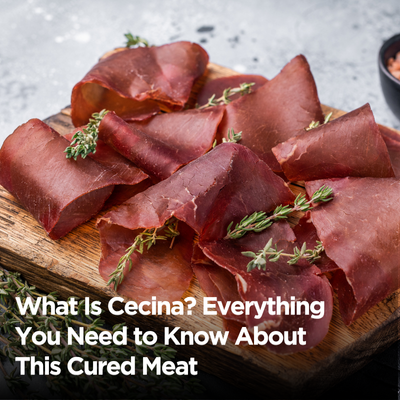
There are few pleasures in the culinary world quite like ruby-red slices of meat on a wooden board.
If you know what Cecina (pronounced seh-SEE-nah) is, you know it’s more than just cured meat. It is a type of air-dried meat, essentially salted, cured beef (in Spain) or beef/pork strips (in Mexico) that have been preserved by drying.
In Spain, it’s sometimes called a Spanish cured beef, while in Mexico, you’ll simply find it labeled Mexican Cecina. The experience of tasting Cecina is rich and savory, it’s smoky and salty, with a deep umami flavor.
But don’t confuse it with jerky or prosciutto. While jerky is dried and chewy, and prosciutto is fat-marbled and buttery, Cecina walks its own line, smoky, lean, and intensely beefy (or porky), with a texture that’s tender yet firm.
In this guide, you’ll learn what Cecina is, how it’s made, how the two styles differ, and exactly where it fits on the cured-meat spectrum.
What Exactly Is Cecina?
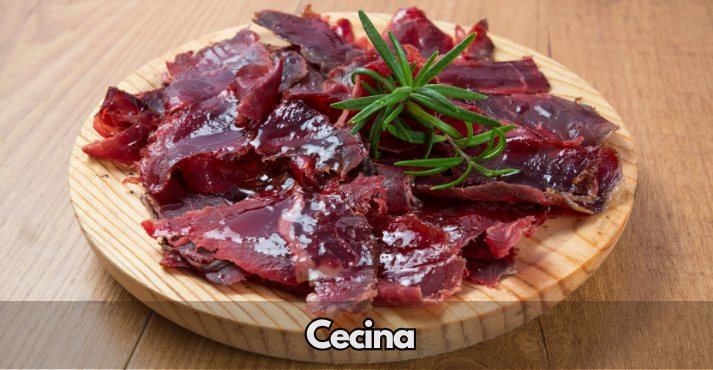
So, what is Cecina meat? Cecina is a salted, cured, and air-dried meat, usually beef. But that simple definition unfolds into two rich traditions.
Historically, in Spain, it could also be made from horse, goat, or other animals, but today, beef is standard. The Spanish Cecina de León is made from beef hind legs: specifically, only prime muscles from a cow’s hind quarters (each about 3–5 kg) are used.
In Mexico, Cecina often refers to thin-cut beef or pork. (The Puerto Yecapixtla variety uses beef; another style, Cecina enchilada, uses pork coated in chili.)
The word Cecina comes from Latin siccus (“dry”), and its texture reflects that. Well-aged Cecina is firm yet tender, not tough or stringy. When sliced wafer-thin, it feels almost velvety on the palate.
Cecina’s taste is smoky, salty, and intensely savory. You might describe it as somewhere between a salty prosciutto and a rich beef jerky: it has the concentrated meatiness and chew of jerky, but the elegant smoothness of an air-dried ham.
Spanish Cecina tends to be deeper and more developed in flavor (often with subtle nutty or oak-smoke notes from long aging), while Mexican Cecina can have a fresh grilled or lightly spiced character.
Origins and History of Cecina
Cecina has deep roots in traditional methods of preserving meat, shaped by geography, climate, and culture.
Over time, different regions developed their own styles, leading to two distinct traditions: the aged, refined version from Spain and the fresh, flavorful style from Mexico.
Cecina in Spain (Cecina de León)
Dry-curing meat is one of the oldest forms of food preservation. In northwestern Spain, beef was preserved in this way for centuries. Civilizations like the Celts and Romans practiced salting and drying meat in this area.
Over time, the process became more refined and recognized. In 1994, Cecina de León received Protected Geographical Indication (PGI) status, which means only meat produced and cured in this region under strict standards can carry the name. You can read more about PGI and other food quality schemes on the European Commission’s agricultural product quality page.
Rural communities created this method for winter food: hind-leg beef is salted, air-dried, lightly oak-smoked, then aged up to a year in cool mountain air, resulting in deep red, firm, richly smoky cecina.
However, unlike pork jamón, Cecina has no bone and less fat (about 30% fat vs. 46–48% in some hams). The result is a very beefy, lean “ham.”
Locals enjoy Cecina just like jamón: small slices drizzled with high-quality olive oil or paired with slices of Manchego or goat cheese. In many villages of León, a platter of Cecina is as revered as one of Serrano ham.
Cecina in Mexico
In Mexico, Cecina also refers to preserved meat, but the preparation and use are quite different. It is especially popular in regions like Oaxaca and Yecapixtla, the latter often called the “World Capital of Cecina.”
Mexican Cecina is typically made from beef, although pork versions also exist. The meat is sliced into very thin sheets, salted, and then either briefly sun-dried or cooked fresh. Unlike the Spanish version, it is not aged for months. Instead, it is prepared quickly, giving it a softer texture and fresher taste.
One popular variation is Cecina enchilada, where pork is marinated in a flavorful chili sauce before being lightly dried or grilled. This adds a spicy and rich twist to the dish.
Moreover, Cecina plays a major role in Mexican street food culture. It is commonly grilled and served in tacos or alongside tortillas, avocado, onions, and salsa.
How Is Cecina Made?
The processes for making Spanish and Mexican Cecina share the basic step of salting and drying, but differ in cuts and aging time.
Spanish Cecina Process
Steps to make Spanish Cecina:
- Select cuts: To understand what part of the cow is Cecina, look to the hind legs. These large muscles (called pierna or jarrete) are precisely the cuts used for cured ham. Only the top hindquarter muscles are allowed for PGI Cecina de León.
- Salt curing: Rub coarse salt all over the beef leg. The pieces rest in a cool room (or cellar) for days, allowing the salt to draw out moisture and kill bacteria.
- Initial drying: Rinse off the salt and hang the meat in a dry, airy place. For several weeks (typically 4–6 weeks), the meat slowly dries, allowing beneficial microflora and enzymes to develop.
- Smoking (optional/unique to Cecina): After initial drying, many producers smoke the meat gently over holm oak or other hardwoods for 12–16 days. This imparts a subtle smoky flavor and helps form the outer crust.
- Aging: Finally, the pieces are rubbed with beef fat and left to mature in controlled conditions for many months (at least 7 months total curing, often up to 12 months for a “Reserva” label). During this time, the meat slowly dehydrates to a very stable, long-lasting state.
Unlike many cured meats, Spanish Cecina can even be made with Halal methods. In fact, León producers have begun offering Halal-certified Cecina to meet demand from Muslim markets.
This shows the benefits of halal meat certification in broadening the audience for such specialty products.
Mexican Cecina Process
- Thin slicing: To understand what cut of meat is Cecina in the Mexican tradition, it’s not from a whole leg but from thinner cuts. For beef Cecina, the meat (often flank or round) is cut into very thin sheets or strips.
- Salting: The thin strips are seasoned liberally with salt (and sometimes other spices or chiles). This quick cure draws out moisture in a short time.
- Sun-drying or resting: The salted strips are laid out flat in the sun or shade on long tables to dry just slightly. Typically, only a short sun-dry (about 40% dehydration) is needed.
- Cooking (grill or fry): In many cases, Mexican Cecina is not stored for months. Instead, it is often grilled or pan-fried to finish cooking. Grilling a thin strip gives it a smoky-charred flavor and is a common way to serve it on tacos.
Types of Cecina Around the World
Dry-cured meat traditions exist in many countries. Here is a quick comparison of Cecina variants by region:
| Type | Origin | Meat | Preparation | Flavor |
| Cecina de León | Spain | Beef (cow leg) | Salted, cold-smoked, and air-aged 7–12 months | Deep, smoky, rich, slightly nutty |
| Cecina (México) | Mexico | Beef / Pork | Thin-cut, heavily salted, sun-dried, or grilled | Savory, tangy, slightly smoky |
| Cecina (Peru) | Peru | Pork | Deboned pork, spiced (achote), air-dried, then smoked | Bold, earthy, aromatic |
Each has its own character, but they all share the basic identity of a cured, dried meat. To explore how the broader meat sector is evolving, including shifts in cured and specialty meats, see our dedicated overview.
Cecina vs Other Cured Meats
Cecina is one of many cured meats worldwide. Here is a comparison of Cecina with some well-known meat types:
| Feature | Cecina | Jerky | Prosciutto | Bresaola | Jamon (Serrano/Ibérico) |
| Primary Meat | Beef (Spain: hind leg) or Pork (MX) | Usually beef (also turkey, game) | Pork leg (Italian pigs) | Beef (top round/eye of round) | Pork leg (Spanish pigs) |
| Curing Method | Salt-curing + air-dry (often smoked) | Salt-curing + hot-drying (smoke or oven) | Salt-curing + long air-dry (no smoke) | Salt-curing + air-dry (no smoke) | Salt-curing + air-dry (no smoke) |
| Texture | Firm yet tender, sliced paper-thin | Very dry, tough/chewy | Very tender, melt-in-mouth | Lean and tender | Tender with a fat melt texture |
| Flavor | Smoky, salty, beefy | Smoky/sweet (often with sugar) | Mild, sweet-salty, nutty | Rich, lean beef flavor | Rich, sweet-salty |
So, is Cecina the same as jerky? The answer is no. While all are salted and dried, jerky is typically much drier and often seasoned to be sweet or spicy, whereas Cecina is cured more like a ham and eaten thinly sliced.
Prosciutto (Italian ham) and bresaola (Italian beef) are similar to Cecina in being aged meats, but they come from different muscles and use different regional methods.
Jamón (Spanish ham) is pork cured like prosciutto. (In fact, Cecina de León is sometimes called “the beef equivalent of jamón.”)
What Does Cecina Taste Like?
Cecina has an intensely savory, smoky taste. Expect deep beefy flavor with a hint of smoke from the curing process or grilling. It’s salty but balanced by rich meatiness (umami).
Many people describe Spanish Cecina as earthy and nutty, more akin to a strong prosciutto, while Mexican Cecina often tastes fresher or spicier (if grilled or seasoned).
On the tongue, thin slices of Cecina can feel almost silky, similar to slicing an aged ham. Given this, it tastes like a cross between high-quality beef jerky and a dry-cured ham: rich and meaty, but not as overwhelmingly chewy as jerky.
How to Eat Cecina
Cecina is very versatile. Here are some traditional and modern serving ideas:
Spanish Style
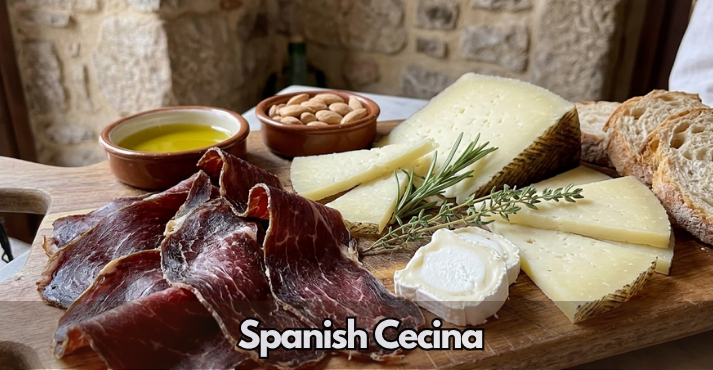
Spanish Cecina is a cured, ready-to-eat product. The goal is to let its smoky, beefy flavor shine without masking it.
- Thin slices: Always serve paper-thin (sliced against the grain). Room temperature is a must.
- Olive oil drizzle: A few drops of high-quality extra virgin olive oil enhance the nuttiness.
- With bread or cheese: Pair with crusty rustic bread, manchego cheese, or even shaved over warm roasted vegetables.
Mexican Style
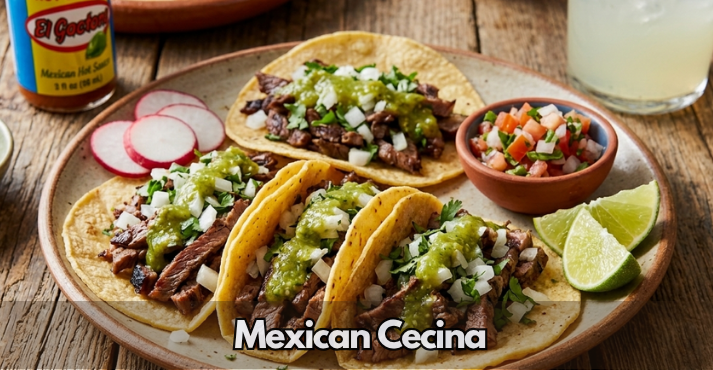
Mexican Cecina is often salted but not fully dried; it’s meant to be cooked. Think of it as a seasoned, air-dried meat ready for the grill or skillet.
- Tacos: Griddle or sear the Cecina until slightly crisp, then chop and stuff into warm corn tortillas.
- With tortillas, avocado, and salsa: Serve alongside fresh tortillas, sliced avocado, and a punchy salsa roja or salsa verde. Add refried beans for a full meal.
- Grilled variations: Throw whole Cecina slices directly on a charcoal grill. The high heat creates smoky, charred edges. Serve with grilled onions and nopales.
Pro tip: Mexican Cecina is salty, so go easy on additional salt in salsas or beans.
Modern Uses

Cecina works beautifully on charcuterie boards and in contemporary dishes. Mix and match based on what you have.
- Charcuterie boards: Arrange thin-folded Spanish Cecina alongside cured meats like salami, chorizo, and jamón. Add olives, almonds, and honey.
- Salads: Tear or slice Cecina over arugula with shaved Parmesan, lemon vinaigrette, and roasted pears or figs.
- Sandwiches: Layer Spanish Cecina on a baguette with brie and fig jam. Or use grilled Mexican Cecina as a smoky substitute for bacon in a torta.
Pro tip: For salads and sandwiches, Spanish Cecina works raw; Mexican Cecina should be quickly grilled or pan-seared first.
Regardless of style, always slice Cecina very thinly (a sharp knife or slicer helps). It’s best served at room temperature so the flavors and aroma can emerge.
Is Cecina Healthy?
Cecina is high in protein and low in carbohydrates. A typical serving (~1 oz or 30 g) provides about 6 grams of protein and essential minerals.
It tends to be leaner than many ham-like products (30% fat vs. 45% in some hams) and lower in saturated fat. Because of this, Cecina can fit well into a high-protein, low-carb diet.
However, keep in mind it is cured meat. Cecina is quite salty by necessity. People watching sodium intake should enjoy it in moderation.
Also, like other processed meats, it contains preservatives (often nitrate or nitrite salts) used in curing. According to the World Health Organization’s guidance on processed meats, current nutrition guidance suggests enjoying cured meats like Cecina as an occasional treat rather than a daily staple.
Where to Buy Cecina
Due to rising interest in traditional foods, Cecina has become more available. Cecina should come from a reliable food supply chain. Buy it from specialty meat shops or trusted importers.
Here’s where to look:
- Specialty Delis and Markets: Look for shops specializing in Spanish or Mexican products. Authentic Cecina de León should have the PGI stamp on the label. For Mexican-style Cecina, try Latin American or Mexican grocery stores.
- Online Retailers: Several gourmet food websites sell vacuum-packed Cecina. For example, charcuterie purveyors often carry Spanish Cecina slices or blocks to slice at home. Check reviews and the seller’s provenance to ensure quality.
- Farmers’ Markets/Local Sources: In some areas, there are artisanal producers making Cecina. These sellers often follow traditional methods, but you may need to ask about their curing process.
In today’s global meat sector, many producers adhere to strict food safety audits. When purchasing Cecina, a good sign is reputable labeling and a clear origin; these indicate it has passed standard safety inspections.
The trend in the meat sector is more toward transparency and certification, so look for brands that highlight quality or origin.
FAQs
What is Cecina made of?
Cecina is made of salted, cured meat. In Spain, it’s beef (typically from the cow’s hind leg) that is salted and air-dried. In Mexico, Cecina is usually beef strips (called Cecina de res) and sometimes pork strips (Cecina enchilada). The meat is heavily salted and dried to preserve it.
Is Cecina pork or beef?
It depends on the style. Spanish Cecina (de León) is beef. Mexican Cecina is most often beef, though a popular style is made from pork coated in chili. So both types exist, but “Cecina” by itself often means beef.
How is Cecina different from jerky?
Jerky is usually a snack made from dried meat. It’s often cooked/smoked at high heat and spiced (sweet or hot) before drying, resulting in a very dry chew. Cecina, on the other hand, is cured more like a ham, salted and slowly dried/aged, and eaten thin-sliced.
Can you cook Cecina?
The cured beef version of Cecina is typically eaten uncooked. In Spain, it’s sliced and eaten as is (like prosciutto). In Mexico, the thin salted beef can be eaten raw after curing (like a cold cut), but many people grill or fry it for added flavor. The pork Cecina enchilada must be cooked (it’s sold marinated and raw).
How long does Cecina last?
Properly cured Cecina is quite shelf-stable. An unopened, vacuum-sealed pack can last for months in the refrigerator (or even longer frozen). Once opened, keep it wrapped or in a container and eat within a couple of weeks for the best quality. (Unlike fresh meat, Cecina won’t spoil quickly, but it will dry out or lose flavor if left out too long.)
Is Cecina spicy?
No, plain Cecina is not spicy. The pure beef versions have no chili; their heat comes from salt and smoke, not chili. The only spicy variant is Cecina enchilada, which is pork cured with red chili paste. If you want spicy, look specifically for that style. Otherwise, Cecina’s flavor is purely savory, smoky, and salty, not hot.
Conclusion
Cecina is a traditional cured meat, basically a salted, air-dried beef (or beef/pork) delicacy.
The Spanish Cecina de León is a deeply flavored, aged beef ham, often lightly smoked and eaten like jamón. Whereas the Mexican Cecina is usually thinly sliced beef (or pork with chili), salted and briefly dried, commonly enjoyed in tacos.
The key differences? Spanish Cecina comes from the hind leg and ages for many months; Mexican Cecina is thinner, quicker to prepare, and meant to be cooked.
We encourage adventurous eaters to try Cecina if possible. It makes a fantastic component in meals, try it on a charcuterie board, in a sandwich, or in place of other cured meats in recipes.
For recipe ideas, look up Spanish or Mexican Cecina dishes: it can elevate salads, pastas, or simply shine on its own with bread and cheese.
Now that you know what is Cecina, next time you see it at a market, pick up some authentic Cecina de León or a pack of Mexican Cecina. Slice it thin, drizzle olive oil, and savor a bite of culinary history. Your taste buds will thank you.