You know that feeling when you’re wandering through a well-stocked Spanish deli or browsing the charcuterie section of a gourmet grocery store?
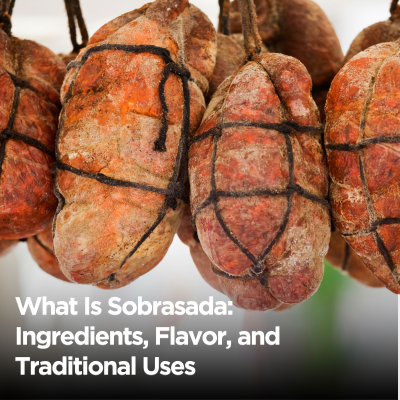
You see rows of familiar chorizo and salami, but then something else catches your eye: a soft, squishy sausage, often tied with a string and looking more like a filled cloth pouch than a firm link. It doesn’t look like any cured meat you’ve ever seen.
If you’ve found yourself staring at this curious product, wondering if it’s ready to eat or what you’re supposed to do with it, you’re not alone.
Let’s answer the big question immediately: Sobrasada is a soft, spreadable cured pork sausage from Mallorca, Spain, known for its rich, smoky paprika flavor and smooth, pâté-like texture.
In this guide, you’ll learn exactly what is sobrasada, from its core ingredients, unique taste profile, to how locals have been eating it for centuries, and its comparison with other familiar sausages.
What Is Sobrasada?

Sobrasada is a cured, spreadable pork sausage. It originates from the Balearic Islands, an archipelago in the Mediterranean Sea, with Mallorca its undisputed home.
Sobrasada holds a Protected Geographical Indication (PGI) status in Europe, meaning only sobrasada produced in Mallorca following specific traditional methods can legally bear the name. You can learn more about how PGI certification works on the European Commission’s geographical indications page.
Culturally, sobrasada is more than just food in Mallorca. For generations, families would slaughter a pig in the autumn, and pork sobrasada was the way to use the fattier cuts and offal, transforming them into a preserve that would last through the winter.
What makes it truly unique is its soft, spreadable texture. While most cured sausages are dried until firm, sobrasada retains a high percentage of fat (often over 60-70%) and is cured for a shorter period.
The result is a sausage that can be easily scooped with a knife and spread like a rich, savory butter onto a piece of bread.
What Is Sobrasada Made Of?
The magic of sobrasada comes from a short, simple list of high-quality ingredients.
When people search for the sobrasada ingredient list, they are often surprised by how few ingredients it lists.
Core Ingredients
1. Pork
Traditionally, sobrasada is made using specific local pig breeds, such as the Porc Negre (Black Pig) of Mallorca.
The key is that butchers use the fattiest cuts, belly, jowls, and trimmings, along with leaner meat to create the perfect fat-to-meat ratio.
No additional fat (like back fat) is typically added; the fat is integral to the meat cuts themselves.
2. Paprika (Pimentón)
This is the soul of sobrasada. A generous amount of paprika is added, which serves two critical purposes.
First, it gives sobrasada its characteristic deep red color. Second, it acts as a preservative and flavoring agent.
Both sweet (dulce) and spicy (picante) varieties of paprika are used, depending on the desired final product.
3. Salt
Essential for the curing process, salt draws out moisture, inhibits harmful bacteria, and concentrates flavor.
4. Optional Spices
While not always present, traditional recipes may include small amounts of black pepper or oregano. However, unlike other sausages, sobrasada relies almost entirely on pork and paprika for its identity.
What Makes It Unique
The unique texture comes from the air-curing process. After the minced pork is mixed with salt and paprika, it is stuffed into natural pork casings.
The sobrasada sausages are then hung to cure for a relatively short period, typically 2 to 4 months. During this time, they lose some water but retain most of their fat.
They are not fully dried like salami or chorizo. This intentional partial dehydration is what leaves the interior soft, unctuous, and spreadable.
So, if you are wondering is sobrasada safe to eat, the answer is absolutely, because it is a cured product, similar to prosciutto or salami. The food preservation process used in sobrasada-making is one of the oldest methods of keeping meat safe for consumption.
Traditional vs Modern Variations
Traditional Sobrasada uses only pork, salt, and paprika. It has a coarser, more rustic texture and a deeper, more complex pork flavor. It is often stuffed into a pig’s large intestine or a cloth bag (embuchado).
Whereas modern Sobrasada may include additional spices, and some mass-produced versions use emulsifiers to guarantee an ultra-smooth, pâté-like consistency.
You can also find variations made with other meats like chicken or turkey (often labeled as sobrasada de ave), though purists argue these are not true sobrasada.
What Does Sobrasada Taste Like?

Sobrasada has a deep, savory richness. When you bite into it (or spread it on bread), you get lush pork fat and saltiness up front, followed by the smoky, slightly sweet tang of paprika.
The taste of sobrasada food is complex and deeply satisfying. The primary flavor notes are:
- Smoky & Earthy: The Spanish paprika (pimentón) is often smoked over oak fires, imparting a deep, earthy smokiness that is far more pronounced than the sweet pepper flavor.
- Rich & Fatty: This is not a lean sausage. The high fat content provides a decadent, savory richness that carries all the other flavors.
- Paprika-Forward: The taste of paprika is the absolute star. You’ll get notes of sweet red pepper, a hint of smokiness, and a deep, almost rustic earthiness.
- Slightly Spicy: Depending on the variety, there is a gentle warmth on the finish.
Is Sobrasada Spicy?
Sabrasada ranges from mild to moderately spicy.
- Dulce (Sweet): The most common type. It has no real heat, only the sweet and smoky flavor of the paprika. This is perfect for newcomers.
- Picante (Spicy): This version uses pimentón picante. It’s rarely fiery or aggressive like a raw chili; instead, it’s a slow-building warmth that complements the pork fat beautifully.
You will likely love sobrasada if you enjoy:
- Rich, fatty foods like duck pâté or bone marrow.
- Smoky flavors, like those in good bacon or smoked cheese.
- Spreadable, soft cured meats.
- The flavor of chorizo, but wish it were softer.
You might not like it if you prefer lean, firm meats, or if you are averse to strong smoked flavors.
Sobrasada vs Chorizo vs Nduja
To truly place sobrasada in the world of cured meats, let’s compare it directly to its two most famous cousins: Spanish chorizo and Italian ‘nduja. For a broader look at how cured meat traditions vary across cultures, the trends in the meat sector are worth exploring.
| Feature | Sobrasada | Chorizo | Nduja |
| Texture | Spreadable (soft, pâté-like) | Firm (slicable, like salami) | Spreadable (very soft, almost liquid when warm) |
| Spice Level | Mild–Medium (sweet to gentle warmth) | Mild–Smoky (rarely spicy, mostly smoky) | Spicy (very hot, heavy on chili peppers) |
| Primary Fat | High-fat pork cuts (belly, jowls) | Lean pork, plus added fat | Pork fat (lardo) |
| Origin | Spain (Mallorca, Balearic Islands) | Spain (many regions) | Italy (Calabria) |
| Key Flavor | Smoked Paprika | Smoked Paprika & Garlic | Chili Peppers & Fermentation |
| Typical Use | Spread on bread, melted into sauces | Sliced for tapas, cooked in stews | Spread on bread, melted into pasta sauces |
When considering the difference between sobrasada vs chorizo, think about it in the context of textures and uses. You can slice chorizo and eat it as is. You cannot slice sobrasada; you must spread it. Flavor-wise, sobrasada is often smokier and less garlicky than chorizo.
Whereas when considering sobrasada vs nduja, both are spreadable, but ‘nduja is from Italy, and its defining feature is intense heat from Calabrian chilies. Sobrasada is from Spain, and its defining feature is the flavor of smoked paprika. If you find ‘nduja too spicy, you will almost certainly prefer sobrasada.
How to Eat Sobrasada
Now for the best part: actually eating it. The beauty of sobrasada lies in its versatility.
Here are three easy ways to experiment with the sobrasada recipe at home:
Simple & Immediate (No Cooking)
- Spread on Toasted Bread: The classic. Slice a baguette or rustic sourdough, toast it lightly, and spread room-temperature sobrasada over it. The warmth of the toast softens it perfectly.
- With Honey (The Classic Pairing): This is a must-try. Spread sobrasada on toast and drizzle with a good-quality honey. The sweet, floral honey perfectly balances the rich, smoky, savory pork.
- With Cheese: Serve sobrasada on a cheese board with mild, creamy cheeses that won’t overpower it. Think fresh goat cheese, Mahón (the other famous cheese from Menorca), or even a mild manchego.
Cooking Ideas (Where it Shines)
Because of its high fat content, sobrasada melts beautifully. Add it to dishes at the end of cooking for a burst of smoky, savory depth.
- Melt into Pasta Sauces: Cook your pasta, drain it, then toss it back in the hot pan with a few tablespoons of sobrasada. Stir until it melts into a glossy, orange-red sauce. Add a splash of pasta water and grated Parmesan for an incredible 5-minute meal.
- Use on Pizza: Dot small spoonfuls of sobrasada over a pizza before it goes into the oven (or add it halfway through baking). It will melt into savory, crispy-edged pools of flavor.
- Add to Eggs: Fry an egg, and just before it’s done, add a teaspoon of sobrasada to the pan to melt. Stir it into scrambled eggs or fold it into an omelet for a phenomenal breakfast.
Traditional Mallorcan Uses
- Tapas: Served simply on a plate with bread and olives.
- Coca de Trampó: A traditional Mallorcan flatbread topped with a vegetable mix (trampó) and dotted with sobrasada before baking.
- Arròs Brut (“Dirty Rice”): A rustic, flavorful rice dish from the island that uses sobrasada as a key flavoring agent.
Can You Cook With Sobrasada?

Yes, and you absolutely should. While delicious raw, cooking sobrasada transforms it. As it heats, the fat renders out, leaving behind crispy pork bits and a pool of seasoned, smoky oil that is liquid gold.
Because of its high fat content, sobrasada acts as a flavor bomb and a cooking fat all in one. You can use it anywhere you want to add a deep, smoky pork flavor.
In fact, learning what is sobrasada sauce is a revelation: simply melting sobrasada into a liquid (cream, tomato, or broth) creates an instant, rich, smoky sauce that rivals any traditional Spanish romesco or Italian arrabbiata.
Using sobrasada also aligns with sustainable food principles. The sausage traditionally uses fattier cuts and trimmings that might otherwise go to waste, honoring the whole animal, a practice central to nose-to-tail eating and traditional Mediterranean food cultures.
Here are some tips:
- Sauces: Simply melt 2-3 tablespoons in a pan with a little cream, tomato sauce, or just pasta water. For a more complex dish, pair it with different types of cheese, like fresh goat cheese or Mahón; the creamy cheese balances the smoky fat beautifully.
- Stuffings: Mix sobrasada into breadcrumbs with a little egg and use it to stuff mushrooms, squid, or chicken breasts.
- Roasted Vegetables: Toss potatoes, cauliflower, or Brussels sprouts with small pieces of sobrasada before roasting. The fat will coat the vegetables, and the sobrasada will crisp up into delicious little flavor bombs.
- Legumes: Stir a spoonful into a pot of cooked lentils, chickpeas, or white beans just before serving.
Quick Tip Box: For the richest flavor, add sobrasada at the end of cooking. Prolonged boiling can diminish its smoky aroma. Just let it melt in off the heat.
Where Does Sobrasada Come From?
Sobrasada comes from Mallorca, the largest island in Spain’s Balearic Islands archipelago, located in the western Mediterranean Sea. Its origin is not an accident of history; it is the direct result of the island’s unique geography, climate, and agricultural traditions.
To understand sobrasada, you must first understand Mallorca. For centuries, the island’s economy was based on pig farming, olive oil, and wine. Each autumn, families would hold la matança (the pig slaughter), a communal event that provided meat for the entire year.
The Crucial Role of Climate
Unlike the dry, continental climate of central Spain, Mallorca has a mild, humid Mediterranean climate with cool winters and moderate humidity. These conditions are perfect for a shorter, gentler air-curing process.
- In dry regions, sausages lose moisture quickly and become hard.
- In Mallorca, the humidity slows down moisture loss, allowing the fat to remain soft and the interior to stay spreadable.
This climate-driven process is what makes sobrasada unique among Spanish cured meats. It cannot be replicated exactly in arid regions; true sobrasada is a product of its Mediterranean cuisine and environment.
Modern Production and Food Safety
Today, commercial sobrasada makers follow strict food safety audit protocols to ensure the product is safe for global distribution. These audits verify:
- Proper temperature and humidity controls during curing.
- Absence of harmful bacteria (e.g., Listeria, Salmonella).
- Accurate labeling of ingredients and allergens.
While these modern controls are invisible to the eater, they guarantee that the sobrasada you buy online or at a deli is just as safe as the one made on a family farm a century ago.
Where to Buy Sobrasada
Finding authentic sobrasada is easier than ever.
- Specialty Spanish or European Delis: This is your best bet for high-quality, authentic imports. Look for a deli that specializes in Spanish products.
- Gourmet Grocery Stores: Larger stores with well-stocked charcuterie or international cheese sections often carry sobrasada, usually vacuum-packed near the chorizo and salami.
- Online Gourmet Shops: Numerous online retailers specialize in Spanish and Mediterranean foods. This is a great option if you don’t have a local source. You can often find a wide variety, including sweet, spicy, and even artisanal versions from specific Mallorcan producers.
Here are some buying tips you must consider:
- Check the Origin: Look for “Producto de Mallorca” or “PGI Sobrasada de Mallorca” on the package. This guarantees authenticity.
- Look at the Color: A good sobrasada should be a vibrant, deep red, indicating quality paprika.
- Read the Ingredients: The best sobrasada will have a short list: pork, paprika, salt. Avoid products with long lists of food additives or other meats. As a rule of thumb, transparency in food labeling is a reliable signal of a quality product.
FAQ’s
What is sobrasada?
Sobrasada (sobrassada) is a traditional Mallorcan (Balearic Islands) cured pork sausage. It’s made with coarsely ground pork, salt, and lots of smoked paprika, along with other seasonings. The result is a soft, spreadable sausage with a vibrant red color.
Is sobrasada cooked or raw?
It is cured, not cooked. Like prosciutto or salami, the curing process makes it safe to eat without further cooking, though it is often cooked to enhance its flavor.
Is sobrasada spicy?
Generally, sobrasada is only mildly spicy. The spiciness comes mostly from the smoked paprika, which has a gentle heat. It tends to have a warm, smoky kick rather than intense chili heat.
How do you eat sobrasada?
You can eat sobrasada as a spread on toast or bread, often topped with cheese (Manchego or Mahón) or a bit of honey/jam. It’s also used in cooking: stirred into pasta sauces, eggs, stews, or on pizza. You can also blend it into dips or stuff it into pastries. Basically, treat it as a spreadable, flavorful pork fat.
What is the difference between sobrasada and chorizo?
Although both are Spanish pork sausages with paprika, chorizo is usually dried and sliced, while sobrasada is soft and spreadable. Chorizo often includes garlic and can be sliced as-is or cooked, whereas sobrasada is always spooned or spread. Sobrasada tends to be milder (paprika-based) in spice and has a creamier texture. Geographically, sobrasada is specifically from Mallorca, while chorizo is made in various regions of Spain.
Conclusion
Sobrasada is a unique spreadable cured sausage at the heart of Mallorcan cuisine.
Made from pork and generous amounts of smoked paprika, it has a rich red color and a savory, slightly smoky flavor profile.
Its smooth, buttery texture sets it apart from other cured meats. Whether scooped on toasted bread with a drizzle of honey, stirred into sauces, or added to traditional tapas, sobrasada offers a taste of Spanish culinary heritage. According to Larousse Gastronomique, spreadable cured sausages like sobrasada represent some of the oldest and most regionally distinct charcuterie traditions in European cuisine.
The next time you wonder “what is sobrasada?”, remember it’s Spain’s paprika-pork pâté, a versatile, paprika-rich sausage that adds instant depth and warmth to dishes.
Give it a try; your taste buds will thank you.