Imagine wandering through a Catalan food market at dusk, the smoky sizzle of sausages on a grill, the warm aroma of roasting pork, and the chatter of locals over a feast.
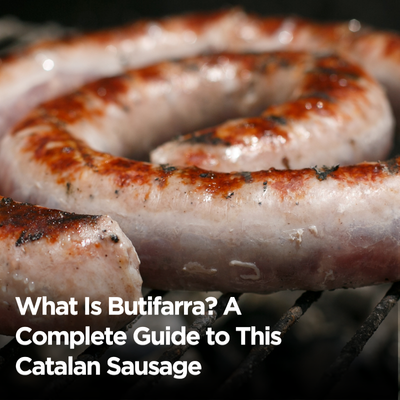
In the heart of Catalonia, Butifarra is not just sausage; it’s a cultural icon. Butifarra is a pork-based Catalan sausage characterized by its fresh meatiness and mild seasoning.
It’s traditionally made with finely chopped pork (often shoulder or leg) and just salt and pepper, unlike the paprika-rich chorizos of other regions. In Catalan cuisine, Butifarra is one of the most important dishes, enjoyed grilled, boiled, or in stews with seasonal vegetables.
This guide explores what is Butifarra, its history, varieties (blanca vs negra and more), flavors, cooking methods, and where to find or make it yourself.
What Is Butifarra?
Butifarra is a fresh or cooked pork sausage from Catalonia, Spain.
In its simplest form, it includes just ground pork, a little pork fat, and basic seasonings, typically salt and freshly ground black pepper. This gives it a mild, savory flavor that highlights the quality of the meat.
The white (blanca) version contains no blood, while the black (negra) version includes a small amount of pig’s blood for depth. Butifarra is generally coarser and juicier than spicy sausages; it lacks the smoky paprika of chorizo, so its taste is meat-forward and mellow.
First-time tasters often expect a loud, garlic-forward or spicy profile due to its Mediterranean origin, only to be surprised by its buttery, savory restraint.
So, if you find yourself in a tapas bar, wondering what is Butifarra sausage compared to the crimson-red rings hanging nearby, the answer lies in the palate: it is the comfort of roast pork shoulder translated into sausage form.
Alt-text: butifarra-deeply-rooted-from-catalan
Origin and Cultural Significance
Butifarra’s roots are deeply Catalan. Historians trace it back to ancient Roman sausages like botulu and lucanica, showing how pork sausages have long been part of the region’s diet. Over centuries, Catalans perfected their own versions.
Butifarra is especially tied to local festivals and community gatherings.
- Fira de la Botifarra (La Garriga): Each spring, the town of La Garriga hosts a vibrant street fair dedicated entirely to this sausage. Vendors showcase the full spectrum of varieties, including white (blanca), black (negra), egg (d’ou), and garlic sausages.
- The Matança: Farmers and families still celebrate the winter pig slaughter by making fresh Butifarra in home kitchens, preserving a ritual that has defined the Catalan winter calendar for centuries.
At these events, and on any given weekday, Butifarra is showcased in classic dishes that define the region’s palate.
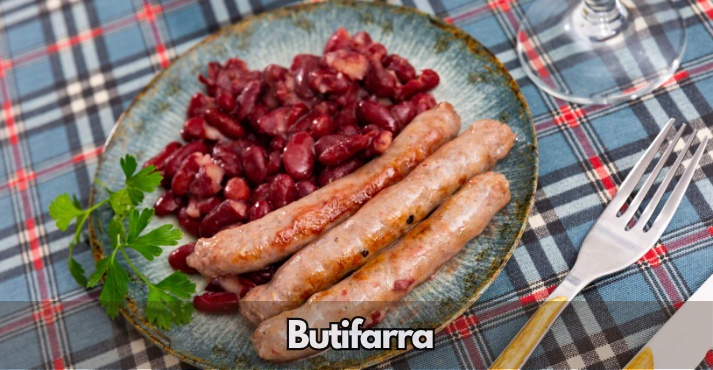
- The Legendary Pairing: Butifarra amb mongetes is simply grilled sausage served with white beans.
- Presentation: The sausages are traditionally cut into rounds and served atop a skillet of beans stewed with garlic and parsley.
- Symbolism: During local carnivals and communal meals, whole Butifarras are boiled or grilled and passed around, symbolizing Catalan unity and hospitality.
It is a symbol of Catalonia’s rural heritage and communal spirit, still savored in households and festivals across the region today. And Catalans take immense pride in their Butifarra recipes, which are often passed down through generations.
Types of Butifarra (Blanca vs Negra and More)
Butifarra comes in many variations, but the two most common are Blanca (white) and Negra (black).
Butifarra Blanca (White)
This version contains no blood, just lean pork and a little fat, seasoned with salt and pepper. The meat is often par-boiled, then stuffed into casings and poached again to remove excess fat.
The result is a fairly low-fat, tender sausage with a pale color. It tastes mild and meaty; imagine a coarse bratwurst without the garlic, and it’s often simply grilled or boiled.
Gourmet variations might include chopped apples, mushrooms, or even chocolate.
Butifarra Negra (Black)
This is the classic blood sausage. Lean pork and some fat are minced and mixed with fresh pig’s blood, plus salt and plenty of black pepper.
It’s not as heavily spiced as a typical morcilla (which often has cumin, onion, or rice), so the blood flavor here is subtler. The texture is firm and crumbly like a blood pudding, with a rich, iron-kissed taste.
Other Variations
Catalans have many local twists. Botifarra catalana is a larger-diameter sausage made with chunks of pork thigh and often flavored with truffle or wine.
Whereas a carnival treat, botifarra d’ou, adds whole eggs into the mix, giving it a pale yellow interior. There’s even a sweet version (botifarra dolça) with sugar or honey, traditionally paired with stewed apples.
Moreover, some fresh, uncooked botifarra crua are simply salt-and-pepper pork and are sold raw for cooking at home.
Here’s a quick comparison of major Butifarra types:
| Type | Ingredients | Flavor | Texture | Similar To |
| Blanca (White) | Lean pork (shoulder/loin), a bit of fat, salt, pepper | Mild, savory pork | Coarse yet tender | Mild bratwurst (no smoke) |
| Negra (Black) | Pork, pork fat, pig’s blood, salt, pepper | Rich, earthy blood | Dense, crumbly | Blood sausage (morcilla-like) |
| Catalana | Pork (often from thighs), salt, pepper, often with truffle or wine | Meaty, aromatic | Chunky, coarse | Ham sausage with truffles |
| D’ou (Egg) | Pork, egg, salt, pepper | Savory, eggy | Coarse, firm | Breakfast sausage (egg) |
What Does Butifarra Taste Like?
Butifarra’s taste is clean and porky. The white variety is subtly seasoned, so you really taste the grilled or boiled pork with just a hint of pepper. It’s juicy with natural pork sweetness and a bit of salty tang.
The black version adds the mild tang of blood and more pepper, making it deeper and more complex, but still nowhere near as spicy as chorizo.
In fact, chorizo, thickly red from smoked paprika, is a good contrast: chorizo packs a hearty, smoky heat, whereas Butifarra is unhurried and mild. Similarly, morcilla (a full-blood sausage) tends to be rich and strongly seasoned; by comparison, Butifarra negra is gentler.
Ingredients and How It’s Made
The core ingredients of Butifarra are simple. It is made from a mix of lean pork and pork fat, in a ratio of about 70–80% meat to 20–30% fat.
Traditional cuts such as pork shoulder, loin, or leg are commonly used after removing any gristle or tough connective tissue. This balance of meat and fat is what gives Butifarra its juicy texture and rich, natural pork flavor.
Basic Ingredients
The seasoning is intentionally minimal to highlight the quality of the meat. A classic preparation includes:
- Pork meat (shoulder, loin, or leg)
- Pork fat
- Coarse salt
- Black pepper (sometimes white pepper)
In some variations, a small amount of wine or subtle spices like nutmeg or allspice may be added, but they remain secondary notes.
Whereas some modern artisanal versions, such as Iberico-style Butifarra, may include only pork, salt, pepper, nutmeg, and cumin, still keeping the flavor profile clean and mild.
Traditional Preparation Method
The process begins with hand-cutting or coarsely grinding the meat and fat. This is a critical step; the fat must remain visible and distinct to ensure the sausage stays moist during cooking.
Butifarra is all about texture. The mixture is then seasoned and left to rest, allowing the salt to begin breaking down the proteins slightly for better binding. It is then stuffed into natural hog casings and either sold fresh or hung to dry for a few days to develop a slightly firmer exterior.
If you are looking for a basic Butifarra recipe, you will find it requires no fancy equipment beyond a meat grinder and a sense of proportion.
Once you have the hang of it, you can experiment with optional spices (nutmeg, allspice, etc.), but the magic of Butifarra is really in its simplicity.
Alt-text: steps-to-cook-and-serve-butifarra
How to Cook Butifarra
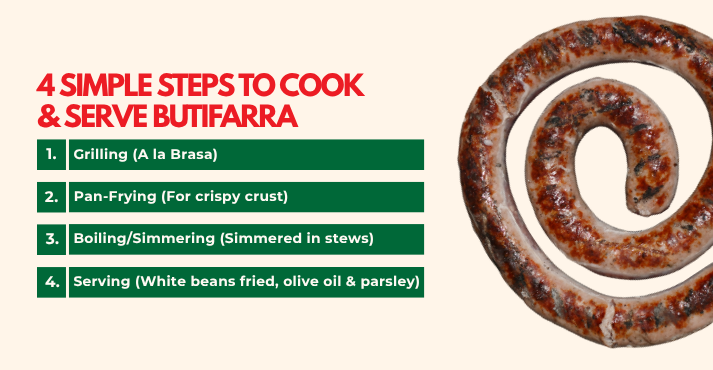
Butifarra’s versatility means there are many cooking methods:
Grilling (A la Brasa)
The Catalan classic is grilling fresh Butifarra over charcoal. Place the links on medium-hot coals and turn slowly. Traditionally, the sausages are scored lightly to prevent splitting.
The goal is a crisp, charred exterior with juicy pork inside. In Catalonia, this is a staple of family barbecues: botifarra amb mongetes is practically a national dish. Serve hot off the grill with bread and allioli (garlic mayo).
Pan-Frying
Cut cooked or raw Butifarra into thick slices. Heat a drizzle of olive oil in a skillet and fry the slices until browned on each side. This is an easy home method, giving a quick, crispy crust.
You can add sautéed onions or peppers to the pan for extra flavor. The frying releases the pork fat and crisps up the meat, delicious with a squeeze of lemon or a dip of aioli.
Boiling/Simmering
Because Butifarra blanca is already fully cooked in processing, it only needs gentle heating. It’s often simmered in stews or even boiled on its own.
A traditional winter stew (escudella i carn d’olla) will include halved Butifarra blanca and negra with beans, potatoes, cabbage, and other meats. To prepare, simply add raw or pre-cooked Butifarra links to simmering broth for 10–15 minutes until heated through.
Serving Ideas
The classic Butifarra amb Mongetes is essential, served alongside grilled sausage, white beans fried in olive oil with plenty of garlic and parsley.
For a quicker, more casual meal, consider a Butifarra sandwich. A crusty baguette (barra de pagès) smeared with ripe tomato and a drizzle of olive oil makes the perfect vehicle.
When considering types of cheese to pair with this sandwich, look for semi-cured sheep’s milk cheeses like Manchego or a young Mahón, which offer nuttiness without overwhelming the pork.
In terms of services in food and beverage, this dish is a staple in Catalan taverns, where it is presented with minimal fuss and maximum flavor.
Butifarra vs Other Sausages
While Butifarra holds its own distinct place in continental food, it is often compared to its Iberian and Italian cousins.
| Sausage | Origin | Flavor | Key Ingredient | Spice Level |
| Butifarra | Spain (Catalonia) | Clean pork, mild pepper | Pork, salt | None |
| Chorizo | Spain | Smoky, tangy, bold | Pork, Pimentón | Medium-High |
| Morcilla | Spain | Earthy, sweet, rich | Blood, rice/onion | None to Low |
| Italian Sausage | Italy | Sweet or Hot Fennel | Pork, fennel seed | Varies |
Butifarra relies on the integrity of the raw material, whereas others rely on spice (chorizo), filler (morcilla rice), or aromatic seeds (Italian fennel). This makes Butifarra a flexible ingredient in the kitchen, as it can be paired with a wide range of sauces and sides without creating flavor clashes.
Where to Buy Butifarra
If you want to try Butifarra, look for it in Spanish specialty shops or delis. In Catalonia, you’ll find it everywhere, from farmers’ markets to charcuteries.
In many cities around the world, gourmet food stores carry imported Spanish meats; for example, retailers like La Tienda (online) and European delicatessens often stock Butifarra.
For example. White Oak Pastures, a U.S. supplier of Iberico pork, sells Iberico Butifarra with the same subtle seasoning Catalans love.
Restaurants that feature Spanish cuisine may carry it too. If you order online, search both retail and foodservice channels: some Spanish importers supply restaurants and wholesale customers as well.
If real Butifarra is scarce, a good substitute is any coarse fresh pork sausage (mild Italian sausage or pork bratwurst), just skip the extra fennel or curry to keep it authentically mild.
Can You Make Butifarra at Home?

Absolutely, Butifarra is a beginner-friendly sausage to make. The ingredient list is short, and you don’t need complex spices. With good-quality pork and a bit of patience, you can recreate this traditional sausage in your own kitchen.
Here’s an easy way to get started:
- Prepare the Meat: Use pork shoulder with about 20–30% fat. This balance ensures the sausage stays juicy and flavorful.
- Season and Mix: Add salt and black pepper to the ground pork. Mix thoroughly until the seasoning is evenly distributed. Let the mixture rest overnight in the refrigerator to develop flavor.
- Stuff into Casings: Fill the mixture into hog casings, which you can get from local butchers or online stores. Tie them into even links.
- Poach Gently: Cook the sausages in simmering water for about 15–20 minutes, until fully cooked. This gives you classic Butifarra blanca.
- Optional Variation: For a darker version, you can add a small amount of fresh pork blood or darker meat scraps to the mixture before stuffing.
Cooking and Storage Tips
Once cooked, you can enjoy your homemade Butifarra in different ways. Grill it on a barbecue for a smoky finish or pan-fry it for a crisp outer layer.
The sausage keeps well in the refrigerator for up to a week. For longer storage, vacuum-seal and freeze it for several months without losing quality.
Once you taste your own freshly grilled batch, you’ll see why this simple sausage holds such a special place in Catalan food culture.
FAQs
Is Butifarra spicy?
No, Butifarra is not spicy. Unlike chorizo or hot Italian sausage, it contains no chili peppers, cayenne, or hot paprika. Its flavor profile is savory and mild.
Is Butifarra the same as chorizo?
No. While both are Spanish pork sausages, chorizo is defined by the use of pimentón (smoked paprika) and garlic, giving it a red color and spicy, smoky flavor. Butifarra is pale, mild, and flavored primarily with salt and pepper.
What is Butifarra made of?
Butifarra is made from coarsely ground lean pork, pork fat, salt, and black pepper. The negra variety also includes pig’s blood.
How do you eat Butifarra?
Butifarra is most commonly grilled and served with white beans (mongetes). It can also be pan-fried, sliced into stews, or eaten cold if it is the cured variety. It is frequently served in a sandwich with crusty bread and tomato.
Is Butifarra healthy?
As a fresh pork sausage with minimal processing and no nitrates or nitrites (in the fresh version), it is a cleaner option than many cured meats. However, it is still a fatty pork product and should be enjoyed in moderation as part of a balanced diet.
Can you freeze Butifarra?
Yes, fresh Butifarra freezes excellently. Wrap the links tightly in plastic wrap and then foil, or vacuum seal them. They will maintain quality for up to 3 months in a standard freezer. Thaw overnight in the refrigerator before cooking.
Conclusion
Butifarra is Catalonia’s beloved pork sausage, a fresh, pork-based link seasoned simply to let the meat shine. It comes in white and black versions (and others), each with its own character, and it pairs beautifully with Catalan staples like beans, bread, and allioli.
Whether grilled at a village festa or boiled in a cozy winter stew, Butifarra embodies the flavor of Catalan cooking. Or even try a Butifarra sandwich or slice into a plate of botifarra amb mongetes, and you’ll taste Catalonia’s food heritage.
If you enjoy cooking, even better: mix up a simple Butifarra recipe at home with ground pork, salt, and pepper, and savor a truly local flavor.
Now that you know what Butifarra is, you can understand why it is a delicious doorway into Spanish cuisine, “Bon profit!”