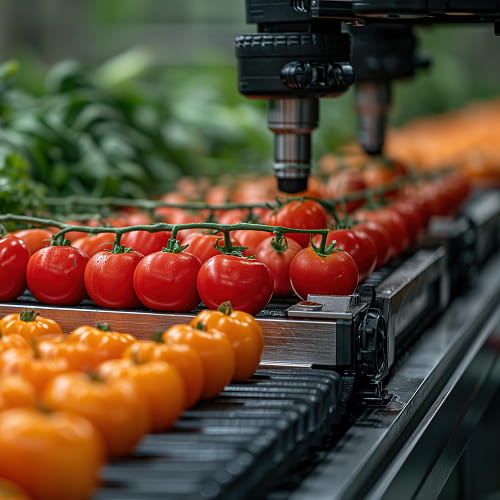
Artificial intelligence is moving beyond experimental projects into everyday food production. Across Southeast Asia, manufacturers are using AI-powered inspection, connected machinery, predictive analytics, and automated systems to improve how they process, package, and distribute food.
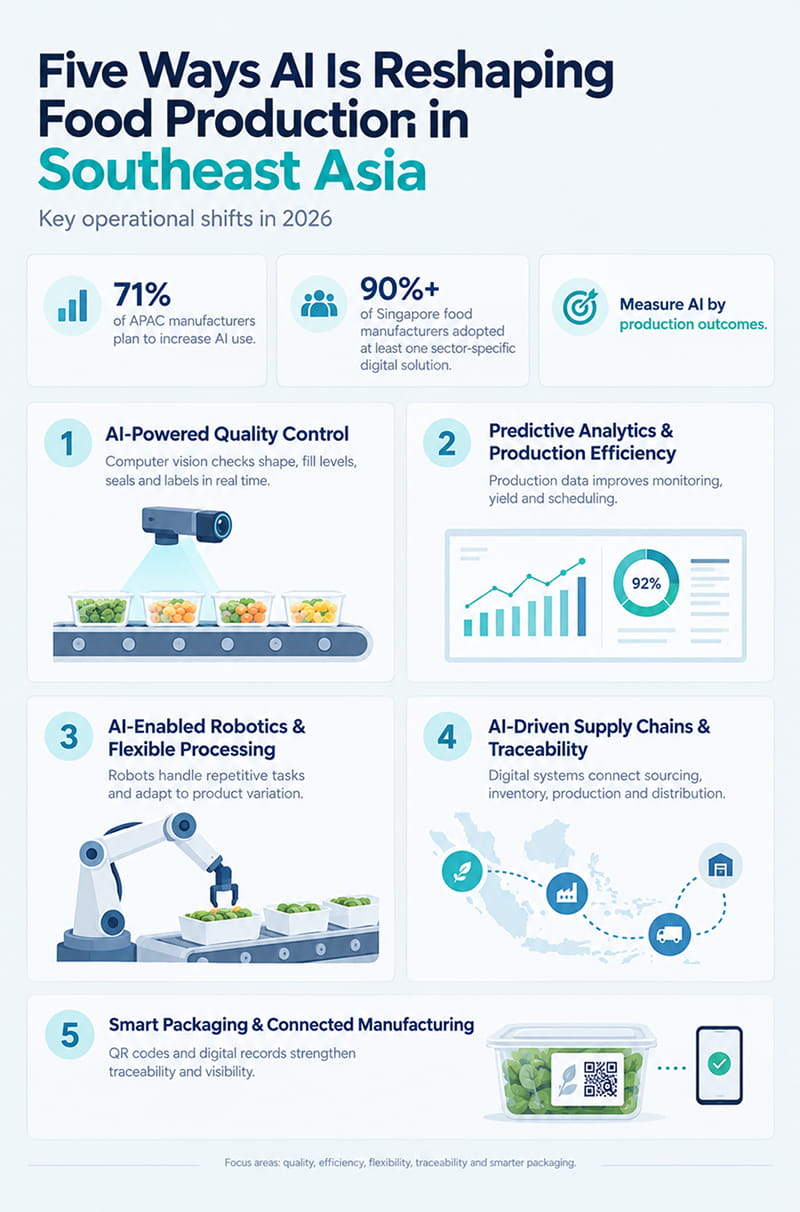
71% of surveyed Asia-Pacific manufacturers plan to increase their use of AI and machine learning over the next 12 months.
Singapore illustrates this transformation.
As of 2025, more than 90% of its food manufacturing businesses had adopted at least one sector-specific digital solution, up from 75% in 2023.
However, the food manufacturing trends influencing 2026 are not simply about adopting more technology. The commercial question is whether AI can improve yield, reduce downtime, strengthen quality control, and deliver measurable returns.
Understanding these AI-driven manufacturing developments can help Southeast Asian food producers determine where technology investments offer the greatest operational value.
Key Takeaways
- The food manufacturing trends shaping 2026 show how AI is moving beyond experimentation into quality inspection, production planning, automation, and supply-chain management.
- Emerging food production trends across Southeast Asia reflect growing investment in digitalisation, with manufacturers focusing on efficiency, product consistency, and waste reduction.
- AI-powered inspection, predictive analytics, and robotics can improve production performance, but successful adoption depends on data readiness, equipment integration, and workforce capabilities.
- Regional examples from Singapore, Malaysia, Thailand, and Vietnam demonstrate how manufacturers are applying digital technologies to practical production challenges.
- Businesses can explore manufacturing technologies and the latest food innovation trends through FHA’s industry platforms.
Why Is AI Becoming a Priority in Southeast Asian Food Manufacturing?
Food manufacturers operate under demanding conditions. Raw ingredients vary between batches, processing equipment must perform consistently, and food safety requirements leave little room for error.
Rising operating costs and manpower constraints add further pressure. According to Singapore’s Infocomm Media Development Authority (IMDA), these challenges are among the factors driving digital adoption across the country’s food manufacturing sector.
From Manual Monitoring to Data-Driven Production
Traditional production monitoring often relies on scheduled inspections, operator observations, and historical records.
AI allows manufacturers to analyse production information continuously, identifying unusual patterns that could indicate quality deviations or equipment problems.
These food factory technology trends encompass several technologies:
- Computer vision for product inspection
- Predictive analytics for equipment maintenance
- Machine learning for production optimisation
- AI-enabled robotics for repetitive processing
- Connected sensors for monitoring operating conditions
Rockwell Automation’s 2025 Asia-Pacific research found that 47% of surveyed manufacturers identified quality control as an AI use case, while 43% cited process optimisation.
These findings suggest that manufacturers are prioritising applications with a clear connection to productivity and operational performance.
Why Digital Readiness Matters
The latest food manufacturing trends also reveal an important distinction between digitalisation and AI adoption.
Digitalising records, connecting equipment, and implementing manufacturing execution systems can create the information foundation required for advanced analytics.
Factories operating with disconnected machinery or inconsistent records may therefore benefit from establishing reliable production data before investing in sophisticated AI applications.
Five Ways AI Is Reshaping Food Production in Southeast Asia
AI-Powered Quality Control and Inspection
Quality inspection is one of AI’s most commercially relevant applications.
Computer vision systems use cameras and machine learning models to assess product characteristics, identify abnormalities, and support automated inspection.
Depending on the production line, these systems can examine product shape, colour, fill levels, packaging seals, and labelling.
Among the food manufacturing trends influencing quality assurance, real-time inspection offers opportunities to identify defects earlier and improve consistency across large production volumes.
Regional example: Sydney Cake House, Malaysia
Malaysian frozen halal bakery manufacturer Sydney Cake House invested RM100 million in a 350,000-square-foot manufacturing campus at the Selangor Halal Hub.
According to the Malaysian Investment Development Authority (MIDA), its Digital Green Factory incorporates AI-powered quality control, IoT-enabled smart cookers, and digital twin infrastructure monitoring warehouse and utility operations.
These smart food production developments show how inspection technology can work alongside connected equipment and broader manufacturing systems.
For manufacturers, the potential commercial benefits include fewer defective products, better production documentation, and greater consistency when supplying retail, foodservice, and export customers.
Predictive Analytics and Production Efficiency
Unexpected equipment failures can disrupt production schedules, affect perishable ingredients, and increase operational costs.
Predictive analytics offers manufacturers an alternative to relying entirely on fixed maintenance schedules or responding after machinery breaks down.
By analysing equipment conditions and operating data, manufacturers can identify potential performance issues and schedule interventions more effectively.
Regional example: Kwong Cheong Thye, Singapore
Singapore condiment manufacturer Kwong Cheong Thye implemented a Manufacturing Execution System to monitor fermentation conditions, including temperature and humidity.
According to Enterprise Singapore and IMDA, the system supports scheduling and multi-batch planning and is expected to increase soya sauce yield from 70% to 90%.
This represents a targeted improvement rather than a completed, independently verified outcome.
The example shows how food manufacturing trends increasingly combine connected production systems with data-based decision-making.
While its current implementation centres on digital monitoring, reliable production records can also provide a foundation for future AI applications.
These food processing innovations are particularly relevant where small improvements in yield or equipment availability can influence manufacturing margins.
AI-Enabled Robotics and Flexible Production
Food products are not always uniform. Differences in size, shape, texture, and ingredient composition can make certain processing activities difficult to automate through fixed programming.
AI-enabled robotics can help equipment recognise variations and respond accordingly, although the suitability of these systems depends on the task and production environment.
Regional example: Thai Union, Thailand
Thai Union’s 2025 annual report identified several Factory of the Future technologies that had reached production-ready status.
These included an automated fish-cutting machine, an energy-efficient continuous dryer, and a high-precision X-ray detection system.
Although not every technology is AI-powered, these developments show how food manufacturing trends are bringing intelligent inspection and advanced machinery into processing environments.
For manufacturers, automation trends in food production are also encouraging interest in flexible food manufacturing systems that can accommodate different products, processing requirements, and production volumes.
The business case depends on whether automation improves throughput, product consistency, raw-material utilisation, or labour productivity sufficiently to justify the investment.
AI-Driven Supply Chains and Food Traceability
Production efficiency depends on more than factory-floor performance. Manufacturers must coordinate ingredient purchasing, inventory levels, processing schedules, warehousing, and distribution.
AI-enabled forecasting can analyse historical demand and order patterns to support production planning. Connected tracking systems can also improve visibility over ingredients and finished products.
Regional example: C.P. Vietnam and FPT
In June 2026, C.P. Vietnam and technology company FPT launched six AI transformation initiatives across the company’s integrated Feed-Farm-Food operations.
The programme includes intelligent cameras for farm monitoring, image-based raw-material inspection, feed-mixing management, and improvements to operational data systems.
The broader partnership has identified pilot targets of approximately 20% lower operating costs and full food safety traceability. These remain objectives, not demonstrated results.
Such initiatives illustrate how food manufacturing trends are increasingly extending beyond individual production lines into interconnected supply chains.
These Southeast Asian manufacturing developments also highlight the importance of accessible data for managing sourcing, food safety, and distribution requirements.
Smart Packaging and Connected Manufacturing
Packaging is another area where digital technologies can support manufacturing performance.
Smart food packaging may include QR codes, traceability information, or other digital identifiers that link physical products to supply-chain records.
However, packaging digitalisation should not be confused with AI. A QR code or connected label is not inherently an AI application; its value depends on the systems and information supporting it.
These food packaging innovations are particularly relevant to manufacturers serving multiple markets, where consistent labelling, product identification, and traceability can support regulatory compliance and customer requirements.
The broader significance of these food manufacturing trends lies in creating more connected production environments, where quality information can be shared between manufacturing, packaging, warehousing, and distribution.
What Should Manufacturers Consider Before Investing in AI?
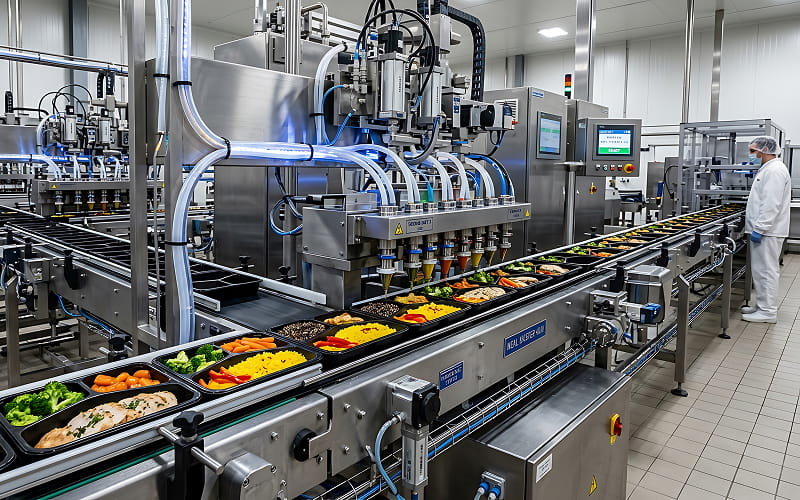
AI presents opportunities for manufacturing innovation, but investment decisions should begin with operational requirements rather than technology availability.
Identify a Measurable Production Problem
Manufacturers should identify where performance improvements would create the greatest commercial value.
Potential priorities include reducing rejected products, increasing production yield, improving forecasting accuracy, or addressing recurring equipment downtime.
Before implementing a solution, businesses should establish performance baselines and decide which outcomes will demonstrate success.
For example, a manufacturer considering automated inspection should calculate its existing rejection rate, inspection costs, and the financial impact of quality failures.
This helps businesses distinguish promising food manufacturing trends from investments that address an actual operational problem.
Assess Data and Technology Readiness
AI systems require reliable information to generate useful insights.
Manufacturers should evaluate whether production data is collected consistently, whether different machines can share information, and whether existing systems can support additional technologies.
Legacy equipment may require new sensors, controllers, or integration work.
For smaller manufacturers, investing first in digital monitoring or a manufacturing execution system may be more practical than implementing advanced AI immediately.
Assess these digital food production developments against the factory’s existing infrastructure, technical capabilities, and available budget.
Consider Workforce Skills and System Integration
AI adoption changes how employees interact with production systems.
Operators may need to interpret digital alerts, while maintenance personnel may need skills to manage connected machinery.
Quality teams may also need to analyse inspection data instead of relying exclusively on manual checks.
Measure Returns Before Scaling
Manufacturers should evaluate AI investments using indicators directly connected to production performance.
Relevant measurements include:
- Production yield and throughput
- Equipment downtime
- Product rejection and rework rates
- Labour hours and maintenance costs
- Food waste and material consumption
- Production accuracy and traceability
A successful pilot should show meaningful improvements before the solution expands across additional production lines.
Manufacturers should compare each pilot’s results against its original performance targets before committing to wider implementation. As food manufacturing trends continue to evolve, this helps ensure that technology investments deliver practical improvements rather than adding complexity to existing operations.
AI Adoption Must Deliver Operational Value
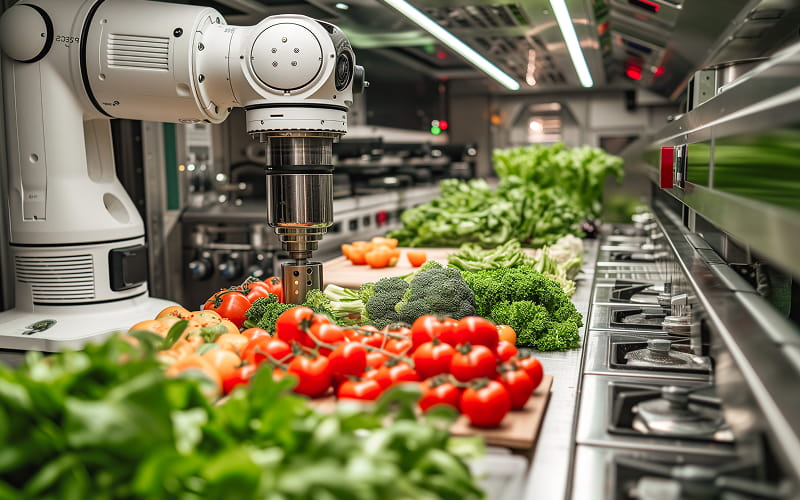
The food manufacturing trends shaping Southeast Asia in 2026 point towards increasingly connected factories, intelligent inspection, automated processing, and data-driven supply chains.
Regional manufacturers are already demonstrating how digital technologies can address production challenges. Nevertheless, adoption should remain guided by measurable business needs, realistic implementation costs, and operational readiness.
For manufacturers evaluating regional food manufacturing developments, the priority is to identify technologies that strengthen quality, productivity, flexibility, and long-term competitiveness.
About FHA: Explore Food Manufacturing Innovations at FHA 2027
Food & Hospitality Asia (FHA) connects food and beverage manufacturers, suppliers, distributors, and industry professionals through its international trade exhibition in Singapore.
At FHA 2027, the dedicated food manufacturing segment will showcase solutions spanning ingredients, processing equipment, packaging, automation, robotics, food safety, and supply-chain technologies.
Visitors can also explore FutureFWD for technology developments across foodservice, hospitality, and retail, or discover contract manufacturing opportunities through Private Label.
For businesses seeking a food manufacturer in Singapore or opportunities to connect with regional manufacturing partners, FHA provides a platform to explore emerging solutions and develop trade relationships.
Explore FHA Manufacturing at FHA 2027, taking place from 20 to 23 April 2027 at Singapore EXPO, and discover innovations shaping the future of food production in Asia.

Frequently Asked Questions
What are the leading food manufacturing trends in 2026?
The leading food manufacturing trends include AI-powered quality inspection, predictive analytics, production automation, robotics, connected manufacturing systems, and improved supply-chain traceability. Adoption varies depending on manufacturers’ production requirements, technological readiness, and available investment.
How is AI improving food manufacturing efficiency?
AI can analyse production data, identify defects, detect equipment abnormalities, and support more accurate planning. Improvements depend on implementation quality and should be measured through yield, throughput, downtime, rejection rates, or other operational indicators.
Can smaller food manufacturers adopt AI?
Yes. Smaller manufacturers can begin with targeted applications such as production monitoring, automated inspection, or forecasting. The most practical starting point is usually a measurable production problem supported by reliable data.
Can AI replace traditional food safety inspections?
AI can support inspection by monitoring production conditions and identifying visible abnormalities. However, it cannot replace all microbiological testing, established food safety controls, regulatory requirements, or human oversight.
How can manufacturers keep up with AI developments?
Manufacturers can follow industry research, assess regional case studies, engage technology providers, and attend specialist exhibitions. The most relevant food technology manufacturing trends are those that translate into improvements in their own production environments.
Data Sources
| Source | Reference |
|---|---|
| Rockwell Automation | 95% of Asia Pacific Manufacturers Say Digital Transformation is Now Essential, as AI Adoption and Cyber Risks Accelerate |
| Rockwell Automation | 94% of APAC Manufacturers Investing in AI to Navigate Uncertainty and Drive Smart Manufacturing |
| Infocomm Media Development Authority (IMDA) | Refreshed Industry Digital Plan to support over 1,500 food manufacturers in accelerating technology adoption |
| Infocomm Media Development Authority (IMDA) | Annex B |
| Malaysian Investment Development Authority (MIDA) | Sydney Cake House: Baking a Global Legacy Through Smart Manufacturing and Green Innovation |
| Thai Union | Annual Registration Statement / Annual Report 2025 |
| FPT Corporation | FPT and two Thai corporations collaborate to accelerate AI transformation. |
| Food & Hospitality Asia | FHA Manufacturing |
| Food & Hospitality Asia | FutureFWD |
| Food & Hospitality Asia | Private Label |
| Food & Hospitality Asia | Food Technology & Innovation: Safer, Sustainable, Nutritious |