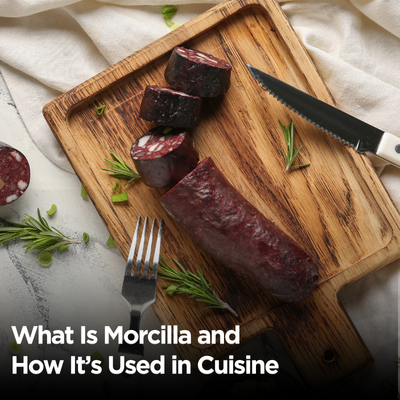
Many people ask what is morcilla and how it is used in traditional cuisine.
Morcilla is a type of blood sausage made mainly from pork blood, pork fat, and fillers such as rice, onions, or breadcrumbs, along with various spices.
It originated in Spain and later became popular in many Latin American cuisines, where different regions developed their own unique variations.
Morcilla is usually cooked before serving and is commonly grilled, fried, or added to dishes like stews, rice plates, and tapas. Its rich flavor and soft texture make it a well-known ingredient in traditional Spanish and Latin American cooking.
This article explores what morcilla is, its key ingredients, where it comes from, and how it is commonly used in different cuisines.
What Is Morcilla?
Morcilla is a type of blood sausage commonly found in Spanish and Latin cuisines.
It is made by combining animal blood, usually pork blood, with pork fat, fillers such as rice, onions, or breadcrumbs, and a mix of spices. The mixture is then stuffed into a casing and cooked to create a rich, savory sausage.
Within this category, morcilla can appear in several forms:
- Fresh morcilla that must be cooked before eating
- Cured or smoked morcilla that may be ready to eat
- Regional varieties that use different fillers, such as rice-based or onion-based recipes
The defining ingredient in morcilla sausage is blood, most often pork blood. This ingredient gives the sausage its deep, dark color and distinctive flavor.
Morcilla usually has a soft, tender texture, especially in varieties that include rice or grains. When cooked, the outside can become slightly crisp while the inside remains moist and crumbly.
What Is Morcilla Made Of?
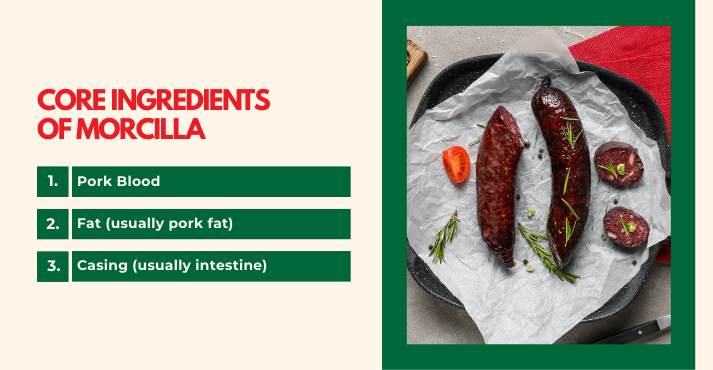
Here’s a breakdown of morcilla ingredients:
Core Ingredients
- Pork blood: The defining ingredient. Blood gives morcilla its deep color and a savory, iron-rich backbone that shapes the overall flavor.
- Fat (usually pork fat): Adds richness and moisture; fat carries flavors and keeps the filling tender when cooked.
- Casing: Natural (intestine) or synthetic casings hold the mixture together and give the sausage its shape; they also help the sausage keep moisture while it cooks.
Common Additions by Region
Across regions such as Spain and Latin America, cooks add various fillers and seasonings. Typical additions include:
- Rice: Very common in Spanish (e.g., Burgos) and many Latin versions.
- Onions: Provide sweetness and moisture; often sautéed first.
- Spices: Paprika, black pepper, cinnamon, or nutmeg, depending on local taste.
- Herbs: Parsley, oregano, or bay leaf for aroma.
- Chili/hot peppers: Used in some Latin American varieties to add heat.
- Breadcrumbs, potatoes, or other grains: Alternative fillers that change texture and stretch the mixture.
What Does Morcilla Taste Like?
The taste of morcilla is rich, savory, and deeply satisfying, with flavors that vary slightly depending on the region and ingredients used.
Texture
Morcilla usually has a soft and tender texture. Varieties made with rice tend to be slightly crumbly, while others can feel smooth and creamy inside. When grilled or pan-fried, the outside becomes crisp while the inside remains moist.
Aroma
Warm and savory, often influenced by onions, garlic, and spices such as paprika or pepper. Some versions also have a smoky smell, especially when cooked on a grill.
Richness
Morcilla is known for its strong, rich flavor, thanks to the pork blood and fat used in the mixture. The taste is earthy and slightly mineral-like, balanced by the sweetness of onions and the depth of spices.
Spice Level
Most morcilla varieties are mildly spiced rather than very hot. Spices such as paprika, black pepper, or herbs add flavor and warmth. In some Latin American versions, chili peppers may be added for extra heat.
To better understand the flavor, morcilla is often compared to pâté or liver sausage because of its smooth richness. It is also similar to black pudding, another type of blood sausage commonly eaten in parts of Europe.
Origins and Cultural Background
The morcilla’s origin is closely tied to traditional food practices in Spain, particularly the rural custom of matanza, the annual pig slaughter.
During this community event, families preserved pork by making ham, chorizo, and sausages. The remaining blood was mixed with fat, rice, onions, and spices to make morcilla, ensuring that no part of the animal was wasted.
In fact, blood sausages have existed for centuries and appear in many cultures around the world.
However, in Spain, morcilla became an especially important part of traditional cooking, particularly in rural areas where preserving food was necessary for long-term use.
One of the best-known regional varieties is Morcilla de Burgos, from Burgos. This version often includes rice, which became common after rice cultivation spread from Valencia to other parts of Castile in the 1700s.
Moreover, blood sausages developed across many cultures for a practical reason: to avoid waste and use every part of livestock. By mixing blood with grains, fat, and spices, communities created a nutritious and filling food that could be preserved and easily cooked.
Over time, morcilla became a traditional dish in Spanish cuisine and a symbol of resourceful cooking. Today, it remains a popular specialty food, enjoyed in everyday meals as well as festive dishes across Spain and Latin America.
Types of Morcilla Around the World
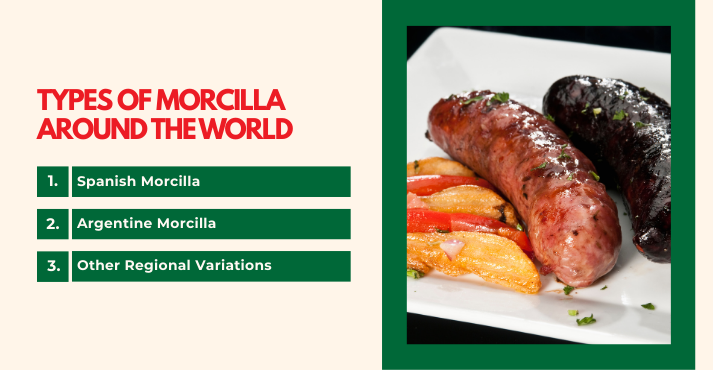
Morcilla is found in many countries, but its ingredients and flavor can vary depending on local traditions, spices, and cooking styles. Climate, available grains, and cultural food habits often shape how each region prepares its version of morcilla.
Spanish Morcilla
In Spain, morcilla is one of the most traditional blood sausages. Spanish versions commonly include rice or onions as fillers, along with pork blood, fat, and garlic.
They are frequently seasoned with paprika, which gives the sausage a smoky, savory flavor.
One well-known example is Morcilla de Burgos, which is made with rice and is often sliced and fried or grilled before serving.
Argentine Morcilla
In Argentina and neighboring Uruguay, morcilla usually has a softer, creamier texture and a milder seasoning than in Spanish styles.
The sausage is commonly cooked on the grill as part of asado, a traditional barbecue that includes several types of meat. In this setting, morcilla is often grilled and served alongside other grilled meats.
Other Regional Variations
Many other countries have their own versions of morcilla or similar blood sausages:
- Mexican morcilla (moronga): Often includes herbs and regional spices, and it is commonly served grilled or in tacos.
- Colombian morcilla: Usually mixed with rice, onions, and herbs, then grilled or pan-fried until the outside becomes crisp.
- Filipino blood sausage: Influenced by Spanish cooking traditions, but adapted with local ingredients such as rice and regional seasonings.
Each region adapts morcilla to local tastes and ingredients. As a result, the sausage may vary in texture, spice level, and cooking style, while still keeping the same core idea of a blood-based sausage.
How Morcilla Is Used in Cooking
Morcilla is versatile in the kitchen and can be prepared in several ways:
Grilled
A classic method. Whole or halved morcilla links are placed on a hot grill (or over embers) and cooked just until the casing tightens and the inside is warmed through.
Grilling adds a smoky char to the exterior while keeping the interior soft.
This is common in Argentina and Uruguay, where morcilla is served as the “first wave” of meats in an asado, often alongside chorizo.
Fried or Sautéed
Sliced morcilla can be pan-fried to produce a crispy exterior and creamy interior. Spaniards typically cut it into thick rounds and fry it in olive oil.
For example, one recipe says: slice ~1 inch thick and fry 3–4 minutes per side until browned. The result is a crunchy crust with a juicy, tender middle.
Fried morcilla rounds are often served on bread as tapas, or alongside eggs and potatoes for breakfast.
Added to Dishes
Because of its bold taste and soft texture, it is often sliced, crumbled, or lightly grilled before being added to recipes.
- Stews: Morcilla is added to hearty stews like Spanish cocido or bean dishes, enriching the broth with its fat and spices.
- Tapas: Sliced and pan-fried, morcilla is served as a tapa with bread, potatoes, or onions, often alongside cheeses and cured meats.
- Rice Dishes: In Latin America, small pieces of morcilla are cooked with rice and beans, infusing the dish with savory flavor.
- Breakfast Plates: Grilled or pan-fried, morcilla is served with eggs, bread, or potatoes for a flavorful breakfast component.
How to Cook Morcilla (Step-by-Step)
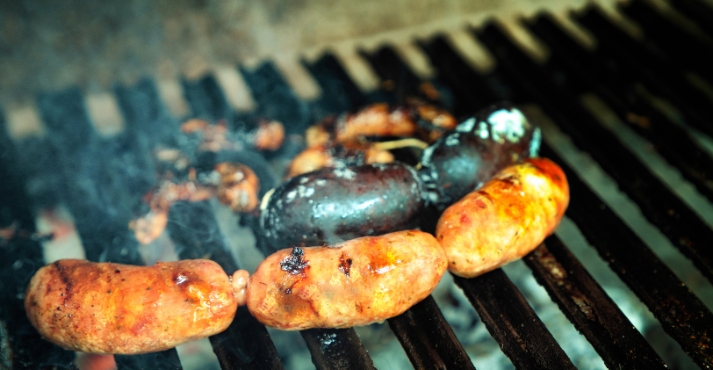
Here’s how to cook morcilla:
- Preparation: If frozen, thaw morcilla in the refrigerator. Pat it dry. Because most morcilla is already boiled (just needing reheating), you generally do not need to cook it in water first. However, if using an uncooked variety, you can simmer links in water for 5–10 minutes until they firm up.
- Choose your method: grill, pan-fry, or bake.
- Slice (if pan-frying or baking): Using a sharp knife, cut the sausage into 1–2 cm (¾–1 inch) thick slices. Thicker slices hold the juices well.
- Pan-Fry: Heat a bit of oil or butter in a skillet over medium heat. When hot, add the morcilla slices. Cook 3–4 minutes per side, flipping carefully so they brown evenly. The goal is a crisp edge and golden exterior, while the inside is hot and slightly soft.
- Grill: Place whole or halved morcilla on a preheated grill or grill pan. Cook a few minutes per side, turning gently, until the casing tightens and browns. Because morcilla is already cooked inside, grilling simply heats it through and adds smoky flavor.
- Bake: Lay sliced morcilla on a baking sheet and roast at 180°C (350°F) for about 10–15 minutes, until heated and starting to brown.
- Check Doneness: Cooked morcilla should be piping hot inside (no cool spots) and have a slightly firm, opaque filling. The casing will be taut. Unlike raw pork, you’re not looking for a pink color – morcilla is meant to be thoroughly heated.
- Serving: Arrange on a platter or bread. Morcilla can be eaten hot from the skillet/grill or at room temperature. It’s delicious topped on toast, crumbled into dishes, or served alongside eggs and vegetables.
Morcilla vs Black Pudding
Morcilla is often compared to British black pudding, but they have notable differences:
| Feature | Morcilla | Black Pudding |
| Origin | Spain (and Spanish-speaking Latin America). | British Isles (England, Ireland, Scotland). |
| Seasoning | Typically spiced with sweet or smoked paprika, garlic, oregano, etc. | Usually seasoned with herbs like pennyroyal, thyme, marjoram, or mint (milder flavor). |
| Texture | Dense, firm, and often slightly dry (morcilla is usually cured). | Softer, moister texture (black pudding is typically not cured and remains soft). |
| Fillers | Rice or onions (sometimes potatoes) are common fillers. | Grains like oatmeal or barley are mixed in. |
Both are blood sausages, but morcilla’s use of rice/onions and paprika gives it a different character than the oat-based, herb-seasoned black pudding. Neither is “better,” they’re regional specialties with their own taste profiles.
Is Morcilla Spicy?
Generally, no. Most morcilla varieties are mildly seasoned, not hot.
Spanish morcilla typically uses sweet or smoky paprika, which adds flavor without much heat. Some Latin versions may include chili peppers for warmth, but this isn’t the norm.
Also, the spice level depends on the recipe: traditional Spanish morcilla is more savory-smoky than fiery, while some South American recipes might be moderately spiced.
If you prefer mild sausage, morcilla (with its paprika and garlic) is usually not overwhelming.
Is Morcilla Healthy?
Morcilla can be nutrient-dense, but it should be enjoyed in moderation due to its high fat and calorie content.
- Nutrients: Morcilla provides a good amount of protein, thanks to its pork and blood ingredients. It also contains vitamins such as B12, which comes from the blood and meat.
- Iron Content: One of morcilla’s standout nutrients is its iron content. A single serving can supply roughly half of the daily iron requirement, making it a rich source compared with many other foods.
- Fat Levels: Morcilla is high in fat and calories. A typical portion contains over 30 grams of fat, along with significant amounts of cholesterol and sodium.
- Moderation Advice: To enjoy morcilla as part of a balanced diet, it’s best to eat it in small portions, such as tapas slices, and pair it with vegetables, grains, or lighter dishes.
Where Is Morcilla Popular?
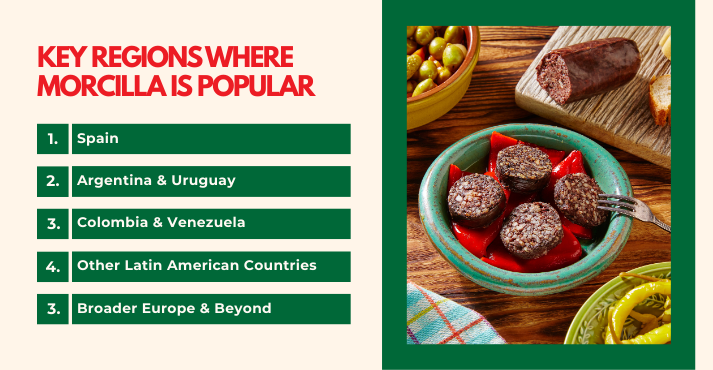
Morcilla is most popular in Spain and across many parts of Latin America, where it plays a meaningful role in local cuisines and cultural eating occasions.
Spain
In Spain, morcilla is a traditional staple enjoyed throughout the country, with regional varieties like Burgos, León, and Asturias.
It appears in everyday meals, local festivals, and family gatherings, as well as in taverns and tapas bars where it’s served alongside other cured meats and breads.
Argentina & Uruguay
In Argentina and Uruguay, morcilla is widely eaten at asados, the traditional barbecues that are central to social and family events. It’s often grilled and served with other meats or in a sandwich called morcipán.
Colombia & Venezuela
In Colombia, morcilla is part of classic dishes like bandeja paisa, and is also common in street food and on dinner tables. In Venezuela, it’s typically grilled with meats and enjoyed at barbecues and local meals.
Other Latin American Countries
Morcilla is also found in Mexico (where it’s called morcilla or moronga and used in tacos and gorditas), Puerto Rico (especially at holidays), Ecuador, Bolivia, and elsewhere in the region.
Broader Europe & Beyond
Although the term morcilla is most associated with Spanish and Latin American cuisine, similar blood sausages exist throughout Europe and have appeared in other countries influenced by Spanish culture.
Cultural eating occasions for morcilla include festive meals and local festivals in Spain, asados and barbecues in South America, street food scenes in Colombia and Mexico, and family feasts across the Spanish-speaking world.
That said, anywhere Spain’s culinary influence has spread, you can find morcilla on the menu, from tapas bars in Madrid to mixed grills in Buenos Aires and traditional dinners throughout Latin America.
How to Serve Morcilla
Serving ideas vary with context:
Casual
Serve grilled or fried slices on crusty bread or as part of a charcuterie/tapas board.
In Argentina, a classic is the morcipán, a sausage sandwich often eaten at outdoor gatherings. Cold sliced morcilla can also star in a picada (meat & cheese platter) with crackers, olives, and cheese.
Traditional
Add slices to stews and soups (beans, lentils, potatoes) for depth of flavor. In Spain, morcilla is traditionally stirred into a cocido stew or paired with boiled potatoes.
It’s often the co-star at festivals and holidays (e.g., in Asturian fabada or on Carnival in beans). You can also fry it alongside other meat and poultry dishes (chorizo, bacon) for a hearty breakfast plate with eggs and potatoes.
Modern
Chefs nowadays showcase morcilla in gourmet ways. For example, crumbling it into a paella for smoky flavor, serving it with fruit compotes to balance richness, or topping pizzas and frittatas.
Buying Guide: How to Choose Good Morcilla
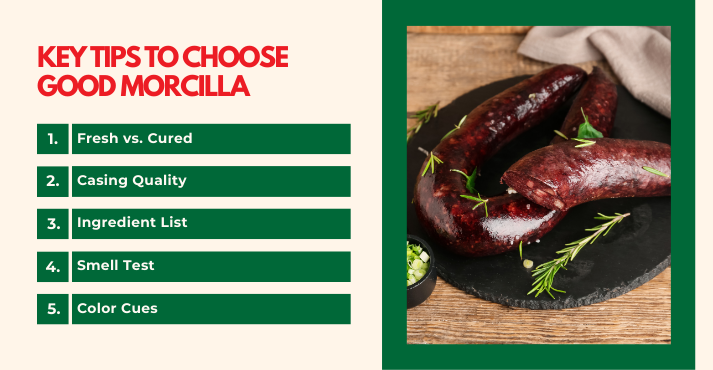
Choosing quality morcilla ensures the best flavor and texture in your dishes.
Here are key tips to guide your selection:
1. Fresh vs. Cured
When buying morcilla, it’s important to know whether it is fresh or cured. Fresh morcilla needs to be fully cooked before eating and has a soft, moist texture that works well in stews or pan-fried dishes. Cured or smoked morcilla, on the other hand, is precooked and ready to eat after reheating.
2. Casing Quality
Check the casing before purchasing. High-quality morcilla has intact, slightly firm casings. Avoid sausages with tears, holes, or dried-out casings, as these can affect texture, cooking performance, and shelf life.
3. Ingredient List
Always review the ingredients. Good morcilla contains simple, natural ingredients: pork blood, fat, fillers such as rice or onions, and spices. Sausages with excessive preservatives, artificial colors, or unnecessary fillers may compromise flavor and quality.
4. Smell Test
The smell of morcilla is a reliable indicator of quality. It should have a savory, meaty aroma with subtle spice notes. Avoid any sausage that smells sour, ammonia-like, or overly metallic, as these can signal spoilage.
5. Color Cues
Finally, examine the color of the sausage. The interior should be a deep reddish-brown or dark purple, reflecting its blood content. Flecks of paprika or other spices are normal, but a pale or gray interior may indicate poor-quality ingredients.
Following these tips will help you select morcilla that is flavorful, safe, and perfect for cooking in stews, tapas, or grilled dishes.
FAQs
Is morcilla blood sausage?
Yes, morcilla is a Spanish blood sausage, it’s made primarily from pig’s blood and pork. The blood gives it its dark color and characteristic flavor.
What is morcilla made of?
The basic recipe is pig’s blood mixed with pork fat (or scraps), then flavored and stuffed in casing. Common fillings include rice, chopped onions or potatoes, and seasonings like salt, paprika, garlic, and other spices.
Can you eat morcilla raw?
No. Morcilla is semi-cured and must be cooked before eating. Although it’s often sold pre-boiled, it’s not eaten like salami. Always heat morcilla (fry, grill, or simmer) until it’s thoroughly hot inside before serving.
Is morcilla the same as black pudding?
They are related but not identical. Both are blood sausages, but morcilla (Spanish/Latin) usually contains rice, onions, and paprika, while black pudding (British) uses oatmeal or barley and milder herbs. Their spices and textures differ, so they taste distinctly different despite both being “black” sausages.
Does morcilla taste like liver?
Not exactly. Morcilla is richer and more seasoned than plain liver. People often describe it as similar to a finely spiced pâté. If anything, morcilla’s flavor is smoother and slightly sweeter (especially if it contains onion or raisins) than straight liver sausage. The taste is dominated by the pork, blood, and spices rather than a raw-liver sharpness.
Final Thoughts
Morcilla is a uniquely rich and storied sausage that showcases the nose-to-tail spirit of Spanish and Latin cooking.
Its combination of pig’s blood, savory spices, and local fillers creates an unforgettable taste and texture unlike many other sausages.
Whether enjoyed fried as a tapa, grilled at a barbecue, or simmered in a hearty stew, morcilla adds depth and tradition to a meal. It’s a dish with centuries of history, regional pride, and comforting flavor, an adventurous ingredient that many who try it come to love.
If you’ve never tasted it, consider giving morcilla a try; it might just become one of your new culinary discoveries in the world of sausage.