
Mushroom coffee is quickly becoming a popular trend in the wellness and specialty coffee world. Many people are curious about this unusual drink that blends traditional coffee with medicinal mushrooms.
So, what is mushroom coffee?
In simple terms, it is a beverage made by mixing coffee, often single-origin coffee or high-quality coffee beans, with powdered extracts from medicinal mushrooms. These blends are part of a growing category of functional foods, meaning foods designed to offer more than basic nutrition.
Mushroom coffee is often promoted as a functional coffee alternative for people who enjoy coffee but want to explore new ingredients and modern wellness trends.
It appeals to coffee drinkers, health-conscious consumers, and anyone interested in innovative products in the food and beverage market.
In this guide, we’ll explain what medicinal mushroom coffee is, how it is made, what ingredients it contains, how it tastes, and what research currently says about its effects. You’ll also learn how it compares to regular coffee and whether it’s worth trying.
What Is Mushroom Coffee?

Mushroom coffee is not a cup of soup; it’s ground coffee mixed with medicinal mushroom extracts.
One study found that a Cordyceps-infused coffee retained its normal coffee aroma and flavor without a strong mushroom aftertaste.
Mushroom coffee is made by blending regular coffee with powdered extracts from functional mushrooms. The process is simple and designed to keep the drink tasting like normal coffee.
Here is how mushroom coffee is typically made:
- Drying the mushrooms: Functional mushrooms such as lion’s mane, chaga, reishi, and cordyceps are first dried.
- Grinding or extracting: The dried mushrooms are ground into a fine powder or processed into concentrated extracts.
- Blending with coffee: The mushroom powder is mixed with coffee grounds, often using single-origin coffee or high-quality Arabica beans.
- Adjusting the ratio: Different brands use different amounts of mushroom extract to balance flavor and product formulation.
Despite its name, mushroom coffee uses non-psychoactive fungi, sometimes called functional or adaptogenic mushrooms, not psychedelic “magic mushrooms.”
Because of this formulation, mushroom coffee is often marketed as part of the growing category of functional foods, where everyday products are combined with additional ingredients while keeping the original drinking experience.
It’s important to note that mushroom coffee generally still contains caffeine, though often less than a regular cup of coffee. The exact amount depends on the product.
Mushroom Extract vs. Whole Mushroom Powder
Mushroom coffee products vary in form. Some use whole-mushroom fruiting-body powder, while others use concentrated extracts.
A whole-fruit powder contains all components of the mushroom, including fiber and chitin, whereas an extract is a concentrated form of specific compounds (e.g., polysaccharides or triterpenes).
For example, in one analysis, a coffee blend treated with Cordyceps extract had much lower levels of β-glucan and cordycepin than raw Cordyceps mushrooms. This indicates that extracts can be diluted compared to whole mushrooms.
However, extracts are prized for their ability to standardize and concentrate key bioactives. Buyers should check labels to see which form is used, whether it’s the fruiting body or mycelium, and whether the product is standardized to a specific active ingredient.
How Mushroom Coffee Works
Mushroom coffee’s proposed effects come from two main sources: the caffeine in the coffee and the bioactive compounds in the mushrooms.
Functional Mushrooms Explained
“Functional mushrooms” refer to species that have long been used in traditional medicine (in China, Japan, and Ayurveda) for health support. These include Lion’s Mane, Reishi, Chaga, Cordyceps, Turkey Tail, and others.
They contain complex phytochemicals that scientists are studying. Many of these mushrooms are classified as adaptogens, meaning they may help the body adapt to stressors and normalize physiological functions.
For example, adaptogens in mushrooms are thought to modulate the stress response by influencing cortisol levels and energy metabolism.
Importantly, the concept of adaptogen is mostly traditional rather than strictly scientific. Modern research has identified specific bioactive compounds in these mushrooms, including polysaccharides (such as β-glucans), triterpenoids, phenolic compounds, and ergosterols.
These substances have been shown in preclinical studies to have immunomodulatory, antioxidant, anti-inflammatory, and even neuroprotective effects. When combined with coffee, these components are believed (though not yet proven) to provide mild health benefits.
Active Compounds

Functional mushrooms contain several natural compounds that are also present in medicinal mushroom coffee, though usually in smaller amounts than in full mushroom supplements.
Main compounds include:
- β-Glucans and Polysaccharides: These are complex carbohydrates found in mushroom cell walls. They are studied for their role in supporting the immune system by activating natural defense cells. Mushrooms like reishi and chaga are rich sources.
- Antioxidants (Phenolics and Melanin): Mushrooms contain antioxidants such as polyphenols and flavonoids that help neutralize free radicals. Chaga, in particular, is known for its high antioxidant content. Since coffee itself is also rich in antioxidants, the blend can be naturally antioxidant-dense.
- Triterpenes: Found mainly in reishi mushrooms, these compounds are associated with anti-inflammatory effects and support of the stress response.
- Cordycepin and Adenosine: Found in cordyceps mushrooms, these bioactive compounds are studied for their role in energy metabolism and potential effects on endurance.
Overall, mushroom coffee introduces these compounds in small amounts. Most research on these substances is still in its early stages, often based on laboratory or animal studies, so many health claims remain preliminary.
Caffeine Interaction
Caffeine still plays an important role in how mushroom coffee affects the body. However, many mushroom coffee blends contain less caffeine than regular coffee.
This happens because mushroom extracts are mixed with coffee grounds, which lowers the total caffeine in each cup. For example, a typical cup of mushroom coffee may contain around 40–50 mg of caffeine, while regular coffee often has about 90–100 mg.
Because of this lower caffeine level, many people describe the effect as a gentler energy boost.
Possible effects people report include:
- Smoother energy: The stimulation may feel milder compared to regular coffee.
- Fewer jitters: Some drinkers say they feel less shaky or anxious.
- Less sudden crash: Energy levels may drop more gradually.
Mechanistically, it’s not fully proven. We know caffeine still acts on the adenosine receptors as usual, but mushroom compounds might mitigate side effects.
Types of Mushrooms Used and Their Benefits
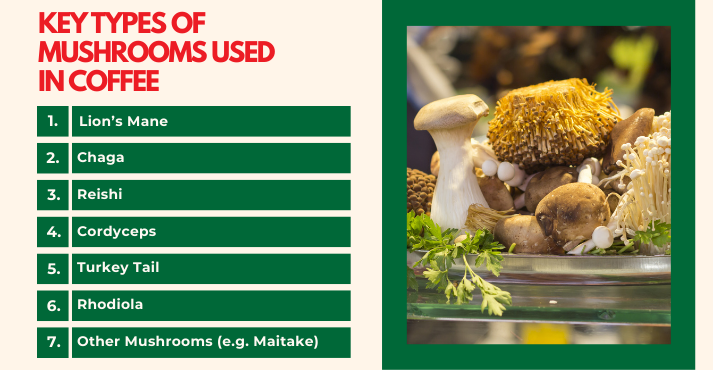
Many medicinal mushrooms used in coffee blends have a long history in traditional medicine and are now being studied in modern nutrition science.
These ingredients are often included to support different wellness goals. However, it is important to remember that most of these effects are traditionally used or studied for, not proven medical treatments.
This is also why people often ask, “Is mushroom coffee really good for you?” The answer depends on the ingredients used and the amount included in the blend.
Here are some of the most common mushrooms found in mushroom coffee:
|
Mushroom |
Studied For |
Common Uses |
|---|---|---|
|
Lion’s Mane (Hericium erinaceus) |
Cognitive support and nerve growth factor research |
Focus, productivity, memory support |
| Chaga (Inonotus obliquus) | High antioxidant content and anti-inflammatory properties | Immune support and inflammation balance |
| Reishi (Ganoderma lucidum) | Adaptogenic effects and stress response support | Relaxation, stress reduction, mild immune support |
| Cordyceps (Cordyceps militaris) | Energy metabolism and endurance | Physical stamina and athletic performance |
| Turkey Tail (Trametes versicolor) | Immune-supporting polysaccharides | Gut and immune health support |
| Rhodiola (an adaptogenic herb sometimes added) | Stress adaptation and mood balance | Stress management |
| Other Mushrooms (Maitake, Shiitake) | General nutrition and immune support | Overall wellness and nutrient support |
For example, Lion’s Mane has been traditionally used in East Asia to support brain health. Researchers are studying it because it may help stimulate nerve growth factor (NGF), a protein important for brain cells.
When these mushrooms are added to mushroom coffee, they are usually included in small amounts, often around 500 mg to 1 gram per cup.
As a result, the drink provides a mild introduction to these ingredients rather than the higher doses found in dedicated supplements. For this reason, mushroom coffee should be seen as part of a balanced diet, not a replacement for medical treatment or proper nutrition.
Health Benefits of Mushroom Coffee
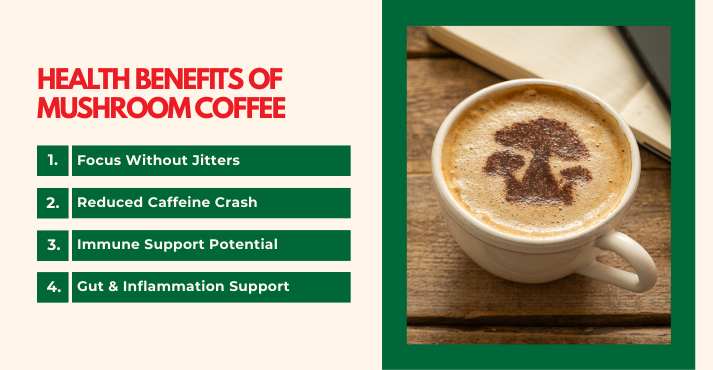
Mushroom coffee has gained significant attention in the food and wellness markets worldwide.
Many products highlight a long list of potential advantages, which leads many people to explore mushroom coffee benefits more closely.
However, it is important to note that direct scientific studies on mushroom coffee remain limited.
Focus Without Jitters
Many mushroom-coffee blends replace part of the coffee with mushroom powder, so each cup usually has less caffeine than a regular brew.
As a result, the energy feels milder. For example, UCLA researchers note that a cup that’s “only about half coffee” will deliver roughly half the caffeine and may cause fewer jitters.
For example, Lion’s Mane is traditionally used in East Asia for brain health and has been studied for its effects on nerve growth factor (NGF) synthesis.
Reduced Caffeine Crash
If you drink less caffeine, the peak is smaller, and the drop tends to be gentler, so consumers can experience a longer, steadier feeling of alertness rather than a sharp spike-and-crash. Evidence for a unique mushroom-coffee anti-crash effect is weak.
However, research suggests that adaptogen compounds in mushrooms may also help modulate stress hormones, potentially reducing crash-like feelings. However, clinical evidence that mushroom components alter caffeine’s effects in people remains lacking.
Immune Support Potential
Medicinal mushrooms contain polysaccharides (like β-glucans) and antioxidants that have immune-modulating activity in lab and animal studies. Therefore, mushroom coffee may provide a small immune or antioxidant boost compared with plain coffee.
Typical mushroom-coffee servings deliver much smaller doses of these compounds than whole-mushroom extracts or supplements, and no randomized trials have shown that drinking mushroom coffee improves immune markers in people. So call this “potential” rather than proven.
Gut & Inflammation Support
Mushrooms contain fermentable fibers and compounds that can act like prebiotics or anti-inflammatories in lab studies. Over time, those fibers might feed beneficial gut bacteria and help lower inflammation.
Again, the dose matters; most brews probably do not contain enough mushroom polysaccharides to produce clinically meaningful gut changes on their own.
Does Mushroom Coffee Taste Like Mushrooms?
A common concern people have is simple: “Does mushroom coffee taste like mushrooms?”
In most cases, the answer is no. Modern blends are carefully formulated so the mushroom flavor stays very mild.
Most mushroom coffee products are designed to taste like regular coffee first, with only a subtle earthy or nutty note in the background. High-quality blends use processed mushroom extracts rather than raw mushroom powder, which helps avoid strong or “mushroomy” flavors.
Many people describe the taste as:
- Smooth and coffee-like
- Slightly earthy or nutty
- Richer in mouthfeel than regular coffee
In other words, you are not drinking something that tastes like mushroom soup.
Several factors help keep the coffee flavor dominant:
- Coffee quality: Many blends use strong Arabica or single-origin coffee, which naturally has a bold flavor.
- Roast level: Medium to dark roasts create deeper, toasted notes that mask earthy flavors.
- Mushroom extracts: Concentrated extracts remove much of the raw mushroom taste.
- Blend ratio: Most products contain more coffee than mushroom powder.
The final flavor can vary depending on the recipe.
- Dark roasts: Strong coffee taste with very little mushroom note.
- Light roasts: Slightly more earthy undertones may appear.
- Higher mushroom ratios: Can produce a more noticeable earthy flavor.
Adding milk, cream, or spices can also make the taste almost identical to regular coffee.
Mushroom Coffee vs Regular Coffee
Mushroom coffee may look like your usual cup, but it has some key differences.
Knowing these differences can help you pick the best mushroom coffee for your taste, caffeine needs, and wellness goals.
Here is a quick comparison:
| Feature | Mushroom Coffee | Regular Coffee |
| Caffeine | Generally lower (many blends ~half per cup) | Higher (typical ~95 mg per cup) |
| Taste | Earthy, nutty, smooth (depends on blend) | Bitter, roasted, often more acidic |
| Energy effect | Gradual, sustained (fewer spikes) | Faster spike, possible crash later |
| Acidity | Often lower (many brands use medium/dark Arabica to reduce acid) | Higher (especially light-roast or Robusta) |
| Nutrition | Adds mushroom bioactives (β-glucans, antioxidants) in small amounts | Mostly coffee antioxidants |
| Usage | Marketed as a functional beverage/nutraceutical | Traditional caffeinated drink |
Taste is subjective, but mushroom coffee is often described as earthier and smoother, while regular coffee is often described as bitter and robust.
When it comes to acidity, a good tip is to choose Arabica over Robusta beans. Robusta often has more caffeine and acidity, which is why many mushroom coffee makers prefer Arabica.
The “energy” profile is more gradual with mushroom coffee due to the lower caffeine and adaptogens. Regular coffee gives a quick jolt.
And nutritionally, mushroom coffee adds fibers (prebiotics) and compounds you’d otherwise only get from whole mushrooms, albeit in smaller amounts.
Caffeine Content Explained
Because caffeine is a major concern for many, let’s clarify the caffeine content.
- A standard 8-oz cup of brewed coffee (Arabica) contains roughly 80–100 mg of caffeine.
- Mushroom coffee is usually diluted: Many brands blend about 50% coffee with 50% mushroom powder by volume.
- Some instant mushroom coffees specify amounts. For example, Four Sigmatic’s mushroom instant coffee lists ~50 mg/cup.
Because it contains less caffeine, mushroom coffee may benefit those who are sensitive to caffeine or who want to cut back. If you find regular coffee makes you jittery, or if you drink coffee late and it affects sleep, switching to mushroom coffee might help. The gentler lift is often cited as a pro.
However, if you rely on coffee for its full stimulant effect (e.g., large cups in the morning), you might find mushroom coffee too mild. Heavy coffee drinkers sometimes compensate by drinking multiple cups.
Also, because each brand uses different beans and extracts, it’s important to check the mushroom coffee ingredients before buying. Some “mushroom coffees” are literally instant mushroom latte mixes with hardly any coffee, so read the label if you need a specific caffeine dose.
Potential Side Effects and Safety
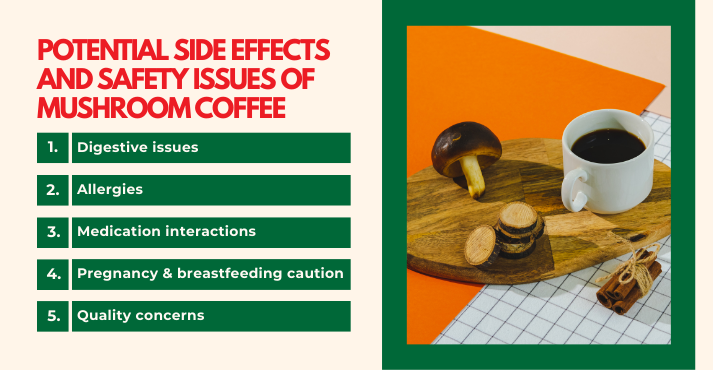
If you’re wondering, “Why do I feel weird after drinking mushroom coffee?”, there are a few simple possibilities to consider.
Here are the possible mushroom coffee side effects and safety considerations:
- Digestive issues: Some people experience bloating, gas, or loose stools when first trying mushroom coffee due to mushroom fibers or added ingredients.
- Allergies: Certain mushrooms may trigger allergic reactions, including rash, itching, or breathing difficulties. Stop drinking immediately if this occurs.
- Medication interactions: Mushroom compounds or herbal adaptogens can interact with prescription medications, such as blood thinners or immunosuppressants.
- Pregnancy and breastfeeding caution: Safety is not well-studied, so it’s best to avoid mushroom coffee unless a doctor approves it.
- Quality concerns: Supplements are not tightly regulated. Look for products that clearly list mushroom coffee ingredients, use standardized extracts, and provide third-party testing for purity.
Starting with a small cup, monitoring your body’s response, and checking labels can help you enjoy mushroom coffee safely and comfortably.
How to Choose a Good Mushroom Coffee Brand
If you decide to try mushroom coffee, here are some tips to pick a quality product:
- Ingredients: Check what mushrooms are included and in what form. Fruiting body extracts are usually preferred for potency. Some brands list mycelium (the root network), which can be less potent.
- Coffee type: Look for 100% coffee (often Arabica) as the base, not fillers or herbs unless you want them. Many premium blends mention “single-origin” or “Arabica” on the label.
- Caffeine level: Decide how much caffeine you want. If you want a little pick-me-up, a 50/50 blend is fine. If you want more stimulation, find blends with a higher coffee ratio or a darker roast.
- Testing and quality: Good brands test for contaminants (such as heavy metals and pesticides) and ensure the correct mushroom species/levels. Certificates of analysis or lab reports on their website are a positive sign.
- No fillers: Beware of brands that fill out their blend with cheap grains or herbs to reduce costs. The label should list only coffee and mushrooms.
- Reputation: Look for brands with positive reviews and transparency. Examples of well-known brands include Four Sigmatic, Laird Superfood, and specialty coffee roasters that added mushrooms.
How to Use Mushroom Coffee
Using mushroom coffee is simple and similar to regular coffee. Here are some key tips:
- Best time to drink: Morning or early afternoon to avoid sleep disruption, since it still contains some caffeine.
- Brewing: Instant powders dissolve in hot water; ground blends work in a filter, French press, or espresso machine. You can also mix powder into milk or hot beverages.
- Dosage: Follow product instructions, typically 1–2 teaspoons (5–10 g) per cup, giving 1–2 g of actual mushroom content.
- Adjusting flavor: Mix with milk, non-dairy alternatives, or add spices like cinnamon, cocoa, vanilla, or honey to reduce earthiness.
- Cycling/tolerance: No strict rules; daily use or a few times a week is fine based on how you feel.
- With food: Pairing with breakfast or a snack can improve digestion and absorption.
This keeps your mushroom coffee experience enjoyable while getting a mild boost from both caffeine and mushrooms.
Scientific Evidence: Does Mushroom Coffee Actually Work?
To evaluate mushroom coffee’s efficacy, we separate two things: evidence on medicinal mushrooms themselves, and evidence on the combination beverage.
Medicinal Mushrooms (General Research)
There is a growing body of research on the individual mushrooms commonly used in coffee blends: Small clinical trials have found some benefits for memory and mood in elderly subjects.
Similarly, reishi has been mostly studied in the lab and in animal models for immune modulation, anti-inflammatory effects, and effects on blood pressure/blood sugar. Some human trials exist, but are often with high-dose extracts.
Studies for sports performance, Cordyceps: a few small trials suggest it may improve VO2 max and endurance. But results are mixed. Overall, many studies are preliminary (in vitro or in rodents).
Coffee + Mushroom Mix
Actual studies on mushroom coffee, as sold, are extremely limited. We found one Korean study that infused green coffee beans with Cordyceps, Phellinus, and Chaga extracts. It measured antioxidant content and flavor but did not test humans.
It found that the mushroom-infused coffee had higher polyphenol content than the control coffee and similar antioxidant activity, while preserving coffee flavor. However, it’s a lab study, not a clinical trial.
Given this, the evidence gap is wide. Traditional use and lab research give plausible mechanisms, but mushroom coffee as a product has essentially no direct human research.
Because of the lack of robust trials on mushroom coffee, most health claims remain in the realm of potential benefits rather than proven results.
Our recommendation: mushroom coffee is a functional beverage that offers subtle benefits and a unique taste experience. It’s not a medical treatment.
FAQs
Is mushroom coffee safe daily?
Generally, yes for healthy adults. The consensus is that 1–2 cups per day are fine. Each cup has modest amounts of caffeine and mushroom compounds. We recommend not exceeding 2–3 cups per day, especially before bedtime. If you have health conditions (blood pressure, diabetes, kidney stones, pregnancy), consult your doctor.
Can mushroom coffee replace regular coffee?
It depends on your goals. If you love coffee’s taste and caffeine but want a gentler effect, you might alternate. Mushroom coffee still tastes like coffee and contains some caffeine, but with less of a buzz. However, if you rely on a strong caffeine kick, a half-caffeinated brew might not be sufficient. Also, regular coffee has proven health benefits (antioxidants) on its own, so you might not want to cut it out entirely.
Does mushroom coffee help with anxiety?
Some claim it can reduce anxiety because it has adaptogens and less caffeine. While reducing caffeine may ease anxiety symptoms (some people feel calmer), there’s no direct evidence that mushroom coffee cures anxiety.
Is mushroom coffee good for ADHD?
This is speculative. Improved focus from caffeine can help anyone, but it can also worsen anxiety or jitteriness. Some people living with ADHD are sensitive to caffeine. The lion’s mane in mushroom coffee is sometimes touted for mental clarity. Indeed, lion’s mane has been studied for cognitive support, but no research specifically looks at ADHD or mushroom coffee in that context.
Does it contain real mushrooms?
Yes, authentic mushroom coffee blends include actual mushroom fruiting body (or mycelium) powder or extract. They are not synthetic. Beware of products that simply add “mushroom flavor.” They should list the mushroom species on the label.
How long until effects are felt?
For the caffeine part, effects start in 15–45 minutes as usual. For mushroom compounds, effects (like subtle mental clarity or calmness) might not be obvious acutely. Unlike caffeine, adaptogens often build effects over days or weeks. Some people feel a difference right away in mood or focus, but it could also be a placebo effect. Give it a few days and note any changes.
Final Verdict: Is Mushroom Coffee Worth Trying?
Mushroom coffee offers a unique twist in the coffee industry, blending traditional coffee with functional mushrooms to create a beverage that is both familiar and novel.
Many people enjoy it for its smoother caffeine boost and potential adaptogenic benefits, such as mild immune or cognitive support, while still enjoying the taste of high-quality coffee.
However, it’s important to remember that the health benefits remain largely speculative, as clinical evidence is limited.
Additionally, mushroom coffee can be more expensive than regular coffee, and flavor or texture may vary depending on the brand and quality of the ingredients.
That said, for coffee drinkers who are curious about functional foods, sensitive to caffeine, or simply want to explore new flavors, trying a well-made mushroom coffee is generally safe and can be enjoyable.
Thus, mushroom coffee represents an emerging trend in the coffee industry, combining tradition, wellness, and innovation. Still, it should be seen as a supplement to a balanced lifestyle, not a miracle health solution.