Food shows are the heartbeat of the restaurant and hospitality sector.
They provide a unique venue where suppliers, chefs, hoteliers, and investors can meet face to face, sample innovative products, and discuss the future of food.
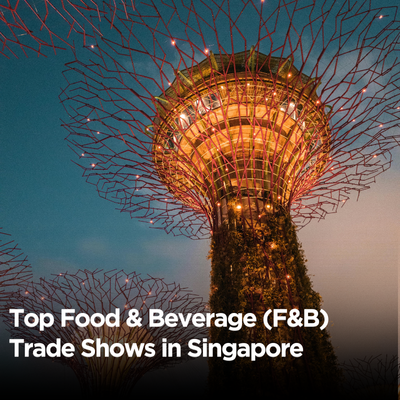
Today, Singapore stands as Asia’s premier gateway for the Food & Beverage and hospitality industry. The city’s trade shows deliver immersive industry experiences and spark collaborations that would otherwise take months to orchestrate.
F&B trade shows in Singapore are more than just events; they are immersive industry experiences that drive business growth, foster culinary creativity, and provide unparalleled global exposure.
This guide combines event listings, industry insights, business benefits, and practical tips to help F&B professionals make the most of Singapore’s vibrant trade show calendar.
What is an F&B Trade Show?

In the food, beverage, and hotel (HoReCa) industry, a trade show is a strategically organized exhibition where businesses converge to showcase products, forge new client relationships, and gain critical insights into market trends.
These events are dynamic marketplaces designed for professionals to display culinary offerings, explore food innovation, and engage in meaningful networking that drives the sector forward.
Core objectives of an F&B trade show are:
Showcasing & Product Launches
Exhibitors use booths to debut new products, equipment, and services, from specialty ingredients to kitchen robotics. The goal is to generate interest and secure orders or partnerships.
Networking & Lead Generation
Trade shows facilitate connections among manufacturers, distributors, chefs, restaurateurs, and investors. Organisers organise business-matching programmes that pair buyers with suppliers, accelerating deal‑making.
Learning & Market Insight
Seminars and panel discussions address trends such as sustainability, alternative proteins, and digital ordering. Delegates gather intelligence on consumer preferences, pricing, and competitor strategies.
Who Participates in F&B Trade Shows
Participation is diverse, creating a comprehensive ecosystem:
- Exhibitors: This includes food and beverage manufacturers, equipment suppliers, packaging companies, technology providers, and service specialists.
- Attendees: The audience comprises buyers, importers, distributors, restaurateurs, hoteliers, chefs, and food service operators.
- Influencers & Decision-Makers: The events attract investors, media, industry consultants, and key decision-makers shaping the future of food and hospitality.
Types of F&B and Hospitality Trade Shows in Singapore
Singapore’s trade shows vary in focus. Understanding the categories helps attendees target the events most relevant to their business.
| Type | Description |
| Culinary & food‑focused shows | These events concentrate on ingredients, finished food products, and culinary techniques. Exhibitors range from artisanal producers to multinational manufacturers, and programmes often include chef competitions and tasting sessions. |
| Hospitality & HoReCa expos | HoReCa shows cater to hotels, restaurants, and caterers, spotlighting kitchen equipment, tableware, furnishing,s and management technology. They showcase innovations in hotel operations and food service equipment. |
| Beverage, bar & nightlife trade shows | These specialise in drinks, from craft beers and wines to spirits and bar technologies. Mixology demonstrations and tasting seminars appeal to bar owners and beverage distributors. |
| Specialty & niche exhibitions | Focused on particular segments such as seafood, gourmet foods, takeaway technology, or sustainability. They offer targeted networking and in‑depth knowledge for specialised buyers. |
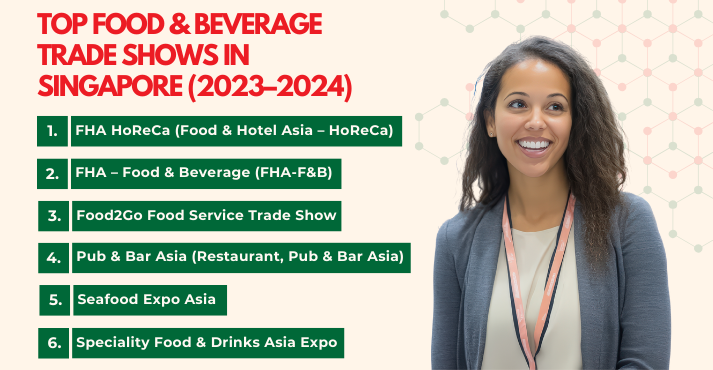
Top Food & Beverage Trade Shows in Singapore (2023–2024)
Singapore is a leading hub for the food, beverage, and hospitality trade in Asia. Its exhibitions attract global brands, regional buyers, and decision-makers from across ASEAN and beyond.
The following trade shows are among the most influential for businesses looking to expand, source products, or stay ahead of industry trends.
FHA HoReCa (Food & Hotel Asia – HoReCa)
FHA HoReCa is part of the Food & Hotel Asia (FHA) portfolio and focuses on the hotel, restaurant, and catering sectors.
It is a mega‑event held at the Singapore Expo that attracts exhibitors offering kitchen equipment, tableware, linens, furnishings, and hospitality technology.
Frequency & Location: FHA-HoReCa will be held at the Singapore Expo on 21–24 April 2026.
Exhibitor Categories:
- Commercial kitchen equipment
- Food service technology
- Tableware and hospitality supplies
- Beverage systems and coffee equipment
- Baking and pastry equipment
- Cleaning, hygiene, and back-of-house solutions
- Catering logistics
- Hospitality technology and others
Attendee Profiles: Hoteliers, restaurateurs, caterers, chefs, procurement managers, facility managers, and investors from across Asia and beyond. The show attracts more than 80,000 attendees and features more than 2,750 exhibitors in typical editions.
FHA – Food & Beverage (FHA‑F&B)
FHA–F&B is one of Asia’s largest international food and beverage trade exhibitions, serving as a gateway to ASEAN markets while attracting global manufacturers and suppliers.
Frequency & Location: From 21–24 April, FHA F&B is held at the Singapore Expo.
Buyer and Distributor Opportunities
- Direct access to importers, wholesalers, and distributors
- Private-label and bulk sourcing opportunities
- Strong representation from emerging Asian brands and global exporters
Product Launches and Masterclasses
- New product debuts across food, beverage, and ingredients
- Live cooking demos, tastings, and expert-led masterclasses
- Trend insights on health, plant-based, and functional foods
Food2Go Food Service Trade Show
Food2Go is dedicated to the fast‑growing delivery and takeaway sector. Exhibitors include packaging suppliers, kitchen automation firms, cloud‑kitchen operators, ordering platforms, and last‑mile logistics providers. Attendees learn about contactless ordering, safe packaging, and emerging dark‑kitchen models.
Dates & Venue: Food2Go runs annually and often co‑locates with speciality food and coffee events.
Technology and Packaging Relevance
- Food delivery platforms and POS systems
- Smart kitchen technology
- Sustainable and functional packaging solutions
Who Should Attend & Exhibit
- Cloud kitchen operators
- QSR brands and takeaway restaurants
- Food tech startups
- Packaging and logistics provider
This show is especially valuable for businesses adapting to digital ordering, delivery optimization, and off-premise dining trends.
Pub & Bar Asia (Restaurant, Pub & Bar Asia)
Pub & Bar Asia, sometimes marketed as Restaurant, Pub & Bar Asia (RPB Asia), is the only trade show in Southeast Asia dedicated to the bar, pub, and nightlife industry. It features craft breweries, distilleries, beverage distributors, and bar‑equipment manufacturers.
Who Attends
- Bar and nightclub owners
- Beverage distributors and importers
- Craft brewers, distillers, and brand owners
- Hospitality consultants and trainers
The event helps professionals stay current with consumer trends, premiumization, and bar innovation.
Seafood Expo Asia
Seafood Expo Asia is a specialised event dedicated to sourcing and trading seafood.
Exhibitors include fisheries, aquaculture firms, processing companies, and suppliers of value‑added seafood products. Buyers, importers, and chefs come to sample new varieties and negotiate contracts.
Dates & Venue: The next event will be 2-4 September 2026 at the Sands Expo and Convention Centre in Singapore.
Product Categories
- Fresh, frozen, and processed seafood
- Aquaculture products
- Value-added and ready-to-cook seafood
Buyer–Supplier Matchmaking: It enables direct business-to-business discussions, improving sourcing efficiency and long-term trade relationships for wholesalers, retailers, and foodservice buyers.
Speciality Food & Drinks Asia Expo
Speciality Food & Drinks Asia (SFFA) focuses on gourmet, artisanal, and premium food and beverage products. It highlights boutique producers, gourmet ingredients, craft beverages, and sustainable brands.
Sustainability and Authenticity Themes
- Ethically sourced ingredients
- Clean-label and organic products
- Authentic regional and artisanal brands
Key Attendees
- Specialty retailers and gourmet stores
- Importers and distributors
- Chefs, restaurateurs, and hospitality buyers
It is especially valuable for brands targeting premium markets and conscious consumers.
Key Features & Highlights of Leading F&B Trade Shows
Trade shows deliver experiences beyond booths. Major shows typically include:
- Chef demonstrations & culinary competitions: Live cooking by celebrity and award‑winning chefs showcases techniques and products. Competitions like the Asian Pastry Cup and bartending contests energise the show floor.
- New product launches: Exhibitors unveil prototypes, flavour innovations and equipment upgrades, attracting early adopters.
- Tastings & sampling: Sampling zones allow buyers to experience products first‑hand, facilitating immediate feedback and purchases.
- Educational seminars & workshops: Sessions led by industry experts cover sustainability, menu engineering, e‑commerce, supply‑chain resilience, and regulatory changes.
Business & Networking Opportunities at F&B Trade Shows
Trade shows are engines for commercial growth and collaboration.
B2B Meetings & Supplier Relationships
Trade shows are designed to foster deals. Many include hosted buyer programmes and B2B matching platforms that pair buyers with relevant suppliers.
Exhibitors can meet potential distributors, sign contracts, and build relationships that lead to long‑term partnerships.
Business Collaboration & Market Expansion
Beyond simple sales, shows encourage co‑branding, joint ventures, and international partnerships. They help companies identify export opportunities and distribution channels, accelerating cross‑border expansion.
Participating in regional shows can lead to visibility in neighbouring markets, enabling brands to test products before launching on a full scale.
Culinary Education, Skill Development & Knowledge Sharing
For professionals, these events are hubs for accelerated learning. Through expert-led masterclasses, workshops on the latest techniques (like molecular gastronomy), and trend forecasting sessions, chefs and managers can rapidly upgrade their skills and knowledge base.
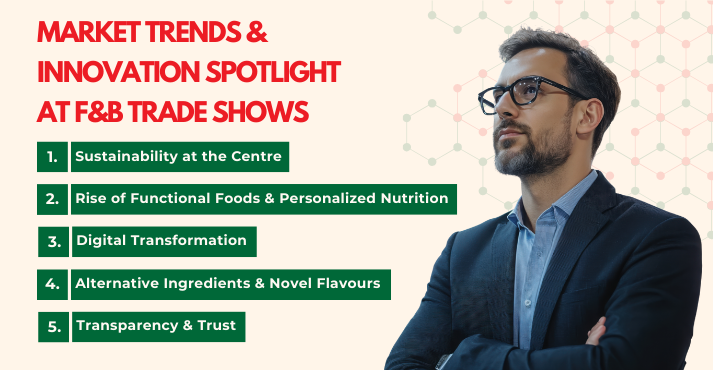
Market Trends & Innovation Spotlight
Trade shows act as barometers for food trends. Industry publications note several themes likely to dominate 2024/25:
- Sustainability at the Centre: Consumers increasingly demand eco‑friendly products. Businesses are focusing on sustainable sourcing, waste reduction, and recyclable or compostable packaging.
- Rise of Functional Foods & Personalized Nutrition: Products fortified with vitamins, probiotics, and other bioactive compounds address health‑conscious consumers. Advances in AI and genetic testing enable tailored nutrition plans and personalised meal kits.
- Digital Transformation: E‑commerce, mobile ordering, ghost kitchens, and blockchain for supply‑chain transparency are reshaping operations.
- Alternative Ingredients & Novel Flavours: The popularity of plant‑based proteins continues to grow. Consumers are also exploring bold global flavours, from Korean gochujang to West African spices, driving innovation.
- Transparency & Trust: Consumers want to know where their food comes from and how it is produced, prompting brands to improve labelling and traceability.
Benefits of Attending or Exhibiting at F&B Trade Shows
The benefits of participation extend far beyond immediate sales. Consolidating insights from various blogs:
- Brand visibility & exposure: Trade shows offer a unique platform to showcase products, build brand recognition, and gather attention through live demonstrations and sampling.
- Lead generation & customer acquisition: Meeting buyers and decision-makers in person fosters trust and can lead to bulk orders, distribution deals, and direct consumer sales.
- Competitive benchmarking: Observing competitors helps businesses understand market positioning, pricing, and emerging trends.
- Product validation & feedback: Sampling allows exhibitors to receive immediate feedback and refine products before full-scale launch.
- Global reach & international exposure: International attendees open doors to new markets, cross‑border partnerships, and export opportunities.
- Culinary inspiration & creativity: Workshops and demonstrations by renowned chefs inspire creative menu development and encourage experimentation.
Planning & Preparation for Trade Show Success
Preparation determines whether a trade show delivers a positive return. Consider the following steps:
- Booth design & layout: Create an inviting space that reflects your brand, allows easy traffic flow, and highlights key products. Use interactive elements like tastings or virtual reality demos.
- Product sampling strategies: Offer bite‑sized samples or mini‑servings to attract visitors and encourage feedback. Ensure food safety and hygiene protocols are followed.
- Pre‑event outreach: Schedule meetings with target buyers before the show, announce your participation on social media, and prepare press releases.
- On‑ground engagement: Train staff to engage visitors, collect contact information, and answer technical questions. Use digital lead‑capture tools and interactive presentations.
- Post‑event follow‑ups: Send thank‑you emails, share product catalogues, and arrange site visits. Follow up quickly to convert leads into contracts.
Virtual & Hybrid F&B Trade Shows
The digital evolution offers extended reach:
- Formats: Include virtual booths, live-streamed seminars, AR/VR product experiences, and online networking lounges.
- Benefits: Provide global accessibility, reduce travel costs, and offer flexible engagement.
- Considerations: While they complement physical events, they balance the irreplaceable value of in-person sensory experiences like tastings and hands-on product demonstrations.
Cost Considerations & ROI of Trade Show Participation
Participating in trade shows ROI requires careful budgeting. Key cost components include:
- Booth rental & design: Costs vary by venue and booth size; custom designs and interactive displays increase expenses. Factor in carpeting, lighting, signage, and technology.
- Travel & accommodation: For international exhibitors, flights and hotels can constitute a significant portion of the budget.
- Product sampling & logistics: Shipping samples, ingredients, and equipment requires coordination and may involve cold‑chain logistics.
- Marketing & promotions: Pre‑show advertising, collateral, and digital marketing campaigns help attract visitors but add to costs.
- Measuring ROI: Track leads generated, orders received, and cost per contact. Evaluate intangible benefits such as brand visibility, media coverage, and strategic partnerships.
Conclusion: Why F&B Trade Shows Shape the Future of the Industry
F&B trade shows in Singapore are indispensable growth accelerators for the industry.
They condensed time and space, bringing together the people, products, and ideas that define what’s next.
By fostering innovation, collaboration, and continuous education, these events do not just reflect the current market; they actively shape its future.
For any professional serious about growth, staying informed and participating strategically in these trade shows is not an option; it is a critical business imperative.