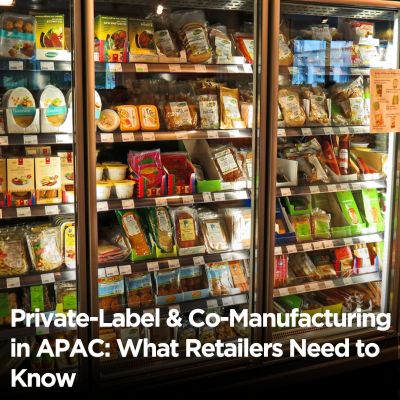
Private-label sales are growing across the Asia-Pacific. A 2025 NielsenIQ report shows that 54% of consumers are now more likely to buy retailer brands than before.
With a rising middle class and value-conscious shoppers, many markets are rewarding products that combine quality with affordability. At the same time, loyalty toward traditional brands is declining, giving companies the chance to strengthen their own lines.
For retailers, private-label and co-manufacturing in APAC offer a way to expand product ranges, improve margins, and maintain quality without investing heavily in new facilities.
However, these strategies also come with challenges, including sourcing, compliance, and ensuring consistent standards across different markets.
This blog explores regional growth patterns, highlights key markets, and outlines practical strategies to help retailers manage risk, maintain product quality, and build stronger, more trusted private-label programs in Asia-Pacific.
Private-Label Growth in APAC — The Market Outlook
Private-label demand across Asia-Pacific continues to grow as retailers expand their in-house product lines. A 2025 InsideFMCG report shows strong uptake in Thailand (64%), India (61%), China (56%), and Indonesia (55%).
Retailers are focusing on food and beverage, personal care, and household goods, paying closer attention to safety and quality, according to the Oracle Private Label in APAC Report.
China and India lead in market scale and variety, while Thailand and Indonesia are growing through competitive pricing and wider retail networks. Japan remains cautious, with national brands still dominating most categories.
In ASEAN markets, private-label development is supported by improved sourcing, co-manufacturing partnerships, and distribution upgrades that cater to local preferences.
This focus on transparency, freshness, and consistent availability continues to strengthen consumer trust across the region.
Why Retailers Are Turning to Co-Manufacturing
Co-manufacturing allows retailers to scale production without owning full manufacturing facilities. Third-party producers manufacture goods to the retailer’s exact specifications, while the retailer retains control over design, formulation, and quality.
This model helps manage costs, reduce capital investment, and adapt production volumes as demand shifts. With ready-to-operate plants, trained teams, and established supply networks, co-manufacturers also help retailers launch products faster.
For example, Kerry Group has expanded its flavour and R&D operations in Karawang, Indonesia, and partnered with Far Eastern Impex (FEI) in Pakistan to enhance its regional manufacturing network.
Olam Food Ingredients (OFI) provides private-label and contract manufacturing for food and beverage products, offering expertise in spice processing, blending, and packaging across multiple markets.
Regional Breakdown — Where Growth Is Strongest
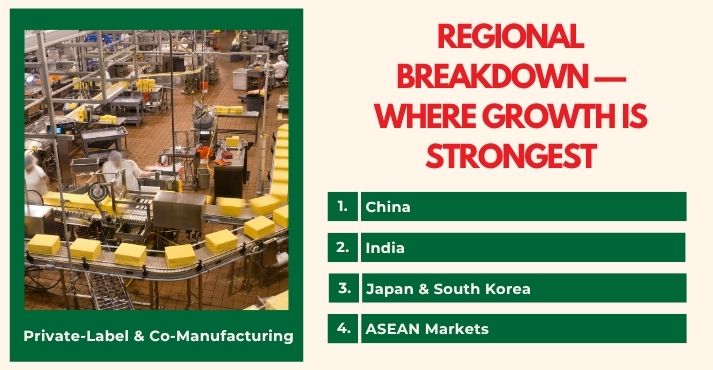
Private-label growth varies across Asia-Pacific. Some countries expand through organized retail networks, while others rely on e-commerce and co-packing partnerships.
According to Grand View Research, private-label packaged food sales in the region are expected to grow at over 6% CAGR through 2030, supported by strong consumer confidence and continued investment from retailers.
1. China
China remains one of the most active markets for private-label and co-manufacturing in APAC. A growing middle-income segment and well-organized retail networks have helped local chains introduce high-quality lines in food, personal care, and household goods.
Retailers work closely with domestic partners such as Olam and Kerry to enhance quality and consistency. The country’s strong food supply chain and advanced e-commerce systems allow store brands to reach consumers efficiently across regions.
2. India
India’s private-label market is expanding as retail modernizes. Companies like Reliance Retail, BigBasket, and DMart continue to scale their own-label ranges across packaged foods and essentials.
While affordability drives demand, better product perception is helping private labels move into mid-tier categories. Growth in outsourcing food and beverage production in APAC has also allowed retailers to maintain consistent standards and respond quickly to local preferences.
3. Japan & South Korea
Retailers in Japan and South Korea use co-packing partnerships to produce premium products that compete with well-known national brands. In these markets, private-label goods are associated with reliability and exclusivity rather than low prices.
Major chains such as Aeon and E-Mart have expanded into ready-to-eat meals, beverages, and skincare products, applying strict quality controls and working with trusted suppliers.
Although growth is moderate, these examples show how private-label strategies succeed in mature, brand-conscious economies.
4. ASEAN Markets: Singapore, Vietnam, Indonesia
In Southeast Asia, private labels are becoming a preferred choice for everyday goods as quality improves and product options grow.
In Singapore, NTUC FairPrice’s house-brand range generated nearly SGD 1 billion in 2024, accounting for around 20% of total sales across 3,500 products and 70 categories.
Meanwhile, in Vietnam and Indonesia, modern grocery chains such as Aeon, Lotte Mart, and Hero Supermarket are expanding their own-label portfolios to serve growing urban demand.
Across the region, younger shoppers are drawn to clean ingredients, upgraded packaging, and transparent sourcing, with greater emphasis on trust and quality.
Benefits of Private-Label + Co-Manufacturing Partnerships
Private-label and co-manufacturing partnerships allow retailers to grow efficiently while maintaining quality and brand consistency.
Collaborating with specialized producers provides cost efficiency, production flexibility, and technical expertise without the need for new infrastructure.
These partnerships improve food distribution by streamlining logistics and ensuring products reach shelves reliably while meeting safety and compliance standards.
They also enhance the customer experience, as shoppers associate consistent quality and value with the retailer’s brand, thereby building trust, loyalty, and long-term competitiveness.
Risks and Challenges in Co-Manufacturing
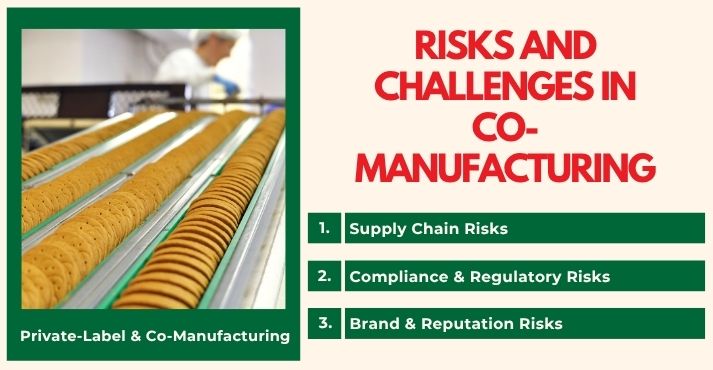
Co-manufacturing brings efficiency but also carries potential challenges that can impact operations and brand reputation. Early identification helps retailers minimize disruptions and maintain consumer trust.
1. Supply Chain Risks
Retailers rely on partners for sourcing, production, and shipping. Disruptions such as material shortages, shipping delays, or sudden policy changes can slow production.
Dependence on a single region or supplier increases vulnerability, especially during events like natural disasters or lockdowns. Forecasting difficulties can also arise due to unstable production cycles in some APAC markets.
2. Compliance and Regulatory Risks
Food safety and labeling rules differ across APAC countries. A product that complies with regulations in one market may violate regulations elsewhere.
For example, changes to front-of-pack warning labels in Pakistan added costs and uncertainty for food producers.
In India, some companies faced fines for failing to include allergen information, nutrition facts, or details on ingredient origin on labels.
3. Brand and Reputation Risks
Inconsistent products can damage consumer confidence. Even isolated issues, such as flavor, shelf-life, or packaging problems, may lead to recalls or lasting reputational effects, as seen in several regional food safety incidents.
Strategies to Ensure Quality & Traceability
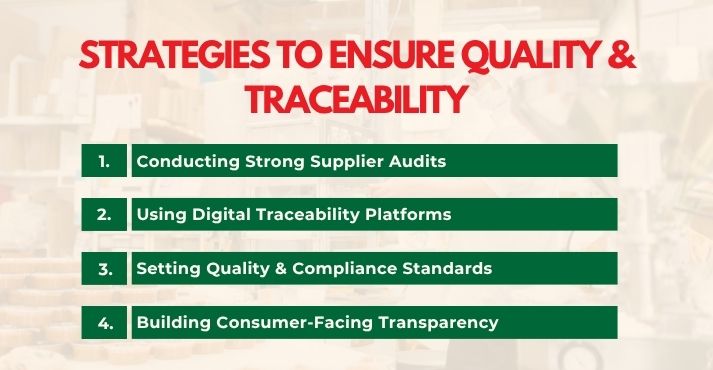
A strong retail private-label strategy in APAC depends on consistent quality and transparency. Retailers partnering with co-manufacturers must ensure every stage, from sourcing to packaging, meets safety and performance standards. This requires effective supplier oversight and digital monitoring.
1. Conducting Strong Supplier Audits
Regular food safety audits help detect issues early and maintain reliability across production partners. Both in-person and virtual assessments review hygiene, process control, and documentation.
Audit management tools can track performance, automate reports, and confirm corrective actions.
2. Using Digital Traceability Platforms
Traceability systems allow retailers to track ingredients and finished products throughout production. This ensures authenticity, enables faster recalls, and provides regulators and consumers with accurate information.
Partnerships like iTrazo, PSQR, and Tive highlight how digital platforms improve supply chain visibility across APAC.
3. Setting Quality and Compliance Standards
Adopting recognized frameworks such as ISO, BRCGS, or the FDA’s Food Safety Modernization Act helps maintain consistent safety and compliance across markets, reducing delays and product rejections.
4. Building Consumer-Facing Transparency
Clear labeling about ingredient origins, production methods, and sustainability practices builds customer trust. Sharing verified information via packaging or digital channels reinforces credibility and strengthens long-term loyalty.
Case Studies — Retailer Success Stories in APAC
Private-label growth and co-manufacturing help retailers across APAC meet diverse consumer needs while improving efficiency and competitiveness. Here are some examples of successful strategies:
AEON: Strategic Expansion and Supplier Integration
AEON, Japan’s largest retailer, expanded its TopValu brand into markets like Cambodia and Vietnam. By integrating suppliers into the Global Food Safety Initiative (GFSI), AEON improved product quality and streamlined operations.
About 30% of suppliers certified under GFSI are exempt from conventional inspections, while the remaining 70% follow AEON’s internal audit standards, boosting overall supplier performance.
Reliance Retail: Local Partnerships and Distribution
Reliance Retail in India has scaled its private-label lines, including Best Farms and DNMX. By connecting local kirana stores to its distribution network, the company expanded market access and accelerated delivery, improving responsiveness across regions.
Woolworths: Process Optimization
Woolworths, Australia’s leading supermarket chain, implemented Business Process Management (BPM) to enhance supplier coordination and product consistency, reinforcing its leadership in the grocery sector.
The Future of Private-Label in APAC
Private-label growth in Asia is set to continue as retailers adapt to changing consumer needs and stronger digital retail networks. Online channels make it easier to launch new products and reach customers across different markets.
Sustainability is now a major influence on purchasing choices. Shoppers are looking for goods with eco-friendly packaging, responsibly sourced ingredients, and clear information about how products are made.
AI-based tools are helping retailers improve forecasting, inventory control, and quality checks, making co-manufacturing partnerships more consistent and efficient.
In terms of trends, plant-based protein products are becoming more common among health-conscious shoppers. There’s also growing interest in functional drinks, nutritious snacks, and premium private-label lines that balance quality with affordability.
Private brand expansion in Asia will remain strong as retailers and manufacturers work together to offer reliable, well-made products that reflect local preferences and sustainable practices.
FAQ’s
What is driving private-label growth in APAC?
Rising consumer trust, value-focused shopping habits, and better product quality continue to support private-label growth in APAC. Retailers are also expanding into new categories and digital platforms to meet changing consumer expectations.
Which industries benefit most from private-label?
The food and beverage, personal care, and household goods industries show the strongest private-label growth in Asia. These categories help retailers offer affordable, high-quality alternatives while building customer loyalty.
How can retailers manage supply chain risks in Asia?
Retailers can reduce supply chain risks through strong supplier partnerships, regular audits, and transparent sourcing. Using digital tracking systems and compliance checks helps maintain consistent quality across different markets.
What role does co-manufacturing play in scaling private brands?
Co-manufacturing allows retailers to scale production quickly without major investments in facilities. It helps them launch new products faster, stay flexible, and meet consumer demand across regions.
How do retailers ensure product traceability?
Retailers use digital traceability platforms and audit protocols to monitor products from sourcing to shelf. Sharing verified information on packaging builds consumer confidence and supports regulatory compliance.
Conclusion
Private-label products continue to grow across APAC as consumers look for affordable, high-quality alternatives. Many retailers are entering categories once led by global brands, making private-label an essential part of long-term growth and customer loyalty.
Sustained success depends on strong production management, transparent sourcing, and collaborative partnerships.
Co-manufacturing supports cost control and scalability but also demands strict food safety audits and compliance with ISO standards to uphold product integrity.
By maintaining reliable supplier relationships and consistent oversight, APAC retailers can strengthen their private-label portfolios, safeguard brand credibility, and build lasting consumer trust.