Restaurants are where community and commerce meet. From street‑food stalls to white‑tablecloth establishments, the restaurant industry sits at the intersection of culture, hospitality, and business.
The industry’s scale is enormous: the global food service market was valued at US$3.7 trillion in 2024 and is projected to grow to US$6.45 trillion by 2032.
Whereas Asia Pacific accounts for more than 42 % of that market, and the region’s food service market alone is expected to surpass US$2.37 trillion by 2034.
Beyond revenue, restaurants are major employers: tourism and hospitality support around 371 million jobs worldwide, over half of which are in the Asia‑Pacific region.
In the United States, eating and drinking places employ 12.5 million people, contributing to a total of 15.7 million restaurant and foodservice jobs. But restaurants are more than statistics. They are social hubs, creative incubators, and economic anchors.
This guide serves as your complete roadmap to understanding this dynamic sector. Whether you are an aspiring restaurateur, a seasoned operator, or simply a curious epicurean, you will learn:
- What the restaurant industry is and its economic role
- The key distinctions between food service and the restaurant industry
- The core categories of restaurant types and real-world examples
- Why the Michelin Guide matters for reputation and standards
- How full-service restaurants operate as a business model
- The role of technology and how POS systems function as the operational backbone
- The latest restaurant technology trends shaping the future
- Proven restaurant marketing strategies to drive growth and retention
What Is the Restaurant Industry?
The restaurant industry refers to businesses that prepare and serve food and beverages to customers in dedicated establishments where people can dine on site.
It includes restaurants, cafés, and bars in which customers can order and eat on the premises. Moreover, restaurants are a subset of the broader food service sector, which also includes catering companies, institutional food providers, and dedicated take-away establishments.
The industry’s importance goes beyond the dining room: it links farmers, distributors, suppliers, and service workers, driving local economies, creating jobs, and shaping cultural identities.
The sector is constantly evolving, with technology adoption, sustainability, and changing consumer preferences influencing how operators run their businesses.
Food Service vs. Restaurant Industry (What’s the Difference?)
While the terms are often used interchangeably, there is a clear distinction between the food service vs restaurant industry.
| Scope | Food Service | Restaurant Industry |
| Definition | Includes any business that prepares and serves food for immediate consumption, encompassing cafeterias, catering, institutional food, take‑out, and mobile vendors. | Refers specifically to establishments where customers dine on the premises and experience table service or self‑service in a dedicated setting. |
| Ambiance | Often, utilitarian (e.g., school cafeterias, hospital kitchens) are focused on nutrition and efficiency. | Places emphasis on ambiance, hospitality, and the overall dining experience. |
| Examples | Corporate cafeterias, school lunch programs, airplane catering, vending services, and take‑out counters. | Fine‑dining restaurants, casual cafés, fast‑food outlets, buffet restaurants, and food trucks. |
The restaurant industry is a subset of food service that offers a curated dining experience, often with menu design, service quality, and ambiance as essential components.
Types of Restaurants
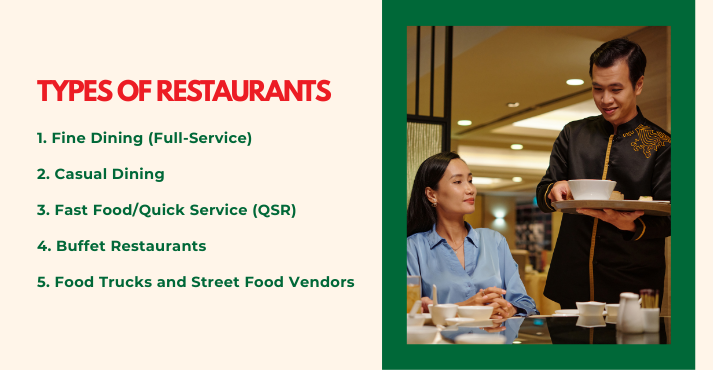
Restaurants come in numerous formats, each catering to different occasions, price points, and service expectations.
Here are the main types of restaurants:
Fine Dining (Full-Service)
Fine‑dining restaurants are the pinnacle of culinary artistry. They use premium ingredients, deliver meticulous service, and create an atmosphere of refinement.
Staff is highly trained, often presenting tasting menus or chef‑driven à‑la‑carte options with wine or beverage pairings.
However, pricing is higher than in other categories, and patrons visit for special occasions or to experience creative cuisine.
Casual Dining
Casual‑dining establishments aim to balance quality and affordability. They provide table service and a relaxed atmosphere, making them popular for families and social gatherings.
Menus are broad and feature familiar dishes such as burgers, pasta, salads, and grills. The goal is to offer a pleasant dining experience without the formality or high prices of fine dining.
Fast Food/Quick Service (QSR)
Fast‑food outlets, also known as quick‑service restaurants, focus on speed, standardization, and affordability.
These are often part of regional or global chains where guests order at the counter or via drive‑through, pay before eating, and receive their food quickly.
Also, QSRs have evolved to include healthier menu items and digital ordering options.
Buffet Restaurants
Buffets are self‑service or all‑you‑can‑eat establishments where customers pay a fixed price and serve themselves from a variety of dishes.
These restaurants rely on volume and menu psychology. Menu designers often position high‑margin dishes in prominent locations, use color and layout to guide choices, and limit the number of items per section to reduce decision fatigue.
Food Trucks and Street Food Vendors
Mobile vendors provide flexible, location‑based dining. Food trucks and street‑food stalls thrive at festivals, city events, or busy commercial districts.
They offer unique, often niche cuisines and allow operators to test concepts without the overhead of a fixed location.
However, compliant kitchens and permits are essential, and demand can be seasonal or event‑driven.
Which Model Is Best for You? A Quick Comparison
| Restaurant model | Typical audience | Startup cost | Staffing complexity | Service speed |
| Fine Dining | Special‑occasion diners, corporate guests, tourists | High (construction, décor, inventory) | High (skilled chefs, sommeliers, servers) | Leisurely |
| Casual Dining | Families, groups, neighbourhood diners | Medium | Moderate | Moderate |
| Fast Food/QSR | Commuters, students, budget‑conscious diners | Medium (franchise fees or brand licensing) | Low (counter service) | Fast |
| Buffet | Families, large parties, value‑seekers | Medium to high (large kitchen, equipment) | Moderate | Moderate |
| Food Truck | Event attendees, lunch crowds | Low (vehicle, equipment) | Low |
The Michelin Guide and Why It Matters in the Restaurant Industry
Founded over a century ago, the Michelin Guide is one of the most influential culinary rating systems. Michelin recognition confers prestige, drives tourism, and often allows restaurants to command higher prices.
It serves as a benchmark of quality and consistency that can elevate a restaurant’s global reputation and encourage culinary tourism.
Why Michelin Recognition Influences Restaurants
Here’s why:
Signals Excellence
A Michelin star suggests exceptional cooking and service. One star means “a very good restaurant in its category,” two stars denote “excellent cooking, worth a detour,” and three stars indicate “exceptional cuisine, worth a special journey”.
Drives Demand
Travellers and food enthusiasts often plan trips around Michelin‑starred establishments. Michelin recognition can multiply reservations and put previously unknown restaurants on the map.
Raises Standards
The guide incentivizes chefs and restaurateurs to innovate and maintain consistency. Even aspiring establishments use Michelin criteria to benchmark their service.
Enhances Pricing Power
Recognition allows restaurants to justify premium pricing by highlighting craftsmanship, quality ingredients, and service excellence.
Michelin Guide Categories Explained
| Category | Description |
| Three Stars | Exceptional cuisine, worth making a special journey to experience. |
| Two Stars | Excellent cooking that is worth a detour; a refined experience. |
| One Star | A very good restaurant in its category. |
| Bib Gourmand | Great food at moderate prices; the category recognizes value and quality. |
| Michelin Plate | A symbol for restaurants serving high‑quality food but not yet at a star level. |
| Green Star | Recognizes gastronomy combined with outstanding sustainable practices, launched in 2020. |
Full-Service Restaurants (What They Are and How They Work)
Full‑service restaurants (FSRs) represent one of the most iconic segments of the industry.
What Is a Full-Service Restaurant?
A full-service restaurant offers table service where guests are seated, orders are taken, meals are served, and payment occurs at the end of the meal.
Staff guides the dining experience, ensuring that the meal is not just about food but about ambiance and hospitality.
Compared with counter‑service concepts, FSRs emphasize menu diversity, wine or beverage service, and a leisurely pace.
Key Features of Full-Service Dining
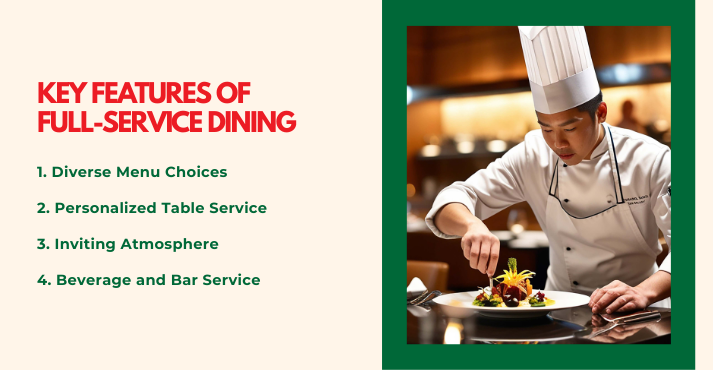
Here are the key features of a full-service restaurant:
- Diverse Menu Choices: FSRs often feature appetizers, entrées, desserts, and beverages, giving diners a wide range of options.
- Personalized Table Service: Servers greet guests, take orders, recommend dishes, and coordinate with the kitchen to deliver meals and handle payment at the table.
- Inviting Atmosphere: Décor, lighting, music, and table settings play a crucial role in creating a memorable experience.
- Beverage and Bar Service: Many FSRs offer wine lists or cocktail programs to complement meals.
Types of Full-Service Restaurants
The main types of full-service restaurants include:
- Fine Dining: High‑end culinary experiences with formal service and tasting menus.
- Casual Dining: Relaxed settings with table service and diverse menus.
- Family‑Style Dining: Meals are served on large platters meant to be shared among guests; the atmosphere is comfortable and communal.
Challenges in Full-Service Operations
Operating a full‑service restaurant requires juggling multiple elements:
Rising Costs and Inflation
In Toast’s Voice of the Restaurant Industry survey, 24 % of FSR operators ranked inflation as their top pain point in 2025 (up nine percentage points from 2024).
Rising food and supply costs force operators to consider price increases, with 51 % planning to raise menu prices if costs continue to climb.
Thus, transparent communication with diners about why prices are higher is vital.
Labor Shortages and Staffing Complexity
42 % of FSR operators reported moderate to extreme hiring challenges. Higher wage expectations and competition from other industries make recruiting and retaining staff difficult.
Operators respond by cross‑training employees and adopting technology to streamline tasks.
Profitability Pressures
41 % of FSR operators cite improving profitability as a top goal. Strategies include adopting AI tools, optimizing inventory, and exploring new revenue streams.
Competition and Market Differentiation
With ghost kitchens and virtual brands entering the market, FSRs must stand out through menu innovation, exceptional service, and unique experiences.
Regulatory and Health Compliance
Operators must navigate health and safety regulations, liquor licensing, and capacity limits, which can change rapidly in response to public health concerns.
Future Trends in Full-Service Dining
FSRs are adapting to technological and societal shifts:
- Digital Menus and Online Reservations: Guests increasingly prefer contactless ordering and reservation systems.
- Smart Restaurant Processes: AI‑powered scheduling, automated kitchen equipment, and data‑driven inventory management help operators run leaner businesses.
- Sustainable Practices: Diners expect sustainable sourcing, reduced food waste, and eco‑friendly packaging. And the diners are willing to pay more for sustainably sourced dishes.
- Experiential Enhancements: Live cooking stations, chef interactions, themed nights, and immersive designs transform the meal into an event.
Restaurant Technology Trends (What’s Changing the Industry)
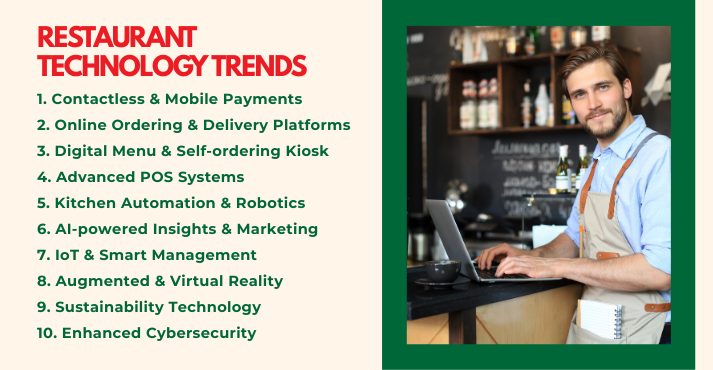
Technology is reshaping every aspect of the restaurant industry, improving efficiency, enhancing guest experiences, and unlocking new revenue streams.
Here are the major restaurant technology trends driving the change:
- Contactless and Mobile Payments: Digital wallets and tap‑to‑pay methods offer speed and convenience while reducing wait times. Adoption of contactless payment surged during the pandemic and remains high.
- Online Ordering and Delivery Platforms: Integrated ordering apps connect restaurants with delivery partners and provide data about customer preferences. Cross‑channel ordering (website, mobile app, and third‑party delivery) helps restaurants reach more customers.
- Digital Menu Boards and Self‑ordering Kiosks: Dynamic displays allow operators to update menus in real time and promote high‑margin items. Kiosks reduce labor costs and improve order accuracy.
- Advanced POS Systems: Modern POS systems handle orders, payments, inventory, and reporting in one platform, integrating data from multiple sources.
- Kitchen Automation and Robotics: Automated fryers, pizza robots, and conveyor ovens ensure consistent quality, reduce labor, and improve speed.
- AI‑powered Insights and Marketing: Artificial intelligence analyzes customer data to personalize marketing campaigns and forecast demand. AI tools also manage scheduling and optimize kitchen workflows.
- IoT and Smart Management: Sensors monitor equipment, track temperature and energy usage, alerting managers to issues before they impact service.
- Augmented and Virtual Reality: Virtual training and interactive menus create engaging experiences and help staff learn new skills.
- Sustainability Technology: Energy‑efficient appliances, waste‑tracking tools, and recyclable packaging support eco‑friendly operations.
- Enhanced Cybersecurity: As digital transactions increase, robust security measures protect customer data and prevent fraud.
All of these technologies often connect through a central system: the point‑of‑sale.
POS Systems in Restaurants (The Operational Backbone)
Restaurant POS systems emerge as indispensable tools, reshaping how businesses operate.
With their ability to handle transactions seamlessly, manage orders, and provide real-time insights, POS systems have become the backbone of efficient and customer-centric service in the contemporary restaurant industry.
What Is a Restaurant POS System?
A point‑of‑sale (POS) system is the hardware and software platform that restaurants use to process transactions, manage orders, track inventory, and generate reports.
Modern systems integrate front‑of‑house and back‑of‑house operations, connecting ordering channels (in‑person, online, delivery), payment processing, kitchen display systems, and inventory management.
Instead of serving merely as cash registers, contemporary POS platforms act as the command centre of a restaurant’s operations.
Core Functions and Features
Key features of a modern restaurant POS include:
- Order Management: Aggregates orders from all channels into one dashboard, reducing errors and delays. Orders entered on tablets are instantly transmitted to kitchen display systems, eliminating lost or misread tickets.
- Live Inventory Tracking: Updates ingredient stock in real time, helping managers avoid shortages and reduce food waste. Automated alerts notify staff when items reach preset reorder points.
- Customer Experience Tools: Enable faster service, accurate orders, flexible payment options, tableside ordering, and digital receipts.
- Analytics and Reporting: Provides detailed insights into sales trends, popular menu items, peak hours, and labor costs.
- Labor Management: Tracks staff hours, integrates payroll, and assists with scheduling.
- Multi‑channel Ordering Integration: Consolidates in‑person, online,e and delivery orders, boosting revenue and minimizing manual entry.
- Secure Payments: Ensures compliance and protects customer data with advanced encryption.
- Integrations: Syncs with accounting, marketing, scheduling, and inventory software to streamline operations.
Benefits of POS Systems
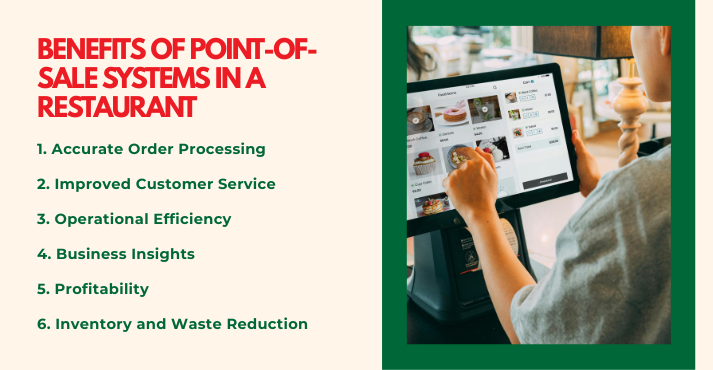
The advantages of modern POS systems go beyond convenience:
- Accurate Order Processing: Real-time order transmission and unified dashboards reduce mistakes and ensure food is prepared correctly.
- Improved Customer Service: Tableside ordering and self-service options speed up transactions and allow diners to customise their meals, leading to fewer errors and happier guests.
- Operational Efficiency: Unified platforms remove the need to manage multiple tools, saving staff time and improving overall workflow.
- Business Insights: Built-in analytics highlight popular items, peak periods, and staff performance, supporting smarter, data-driven decisions.
- Profitability: Integrated upselling features and online ordering help increase average order value and overall revenue.
- Inventory and Waste Reduction: Live inventory tracking minimises food waste and helps ensure high-demand items stay in stock.
Types of Restaurant POS Systems
Here are the types of restaurant POS systems:
- Cloud-based POS: Data is stored and managed online. Offers scalability, automatic updates, and remote access. Ideal for multi‑unit operators and restaurants seeking flexibility.
- Mobile POS (MPOS): Tablets or smartphones function as POS terminals, enabling tableside ordering and payment. Reduces wait times and enhances the guest experience.
- On-premise POS: Software is installed locally on servers. Provides more control and customization but requires hardware maintenance and manual updates.
How to Choose the Right POS
Consider the following factors when selecting a POS system:
- Scalability: Can the system handle multiple locations and high transaction volumes?
- Integration: Does it sync with accounting, payroll, inventory, and online ordering platforms?
- User‑friendliness: A system with intuitive interfaces reduces training time and errors.
- Cos: Evaluate upfront hardware expenses, subscription fees, and transaction charges.
- Customer support: 24/7 support ensures minimal downtime and quick issue resolution.
Implementation Tips (So It Actually Works)
Successfully deploying a POS system requires planning and follow‑through:
- Train Staff Thoroughly: Provide hands‑on training and refresher sessions to ensure all employees can use the system effectively. Continuous training reduces errors and increases adoption.
- Assign Troubleshooting Ownership: Designate team members or managers responsible for addressing minor technical issues before they disrupt service.
- Conduct Regular Audits and Optimizations: Review sales reports, inventory levels, and user feedback regularly. Adjust menus, pricing, and workflows based on data insights to maximize efficiency and profits.
Factors That Affect the Restaurant Industry (What Can Make or Break Performance)
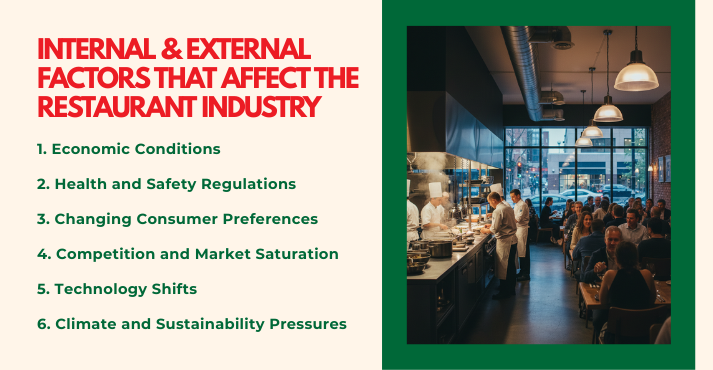
Multiple external and internal factors influence restaurant performance. Understanding these drivers helps operators adapt and thrive.
- Economic Conditions: Rising labour costs, staffing shortages, inflation, and supply chain disruptions increase operating expenses and pressure margins, forcing operators to balance pricing with customer value.
- Health and Safety Regulations: Food safety rules, capacity requirements, and public health guidelines can change rapidly, affecting staffing, seating, and sanitation practices and requiring strong compliance systems.
- Changing Consumer Preferences: Diners increasingly prioritise sustainability, health, and transparency, with growing demand for plant-based options, clear sourcing, and allergy-friendly menus.
- Competition and Market Saturation: Ghost kitchens, delivery-only brands, and alternative meal solutions intensify competition, making differentiation through concept, service, and marketing essential.
- Technology Shifts: Customers expect convenient online reservations, contactless ordering, and digital engagement, pushing restaurants to adopt technology that improves both experience and efficiency.
- Climate and Sustainability Pressures: Climate-related supply disruptions and rising environmental expectations encourage restaurants to diversify suppliers, reduce waste, and improve energy efficiency.
Restaurant Marketing Strategies (High-Impact Moves for Growth)
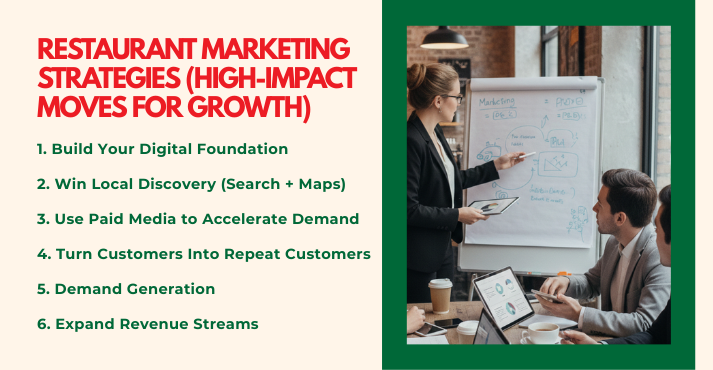
Effective restaurant marketing strategies combine digital visibility, community engagement, and customer retention.
Here are the strategies that reflect current trends and actionable tactics:
Build Your Digital Foundation
Customers research a restaurant online before visiting, so a strong digital presence is non‑negotiable.
Here’s how to build a strong digital foundation:
- Create A Complete Website: Include your menu, contact details, reservations, online ordering, photo gallery, customer reviews, and FAQs so diners can find everything they need in one place.
- Make Navigation Simple: Ensure visitors can easily find key actions like booking a table, placing an order, or calling your restaurant within a few clicks.
- Keep Information Updated: Regularly update menus, opening hours, and promotions to avoid confusion and missed opportunities.
- Optimize for Mobile: Design your site for mobile users, as most customers browse menus and make decisions on their phones.
- Show Social Proof: Highlight reviews and testimonials to build credibility and reassure first-time visitors.
Win Local Discovery (Search + Maps)
Local discovery is critical for restaurants because most diners search with intent, using phrases like “restaurants near me” or “best place to eat nearby.”
So, if your restaurant does not appear in local search results or map listings, you miss high-value customers who are ready to visit or order.
Here are some ways to win local discovery:
- Set Up And Optimize Google Business Profile: Complete your profile with accurate hours, location, contact details, photos, menus, and clear ordering or reservation CTAs so customers can take action instantly.
- Use High-Quality Photos: Add professional images of your food, interior, and exterior to improve click-through rates and build trust.
- Publish Regular Posts: Share updates, promotions, events, and seasonal specials to keep your listing active and engaging.
- Manage Reviews Actively: Encourage satisfied customers to leave reviews and respond promptly to all feedback to strengthen credibility.
- Focus On Local SEO: Improve relevance with accurate business details and keywords, boost prominence through reviews and citations, and ensure your location supports strong visibility for nearby searches.
Use Paid Media to Accelerate Demand
Paid media helps restaurants generate immediate visibility and demand, especially when organic reach is limited or results are needed quickly.
Also, paid campaigns are especially effective for promoting new openings, limited-time offers, events, and off-peak promotions, making them a powerful tool for driving fast, measurable results.
Benefits of paid media for restaurants are:
- Precise Targeting: Reach customers based on location, interests, dining behaviour, and search intent to attract the right audience.
- Proximity Marketing: Show ads to nearby diners who are most likely to visit, order, or book a table.
- Budget Control: Set clear spending limits, adjust campaigns in real time, and scale only what delivers results.
- Fast Traffic: Generate immediate website visits, reservations, and orders without waiting for long-term organic growth
Turn Customers Into Repeat Customers
Attracting new diners is important, but long-term growth comes from turning first-time visitors into loyal regulars. Repeat customers spend more, visit more often, and are more likely to recommend your restaurant to others.
Here are some tips to build repeat business:
- Email Newsletters: Share weekly specials, upcoming events, and exclusive promotions to stay top of mind and encourage return visits.
- Birthday Discount Campaigns: Celebrate customers with personalised birthday offers that create goodwill and drive extra visits.
- Loyalty Programs: Reward frequent diners with points, discounts, or perks that incentivise repeat purchases.
- Referral Programs: Encourage happy customers to bring friends by offering rewards for successful referrals.
- Reputation Management: Respond to reviews, monitor brand mentions, and engage with feedback to show customers you value their experience and opinions.
Demand Generation Through Content and Community
Demand generation goes beyond promotions by building awareness, trust, and emotional connection with your audience.
When restaurants consistently create engaging content and actively participate in their local community, they stay top of mind even when customers are not actively searching.
Here are some ways to generate demand via content and community:
- Blogging and Storytelling: Share behind‑the‑scenes stories, chef interviews, recipes, and sustainability initiatives. Consistent content improves SEO and builds your brand’s personality.
- Social Media Presence: Use short‑form videos (TikTok, Instagram Reels) and live streams to showcase dishes, kitchen creativity, and staff culture. Implement social commerce features, like in‑app ordering, to reduce friction.
- Influencer Marketing: Partner with local food bloggers and influencers to reach new audiences. Encourage user‑generated content by creating photo‑friendly dishes and interior design.
- Events and collaborations: Host themed dinners, tasting events, or pop‑ups in partnership with local producers. Collaborations with nearby businesses (e.g., breweries, farms) strengthen community ties and generate buzz.
Expand Revenue Streams
Relying on dine-in sales alone can limit growth and make revenue vulnerable to seasonal shifts or changing consumer habits.
Expanding revenue streams allows restaurants to reach customers in new ways, increase average order value, and create more stable income.
Consider the following ways to expand revenue streams:
- Delivery and Take‑out: Integrate online ordering, curbside pickup, and delivery to reach customers at home. Use your own channels when possible to retain margins.
- Catering: Offer catering for corporate functions, weddings, and community events, creating a new revenue channel and generating referrals.
- Food Trucks or Pop‑ups: Launch a mobile version of your restaurant to test new markets or augment your brand without the cost of a permanent location.
Optimize the Menu for Online Orders
Your online menu plays a major role in whether customers complete an order or abandon it. A confusing layout, poor visuals, or too many choices can create friction and reduce conversions.
Here’s how to optimize your online menu for orders:
- Mobile-Friendly Layout and Clear Categories: Design your menu for small screens with simple navigation and logical sections so customers can find items quickly.
- Photos and Descriptions: Use high-quality images and clear, appetising descriptions to help customers visualise what they are ordering.
- Highlight Bestsellers: Feature popular and high-margin items to guide decisions and increase average order value.
- Customization Options: Allow easy modifications and add-ons so customers can personalise their meals without confusion.
Putting It All Together
To create a cohesive restaurant growth strategy, think of your efforts as a connected framework. Each piece, from operations to marketing, supports the others, creating a stronger, more resilient business.
Here’s a simple framework to tie everything together:
- Choose Your Model Wisely: Decide which restaurant type and service style align with your goals, audience, and resources.
- Build the Experience: Remember that your product is more than food; invest in hospitality, ambiance, menu design, and staff training to create a memorable guest journey.
- Standardize Operations: Implement a robust POS system and standardized workflows for order management, inventory control, and reporting. Use data to refine your processes.
- Adapt to Trends: Embrace technology like contactless payments, online reservations, AI‑driven insights, and sustainable practices to meet evolving consumer expectations.
- Market consistently: Maintain a strong digital presence, leverage local SEO, run targeted advertising, cultivate a loyal customer base, and engage with your community.
- Prioritize Sustainability: Source responsibly, reduce waste, and communicate your environmental commitments to build trust and appeal to eco‑conscious diners.
- Monitor and iterate: Continually analyze performance metrics (sales, customer feedback, loyalty program KPIs) and adjust strategies accordingly.
With a deeper understanding of restaurant types, Michelin recognition, full‑service dynamics, POS technology, market forces, and marketing tactics, you’re better positioned to navigate the fast‑evolving restaurant landscape.
FAQ
What industry is a restaurant in?
A restaurant is primarily part of the hospitality industry, as its core offering revolves around service, experience, and guest satisfaction. More broadly, it falls under the food service industry, which includes all businesses that prepare food for consumption outside the home.
What’s the difference between food service and the restaurant industry?
The key difference between food service and the restaurant industry lies in scope and focus. Food service is a broad category that includes any business preparing and selling food outside the home, such as hospitals, school cafeterias, catering companies, and food trucks. The restaurant industry is a specialized segment within this category, centered on the dine-in experience. Unlike a cafeteria or catering operation, a restaurant combines prepared meals with table service, thoughtful ambiance, and hospitality to create a complete dining experience.
What are the main types of restaurants?
Here are the main types of restaurants:
- Fine Dining: Premium ingredients, formal service, and curated ambiance for special occasions.
- Casual Dining: Relaxed atmosphere with full table service and broad, family-friendly menus.
- Fast Food/Quick Service (QSR): Speed and affordability with counter service and standardized menus.
- Fast Casual: A hybrid offering higher-quality ingredients than QSR with limited table service.
- Buffet: All-you-can-eat format where customers serve themselves from food stations.
- Food Trucks: Mobile vendors offering specialized menus at flexible locations.
- Cafés and Coffee Shops: Light fare and beverages in a casual, often cozy setting.
- Pop-Up Restaurants: Temporary dining concepts in unique or shared spaces.
What is a full-service restaurant?
A full-service restaurant is an establishment where customers are seated and served by waitstaff, offering a complete dining experience. Unlike fast food or quick-service outlets, full-service restaurants focus on table service, menu variety, and a comfortable ambiance, often including appetizers, entrees, desserts, and beverages. The goal is to provide not just food, but a complete hospitality experience.
What does a POS system do in a restaurant?
Here is what a POS system does in a restaurant:
- Processes Payments: Handles cash, credit cards, and mobile payments at the counter or tableside.
- Manages Orders: Sends orders directly from the server to the kitchen display system (KDS), reducing errors and wait times.
- Tracks Inventory: Automatically deducts ingredients from stock as items are sold, helping prevent shortages or over-ordering.
- Generates Sales Reports: Provides real-time data on best-selling items, peak hours, and daily revenue to inform business decisions.
- Splits Checks and Manages Tables: Allows servers to easily split bills, transfer tables, and manage multiple orders seamlessly.
- Integrates with Online Ordering: Syncs with delivery platforms and online ordering systems so all orders flow into one central hub.
- Manages Employee Clock-In/Out: Tracks staff hours and integrates with payroll systems for simplified labor management.
Why is the Michelin Guide important?
The Michelin Guide is important because it is one of the most prestigious and widely recognized benchmarks for restaurant quality worldwide. Earning a Michelin star signals exceptional food, service, and overall dining experience, boosting a restaurant’s reputation and credibility. It influences diners’ choices, attracts food enthusiasts, and can significantly increase business and media attention. For chefs and restaurateurs, it represents a mark of excellence and industry recognition.
What are the top technology trends in restaurants?
Top technology trends in restaurants are focused on improving efficiency, enhancing customer experience, and driving revenue.
- Online Ordering & Delivery Platforms: Streamlined digital ordering for takeout and delivery.
- Contactless Payments & Mobile Wallets: Faster, safer payment options.
- POS System Integration: Unified platforms for orders, inventory, and reporting.
- Self-Service Kiosks: Allow customers to customize and place orders independently.
- Customer Relationship Management (CRM) Tools: Track preferences and personalize promotions.
- AI & Data Analytics: Forecast demand, optimize menus, and track performance.
- Kitchen Display Systems (KDS): Improve order accuracy and workflow in the kitchen.
- Digital Loyalty Programs: Encourage repeat visits with app-based rewards.
- Automation & Robotics: Use robots for cooking, serving, or cleaning tasks.
- Virtual & Ghost Kitchens: Operate delivery-only concepts using technology-driven kitchens.