The way people dine has undergone significant changes in recent years. What started during the pandemic with QR code menus and contactless payments has now become a regular part of dining out. Guests expect convenience, speed, and technology in their experience.
Restaurant operators are investing more in technology. A recent survey reveals that 60% plan to invest in technology to enhance the customer experience. At the same time, 55% want to increase productivity in service areas, and 52% aim to make kitchens more efficient.
The future of dining technology is unfolding. Digital menus, contactless payments, and AI that helps personalize orders are no longer just ideas, but a part of everyday operations.
For restaurants, hotels, and hospitality technology providers, keeping up with these technologies is essential to meet changing guest expectations and run smoother operations.
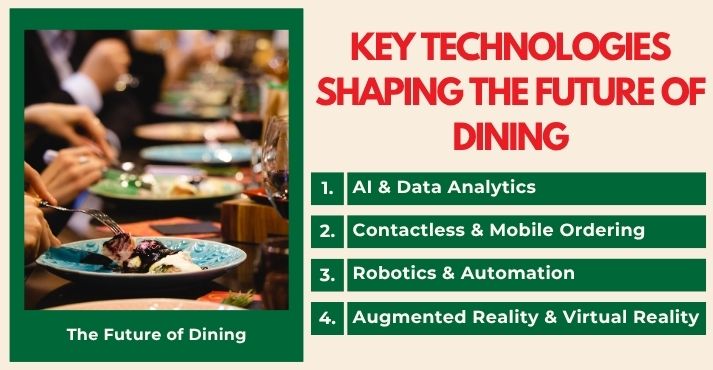
Key Technologies Shaping the Future of Dining
The restaurant industry is changing fast, thanks to technology that improves how restaurants operate and how guests enjoy their meals. Several significant trends are behind this change:
1. AI and Data Analytics
Data-driven approaches are helping restaurants offer more personalized recommendations based on guest preferences and ordering habits. This improves customer satisfaction and boosts sales.
Predictive inventory management uses sales data to forecast demand, helping restaurants reduce food waste and control costs. Dynamic pricing models adjust prices based on factors like time or demand, which can increase profits without turning away customers.
The Global AI in Food and Beverage Market is projected to hit $311.6 billion by 2033, with a consistent growth rate of 43.7% anticipated between 2024 and 2033. This growth shows how smart restaurants are becoming essential to the future of dining.
2. Contactless and Mobile Ordering
Contactless ordering has become essential for many diners. QR code menus enable guests to browse dishes on their phones, reducing wait times and minimizing the need for physical contact. Mobile ordering apps allow customers to place orders for dine-in or takeout easily.
Many restaurants connect these systems to delivery services and loyalty programs, making it simple for guests to order and earn rewards. This meets the demand for convenience and speed while supporting contactless ordering options.
3. Robotics and Automation
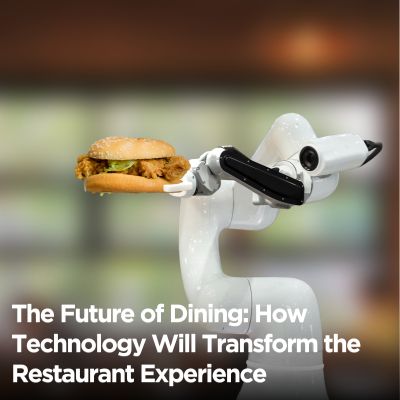
Robots are making their way into kitchens and dining rooms. They assist with food prep, help deliver meals, and improve consistency. Automated kitchens use smart appliances to precisely monitor cooking temperatures and times, resulting in improved food quality.
Smart kitchen technology also streamlines operations, allowing staff to focus more on customer service rather than repetitive tasks. Robots in food service are becoming a significant component of making restaurants more efficient.
4. Augmented Reality and Virtual Reality
Augmented reality is changing how customers interact with menus. It allows guests to see virtual previews of dishes before ordering, helping them make choices with more confidence. This connects with menu psychology by making the experience more engaging.
Virtual reality can create immersive dining experiences that transport guests to themed environments or unique settings.
With 75% of consumers aged 16 to 44 aware of AR, these AR dining experiences provide restaurants with an opportunity to stand out and create memorable experiences.
Enhancing Customer Experience with Technology
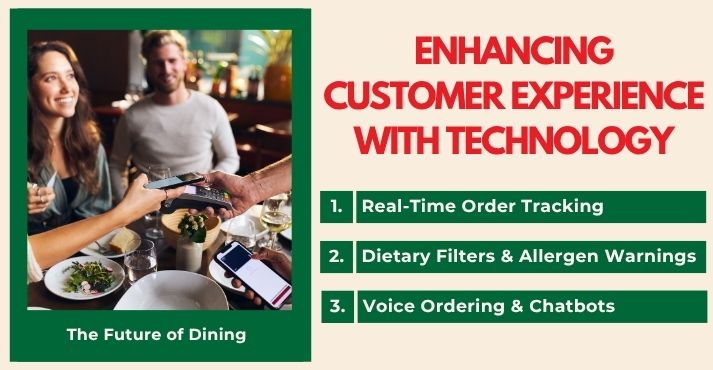
Technology is making dining out smoother, faster, and more personal. From tracking your order in real time to making it easier to spot allergens on a menu, these upgrades are changing how people interact with restaurants.
1. Real-Time Order Tracking
Real-time order tracking helps guests feel more in control by letting them see exactly where their meal is, from the kitchen to pickup or delivery. Whether dining in or ordering out, people want clarity and updates.
A report from Gitnux shows that 45% of customers say real-time updates reduce frustration and increase trust in the restaurant.
It’s a small feature that makes a big difference. Tracking keeps expectations clear, especially during busy periods, and reduces the number of calls or questions about order status.
For restaurants, it creates a smoother flow and fewer interruptions. For customers, it provides peace of mind and an enhanced digital dining experience.
2. Dietary Filters and Allergen Warnings
Food choices are becoming more personal. With rising awareness of allergens and special diets, diners want menus that are easy to navigate.
Digital menus that include dietary filters and precise allergen labeling help guests make safer, more informed decisions, whether they avoid gluten, nuts, or follow specific lifestyle diets like keto or vegan.
This is especially important for people with severe allergies. It also helps restaurants earn trust by showing they care about individual needs. Supporting dietary restrictions is no longer just a thoughtful extra. In fact, it’s an essential part of creating a better customer experience.
3. Voice Ordering and Chatbots
Voice ordering and automated chat support are changing how restaurants handle service. Voice features enable guests to order hands-free, which is particularly helpful for drive-thrus, kiosks, or at-home ordering through smart devices.
Meanwhile, chatbots can help answer common questions, take reservations, or process online orders quickly. About 33% of casual dining restaurants now use AI-powered chatbots for reservations and ordering.
These systems are beneficial during rush times when staff are busy. They facilitate faster interactions and reduce wait times, providing guests with a more relaxed and responsive experience.
The combination of voice and chatbot technology helps restaurants stay connected with guests, even when human staff are stretched thin.
These features do more than add technology for technology’s sake. They make the digital dining experience easier and more welcoming for everyone.
Operational Benefits for Restaurants
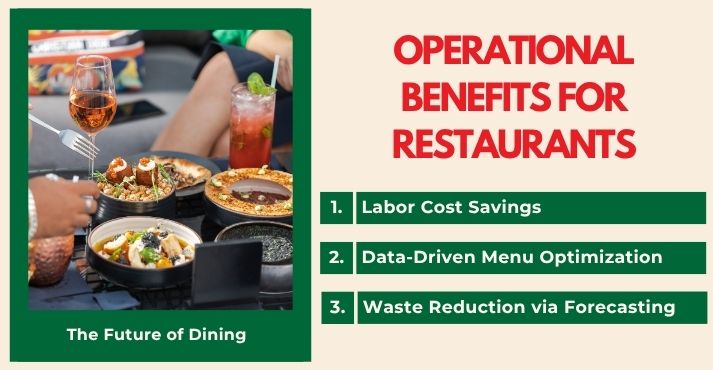
Technology is helping restaurants run more efficiently, cut costs, and make smarter decisions. These improvements are crucial for maintaining profitability in a competitive industry.
1. Labor Cost Savings
Automation reduces the need for manual tasks, freeing up staff to focus on customer service. From automated order taking to kitchen equipment that adjusts cooking times, restaurants are using automation to reduce labor costs while maintaining consistent quality.
This shift allows employees to spend more time creating a better dining experience rather than handling repetitive tasks.
2. Data-Driven Menu Optimization
Using data from sales and customer preferences, restaurants can fine-tune their menus to highlight popular dishes and remove underperforming items. This type of analysis helps boost profits by focusing on what guests actually want.
Menu adjustments based on real customer data are a clear example of restaurant tech innovation that improves both revenue and satisfaction.
3. Waste Reduction Through Forecasting
Better forecasting of demand enables kitchens to prepare the right amount of food, thereby reducing waste. Predictive food ordering helps restaurants manage inventory more effectively, reducing spoilage and lowering costs associated with waste management.
Accurate demand predictions also contribute to smoother kitchen operations and less environmental impact.
Challenges in Tech Adoption
While technology offers numerous benefits to the restaurant industry, its adoption comes with several challenges that operators must address to ensure successful integration and sustained growth.
1. Infrastructure Needs in Southeast Asia Markets
Southeast Asia’s digital infrastructure varies significantly across countries, affecting the pace and effectiveness of technology adoption in the restaurant sector.
Countries like Singapore have advanced digital networks, but others face limited internet access, especially outside urban centers.
This uneven connectivity can slow the rollout of technologies such as AI-powered hospitality and restaurant automation, which rely on reliable internet service.
2. Balancing Technology with Personal Touch
Integrating technology into restaurant operations must be done thoughtfully to maintain the essence of personalized customer service. Over-reliance on automation can lead to a loss of human interaction, which many diners value.
A study indicates that 29% of restaurant operators cite concerns about the speed of service and repair as barriers to technology adoption, highlighting the importance of balancing efficiency with the personal touch.
Ensuring that technology enhances rather than replaces human interaction is crucial for maintaining customer satisfaction.
3. Cybersecurity and Customer Data Protection
With the increasing use of digital platforms, restaurants are collecting more customer data, raising concerns about privacy and security. Implementing robust cybersecurity measures is crucial for protecting sensitive information and maintaining customer trust.
A report highlights that data privacy and compliance are significant challenges, emphasizing the need for restaurants to adopt secure systems and adhere to regulations like GDPR and CCPA.
Investing in cybersecurity not only safeguards customer data but also protects the restaurant’s reputation and operational integrity.
Overcoming these challenges means carefully considering the specific needs and limitations of each market to ensure technology improves both operational efficiency and customer satisfaction.
Southeast Asia Case Studies & Innovations
Southeast Asia is rapidly becoming a hub for hospitality technology, with restaurants across the region adopting innovative solutions to enhance efficiency and customer experience.
Here are notable examples from Singapore, Malaysia, and Thailand:
1. Singapore’s Smart Restaurant Initiatives
Singapore’s food services industry has advanced through digital transformation initiatives, such as the Industry Digital Plans (IDPs), which provide small and medium-sized enterprises (SMEs) with a step-by-step guide to adopting digital solutions.
These plans have helped over 85,000 companies improve process efficiency, with nearly 85% of respondents noting time savings and 75% reducing their reliance on physical labor.
Restaurants in Singapore are integrating technologies such as cloud-based point-of-sale (POS) systems, self-service kiosks, and robotic chefs to streamline operations and enhance customer service.
For example, the Food Services Industry Digital Plan outlines advanced digital solutions, including food preparation tools and smart ingredient dispensers, to help restaurants manage end-to-end kitchen operations through the use of IoT, AI, and video analytics.
2. Malaysia’s Robotic Café Startups
Malaysia is witnessing a surge in robotic café startups that are revolutionizing the food and beverage industry.
Kopy Robot Café, for example, offers an AI-powered robotic coffee kiosk that can prepare a variety of hot beverages, including coffee, chocolate, and matcha, allowing customers to customize their orders.
These machines are equipped with IoT systems for remote monitoring and inventory management, addressing labor shortages and providing a consistent customer experience.
Another notable player, Otter Barista, has developed robotic coffee vending machines that can brew a variety of hot beverages and allow customers to customize their orders.
Each unit is equipped with an IoT system for remote monitoring and inventory management. The company has deployed 60 machines across Malaysia, targeting locations such as hospitals, offices, and universities.
3. Thailand’s Digital Loyalty Programs
Thailand’s loyalty programs market is experiencing significant growth, with the market expected to reach $672.8 million by 2025.
Central Group’s The1 program offers a digital lifestyle platform that connects customers with a network of over 1,000 partners and 20,000 service points.
The program incorporates gamification elements, allowing users to earn points and unlock rewards through interactive challenges.
Additionally, GrabRewards is another prominent loyalty program in Thailand that uses gamified elements to boost engagement, encouraging users to earn points, complete challenges, and unlock rewards, making loyalty feel like a game.
These programs use data-driven insights to personalize rewards and enhance customer retention.
Preparing for the Future: Recommendations for Restaurateurs
Restaurants looking to stay ahead should start small with tech that’s easy to scale. Digital ordering, mobile payments, and table management systems are good first steps. These upgrades don’t require a full system change and can quickly improve day-to-day service.
Training staff is just as important as the tech itself. If teams don’t know how to use new systems, even the best tools won’t help.
Providing employees with time to learn makes service smoother and ensures a consistent experience for guests. It also builds confidence and reduces mistakes during busy shifts.
Working with experienced tech partners can also make a big difference. Many offer support beyond setup, helping restaurants use features fully and resolve problems quickly.
For example, IoT in foodservice can help track energy use and kitchen equipment, reducing waste and saving money. With the right support and steady steps, restaurants can improve operations and boost customer engagement without overcomplicating things.
Conclusion
Technology is no longer optional for restaurants. It is part of how the industry moves forward. From streamlining kitchen operations to making ordering more convenient, digital solutions help businesses stay efficient and competitive.
Customers expect quick service, clear communication, and a smooth experience whether dining in or ordering out. Restaurants that invest in smart systems and train their staff are better equipped to meet these demands.
It is not about adding gadgets. It is about using what works to serve people better. In a rapidly changing industry, those who adapt with purpose will remain relevant and continue to grow.