Suppliers influence nearly every part of how hotels and restaurants operate, from menu quality to day-to-day workflow.
Many businesses work with a mix of large vendors and smaller partners, but managing several independent suppliers can add extra paperwork, delivery coordination, and higher operational expenses.
To manage this more effectively, some hospitality teams bring their small suppliers together into a more organised system. This can streamline ordering, reduce administrative time, and improve overall efficiency.
It also fits current industry priorities such as cost control, sustainability and stronger ties with local producers, particularly within modern hospitality supply chain management models.
Guests continue to look for local ingredients, environmentally conscious sourcing, and products that reflect the region. By combining small suppliers, hotels and restaurants can respond to these expectations while keeping their food supply chain clear and manageable.
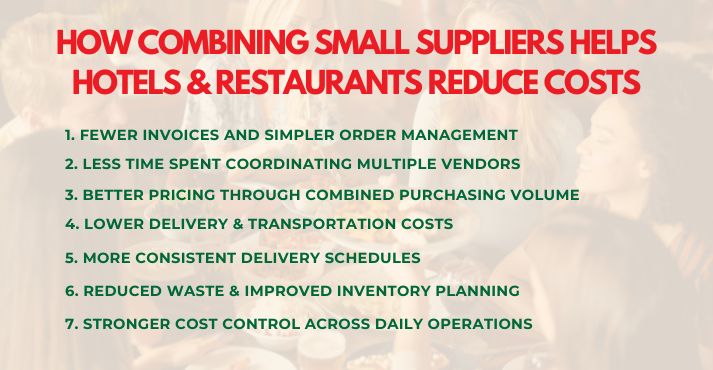
How Combining Small Suppliers Helps Hotels and Restaurants Reduce Costs
Working with several small suppliers gives operators access to a wider range of ingredients than relying solely on large distributors. This is especially true when working with farm-to-table suppliers, who often grow or produce items that highlight Southeast Asia’s biodiversity.
When several small food and beverage vendors are involved, the administrative workload increases, and staff spend more time coordinating orders than focusing on guest-facing tasks.
Bringing these suppliers together in a more organized setup reduces the number of transactions and cuts the effort required to manage them.
Another cost advantage comes from purchasing volume. Small suppliers may offer good pricing, but ordering from them separately limits the ability to secure stronger discounts or delivery adjustments.
When their orders are combined, the total volume becomes more meaningful, supporting better negotiations with food distributors and wholesalers.
Logistics expenses also decline. Multiple deliveries from different vendors often lead to repeated transportation charges and inconsistent receiving hours.
Coordinated deliveries help reduce these overlaps, stabilize scheduling, and prevent labour downtime caused by irregular drop-offs.
Consolidation also improves inventory planning. With fewer order streams and more predictable purchasing cycles, teams can avoid overstocking, reduce waste, and maintain steadier costs across commonly used items.
Overall, combining small suppliers is a practical way to manage rising expenses. By reducing administrative work, strengthening purchasing power, and minimizing delivery inefficiencies, businesses can maintain product quality while improving cost control.
Why Supplier Consolidation Improves Reliability and Reduces Risk
Relying on a single supplier can expose F&B operators to service interruptions, stock shortages, and unpredictable delivery issues. Recent industry analysis continues to show how vulnerable supply chains can be.
A 2025 McKinsey survey reported that 82% of companies experienced supply disruptions linked to trade and operational changes, and many responded by diversifying their supplier base. This closely mirrors risks faced across the food and beverage industry.
When several small suppliers are coordinated within one system, the overall supply network becomes more resilient. If one vendor cannot meet demand or experiences delays, another supplier can step in.
This reduces the likelihood of sudden menu changes, stockouts, or operational slowdowns, helping teams maintain a steadier inventory flow.
Smaller vendors, particularly local suppliers for hotels and restaurants, are often more responsive when challenges arise. Their shorter delivery routes, direct communication, and ability to adjust quantities or timing allow hospitality teams to address issues faster.
Research on supplier diversity also notes that smaller vendors tend to adapt more quickly to sudden shifts in demand.
Overall, combining small suppliers helps spread risk across multiple sources and strengthens operational continuity.
This approach reduces vulnerability to disruptions and allows businesses to maintain consistent service performance even when one supplier encounters difficulties.
How Combining Small Suppliers Expands Product Variety and Enhances Guest Experience
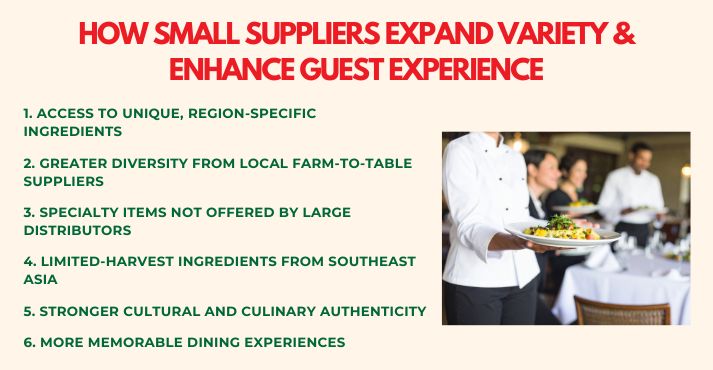
Working with several small suppliers gives operators access to a wider range of ingredients than relying solely on large distributors. This is especially true when working with local farm-to-table suppliers, who often grow or produce items that highlight Southeast Asia’s biodiversity.
Examples include Thai heirloom rice varieties, Malaysian kampung eggs, Indonesian single-origin cocoa, Balinese sea salt, Vietnamese herbs, and fruits such as calamansi, pandan coconut, and red dragon fruit.
Global market data reinforces the growing interest in locally sourced and specialty products. The farm-to-table restaurant segment reached $14.2 billion in 2024 and is projected to grow at 7.8% annually from 2025 to 2033, signalling continued demand for fresh, traceable, and region-specific ingredients.
Small growers across Southeast Asia often supply limited-harvest items such as Sarawak black pepper, Sabah mountain vegetables, virgin coconut oil, and pandan leaf puree.
These ingredients allow chefs to create dishes that reflect local culture, flavour profiles, and culinary traditions that guests may not encounter in larger commercial supply chains.
Research consistently shows that diners gravitate toward menus featuring local or specialty items, viewing these choices as fresher and more memorable.
When several small suppliers are combined under a coordinated system, operators can maintain steady access to these products and continue offering dining experiences that leave a strong impression on guests.
Why Supporting Local Small Suppliers Strengthens Your Brand and Community Impact
Local sourcing has become a priority for many diners, especially those who care about environmental impact and ingredient transparency.
Guests often choose venues that can show where their products come from and how they are grown. Many operators now turn to independent hospitality vendors to meet these expectations.
Working with small local suppliers also helps build stronger ties with nearby farmers, producers, and artisanal makers. Money spent within the region stays in the region, which supports local livelihoods and strengthens culinary tourism.
Many guests value businesses that contribute to their local economy and recognise the people behind the food they enjoy.
A Deloitte study found that 64% of consumers are willing to pay more for sustainable food choices, reinforcing the growing importance of responsible sourcing in purchasing decisions.
Using local producers also creates opportunities to share origin stories, farming practices, and cultural connections behind ingredients.
This gives guests a more meaningful dining experience and helps build a positive brand identity centred on authenticity and commitment to sustainable food.
Customization and Flexibility: The Hidden Advantage of Working With Small Suppliers
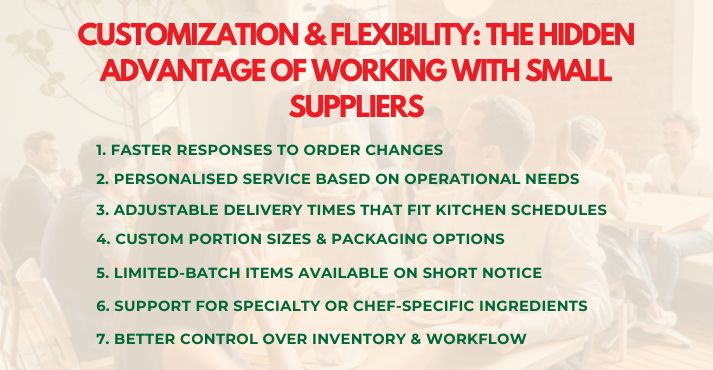
Many operators value the ability to quickly adjust orders, modify product details, or request changes without lengthy approval processes. This is where small hospitality suppliers offer an advantage.
Their leaner structures allow them to respond to individual requests, provide personalised service, and adapt to specific operational needs in ways that larger distributors may not match.
Small suppliers often adjust delivery times to match kitchen schedules, prepare custom portion sizes, modify packaging, or supply limited-batch items on short notice. During periods of unpredictable demand, this flexibility becomes especially important in restaurant inventory management.
One example is Singapore’s urban farm Edible Garden City, which supplies fresh herbs, edible flowers, and microgreens to food and beverage outlets and can grow produce to chef specifications.
This level of flexibility can enhance service quality and strengthen guest satisfaction. Kitchens can maintain menu consistency, avoid delays caused by rigid supply processes, and introduce specialty items without long lead times.
Customised ordering also helps teams reduce waste, manage quantities more accurately, and keep inventory aligned with actual needs.
Working with small suppliers gives operators greater control over when and how products arrive, supporting smoother workflows and better overall performance.
Conclusion
Consolidating small suppliers can improve several parts of hospitality operations, from reducing administrative tasks to improving cost control, reliability, and access to unique products.
It also supports local producers and creates room for the kind of customisation that larger distributors rarely provide. These combined benefits help operators maintain steadier operations while offering guests fresher, regionally connected, and more memorable dining experiences.
Businesses that want to strengthen their sourcing strategy can begin by reaching out to nearby growers or specialty producers and exploring where consolidation might reduce complexity or create new menu opportunities.
Even small steps toward coordinated purchasing can build stronger community relationships, improve operational efficiency, and deliver a clearer sense of identity through the food and products served.