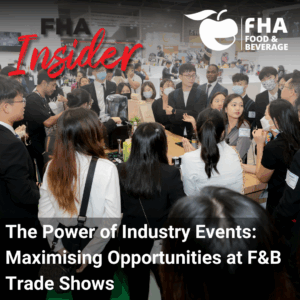
Every year, the global exhibitions industry celebrates Global Exhibitions Day (GED), an initiative led by UFI to recognise the important role exhibitions play in driving business growth, innovation, partnerships, and industry connections worldwide.
In today’s increasingly digital landscape, exhibitions continue to remain powerful platforms for face-to-face engagement, allowing businesses to connect, experience products firsthand, and build meaningful relationships that drive long-term opportunities. Hear from our team: Andy Chua, Senior Manager, Event and Customer Success, Jolene Koh, Operations Manager, and Merliyn Low, Deputy Business Development Director, as they share their perspectives on the impact exhibitions continue to create across the industry.

Andy Chua, Senior Manager, Event and Customer Success
1. What does a first-time buyer typically walk in expecting — and how does that usually compare to what they actually experience?
A lot of first-time buyers hesitate to join our Hosted Buyer Programme because they assume it means being locked into back-to-back scheduled meetings with no time to explore on their own. We totally get that concern. They have limited time at the show and want to make the most of it by discovering what FHA has to offer for their business. That’s why we take a different approach we let buyers explore the event at their own pace and set up their own appointments as part of the programme. This way, they get a productive sourcing trip without the stress, and we’re there to support them in finding exactly what they need.
2. What’s a conversation you’ve had with a buyer that made you realise exhibitions solve a problem no briefing document or product catalogue ever could?
Just at FHA2026, we had a buyer request an introduction to a Belgian whiskey exhibitor. What’s interesting is that the buyers had passed by that booth a few times but never actually stopped to check it out. Once we brought them over and they tasted the whiskey, they were really excited about it. They immediately started asking for quotes and talking through how they could promote it in their business. It’s these kinds of connections that really show the value of what we do.
3. Where do hosted buyer relationships tend to go after the show — and what does it take for them to actually stick?
After every event, our team makes it a point to check in with buyers whether they need help tracking down an exhibitor they spoke with, recovering a lost contact, or getting information they might have missed. We also run roadshows that give local FCB folks a chance to connect in a more laid-back setting, where they can meet new people and catch up with familiar faces. At the end of the day, we want to be more than just event organizers we’re here to bring the industry together and be the platform everyone turns to for sourcing.

Jolene Koh, Operations Manager
1. What sustainable feature did we implement on-site at the last FHA — and what was the thinking behind those choices?
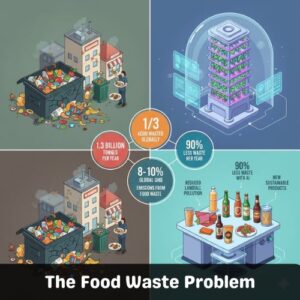
As we are aware that tradeshows generate multiple waste streams before, during and after event days, we are mindful of the impact that a tradeshow as large as FHA may cause to the environment. As such, during our planning, we ensured that various sustainability measures were put in place to minimise waste. Some of the initiatives include
- Recycling Zones, where exhibitors and visitors get the opportunity to sort out their waste into recyclables and general waste, and dispose used oil that were recycled into biofuel post-event.
- Using only recyclable carpet from a sustainable source, and all carpet are retrieved for downstream usage post-event.
- Using only reusable stand building materials for the construction of our organiser requirements (signages, feature areas, organiser packages, etc).
- Working with a charity organisation, Willing Hearts, to provide exhibitors with an avenue to donate their surplus food products at the end of our 4-day tradeshow.
2. What’s the hardest sustainability challenge to solve when running a show of this scale?
One-time used disposable carpentry booths.
At FHA, 80% of our show floor is made up of space only booths where exhibitors engage contractors to build their stands. It has always been a challenge to influence and
encourage exhibitors and contractors to build sustainably and minimize carpentry waste. If the contractors do not reuse these booth materials post event, it will all go into landfill as general waste. Since the implementation of sustainability at FHA, we have seen a steady increase in the number of sustainably built stands, however, there is still a gap that we need to continue to bridge.
3. When you walk the show floor during build-up or teardown, what do you look for that tells you the sustainability effort is actually working?
Some of the tell-tale signs of our sustainability efforts actually working include increased usage of our recycling zones that can be observed through a higher collection of recycled waste and used cooking oil, higher amount of food products donations, and an increase in number of booths and pavilions built using reusable materials.
During the tear down hours, we also see more contractors dismantling the stands in a systematic manner and packing the carpentry materials properly. This is also one of the tell-tale signs that the materials will be reused or re-purposed after bringing them back to their warehouse.

Merliyn Low, Deputy Business Development Director
Merliyn Response:
1. Tell us about an exhibitor who came to FHA and came away with a result they couldn’t have achieved any other way.
One memorable example was the Indonesia Pavilion at FHA 2025, where participating exhibitors secured export contracts worth over US$32 million and generated further business opportunities with international buyers and distributors.
What stood out was how the event created opportunities that would have been difficult to replicate elsewhere. Many of the participating brands including SMEs were able to engage directly with decision-makers from multiple markets, opening conversations that may otherwise have taken months or even years to happen organically.
It’s a reminder that beyond showcasing products, exhibitions can create the right environment for meaningful business relationships, market expansion, and opportunities that have a lasting impact well beyond the show floor.
2. What does return on exhibition actually look like for a brand at FHA — how do you see it play out in practice?
Exhibitors come to FHA for many reasons, but it’s the real business done on the show floor that truly keeps the energy alive—distributorship agreements, bulk purchases, and high-value orders signed in the moment. These tangible outcomes continue to attract a diverse international mix of exhibitors and buyers to FHA.
While ROI is often measured through leads, pipeline deals, and revenue, the real return goes far beyond numbers. It’s about relationships built through meaningful conversations, referrals that happen naturally on the show floor, and powerful word-of-mouth moments when someone
says, “I saw this product in Hall 8.” that can be just as valuable as a signed contract.
Equally important, many client relationships extend beyond business. Catching up with long-time partners, sharing meals, and reconnecting on a personal level is part of the FHA experience. This unique blend of commercial outcomes and genuine human connections is what makes FHA a trusted platform within the food and hospitality industry.
Looking ahead, exhibitors will also be able to leverage Informa’s advanced analytics tools to improve lead conversion rates and turn show floor connections into measurable business growth.
3. For a smaller brand or first-time exhibitor, what opportunity does FHA open up that an online meeting or a phone call simply can’t?
Suggestion: For an SME, what opportunity does FHA open up that other sales channel like an online meeting or a phone call simply can’t?
One of the most common sales channels is cold email outreach, but busy executives today rarely respond. Many already have existing supplier relationships, no immediate purchasing needs, or emails may simply get blocked by spam filters before ever reaching them. Cold calling has also become less effective due to stricter data privacy regulations, making it increasingly difficult to reach decision-makers through traditional outbound methods.
At the same time, while online meetings offer convenience, they are often far less convincing especially in the food, beverage, and hospitality sectors, where physical product experience matters greatly. Buyers often need to taste products, assess quality firsthand, test equipment performance, and build trust directly with suppliers before committing to long-term partnerships. FHA brings global suppliers and buyers together in one location, making these valuable face-to-face interactions far more accessible and efficient.
Beyond the product experience, trust has also become increasingly important in today’s business environment. Meeting suppliers face-to-face at FHA allows buyers to have genuine
conversations, experience products in person, and build confidence and credibility in ways that virtual interactions simply cannot fully replicate.