Have you ever taken a sip of coffee and thought it tasted like pineapple, berries, or even red wine? These surprising flavors are not just a happy accident.
They often come from special ways of processing coffee after it is picked. One of the most widely discussed methods today is anaerobic fermentation in coffee.
This method is gaining popularity in the specialty coffee world because it brings out bold and unexpected flavors. By carefully controlling how the beans ferment without oxygen, producers can create a cup that stands out and feels almost like a new experience.
In this blog, we’ll learn what anaerobic fermentation is, how it works, how it differs from other methods, and, most importantly, how it affects the taste in your cup. If you enjoy exploring new flavors, this is a story you will want to follow.
What is Anaerobic Fermentation in Coffee?

Anaerobic fermentation in coffee is a type of post-harvest processing in which ripe coffee cherries or pulped beans are placed in sealed tanks without oxygen.
By removing oxygen completely, producers create an environment that allows specific microorganisms to develop in a controlled manner. This helps bring out unique and expressive flavors in the final cup.
The main goal of this method is to guide microbial activity to produce distinct and memorable flavors. By carefully managing factors such as temperature, time, and pressure inside the tanks, farmers can accentuate fruity, floral, or even wine-like notes that are challenging to achieve with other techniques.
This focus on flavor has inspired many producers to experiment with new ideas and offer something different to coffee drinkers.
Anaerobic fermentation belongs to the same group of post-harvest methods as washed and natural processing. In the washing process, mucilage is removed before fermentation in water, which often results in a clean and bright cup.
In the natural process, cherries are dried with the fruit still attached, adding sweetness and a fuller body. Anaerobic fermentation stands out because it offers even more control over coffee flavor development, allowing producers to fine-tune each batch for specialty markets.
More people around the world are exploring new types of coffee. Every day, about 2.25 billion cups of coffee are consumed globally, showing how widespread coffee culture has become.
This global love for coffee encourages producers to innovate and offer memorable taste experiences.
The rise of anaerobic fermentation also ties into modern coffee brewing methods, as baristas and home brewers seek beans with vibrant and lively profiles to bring fresh, dynamic flavors to their daily routine.
How Does Anaerobic Fermentation Work?
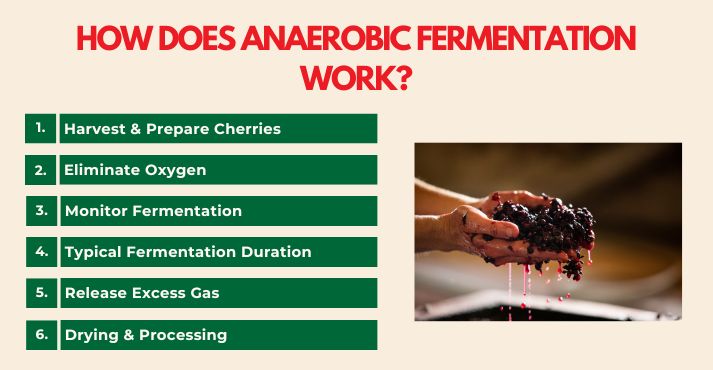
Here is a clear, step‑by‑step look at how anaerobic fermentation unfolds on the farm:
- Harvest and prepare cherries: Ripe coffee cherries, or beans freshly pulped, are gathered and immediately placed into sealed tanks. These tanks are typically made of stainless steel or thick, food-grade plastic. The choice depends on factors like durability, ease of cleaning, and temperature control.
- Eliminate oxygen: Tanks are sealed airtight and often equipped with one-way valves to release gas while preventing air from entering. This setup creates actual oxygen-free conditions, allowing specific microorganisms to thrive in a controlled atmosphere.
- Monitor fermentation: During fermentation, producers carefully track time, temperature, and even pH levels. Controlling these factors helps achieve desired outcomes in coffee flavor development.
- Typical fermentation duration: The process can take anywhere from 18 hours up to 96 hours. Around 24 to 72 hours is common in many regions, but longer fermentations, such as 96 hours, give more intense and complex flavour profiles.
- Release excess gas: CO₂ builds up during fermentation. The valve releases this gas, preventing dangerous pressure buildup and ensuring the cherries don’t burst the tank.
- Drying and processing: Once fermentation is complete, the cherries are removed, rinsed, and dried, often on raised beds or patios, before the lots undergo coffee cupping and grading.
This method offers more control than traditional coffee processing methods, which often rely on open-air conditions. Even small changes in microbial activity can create big differences in taste.
Many producers see anaerobic fermentation as an exciting new direction in specialty coffee fermentation. Small farmers are also learning to measure and monitor each stage more precisely, making the process more consistent and accessible.
During coffee rituals worldwide, especially in cupping sessions, these coffees are known for their lively and layered flavors. Each batch feels like a story in a cup, showing careful work from farm to table.
Why Do Producers Use Anaerobic Fermentation?
Many producers use anaerobic coffee methods to create beans with higher quality and unique flavors.
By fermenting without oxygen, they can develop fruity or wine-like notes that make their coffee stand out. This style helps them offer something special to buyers looking for new taste experiences.
Anaerobic fermentation also enables farmers to replicate successful results more easily and experiment with new ideas. They can adjust the time, temperature, or other steps to highlight certain flavors.
This type of control is more challenging to achieve with traditional methods, which gives them greater confidence in the final product.
This process has become a strong selling point for specialty coffee. Roasters and cafes often look for beans that bring something different to the table.
When they hear that a coffee was produced with anaerobic fermentation, it usually means the cup will have bold and interesting flavors.
These beans also open new options for roast profiles. Roasters can opt for lighter roasts to maintain bright acidity or use medium roasts to bring out sweetness and complexity. It gives them more freedom to match the roast to the bean’s character.
Using this method is part of modern coffee farming practices, where farmers focus on quality and direct relationships with roasters. By having more control over processing, they can reach new markets and earn better prices, which supports their farms and local communities.
How Does It Affect Coffee Flavor?
Anaerobic fermentation brings out bold and unexpected flavors in coffee. You might taste tropical fruits like pineapple or mango, notes of red wine, gentle spices, and different types of acidity, from bright citrus to smooth, juicy tang. These flavors are often more vivid than those found in washed or natural coffees.
The sealed, oxygen-free environment allows certain microbes to work in a controlled way. They break down sugars and other compounds inside the cherries and help develop unique taste profiles. This is why coffees made with this method often feel more layered and lively.
In Costa Rica’s Tarrazú region, coffee processed with anaerobic honey techniques often shows bright strawberry, caramel, and subtle cinnamon notes on a juicy body.
In Colombia’s Cauca region, farms like Finca Juan Martín use anaerobic natural processing to produce beans with crisp citric acidity, floral tones, grape-like fruitiness, and exotic complexity.
These vibrant flavors come through clearly in different drinks. When you enjoy a long black or an Americano, you can still taste the fruitiness and sweetness. In cold brew, these coffees often taste smooth and sweet without harsh bitterness.
For many coffee lovers, trying beans made this way feels like exploring a new side of coffee, one that is full of character and surprises.
How is Anaerobic Fermentation Different from Other Coffee Processes?

Anaerobic fermentation differs from other common coffee processes because it gives producers more control over flavor. Here’s a simple look at how it compares:
1. Natural (Dry) Process
In this method, whole cherries are dried in the open air with the fruit still attached. This often creates fruity and wine-like flavors with a heavier body. Since it occurs in open conditions, it is more challenging to determine how microbes affect the final taste.
2. Washed (Wet) Process
Here, cherries are pulped and fermented in water before being washed and dried. This leads to a cleaner cup with bright acidity and a lighter body. Because water controls fermentation, flavors are often more consistent and easy to repeat.
3. Anaerobic Fermentation
With this method, cherries or pulped beans ferment inside sealed, oxygen-free coffee fermentation tanks, often fitted with valves to release gas.
The lack of oxygen alters how sugars and acids break down, resulting in more pronounced and exotic flavors, such as those of tropical fruits, red berries, or spiced notes.
This careful control has helped producers create expensive coffees that command high prices at auctions. Some anaerobically processed Geisha lots have sold for over USD 800 per pound.
A recent study also noted that anaerobic beans tend to keep slightly higher caffeine levels than washed coffees, which can affect taste and body.
By using this method, farmers can explore new flavors and create special lots that appeal to adventurous coffee drinkers, supporting new trends in high-end brewing.
Pros and Cons of Anaerobic Fermentation in Coffee
Anaerobic fermentation offers exciting opportunities for producers and roasters, but it also comes with challenges. Here’s a quick breakdown:
Pros
- Creates unique, complex flavors. Many arabica coffee growers use it to bring out fruity or wine-like notes.
- Offers more consistency by allowing close control of each fermentation step.
- Helps producers develop premium coffees that can sell at higher prices in the specialty market.
Cons
- Higher risk of defects or off-flavors if not carefully managed.
- Requires costly equipment like sealed tanks and monitoring systems.
- Harder to scale on large farms, as each batch requires close attention.
Some roasters have even explored using anaerobic fermentation for decaf, adding new flavors to caffeine-free options.
Who is Using Anaerobic Fermentation Today?
Anaerobic fermentation has grown popular among specialty farms across Latin America, Africa, and Southeast Asia. In Colombia, producers like Frank Torres at Finca La Indonesia in Nariño use 100-hour anaerobic natural fermentation in sealed tanks with pressure valves.
These careful methods bring out bright, juicy flavors and showcase what controlled fermentation can achieve.
In Brazil, Carmo Coffees in Carmo de Minas uses adapted cheese tanks to ferment large volumes of cherries, creating bold and fruity profiles that show Brazil’s growing interest in new and creative coffee flavors.
In Mexico, farms in Veracruz have started producing microlots using anaerobic fermentation. One example is Peet’s Coffee’s Huatusco microlot, which revealed green apple and juicy white grape notes along with a silky texture.
This trend indicates that producers in various regions are seeking ways to enhance the value and personality of their coffees.
Experimental roasters and competition-level coffees are also using anaerobic fermentation to develop new and memorable flavor profiles. Alternate Route in Colombia works with microlots like Santa Monica, known for red berry and cola notes.
In the United States, Parisi Coffee sources anaerobic beans from Nicaragua, producing roasts with a syrupy body and flavors like grape, mixed berry, and vanilla.
Even decaf options have seen this trend. Prototype Coffee Roasters offers a Nicaragua decaf lot processed anaerobically, resulting in flavors such as dark chocolate, orange, and melon.
Anaerobic coffees are now appearing more frequently on the specialty coffee menus in third-wave cafés, where customers seek out new and exciting flavor experiences. Online specialty retailers also feature these beans, often marketing them as rare and exclusive.
This method has opened doors for farmers and roasters to experiment more and connect with a growing community of adventurous coffee drinkers.
What Should Buyers or Roasters Look For?
When selecting coffees processed through anaerobic fermentation, it is helpful to pay close attention to the labels. Terms like “anaerobic process,” “experimental fermentation,” or “sealed tank process” usually indicate this method was used.
These details suggest that the beans may have more intense or fruit-forward flavors compared to traditional washed or natural coffees.
Roasters should keep in mind that these coffees often perform better with a careful approach to heat. Slower roasting can help highlight fruity or wine-like notes and preserve delicate acidity.
Because each batch can taste significantly different, it’s essential to adjust roast profiles based on sample cupping rather than relying on a standard plan.
For buyers, especially those selecting beans for cafés or incorporating them into a coffee trade show lineup, starting with small batches is a good idea. It allows you to test customer response and see how the beans work with different brewing methods before committing to larger orders.
Trying these coffees in smaller quantities first also makes it easier to experiment with different extractions, from pour-over to espresso.
By understanding the flavors and potential of each lot, roasters and café owners can effectively showcase what makes these beans special and add a memorable element to their menu.
Conclusion
Anaerobic fermentation gives coffee producers the freedom to explore new flavors and produce premium, standout beans. By using sealed tanks and careful monitoring, they create coffees with bright, fruity, and layered profiles that feel different from everyday brews.
For anyone who loves trying new flavors or enjoys coffees with rich, wine-like notes, these beans are worth adding to your list. Roasters and cafés can also use them to add something special to their offerings and surprise their customers.
Next time you shop for coffee, look out for “anaerobic” on the label and see what new flavors you discover. Supporting these methods also helps small farmers and specialty roasters continue to improve their craft.