Ever wonder why your bread did not rise as beautifully as you hoped or why the flavor fell flat? Many home bakers face this problem, often thinking the issue is with the oven or the flour.
In reality, the answer often hides in a single, powerful step called bulk fermentation in bread making.
Bulk fermentation in bread is the first long rise after mixing the ingredients and before shaping the dough. During this stage, the dough develops strength, gains structure, and builds complex flavors that make each bite special.
It is when the natural yeast and bacteria create gases, stretch gluten networks, and form the airy crumb we all love.
In this blog, we will break down what bulk fermentation is, how long it should take, and the signs that show it is working properly. Mastering this stage can turn an ordinary loaf into something truly remarkable.
What Is Bulk Fermentation in Bread Making?
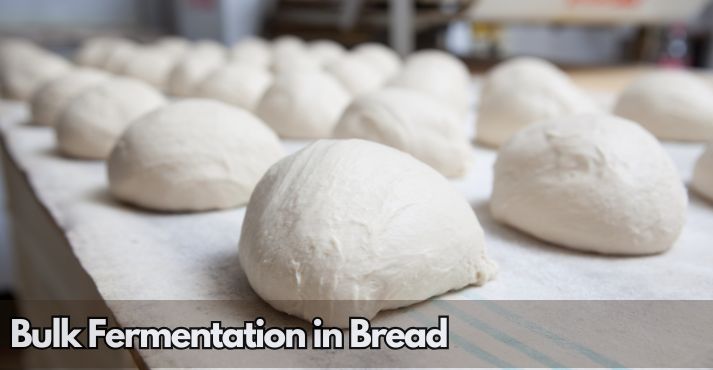
Bulk fermentation in bread is the first long resting phase that occurs after mixing the dough and before shaping it.
During this time, yeast or sourdough bacteria in artisan bread start consuming sugars and producing carbon dioxide gas and organic acids. This process creates lift, strengthens the gluten network, and builds flavor.
The word “bulk” means the dough stays in one large mass rather than being divided into smaller pieces. The typical fermentation time in baking for this stage ranges from about three to six hours.
Warmer doughs or high-hydration recipes may rise faster, while cooler doughs or whole-grain mixes often require more time.
Bulk fermentation is the stage where the dough begins to develop its final character and depth of flavor.
Why Is Bulk Fermentation So Important?
Bulk fermentation is an essential part of bread making because it lays the foundation for both texture and flavor. During this stage, the dough builds gluten strength.
This strong gluten network allows the dough to retain gas, rise well, and produce an open, airy crumb. Without it, bread often turns out dense and heavy.
This stage also helps develop deep flavor, especially in sourdough. As the natural yeast and bacteria work, they produce acids and other compounds that give the bread its distinct taste.
Sourdough fermentation can also make bread easier to digest. Research shows that it can lower the phytate content by over 70%, helping the body absorb more minerals, such as iron and zinc.
Skipping or rushing bulk fermentation usually results in bland bread with poor structure. In baking traditions around the world, this stage is never overlooked, whether in a small home kitchen or a busy commercial kitchen. It is the step that creates the structure needed for a light crumb and a crisp, golden crust.
What Affects Fermentation Time?
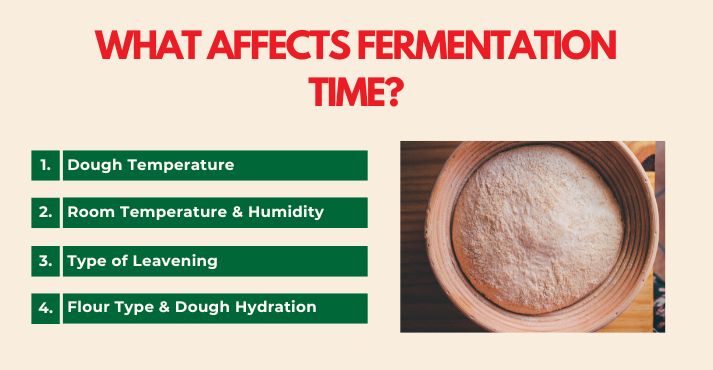
Fermentation time depends on a few important factors. Paying attention to these details helps you control the texture and flavor of your bread.
1. Dough Temperature
The warmth of your dough is one of the biggest factors. Warmer dough ferments faster because yeast and bacteria work more quickly. Cooler dough slows things down and can help create more complex flavors.
For most artisan bread methods, the best dough temperature is around 23 to 27 degrees Celsius (73 to 80 degrees Fahrenheit).
If your dough is too cool, you can move it to a cozy spot, use warm water when mixing, or store it in a warming drawer to maintain a steady temperature.
2. Room Temperature and Humidity
The room where your dough sits affects fermentation speed. A warm kitchen makes the dough rise faster, while a cooler space slows it down. High humidity can help the dough expand, but may also make it sticky and harder to handle.
Moving the dough to a different spot or using a proofing box are simple ways to manage temperature and humidity. These practices are common in bakeries and patisseries.
3. Type of Leavening (Yeast vs. Sourdough)
Your choice of leavening affects the duration of fermentation. Instant yeast works quickly and is easy to control. Sourdough needs more time since it relies on wild yeast and bacteria.
While slower, sourdough fermentation gives bread a deep, rich flavor. This is one reason it remains popular among bakers who value traditional techniques.
4. Flour Type and Dough Hydration
The type of flour and the amount of water in your dough also affect how quickly it ferments. Whole wheat and other whole grain flours usually ferment faster because they offer more nutrients for yeast and bacteria.
Doughs with higher hydration, meaning more water, often ferment more actively and feel softer and stretchier.
These factors guide bakers in perfecting bread rising techniques and creating loaves with better structure and taste.
How to Tell When Bulk Fermentation Is Done
Knowing when bulk fermentation is finished is one of the most essential skills in bread making. A few simple visual and tactile clues can help you judge the dough with confidence.
The dough should look puffier and feel smoother than when you first mixed it. It often increases in volume by about 50 to 100%, depending on the recipe and conditions.
You may notice bubbles on the surface or along the sides of the container. These bubbles show that gas has developed inside, a sign that the yeast and bacteria have been active.
The finger-poke test is a reliable method. Gently press a floured finger into the dough. If the dent springs back slowly but does not disappear right away, the dough is ready. If it springs back too quickly, it likely needs more time.
Some bakers like to take before-and-after photos during a few batches. This practice can help train your eye and build confidence over time.
At a bakery and pastry trade show, you might see professionals demonstrate these same techniques, showing just how much careful observation matters in good bread making.
The Role of Stretch and Folds During Bulk Fermentation
Stretch and fold is a simple method used to strengthen the dough without heavy kneading. This technique involves gently pulling one side of the dough up and folding it over itself. You repeat this around all sides of the dough, which helps develop gluten and improve overall structure.
It is usually done every 30 to 45 minutes during the early part of the bulk fermentation stage. This timing fits well within the different bread proofing stages and gives the dough time to rest and relax in between folds.
Regular stretching and folding help the dough hold gas more effectively. This leads to a better rise and an open, airy crumb. The process also makes the dough easier to handle later when shaping.
Many bakers in the restaurant industry rely on this technique because it builds strength without making the dough tough or overworked. It supports the final texture and volume of the bread.
Cold Bulk Fermentation (Retardation Method)
Cold fermentation, also known as the retardation method, involves resting the dough in the refrigerator for 12 to 24 hours during the bulk fermentation stage.
By lowering the temperature, yeast and bacteria work more slowly, allowing flavors to develop more deeply and creating a more complex taste.
This method also helps improve oven spring, the final rise that occurs when the dough is placed in a hot oven. A well-chilled dough often holds its shape better and shows a beautiful crust and open crumb once baked.
However, it is important to watch the timing closely. The refrigerator slows down fermentation but does not stop it completely. If the dough is left to rise too long, it can overproof and lose its strength, making it difficult to shape and affecting the final texture.
Cold fermentation is a favorite among many bakers because it adds flexibility to their schedule while producing rich, well-developed bread.
Common Mistakes to Avoid
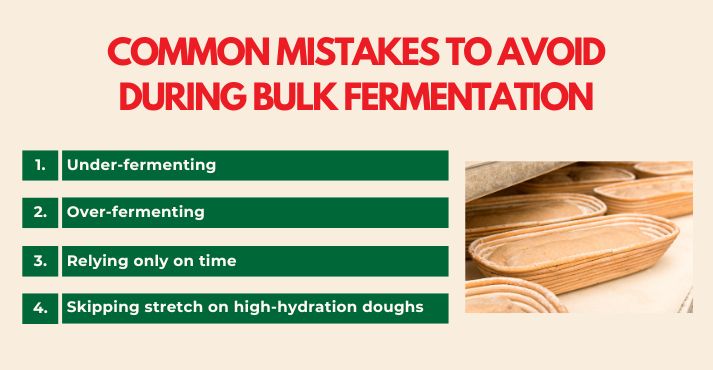
Even experienced bakers can encounter issues during bulk fermentation. Here are some common mistakes and how to avoid them:
- Under-fermenting: When dough does not ferment long enough, it will not develop enough gas or flavor. This can lead to a tight crumb and flat taste.
- Over-fermenting: Dough that sits too long can collapse or turn overly sticky. It loses strength and becomes harder to handle during shaping.
- Relying only on time: Watching the clock is not enough. Always check visual and tactile signs, such as dough volume, bubbles, and the finger-poke test, to determine if it is ready.
- Skipping stretch and folds on high-hydration doughs: Stretch and folds help strengthen wetter doughs. Skipping them can cause the dough to spread too much and lose structure.
Many bakers also pay attention to their kitchenware, such as clear tubs or large bowls, to help spot changes in the dough more easily and work with better control.
How to Adapt Fermentation for Your Schedule
Busy days do not mean you have to give up on good bread. With a few adjustments, you can fit bulk fermentation into almost any routine.
One of the easiest ways is to place the dough in the fridge overnight. This slows fermentation and gives you more flexibility. Using proper refrigeration equipment helps keep the dough at a steady temperature, preventing it from overproofing while you sleep.
Starting early in the day is another option. You can divide your work into two shorter sessions, allowing time for other tasks in between.
If you need to speed things up, try using slightly warmer water when mixing or place the dough in a proofing box. These methods encourage faster activity without sacrificing quality.
By planning around your day, you can still enjoy fresh, flavorful bread even with a full schedule.
Conclusion
Bulk fermentation is much more than just waiting for the dough to rise. It is a critical stage during which the dough develops strength, structure, and flavor. By giving this step proper attention, you help create a beautiful crumb and a rich, satisfying taste.
Patience and careful observation matter here. Watching how the dough changes in volume, feeling its texture, and noticing bubbles are all subtle signs that indicate it is on the right track.
Once you become comfortable with this process, you will notice a significant difference in your baking. Your loaves will have better texture, a lighter crumb, and a flavor that makes each slice worth the effort.