In the hospitality industry, trust is essential. As hotels use more technology solutions to improve operations and guest experiences, the need for reliable, trust-based vendor relationships is more important than ever.
These technology investments are long-term commitments that require vendors to keep their promises, provide consistent support, and align with the hotel’s needs.
A recent study revealed that 81% of hoteliers believe technology will be more important for the success of their business in the next five years, showing how much hotels rely on tech solutions.
This blog will explain how hospitality technology vendors can build trust with hotel partners. By establishing credibility, reducing risks, and offering real value, vendors can create long-term partnerships that benefit both sides.
Why Trust Matters in Hospitality Tech Partnerships
Trust is essential for building vendor-hotel relationships. In the hotel industry, technology solutions are often long-term investments that involve training staff, moving data, and adjusting daily operations.
When hotels trust their vendors, these processes run more smoothly, and the likelihood of errors, unexpected costs, or operational problems is significantly lower.
Without trust, hotels may frequently switch vendors, leading to wasted time, resources, and inconsistent service. Low trust can also result in a poor return on investment, as staff may resist using new systems or hesitate to rely on them fully.
Vendors who maintain trust with their hotel partners gain loyalty, encourage fresh ideas, and create partnerships that last for years.
Key Factors That Build Trust Between Vendors and Hotels
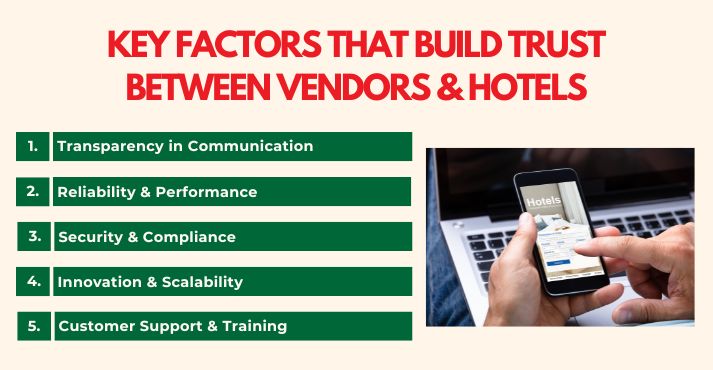
Building trust in hospitality technology requires attention to multiple factors that influence hotel confidence and satisfaction. Each element, from clear communication to reliable support, helps vendors create lasting partnerships.
In 2025, nearly 9 out of 10 hotels reported using automated or AI-driven technology, such as predictive pricing engines and digital concierge tools, showing that hotels rely on vendors to deliver systems that perform consistently and support operational efficiency.
1. Transparency in Communication
Hotels appreciate vendors who set clear expectations from the start. A vendor providing a property management system might outline the full scope of implementation, including timelines, costs, and potential challenges.
Sharing updates regularly and being honest about delays helps hotel management plan effectively. This openness reduces the risk of conflicts and surprises.
2. Reliability and Performance
Consistent performance builds confidence. A booking or reservations system with minimal downtime ensures front-desk staff can manage check-ins smoothly and avoid guest frustration.
When technology functions reliably day after day, hotel teams can trust the system. This reduces oversight, allowing staff to focus on enhancing guest experiences.
3. Security and Compliance
Guest data protection is non-negotiable. Vendors who follow local regulations and provide secure systems reassure hotels that sensitive information is safe.
A vendor implementing compliant payment processing or loyalty programs gives hotels confidence in protecting guest data. This reduces legal risks and operational concerns.
4. Innovation and Scalability
Hotels often grow or adjust services over time. A scalable point-of-sale system that handles new outlets or increased bookings shows the vendor is prepared for future needs.
Hotels can feel confident that the technology investment will continue to meet requirements. This helps maintain smooth operations as the property changes.
5. Customer Support and Training
Accessible hotel rooms and services rely on staff knowing how to use systems properly. Vendors offering multilingual support, training sessions, and quick issue resolution help staff feel capable.
A housekeeping team trained on a new mobile app can efficiently track room readiness. This improves guest satisfaction and overall operational efficiency.
Short-Term Contracts vs. Long-Term Partnerships
When hotels invest in technology, they often need to decide between short-term contracts and long-term partnerships.
Short-term contracts can provide quick solutions and allow hotels to test products, but they often come with limited support and higher costs if the vendor is changed later. Long-term partnerships involve full integration, ongoing collaboration, and cost efficiency over time.
Hospitality technology partnerships built on trust give hotels the confidence to commit to solutions that support smooth operations and long-term success.
| Feature | Short-Term Contracts | Long-Term Partnerships |
|---|---|---|
| Implementation | Quick setup with minimal customization | Full integration with existing systems |
| Support | Limited support, mostly reactive | Continuous support and training |
| Costs | Lower initial cost, higher long-term switching costs | Cost-efficient over time with fewer disruptions |
| Innovation | Minimal collaboration on new features | Collaborative innovation aligned with hotel needs |
| Relationship | Transactional and time-bound | Strategic and long-term, built on trust |
Short-term contracts may solve immediate needs, but they rarely build loyalty or confidence in the vendor. Long-term partnerships, supported by trust, turn vendor relationships into strategic collaborations that benefit both hotels and technology providers.
Strategies for Hospitality Tech Vendors to Win Long-Term Partnerships
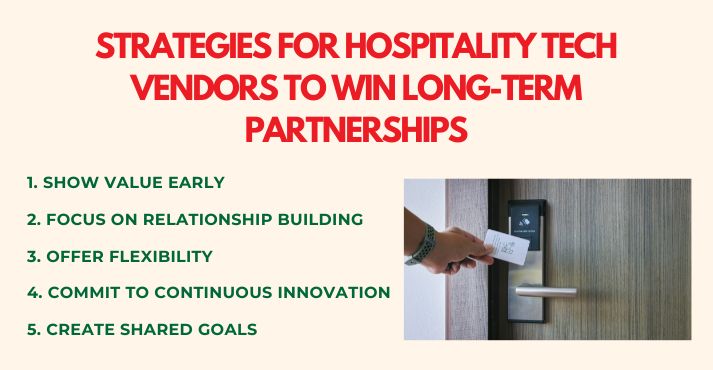
Long-term partnerships in the hotel industry are built on trust, consistent results, and shared goals. Vendors can adopt several strategies to secure lasting relationships and show their commitment to hotel success.
These approaches also support smoother technology adoption in the hospitality industry.
1. Show Value Early
Hotels gain confidence when vendors provide evidence of benefits quickly. A vendor could run a pilot program for a property management system and share case-based results, such as improved check-in efficiency or reduced booking errors.
Sharing early results and performance metrics helps hotel leadership assess the value of the technology. This gives hotels confidence that their investment is reliable and contributes to smooth daily operations.
2. Focus on Relationship Building
Vendors should maintain regular check-ins, organize joint planning sessions, and provide personalized support. Building strong connections ensures that hotels feel heard and valued.
Attending events like a trade show featuring hospitality technology can also help vendors stay visible and maintain engagement with hotel decision-makers.
3. Offer Flexibility
Customizable solutions and scalable pricing models allow hotels to adapt systems as their needs change. Flexible offerings make it easier for hotels to implement new technology without fear of overcommitting or facing limitations as they grow.
4. Commit to Continuous Innovation
Vendors should provide regular product updates in line with hotel trends. For instance, adding mobile check-in features or contactless payment options can help hotels stay competitive.
Keeping up with these trends shows that the vendor is attentive to operational and guest expectations.
5. Create Shared Goals
Aligning vendor success metrics with hotel outcomes encourages collaboration. Vendors who focus on improving guest satisfaction scores, operational efficiency, or revenue management alongside hotel teams can build partnerships that benefit both sides.
How Hotels Evaluate Tech Vendors for Trustworthiness
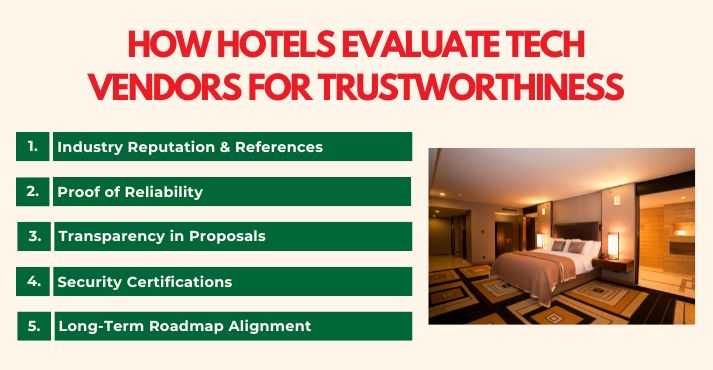
From the hotel’s perspective, selecting a technology vendor requires careful consideration. Hotels seek partners they can trust to deliver reliable solutions that align with operational needs and long-term goals.
This is particularly important for different types of hotels, as each property has unique requirements and expectations.
1. Industry Reputation and References
Hotels often start by researching a vendor’s reputation in the market. References from other properties, case studies, and client testimonials help gauge reliability and credibility.
A vendor known for positive results gives decision-makers confidence that their investment is likely to succeed.
2. Proof of Reliability
Performance metrics, including uptime, response times, and service guarantees, are crucial. Hotels want assurance that the systems they rely on daily will function consistently, reducing the risk of operational disruptions.
Vendors who provide documented reliability reports make it easier for hotels to trust their solutions.
3. Transparency in Proposals
Proposals covering pricing, timelines, and the scope of services help hotels assess what to expect. Open communication about potential limitations or challenges signals honesty and allows hotel teams to plan accordingly.
4. Security Certifications
Guest data protection is a top priority. Hotels evaluate whether vendors meet industry standards, follow best practices, and hold relevant security certifications.
Compliance with regulations such as PCI DSS or GDPR shows a vendor’s commitment to safeguarding sensitive information.
5. Long-Term Roadmap Alignment
Hotels look for vendors whose product roadmap matches their own growth and operational plans. Solutions that can adjust as the property changes reduce the risk of obsolescence and the need to switch vendors frequently.
Vendor Evaluation Checklist
- Check vendor reputation and references.
- Review uptime and performance guarantees.
- Assess the transparency of pricing, timelines, and deliverables.
- Verify security certifications and compliance.
- Compare the vendor roadmap with the hotel’s long-term goals.
Challenges in Building and Maintaining Trust
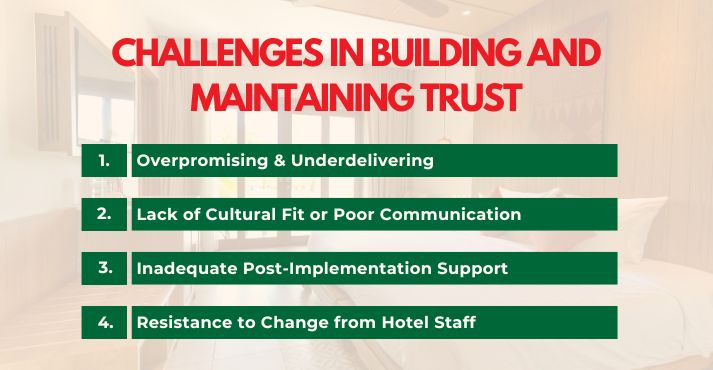
Even the most capable vendors can encounter challenges when attempting to establish vendor trust in hotel technology. Understanding common pitfalls helps vendors prepare and maintain strong relationships with hotel clients.
1. Overpromising and Underdelivering
Vendors sometimes promise features, timelines, or results that are difficult to achieve. Failing to meet expectations can quickly damage trust.
Tip: Set realistic expectations upfront and clearly communicate any limitations. Regularly update hotel teams on progress to avoid surprises.
2. Lack of Cultural Fit or Poor Communication
Misalignment between vendor and hotel teams, including differences in work style or priorities, can create friction.
Tip: Invest time in understanding the hotel’s culture and maintain open, consistent communication. Adjust your approach to fit the hotel’s workflow and decision-making process.
3. Inadequate Post-Implementation Support
Technology is only valuable if hotels can use it effectively over time. Vendors that provide minimal training or slow support risk reducing trust.
Tip: Offer ongoing training, responsive support channels, and documentation to help hotel staff use systems efficiently.
4. Resistance to Change from Hotel Staff
Even well-designed systems can face pushback due to staffing challenges or habits. Employees may be hesitant to adopt new technology if they feel unsupported.
Tip: Involve staff early in the implementation process, provide practical training, and highlight how the technology makes their daily tasks easier. Recognize and reward staff adoption milestones to encourage engagement.
The Role of Innovation and Digital Transformation
Innovation helps vendors gain trust by showing that their solutions are prepared for the future. Hotels want technology partners who provide systems that keep pace with operational demands and guest expectations.
Vendors who update offerings and introduce practical advancements signal they are ready for long-term collaboration.
Many properties are adopting AI to enhance hotel security, optimize pricing, and improve guest experiences. IoT devices, such as smart thermostats, energy management systems, and connected room controls, allow hotels to offer personalized, seamless experiences.
According to a 2024 report, 83% of hotel leaders increased their budgets for AI, with 89% saying that generative AI will have a meaningful impact on their business in the coming years.
This shows that hotels are relying more on AI and connected systems to support operations and guest services.
Cloud-based systems allow hotels to access data and manage operations from anywhere, making updates and scalability easier.
Personalization features, such as customized guest preferences or targeted services, show that vendors understand the importance of improving guest satisfaction while keeping systems reliable.
Vendors who combine advanced technology with consistent performance are more likely to earn long-term trust from hotel partners.
Benefits of Trust-Based Partnerships in Hospitality Tech
Building trust between hotels and technology vendors brings significant advantages for both parties. When vendors consistently meet expectations, hotels feel confident in their technology investments, which helps staff use new systems effectively.
Trust-based partnerships also encourage collaboration on automation in hotels, allowing employees to focus on higher-value tasks while routine processes run efficiently.
Advantages for Hotels
Hotels benefit from reduced risk when working with trusted vendors. Reliable systems and honest communication minimize unexpected costs and operational disruptions.
Trusted partnerships also help hotels get better returns on technology investments, as they can implement systems fully and use their features without hesitation. Staff can easily adopt new systems, improving overall operational efficiency and guest satisfaction.
Advantages for Vendors
Vendors can gain customer loyalty, recurring revenue, and a strong reputation by building trust with hotel clients. Long-term partnerships create opportunities for co-innovation, as vendors can work with hotels to customize solutions that meet operational needs.
This collaboration helps vendors maintain a strong position in the market and supports ongoing business growth.
FAQs
How do hotels choose trusted tech vendors?
Hotels evaluate vendors based on reputation, references from similar properties, performance history, and transparency in proposals. Security certifications and alignment with the hotel’s long-term operational goals are also important factors in selecting a reliable partner.
What builds long-term trust between vendors and hotels?
Consistent performance, honest communication, ongoing support, and a willingness to collaborate on hotel needs build long-term trust. Vendors that address operational challenges and provide solutions that grow with the hotel are more likely to maintain strong relationships.
What risks exist in short-term vendor contracts?
Short-term contracts can result in limited support, frequent vendor switching, and increased costs over time. Hotels may also face interrupted services or slower adoption of systems if the vendor is not fully invested in the property’s long-term success.
How can vendors prove reliability and support?
Vendors can demonstrate reliability through documented uptime, performance metrics, case studies, and client references. Providing responsive support, training, and clear communication throughout implementation reassures hotels that the technology will function smoothly.
What role does innovation play in vendor–hotel partnerships?
Innovation shows that a vendor is prepared for future needs, from AI-driven security and pricing solutions to IoT devices and cloud-based systems.
Hotels value vendors who introduce practical advancements while ensuring consistent system performance, which builds trust and long-term collaboration.
Conclusion
Trust is essential for successful partnerships between hotels and technology vendors. Companies that deliver on promises, communicate openly, provide reliable systems, and offer strong support give hotels confidence in their investments.
Transparency, consistent performance, practical innovations, and accessible training help reduce risk for hotels and encourage long-term collaboration.
As hotels continue to adopt new technologies, only vendors who maintain trust will secure lasting partnerships.
Focusing on reliability, collaboration, and solutions that meet hotel needs positions providers as valued partners, ensuring their role in the hospitality industry continues to grow.