Fast food isn’t what it used to be. A few years ago, it mostly meant greasy burgers, fried chicken, and giant sodas. If you were trying to eat healthy, there wasn’t much to choose from. But that’s no longer the case.
Today, more people care about what they eat, even when they’re in a rush. They’re looking for meals that are quick, tasty, and better for their health.
That’s why many fast food chains have started offering fresh, lighter options like grilled wraps, veggie bowls, and low-sugar drinks. This change shows how people are adapting to new ways of eating and living.
Health-conscious fast food has moved from the sidelines to the center of the industry. It’s not just for a small group of fitness lovers or dieters anymore. It’s something that everyday people are asking for and choosing regularly.
The numbers say a lot. The global fast food market was valued at $809.79 billion in 2024 and is expected to reach $849.39 billion in 2025, increasing to $1,244.46 billion by 2033. That’s a steady rise, with a compound annual growth rate (CAGR) of 4.89%.
As more people look for healthier meals on the go, these options are becoming a bigger part of the market. In this blog, we’ll explain why this is happening, what is causing it, and how brands are changing to meet customer needs.
What Is Health-Conscious Fast Food?
Health-conscious fast food refers to meals that are designed to be healthier for the body without compromising on convenience or taste.
This category includes a diverse range of options, including low-calorie meals, plant-based fast food, high-protein bowls, and dishes made with clean-label ingredients.
Many of these meals focus on reducing added sugar and sodium, offering gluten-free and low-carb options that cater to various dietary needs.
Quick-service restaurants are offering more healthy options as more people look for fast food that’s not only quick but also made with real, simple ingredients.
A study found that consumer interest in clean and minimally processed ingredients has increased by 79% in recent years.
This indicates that people prefer food made with whole ingredients and no artificial additives, which is a sign that they value simple, honest meals.
Key Features
- Calorie transparency: Menus display calorie counts and sometimes other nutritional facts, making it easier for customers to track their intake and choose meals that align with their health goals.
- Whole ingredients: Health-conscious fast food relies on fresh, natural ingredients, such as vegetables, whole grains, and lean proteins, while avoiding heavily processed additives and preservatives.
- Customization: Many QSRs now allow customers to customize their meals with options like keto, gluten-free, or low-carb. This flexibility allows people to enjoy fast food without compromising their personal food preferences.
The Consumer Shift: Wellness Meets Convenience
Fast food is no longer just about speed. Today’s consumers, especially younger generations, want meals that fit their busy lives while also supporting their health goals. This change is influencing how brands offer convenience food around the world.
Changing Priorities Among Younger Generations
Gen Z and Millennials are choosing fast food that is both quick and health-conscious. According to NielsenIQ, Gen Z’s spending power is projected to reach $12 trillion by 2030, showing their strong influence on market trends.
This generation values authenticity, transparency, and wellness in their food choices. Similarly, Mintel reports that two-fifths of Millennials are increasingly using technology to manage their health, more than any other generation.
The COVID-19 pandemic has increased health awareness, leading to a rise in demand for better-for-you food options. Consumers are now more inclined towards clean-label dining, seeking meals made with whole, minimally processed ingredients.
The rising popularity of vegan and plant-forward meals shows that health-conscious individuals want options that don’t compromise on taste.
Southeast Asia’s Evolving Food Scene
Urbanization and a growing middle-income population in Southeast Asia are changing dietary habits and expectations. By 2050, nearly 63% of the region’s population is projected to reside in urban areas, resulting in increased demand for high-quality and safe food.
Consumers are seeking foods that prioritize health, sustainability, and convenience. The rise of gym culture and mobile ordering apps has facilitated access to meals that align with these preferences.
For example, Grab’s 2023 report indicates that consumers are using the app not only for deliveries but also to discover new restaurants and order food for takeout.
To meet these needs, many quick-service restaurants now offer customizable meals, including options like low-carb and gluten-free choices. This shows how health-conscious fast food is becoming a regular part of everyday eating in Southeast Asia.
Global & Regional Brand Examples Leading the Trend
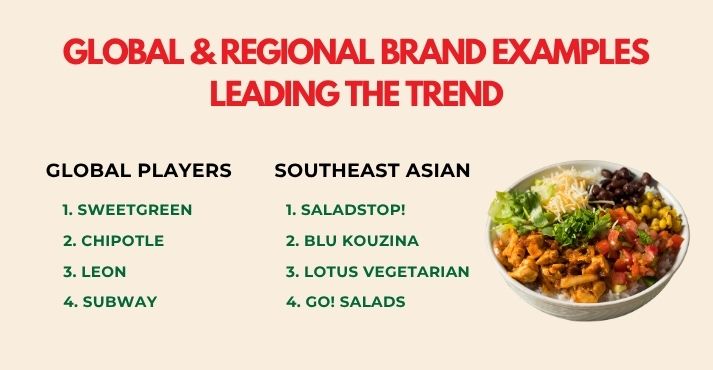
Both global giants and local Southeast Asian chains are investing heavily in health-focused menus to meet changing consumer preferences.
These brands are innovating with fresh ingredients, customizable meals, and functional beverages to enhance the customer experience and stay competitive in the fast-food industry.
Their efforts show how wellness foodservice is becoming a core part of fast-casual health food offerings worldwide.
Global Players
1. Sweetgreen
Sweetgreen, a US-based fast-casual chain, has expanded to over 250 locations, focusing on fresh, plant-forward meals. Their menu includes options like the Chicken Pesto Parm bowl, which contains 35g of protein and 525 calories.
In response to consumer demand for healthier choices, Sweetgreen has introduced air-fried Ripple Fries, cooked in avocado oil, offering a “permissible indulgence” with 240 calories per serving.
2. Chipotle
Chipotle continues to offer customizable meals that cater to various dietary preferences. A popular choice is the burrito bowl with sofritas, black beans, brown rice, lettuce, tomato salsa, cheese, and sour cream, providing 740 calories and 28g of plant-based protein.
3. LEON
LEON, a UK-based fast food chain, promotes “natural fast food” by offering meals made from whole ingredients with a focus on health and sustainability.
Their current menu features options such as the Falafel Super Bowl, a plant-based dish made with supergreen falafel, roasted vegetables, grains, and a Golden Goddess dressing.
Another popular item is the Sicilian Chicken Meatballs, served with brown rice, tomato sauce, and basil pesto. These offerings cater to various dietary needs, providing quick and wholesome meals.
4. Subway
Subway’s Fresh Fit menu offers a selection of 6-inch subs that are 400 calories or less when prepared on 9-grain wheat bread with standard fresh vegetables like lettuce, tomatoes, onions, green peppers, and cucumbers.
These sandwiches are low in saturated fat and provide 24 grams of whole grains and two servings of vegetables per 6-inch sub. This initiative aims to provide healthier options for customers seeking balanced meals.
Southeast Asian Examples
1. SaladStop! (Singapore)
SaladStop! offers a diverse menu of fresh salads, wraps, and warm protein bowls. Their commitment to health is evident in their use of quality ingredients and the option for customers to create their meals.
They also offer functional beverages, such as prebiotic sodas, to complement their offerings.
2. Blu Kouzina (Singapore)
Blu Kouzina brings authentic Greek cuisine to Singapore, focusing on fresh, high-quality ingredients. Their menu features Mediterranean dishes, including Greek salads and grilled meats, catering to health-conscious diners who seek flavorful options.
3. Lotus Vegetarian (Malaysia)
Lotus Vegetarian, located in Kuala Lumpur, offers a modern take on plant-based Asian cuisine. Their menu is built around nutritious, meatless dishes made with natural ingredients and no added MSG.
Signature items include Kam Heong Stir-Fried Vermicelli, Lotus Leaf Rice with Chinese Chestnuts, and various herbal soups that combine traditional flavors with a health-conscious approach.
4. Go! Salads (Philippines)
Go! Salads is a health-focused fast-casual chain in the Philippines that offers a diverse menu of fresh salads, wraps, smoothies, and guilt-free desserts.
Their offerings include signature salads, such as the Mango Greek Salad and Chicken Caesar Salad, providing nutritious and flavorful options for customers seeking healthy meals on the go.
In addition to salads, they offer a variety of wraps, green smoothies, and healthy paninis, catering to a wide range of dietary preferences.
Innovation Driving the Movement
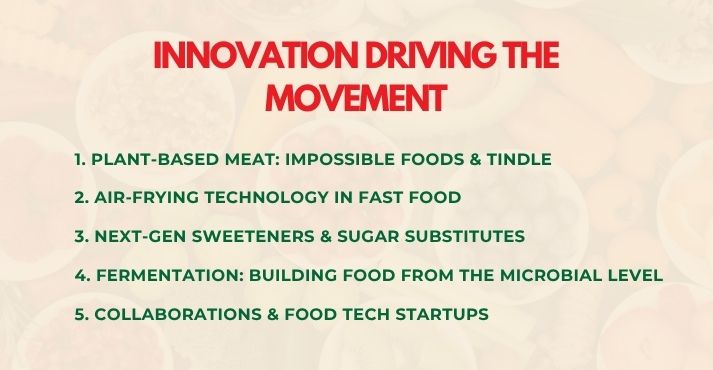
Practical innovations in ingredients, cooking technologies, and collaborations with food scientists are making it easier to serve meals that are both convenient and better for you in the healthy fast food space.
Plant-Based Meat: Impossible Foods and TiNDLE
Impossible Foods continues to lead in plant-based meat innovation. In early 2024, the company launched a rebranding effort aimed at reaching flexitarians and meat-eaters by positioning its plant-based burgers as flavor-forward alternatives, rather than just substitutes for meat.
Their products are now available in more than 30,000 grocery stores and restaurants across the US.
TiNDLE Foods, known for its plant-based chicken, expanded its US retail presence in August 2024 through a line of Stuffed Chicken, developed in partnership with The GIANT Company.
These products closely mimic traditional chicken in appearance, cooking, and taste, while using fewer resources to produce, which helps create a more sustainable supply chain.
Together, brands like these are making alternative proteins a regular part of mainstream menus.
Air-Frying Technology in Fast Food
Air-frying, once a household trend, is now influencing commercial kitchens. This method uses hot air to cook food with minimal or no oil, offering a healthier alternative to fried textures.
Operators are turning to air fryers to meet customer demand for crisp, lower-fat sides, such as fries or chicken, without the need for a deep fryer.
The air fryer market is projected to grow to $1.34 billion by 2028, up from $916.5 million in 2023. This development supports the rise of low-carb quick meals that don’t sacrifice texture or taste.
Next-Gen Sweeteners and Sugar Substitutes
As more consumers cut back on sugar, fast food brands are turning to innovative substitutes. From stevia blends to erythritol and monk fruit, these sweeteners are helping brands reduce calories in drinks, desserts, and sauces.
In 2024, the global sugar substitutes market was valued at $23.56 billion and is expected to reach $29.90 billion by 2029. By using these ingredients, fast casual brands are developing better-for-you offerings that still hit the sweet spot.
Fermentation: Building Food from the Microbial Level
Fermentation is increasingly used to develop clean-label and protein-rich foods. Unlike traditional methods, precision fermentation enables the production of animal-free dairy, meat flavors, and even eggs, all without the use of animals.
In 2024, 17 new fermentation facilities were built or announced worldwide to meet rising demand. Startups are using these methods to develop more scalable and cost-effective products with a minimal environmental impact.
Fermentation-based foods are becoming an essential part of the future of food, offering a new path to sustainable protein production.
Collaborations and Food Tech Startups
The innovation boom wouldn’t be possible without collaborations between major food brands, scientists, and startups. New ventures are using everything from AI-enabled supply chains to the co-fermentation of algae and fungi to create novel food textures and nutritional profiles.
One example is Berlin-based Formo, which uses precision fermentation to develop animal-free cheese, or California’s The EVERY Company, which makes animal-free egg proteins. These companies are supplying ingredient solutions to major food producers worldwide.
These partnerships are helping quick-service brands offer sustainable dining options that meet changing customer needs using proven science and products that can grow.
Market Impact: Retail, Foodservice & Hospitality
The increasing demand for healthier fast food options is influencing multiple sectors, including grocery retail, hospitality, and catering services.
Grocery stores, hotels, and catering services are offering more health-conscious options and using new solutions to support changing eating habits.
Grocery stores are responding to healthy QSR trends by increasing shelf space for products with clean label packaging. This packaging highlights simple, natural ingredients and transparency, helping shoppers make informed choices quickly.
Many retailers now offer ready-to-eat meals and snacks, emphasizing fresh, wholesome ingredients that are free from artificial additives.
Smart vending machines stocked with nutritious snacks are becoming more common in workplaces, gyms, and public spaces. These machines offer options like low-carb meals, protein bars, and functional beverages.
With cashless payments and app-based ordering, they provide a seamless customer experience that fits fast-paced lifestyles.
Hotels and hospitality providers are also developing wellness-focused menus to attract guests seeking nutritious dining options during their stay.
These menus feature balanced meals made with fresh, sustainable ingredients, catering to a variety of dietary preferences, including plant-based and gluten-free options.
This shows that hotels are paying attention to what today’s travelers want: meals that are both healthy and satisfying.
Why This Trend Is Built to Last
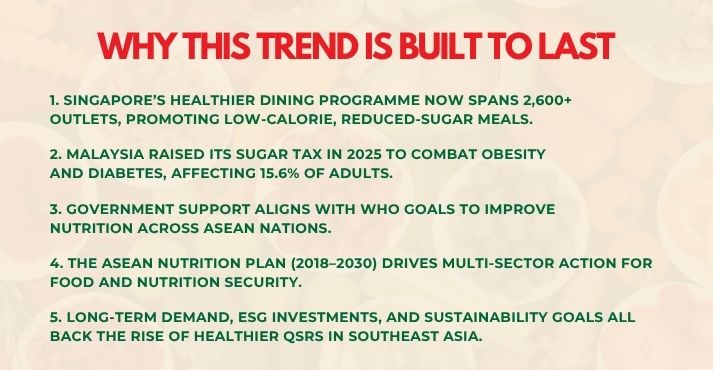
The rise of healthier quick-service restaurants (QSRs) aligns with long-term sustainability goals, repeat customer demand, ESG investment, and strong government support in Southeast Asia.
In Singapore, the Healthier Dining Programme has undergone significant expansion since its inception in 2014. It now includes over 2,600 outlets across more than 300 brands, offering lower-calorie meals and drinks with reduced sugar, sodium, and healthier oils.
This initiative supports national efforts to promote preventive health through programs like Healthier SG.
Malaysia has taken a fiscal approach to encourage healthier consumption. The government increased the sugar tax on sweetened beverages from 50 sen to 90 sen per litre in 2025, as part of its “war on sugar” campaign.
This measure aims to address rising obesity and diabetes rates, with data indicating that approximately 15.6% of Malaysia’s adult population, or around 3.6 million individuals, were diagnosed with diabetes.
These national policies align with the World Health Organization’s (WHO) nutrition goals in the ASEAN region, which aim to reduce malnutrition and promote healthier diets.
The ASEAN Strategic Framework and Action Plan for Nutrition 2018-2030 supports these objectives by encouraging member states to implement multi-sectoral plans of action to achieve food and nutrition security.
Policy, consumer habits, and investment are all pointing toward healthier QSRs becoming a regular part of Southeast Asia’s food scene. This change follows SEA consumer trends toward sustainable dining and wellness-focused choices.
Conclusion
Health-focused fast food is becoming essential for businesses, not just a trend to watch. More people want meals that are both quick and good for them and the planet.
By offering healthier options, food businesses can attract loyal customers and encourage them to return. With growing support from governments and investors who prioritize sustainability and wellness, this demand is expected to continue rising.
Restaurants and brands that prioritize health now will not only see better returns but also build stronger reputations and stay competitive as the market shifts toward lasting, positive change.
Investing in health-driven fast food means preparing for the future of dining and directly addressing changing customer needs. This focus offers long-term benefits for both business and community well-being.