
The food and wellness market is growing faster than ever as people are starting to think about health more comprehensively.
The 2024 Global Wellness Economy Monitor reveals that the wellness economy reached $6.3 trillion in 2023 and is projected to reach nearly $9 trillion by 2028.
This isn’t just about avoiding sickness anymore; it’s about taking care of your whole self: body, mind, and even emotions.
Because of this, people’s expectations of food and drinks are changing. Instead of just filling their plates, many want products that help support their immune system, improve digestion, or give them more energy.
They’re also paying more attention to how their choices impact the environment and animal welfare. Food companies, stores, and restaurants are noticing these changes and developing new products to meet the demand.
As a result, the food and wellness market is undergoing rapid change. Businesses that understand these new demands and focus on delivering genuine health benefits are the ones likely to succeed in this evolving landscape.
Defining Wellness Foods: Beyond Nutrition
Wellness foods are designed to do more than simply satisfy hunger. They include ingredients and formulations that support mental, physical, and emotional health.
Primary examples include functional ingredients such as probiotics, which aid digestion and strengthen the immune system, and adaptogens in food, natural substances believed to help the body manage stress and enhance resilience.
Clean labels are also a vital part of the wellness food trend. Consumers want products with simple, recognizable ingredients and fewer artificial additives or preservatives.
This demand is influencing product development across the industry, encouraging brands to prioritize transparency and ingredient quality.
Another major focus in the food and wellness market is plant-based wellness. More products featuring plant-based alternatives and vegan options are entering the market as consumers show growing interest in health, sustainability, and ethical eating.
Plant-based foods tend to be rich in fiber, antioxidants, and essential nutrients, supporting digestion and overall well-being while also addressing environmental concerns.
Wellness foods are no longer niche and are becoming an essential part of the future of eating.
By focusing on natural ingredients that promote gut health, reduce stress, and support a balanced lifestyle, these products cater to the growing consumer demand for holistic health solutions in everyday meals and snacks.
Consumer Drivers Behind the Wellness Food Boom
Consumers are increasingly focused on self-care, resulting in higher demand for foods that support immunity, help manage stress, and promote overall well-being and longevity.
Many people are seeking personalized nutrition options customized to their individual health needs, rather than generic solutions.
This trend has led to increased interest in functional foods, which offer specific health benefits, such as improving digestion or supporting mental well-being. It aligns with holistic eating, where food is viewed as an essential part of overall physical and emotional well-being.
In Southeast Asia, a few key factors are speeding up this trend:
- Health and Wellness Focus: According to NielsenIQ, 54% of consumers in the Asia-Pacific region actively seek health and wellness products. The primary motivations include protecting oneself from ailments (47%), desiring a longer life (46%), avoiding preventable diseases (45%), and looking and feeling healthier (45%).
- Mental Health and Sleep Concerns: Sleep and mental health have emerged as top concerns among APAC consumers. A report highlights that these issues are now among the leading health priorities in the region, creating opportunities for innovation in food products that address these concerns.
- Personalized Nutrition Growth: The rise of food technology in Southeast Asia is facilitating the growth of personalized nutrition. Consumers are increasingly seeking meals customized to their individual health needs, such as those that boost immunity or manage chronic conditions.
These factors are changing consumer preferences, prompting brands to create products that meet the growing demand for health-oriented and personalized food options.
Product Innovation in Wellness Foods
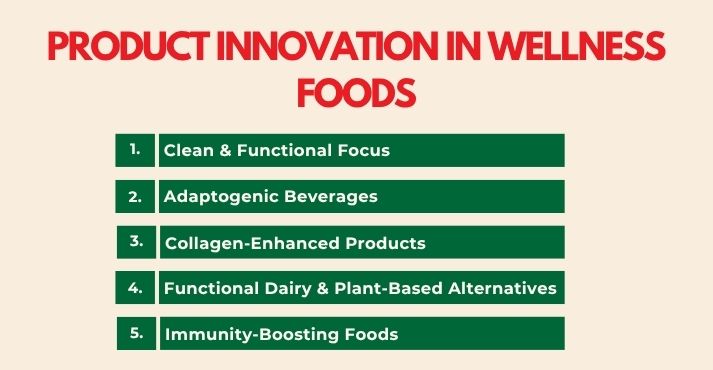
Food and beverage companies are expanding their wellness portfolios with products that support immunity, digestion, mental focus, and overall balance. Across major categories, innovation is being led by clean formulations, plant-based options, and targeted health benefits.
One growing area is adaptogenic beverages, which feature ingredients like ashwagandha, holy basil, and reishi mushroom. For example, brands like REBBL and Kin Euphorics offer functional drinks aimed at stress relief and mood support.
These beverages are marketed to consumers seeking calm energy without the caffeine or sugar overload.
Snacks and beverages enriched with collagen continue to grow in popularity. Vital Proteins offers collagen water, while Snaq Fabriq in Asia features beauty-oriented snacks containing marine collagen.
These items are positioned as convenient additions to daily wellness routines, particularly among consumers who prioritize skin and joint health.
Another focus is on functional dairy and plant-based dairy alternatives. Brands are introducing yogurts, milks, and cheeses that contain added probiotics for gut health, alongside non-dairy options made from oats, almonds, and soy, to cater to vegan and lactose-intolerant consumers.
These offer both convenience and nutritional benefits, fitting seamlessly into a health-focused lifestyle.
Another important category is immunity-boosting foods. Remedy Drinks offers kombucha with natural probiotics and antioxidants, while Yakult maintains its market presence in Asia with its probiotic drink, which supports immune and digestive health.
Fortified juices, soups, and cereals are also incorporating ingredients like vitamin C, zinc, elderberry, and turmeric to support the body’s defense system.
These examples illustrate the current path of health-focused food trends. Rather than relying on quick fixes, brands are developing products that seamlessly integrate into daily life while promoting wellness through simple, beneficial ingredients.
From fortified foods to functional drinks, innovation is helping redefine what consumers expect from their everyday meals and snacks.
Retail and Hospitality Embrace Wellness

Retailers and hospitality providers are adjusting their offerings to meet the growing interest in health and wellness. From grocery aisles to restaurant menus, wellness-focused choices are becoming more visible and accessible.
1. Wellness Sections and Menus
Major retailers are dedicating space to wellness-oriented products. For example, Sainsbury’s in the UK introduced “Serum Bars” and ingredient-focused sections for wellness and beauty shoppers.
In foodservice, True Food Kitchen partnered with artist SZA to launch the “SZA CZA” salad. A portion of each purchase supports programs improving access to fresh food in underserved communities.
Menus at wellness-focused cafes often feature mental wellness foods, such as omega-3-rich dishes, adaptogenic teas, and gut-friendly fermented items.
2. Wellness Training for Staff
Retailers like Holland & Barrett have begun training their staff to provide in-store wellness advice.
The brand recently trained 600 team members to serve as women’s health coaches, supporting customers on topics such as hormonal health, stress management, and sleep hygiene.
This helps shoppers make informed decisions and builds trust around wellness-driven F&B options.
3. Influencer Partnerships
Brands are also teaming up with wellness influencers to promote healthy living. Truvani, a supplement and health brand, runs affiliate programs for influencers, offering product discounts and revenue sharing to help expand its reach.
These partnerships help bring wellness into daily food and beverage routines in a relatable way.
Challenges for Wellness Food Brands

As interest in wellness foods grows, brands are facing significant challenges in delivering on health promises and maintaining consumer trust.
One major issue is dealing with different regulations across countries. Claims like “supports immunity” or “good for gut health” can fall into gray areas depending on where the product is sold.
In Southeast Asia, for example, health-related claims must adhere to strict national regulations, which vary from country to country. This makes it challenging for brands to sell the same product in multiple places without having to change the label or even the ingredients.
Clean label trends add another layer of pressure. Shoppers want shorter ingredient lists with real, recognizable items and no artificial additives.
However, creating a stable, tasty, and shelf-stable product while maintaining its cleanliness can be challenging, especially when it includes functional ingredients such as probiotics or plant extracts.
Then there’s the challenge of consumer skepticism. With so many wellness products on the market, not all claims are trustworthy.
Customers are seeking proof, such as clinical studies or third-party certifications, particularly when it comes to newer ingredients like adaptogens, probiotics, or so-called superfoods.
Supply chains also bring challenges. Finding high-quality, responsibly sourced ingredients like organic adaptogens or functional mushroom powders isn’t always easy.
These ingredients often come from limited or small-scale suppliers, which can drive up costs or limit the amount of product a brand can produce.
To move forward, wellness brands must be transparent about the ingredients in their products, support their claims with research, and maintain clear and honest communication. The brands that do this well are more likely to build trust and grow with today’s health-focused consumers.
Future Trends to Watch
Wellness food trends are moving toward precision and practicality. One major direction is personalized nutrition, with more consumers choosing food and beverages that cater to specific needs, such as energy, sleep, focus, or weight management.
Apps, at-home tests, and health trackers are helping people make more informed food choices tailored to their individual goals. As a result, brands are creating products with customizable ingredients or condition-specific benefits.
Gut health nutrition remains a strong focus. People are seeking food that supports digestion and overall health, driving demand for probiotics, prebiotics, and fiber-rich ingredients in everyday categories such as cereal, dairy, snacks, and even beverages.
This isn’t limited to supplements. Functional yogurts, kombucha, and fermented vegetables are becoming kitchen staples.
Sustainability is also a part of wellness decision-making. Shoppers are looking for products with clean sourcing, minimal environmental impact, and transparent supply chains. This includes everything from regenerative farming and upcycled ingredients to plastic-free packaging.
This shows a growing awareness of how food choices affect both personal and environmental health.
These changes show how wellness foods are meeting demand for targeted health support, improved gut function, and low-impact sourcing while keeping the focus on clear, honest benefits.
Conclusion
Wellness has become a major force in the food industry, changing how products are made, promoted, and enjoyed. Consumers are no longer just looking for basic nutrition — they want foods that support their overall health, including mental and emotional well-being.
This has prompted brands to focus on natural ingredients, clean labels, and products that offer real benefits, such as improved digestion, stress relief, and immune support.
Retailers and restaurants are also adapting by offering wellness-focused options and educating staff about the benefits.
While challenges remain, especially around regulations and consumer trust, the demand for wellness foods shows no signs of slowing down.
Ultimately, the wellness movement is transforming the food and beverage market into one that prioritizes health, transparency, and sustainability as its central values.