Are you worried about contaminated food putting your customers’ health and your business’s reputation at risk?
Food safety is essential for anyone preparing or serving food. The World Health Organization (WHO) reports that 600 million people get sick every year from unsafe food, which shows how important it is to control biological hazards.
Biological hazards, such as bacteria, viruses, parasites, and fungi, are among the most common causes of foodborne illness. Without proper handling, storage, and hygiene, these microorganisms can easily contaminate food.
In this blog, we’ll look at the main biological hazards, what causes them, and how they affect food quality and health.
We’ll also explore food safety practices, as well as related concepts such as food contamination, food security, and the role of GM foods in today’s system.
Let’s get started.
Understanding Biological Hazards in Food Safety
Biological hazards are one of the biggest threats to food safety. These hazards come from harmful microorganisms that can contaminate food and cause foodborne illnesses.
Since millions of people get sick every year from unsafe food, understanding these hazards is essential for preventing contamination and keeping consumers safe.
What Are Biological Hazards?
Biological hazards are harmful microorganisms that make food unsafe when they grow or enter it. They can spread through contaminated water, poor hygiene, unsafe handling, or storage conditions that support microbial growth.
These hazards can be influenced by factors like food contamination and certain production practices, including the use of GM ingredients in some systems. Knowing how they develop helps food workers identify risks early and prevent foodborne illness.
Types of Biological Hazards
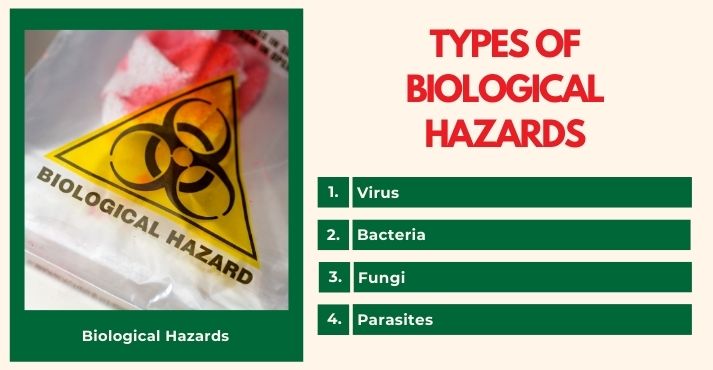
Biological hazards found in food fall into four groups: viruses, bacteria, fungi, and parasites. Each type affects food differently and requires targeted safety practices to control.
1. Virus
Viruses are tiny infectious agents that can contaminate food and cause widespread foodborne illnesses. They often spread through contaminated water or poor hygiene by food handlers.
Common foodborne viruses include:
- Norovirus: Linked to contaminated water and raw or undercooked shellfish.
- Hepatitis A: Often spread through infected food handlers or contaminated water.
- Rotavirus: Can enter food through water contamination and poor hygiene.
- Astrovirus: Usually associated with sewage-contaminated water.
- Sapovirus: Similar to Norovirus and often linked to seafood and unsafe water.
2. Bacteria
Bacteria multiply quickly in food and are one of the leading causes of foodborne illness. Contamination often occurs through unsafe food handling, unclean equipment, or improper cooking and storage practices.
Food contamination is a significant source of bacterial hazards, especially when food is kept at unsafe temperatures.
Common harmful bacteria include:
- Salmonella: Found in raw meat, poultry, eggs, and unpasteurized dairy.
- E. coli: Common in ground beef, raw milk, and leafy greens.
- Listeria: Associated with deli meats, unpasteurized soft cheeses, and ready-to-eat foods.
- Campylobacter: Often found in raw poultry and contaminated water.
- Clostridium perfringens: Linked to improperly stored cooked foods like stews and gravies.
- Staphylococcus aureus: Carried on human skin and can easily contaminate food.
- Bacillus cereus: Common in rice and starchy foods.
3. Fungi
Fungi include molds and yeasts that can spoil food and, in some cases, produce toxic substances called mycotoxins. Mold growth affects both food quality and health, especially in items stored for long periods or exposed to moisture.
Common foodborne fungi include:
- Aspergillus spp.: Found in grains, nuts, seeds, dried fruits, and spices.
- Candida spp.: Seen in dairy products, processed meats, and grains.
- Rhizopus spp.: Common in spoiling fruits and vegetables.
- Mucor spp.: Found in bread, fruits, and dairy items.
4. Parasites
Parasites such as protozoa and worms can enter the body through contaminated food or water. They often come from unsafe water sources, undercooked meat, or poor sanitation.
Common foodborne parasites include:
- Trichinella spp.: Found in raw or undercooked pork and wild game.
- Cryptosporidium spp.: Spread through untreated or contaminated water.
- Toxoplasma gondii: Found in undercooked meat and soil contaminated by infected animals.
Causes of Biological Hazards in Food Establishments
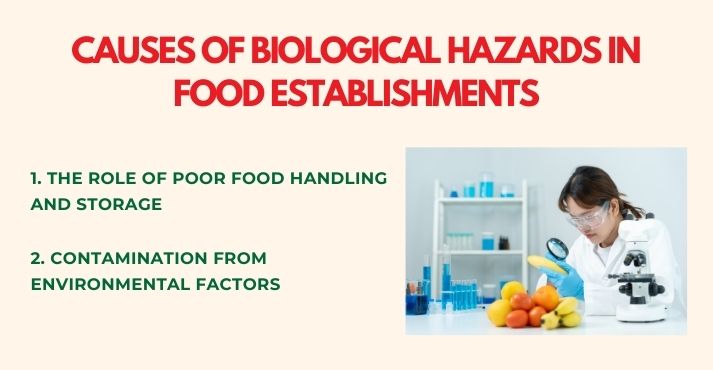
Biological hazards do not always originate from the food itself. They often occur because of how food is handled, stored, or prepared.
According to a 2023 report by the Centers for Disease Control and Prevention (CDC), 84 multistate foodborne disease outbreaks resulted in 3,153 illnesses, 942 hospitalizations, and 10 deaths.
Of these outbreaks, 32 were linked to contaminated food, showing that contamination from handling, storage, or environmental sources remains a major cause of foodborne illness.
1. The Role of Poor Food Handling and Storage
Cross-contamination, such as using the same cutting boards or utensils for raw meat and ready-to-eat foods, can transfer bacteria or viruses.
Incorrect storage or temperature control, for example, leaving cooked or perishable food at room temperature too long, creates ideal conditions for microbial growth.
Unsafe thawing, re-using kitchen tools without proper cleaning, or neglecting sanitation also increases risk.
These mistakes can turn otherwise safe food into health hazards.
2. Contamination from Environmental Factors
Even when food is handled carefully, environmental conditions can introduce hazards. Contaminated water used for washing or cooking may carry harmful microorganisms.
Dirty surfaces, unclean equipment, or inadequate sanitation can harbor pathogens that transfer to food.
Poor ventilation, high humidity, or mold in storage areas can encourage fungal growth or airborne contamination.
Weaknesses in the food supply chain, such as food arriving already contaminated, can also introduce risks before food reaches the kitchen.
Addressing both human errors in handling and storage, as well as environmental and supply chain risks, gives food businesses a better chance of preventing contamination and protecting consumers.
Preventive Practices for Biological Hazards
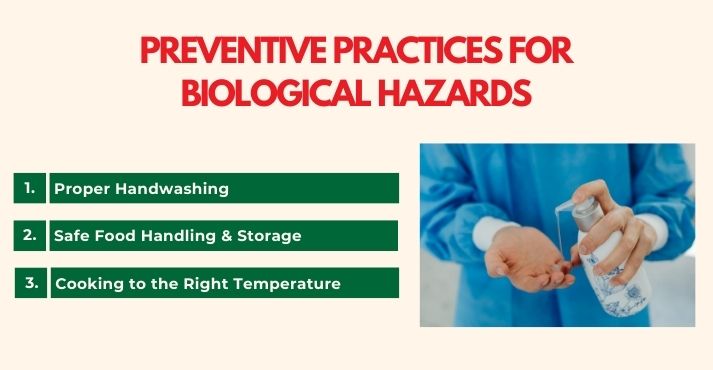
Preventing foodborne illness requires proactive measures to reduce contamination and disease transmission. Food establishments can adopt practical strategies to ensure the safety of the food they serve.
The HACCP system guides proper food handling. It focuses on hazard analysis, identifying critical control points, establishing limits, monitoring procedures, corrective actions, record keeping, and verification.
Ensuring your food business complies with these regulations is crucial.
1. Proper Handwashing
Handwashing is the most basic and essential preventive measure for food safety. Workers should wash their hands frequently before handling fresh produce or ready-to-eat food.
Handwashing with soap and warm water effectively removes dirt and microorganisms from the skin, preventing foodborne illness. Alcohol-based sanitizers should not replace handwashing, as they cannot eliminate pathogens like Norovirus.
Food establishments should provide adequate handwashing stations with proper hand-drying facilities and ensure that all staff adhere to sanitation guidelines.
2. Safe Food Handling and Storage
The World Health Organization has established essential rules for safe food handling that every food business should follow. Key practices include:
- Choose safely processed food: Ensure fresh produce, milk, and other ingredients meet safety standards before use.
- Separate raw and cooked foods: Keep raw meats, poultry, and seafood separate from ready-to-eat items. Use separate cutting boards and utensils to prevent cross-contamination.
- Temperature control: Cook food to a minimum internal temperature of 70°C. Store cooked foods above 60°C or cool to 10°C or below. Thaw frozen food in the refrigerator, under cold running water, or in a microwave, not at room temperature.
- Sanitize kitchen surfaces: Use chlorine or bleach-based cleaners on counters, floors, and equipment. Control microbial entry using sanitary mats, shoe covers, and designated work boots.
- Label products: Use first-in, first-out methods to ensure ingredients are used within their shelf life.
3. Cooking to the Right Temperature
Cooking food to the correct internal temperature kills harmful microorganisms, including bacteria, viruses, fungi, and parasites.
Food handlers should follow standard operating procedures for cooking and verify temperatures with food-grade thermometers. The color or cooking time alone is not a reliable indicator of safety.
Be aware of the temperature danger zone between 70°F and 125°F, where rapid microbial growth occurs. Foods that require strict time and temperature control include:
- Dairy products, including milk
- Meat and poultry
- Seafood, including fish and shellfish
- Shell eggs
- Baked potatoes
- Cooked rice, beans, and vegetables
- Oil mixtures
Following proper cooking, the food should rest briefly to allow internal temperatures to stabilize, ensuring it is safe to eat.
Monitoring and Inspection to Ensure Food Safety
Regular monitoring and inspections help prevent biological hazards in food establishments. Routine checks identify potential contamination risks and ensure compliance with food safety regulations.
Practices like food contamination control and microbiological testing are essential for maintaining safe food.
Regular Inspection of Food Establishments
Routine inspections by food safety authorities ensure that kitchens, food warehouses, and manufacturing sites comply with proper food-handling guidelines.
These inspections may occur bi-monthly or quarterly and help identify violations related to refrigeration, cooking temperatures, sanitation, and worker hygiene.
If a food establishment is found in violation, authorities may impose fines or even close the facility. To prevent this, food businesses should implement internal quality control checks and regularly monitor hygiene and food safety procedures.
Consistently cleaning and inspecting utensils, surfaces, and equipment keeps the food-handling environment safe for employees and customers.
A real-world example highlights the importance of these measures. In late 2024, a multistate E. coli O157:H7 outbreak in the US was traced to slivered onions used at McDonald’s restaurants, affecting 104 people across 14 states, hospitalizing 34, and causing one death.
Proper supplier checks, ingredient testing, and monitoring could have reduced the risk of the outbreak. This shows why regular inspections and strict internal monitoring are crucial in preventing biological hazards.
Microbiological Testing and Analysis
Microbiological testing identifies harmful bacteria, viruses, parasites, and molds in food products. Detecting pathogens is as important as preventing them, as it allows corrective actions such as tracing contaminated batches or recalling unsafe products from retailers.
Food microbiology includes both quantitative and qualitative tests that analyze food, surfaces, air, water, and personnel for contamination.
Common tests detect pathogenic bacteria, indicator organisms, spoilage organisms, and other microorganisms that can affect food quality and safety.
HACCP guidelines recommend microbial testing to ensure food products meet safety standards. Regular testing prevents spoilage, off-flavors, and textural changes, while increasing consumer confidence.
Food establishments that include microbiological testing in standard procedures provide safer, higher-quality products.
Addressing Broader Food Safety Concerns
Food safety involves more than just controlling biological hazards in a single kitchen. Factors such as food security, contamination, GM foods, and menu labeling all influence the safety and hygiene of the food supply.
Food Security and Its Role in Food Safety
Food security ensures that people have access to sufficient, safe, and nutritious food at all times. When the food supply is stable and reliable, the risk of contamination decreases, as food can be handled, stored, and distributed under controlled conditions.
Innovations such as urban farming and agritech have improved food availability and reduced vulnerabilities in densely populated regions like Singapore.
Food Contamination: A Continuing Risk
Food contamination remains a persistent concern for food safety. Contaminants can enter food at any stage of the supply chain, from production and transportation to storage and preparation.
Biological hazards such as bacteria, viruses, fungi, and parasites contribute to these risks, but proper food handling, hygiene, and temperature control significantly reduce their impact.
Regular monitoring, inspections, and adherence to food safety practices help prevent contamination and maintain high standards.
Genetically Modified Food and Safety Concerns
Genetically modified (GM) foods are designed to improve crop yields, resist pests, and enhance nutritional content. While most approved GM foods have passed safety tests, concerns remain about potential allergenicity and long-term health effects.
Proper regulatory testing and monitoring are essential to ensure these foods remain safe for consumption.
GM foods also raise environmental and ethical considerations. Overuse of herbicide-resistant crops can affect biodiversity, and transparency in labeling is crucial for consumer choice.
Continued oversight, rigorous testing, and clear information help maintain trust and safety in the food system.
Menu Labeling and Its Impact on Consumer Awareness
Menu labeling provides diners with information about calories, nutritional content, and allergens in each dish.
This transparency helps consumers make informed choices, especially those with dietary restrictions or health goals, and reduces the risk of allergic reactions and other food-related health issues.
Clear and accurate labeling also builds trust and encourages repeat visits to food establishments.
Regulations require food businesses to display this information, including major allergens like dairy, nuts, gluten, shellfish, eggs, and soy.
Proper labeling not only protects consumer health but can also encourage healthier choices and raise food safety and hygiene standards in restaurants.
Conclusion: Ensuring a Safe and Healthy Food Environment
Maintaining a safe food environment requires consistent hygiene, proper food handling, and temperature control. Preventing biological hazards such as bacteria, viruses, fungi, and parasites is crucial for protecting consumers from foodborne illnesses.
Regular handwashing, safe storage practices, cooking to recommended temperatures, and routine inspections help minimize contamination risks and ensure compliance with food safety regulations.
Adopting preventive systems like HACCP and conducting microbiological testing further support safe operations.
Measures such as food security, GM food monitoring, and accurate menu labeling strengthen consumer trust and safeguard health. Educating employees on proper food handling and hygiene standards creates a culture of safety.
By implementing these practices, businesses protect customers, improve operational efficiency, and enhance their reputation. Review safety protocols today and empower your team to prioritize food safety at every step.