Efficient hotel operations help maintain guest satisfaction, increase revenue, and ensure lasting business growth. When processes run smoothly, hotels can manage resources wisely, provide consistent service, and create experiences that make guests want to return.
Strong operations also bring structure to daily work. They help staff stay organized, reduce delays, and maintain quality standards across departments.
From front desk coordination and housekeeping to maintenance and guest services, each function helps the hotel run smoothly and deliver better results.
In this blog, we’ll explore the main areas that define hotel operations, including housekeeping management, business planning, workforce development, hospitality training, and practical solutions to handle labour challenges effectively.
What is Hotel Operations Management?
Hotel operations management involves planning, organizing, and overseeing daily activities to keep a hotel running smoothly. Its purpose is to align people, processes, and resources to maintain quality, control costs, and deliver a positive experience for every guest.
Effective operations rely on coordination across departments, guided by the hotelier, who leads teams and upholds standards.
Key Components of Hotel Operations
- Front Office: Handles reservations, check-ins, and check-outs, and assists guests throughout their stay.
- Housekeeping: Keeps rooms and public areas clean, comfortable, and safe. Daily cleaning, linen management, and timely maintenance reports help maintain high service standards.
- Food & Beverage: Oversees dining services, menu planning, and cost control to ensure quality and consistency across restaurants, catering, and room service.
- Maintenance: Ensures all facilities and equipment are functional, preventing breakdowns that could disrupt operations or inconvenience guests.
- Administration: Manages budgeting, procurement, and scheduling to keep hotel operations efficient and financially stable.
Effective coordination between departments ensures smooth operations and consistent performance.
Optimizing Housekeeping Operations
Housekeeping is one of the most important parts of hotel operations and a major factor in guest satisfaction. Clean rooms, well-maintained amenities, and organized spaces help guests feel valued and cared for.
When rooms are spotless and public areas are tidy, guests are more likely to leave positive reviews, return for future stays, and recommend the hotel to others.
A well-managed housekeeping department ensures cleanliness standards are consistently met and that the team works closely with other departments to keep the property running smoothly.
1. Core Housekeeping Processes
Housekeeping operations include several important activities that maintain efficiency each day:
- Cleaning Protocols: Daily cleaning of guest rooms and public areas ensures hygiene and comfort. Standardized procedures help maintain consistency across shifts.
- Linen Handling: Managing the collection, washing, and restocking of linens ensures every room is ready for new guests without delays.
- Maintenance Coordination: Promptly reporting and addressing repair needs helps maintain safety and comfort standards.
- Quality Assurance: Regular inspections confirm that rooms meet cleanliness and presentation expectations before check-in.
2. Strategies to Improve Housekeeping Performance
Many hotels are refining their housekeeping systems with practical and modern improvements:
- Standardized Cleaning Checklists: Clear checklists guide staff through every step of the cleaning process, ensuring no detail is missed.
- Automation and Smart Tools: Technology such as task management apps, smart sensors, and robotic vacuums helps teams save time and focus on guest needs.
- Cross-Training and Staff Motivation: Training staff for multiple tasks increases flexibility and teamwork, especially during peak seasons. Recognition programs and fair scheduling also improve morale and retention.
- Sustainable Practices: Using eco-friendly cleaning products, reducing water and energy use, and encouraging linen reuse support both environmental goals and cost savings.
- Handling Complaints and Maintaining Consistency: Quick responses to guest concerns and ongoing supervision help maintain high cleanliness standards at all times.
An effective housekeeping department ensures every guest enjoys a comfortable and welcoming stay. With proper training, consistent procedures, and attention to detail, hotels can maintain high cleanliness standards, strengthening their reputation and overall performance.
Enhancing Guest Experience
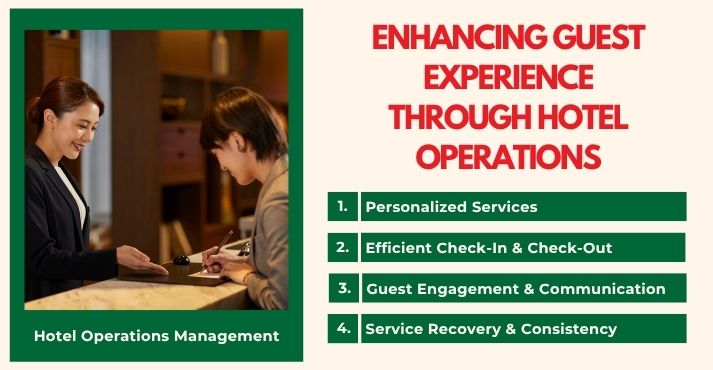
Guest experience is one of the most important aspects of hotel operations. Every interaction, from arrival to departure, influences how guests feel about their stay and their decision to return.
1. Personalized Services
Personalization helps guests feel valued and appreciated. By noting their room preferences, dining choices, or special requests, hotels can make each stay more comfortable and enjoyable.
Simple gestures such as greeting guests by name or recalling their previous visits help build genuine connections.
2. Efficient Check-In and Check-Out
Fast and convenient arrivals and departures set a positive tone for the visit. Using digital check-in systems and automated payment methods reduces waiting time and ensures a smooth experience for guests and staff.
3. Guest Engagement and Communication
Open communication makes guests feel welcome and cared for. Staff should interact with guests throughout their stay, respond quickly to requests, and encourage feedback.
Surveys and in-person conversations provide helpful insights into what works well and what can be improved.
4. Service Recovery and Consistency
Issues may arise, but how they are resolved determines guest satisfaction. Staff should handle concerns quickly, politely, and with empathy. Consistent service standards across all departments help ensure reliability and maintain guest confidence.
When hotels combine personalization, efficiency, and empathy, they create experiences that guests remember and want to repeat.
Leveraging Technology in Hotel Operations
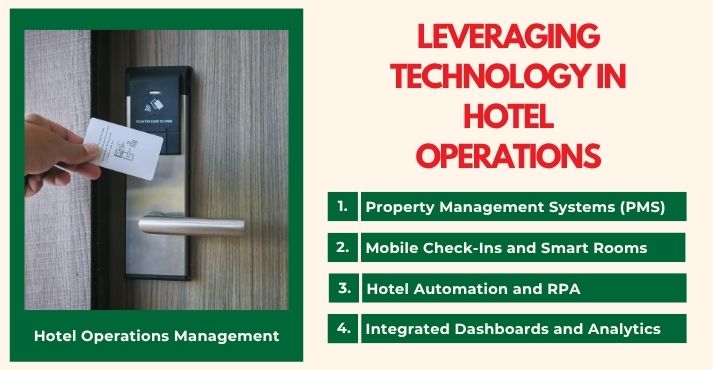
Technology helps hotels manage daily operations more efficiently. Digital systems reduce manual work, improve accuracy, and enable faster, more personalized service.
1. Property Management Systems (PMS)
A Property Management System (PMS) centralizes reservations, occupancy, billing, and reporting on a single platform.
API-first systems allow hotels to connect booking engines, housekeeping software, and payment gateways, providing real-time updates and seamless coordination across departments.
2. Mobile Check-Ins and Smart Rooms
Contactless features such as mobile check-ins, digital room keys, and smart room controls give guests more convenience and privacy. These options also reduce front-desk workload, allowing staff to focus on delivering quality service.
3. Hotel Automation and RPA
Hotel automation and Robotic Process Automation (RPA) handle routine tasks like billing, scheduling, and reporting with speed and accuracy. Automating repetitive work saves time, prevents errors, and ensures consistency across all operations.
4. Integrated Dashboards and Analytics
Integrated dashboards bring together data from sales, housekeeping, and guest feedback, helping managers track performance, forecast demand, and plan resources more effectively.
5. AI and Chatbots
Artificial intelligence supports both guest service and management. Chatbots handle common requests instantly, while AI-driven analytics help forecast occupancy, adjust pricing, and improve communication based on guest preferences.
By combining PMS, automation, and analytics, hotels can operate more efficiently, improve service quality, and meet the changing needs of the hospitality industry.
Workforce Management and Training
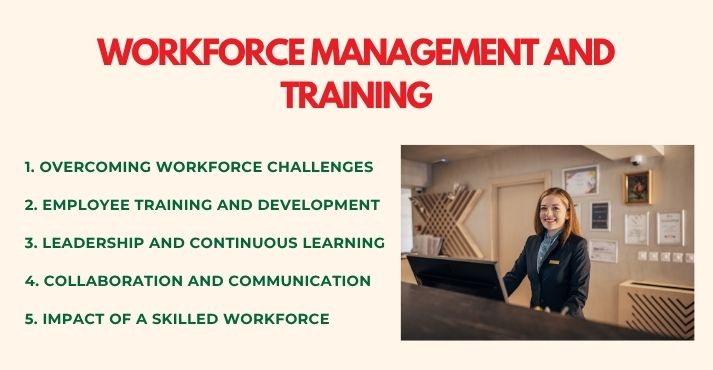
A skilled and motivated workforce is essential for running hotel operations smoothly. The hotel industry continues to face challenges, including talent shortages, burnout, and high turnover.
Addressing these issues requires fair pay, flexible schedules, and a workplace culture that encourages learning and teamwork.
1. Overcoming Workforce Challenges
Staffing gaps remain common across housekeeping, food service, and front-office roles. Offering competitive compensation helps attract workers, but retention depends on more than pay.
Work-life balance, positive management practices, and recognition programs help reduce turnover and improve employee satisfaction.
2. Employee Training and Development
Training should start with a structured onboarding process that helps staff understand service standards, policies, and compliance requirements.
Regular sessions on safety, ethics, and communication build confidence in daily tasks. Soft skills, such as empathy and problem-solving, help employees effectively manage guest needs.
3. Leadership and Continuous Learning
Leadership programs help supervisors guide their teams, manage performance, and maintain consistent service.
Ongoing learning through workshops or online courses keeps staff up to date on the latest hospitality practices, sustainability measures, and digital systems used in daily operations.
4. Collaboration and Communication
Strong collaboration among departments ensures smooth coordination between the front office, housekeeping, maintenance, and F&B teams. Regular briefings, digital messaging platforms, and shared goals improve communication and service consistency.
5. Impact of a Skilled Workforce
Trained employees increase efficiency, reduce errors, and maintain high service quality. Investing in employee growth creates a capable, motivated team that strengthens overall operations.
Hotel Business Planning and Performance
A clear business plan helps hotels stay organized, attract investors, and make better decisions. It sets the direction for daily operations, financial management, and long-term growth while ensuring that each department works toward common goals.
1. Key Elements of an Operational Plan
An operational plan outlines how a hotel functions on both a daily and strategic level. It typically includes:
- Executive Summary: A brief overview of the hotel’s goals, target market, and value proposition.
- Market Analysis: A review of customer segments, competitors, and industry trends to identify growth opportunities.
- Financial Forecasting: Revenue and expense projections that guide investment, budgeting, and resource allocation.
- Risk Assessment and Mitigation: Plans to address financial, operational, and reputational risks through prevention, control, or contingency measures.
2. Financial Planning and Pricing Strategies
Sound financial planning supports stability and smarter decision-making. Hotels use pricing strategies to set room rates based on demand, seasonality, and competition.
Forecasting tools and historical data help managers optimize revenue without affecting occupancy. Regular budget reviews and expense tracking maintain profitability and operational balance.
3. Key Hotel Performance Indicators (KPIs)
Tracking KPIs allows managers to assess progress and identify areas that need improvement. Important metrics include:
- Occupancy Rate: Percentage of available rooms sold.
- Average Daily Rate (ADR): Average income earned per occupied room.
- Revenue per Available Room (RevPAR): Combines occupancy and rate performance to measure revenue efficiency.
- Gross Operating Profit per Available Room (GOPPAR): Reflects operational profitability across all revenue streams.
- Net Promoter Score (NPS): Measures guest satisfaction and loyalty through feedback.
4. Data-Driven Decision-Making
Data from PMS, CRM, and accounting systems helps identify trends and guide forecasting. This information supports smarter decisions about pricing, staffing, and marketing. Real-time dashboards also help managers make timely adjustments to improve overall efficiency.
5. Continuous Performance Reviews
Regular performance reviews keep hotel operations aligned with business goals. By analyzing KPIs, guest feedback, and financial results, managers can refine strategies, update budgets, and improve operations.
Effective business planning connects daily operations with long-term strategy. With strong financial management, measurable KPIs, and ongoing reviews, hotels can maintain stability, improve service quality, and achieve consistent growth.
Sustainability and Resource Efficiency
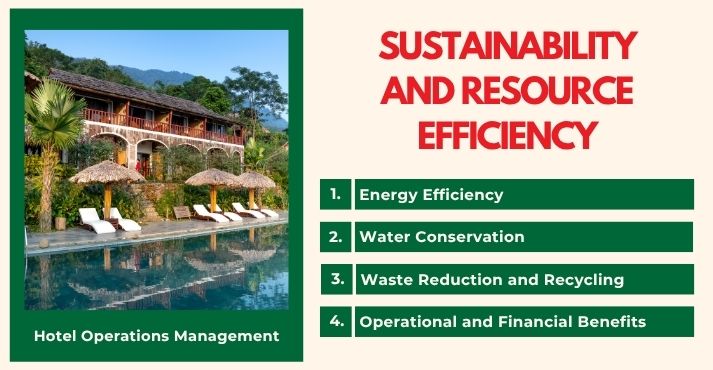
Sustainability has become an essential part of hotel operations. It helps reduce costs, preserve resources, and appeal to guests who value responsible travel. By managing energy, water, and waste more efficiently, hotels can operate responsibly while improving long-term profitability.
According to a report, the proportion of hotels with formal carbon-reduction plans nearly doubled, from 57% in 2022 to 97% in 2024, showing the industry’s strong commitment to environmental accountability and sustainable growth.
1. Energy Efficiency
Modern hotels are adopting energy-efficient lighting, automated HVAC systems, and smart energy management systems to monitor and control usage across the property. These solutions adjust energy consumption based on occupancy, reducing waste and lowering utility costs.
According to a report, smart hotel technologies, such as sensors and air-conditioning optimization, can cut energy bills by over 40% through improved monitoring and system management.
2. Water Conservation
Installing water-saving fixtures, low-flow showerheads, and dual-flush toilets helps reduce water use without affecting guest comfort. Linen and towel reuse programs also conserve water and energy used in laundry operations while promoting sustainable guest participation.
3. Waste Reduction and Recycling
Recycling programs, bulk amenities, and reduced plastic use are practical ways to minimize waste. Composting food scraps and using biodegradable materials help reduce environmental impact and meet global sustainability standards.
4. Operational and Financial Benefits
Sustainability efforts do more than protect the environment — they make financial sense. Energy and water savings reduce operational expenses, while efficient waste management cuts disposal costs.
These practices also enhance brand reputation, appealing to environmentally conscious travelers who prefer staying in eco-responsible hotels.
Adopting eco-friendly practices is no longer optional for hotels. By combining smart resource management with modern efficiency systems, hotels can reduce costs, support the planet, and attract a new generation of guests who value sustainable hospitality.
Future of Hotel Operations Management
Hotel operations are entering a new phase driven by automation, sustainability, and changing workforce models. Artificial intelligence and digital systems help streamline tasks such as check-ins, scheduling, and reporting.
These improvements allow staff to save time and focus more on personal guest service rather than administrative work.
Industry innovation also comes from trade shows featuring hospitality technology, where hotels explore smart systems and sustainable solutions for the next generation of operations.
Personalization continues to define the guest experience as hotels use data and smart room systems to adjust services based on individual preferences. At the same time, sustainability has become a business priority.
Many hotels are adopting eco-friendly amenities, ethical sourcing practices, and renewable energy solutions to lower costs and appeal to environmentally conscious travellers.
The role of hoteliers is changing as they balance innovation with human connection. Managers are expected to combine digital knowledge with leadership and empathy to guide their teams effectively.
Success now depends on how well hotels integrate efficiency, guest care, and environmental responsibility into everyday operations.
Conclusion
Efficient hotel operations depend on maintaining the right balance between technology, people, and sustainability. When these elements work together, they create smoother workflows, motivated teams, and higher operational standards.
Long-term success comes from continuous staff development and a commitment to guest-focused innovation. Investing in employee growth, service quality, and responsible resource use helps hotels remain strong and adaptable.
Hospitality excellence comes from precise operations paired with attentive staff, ensuring lasting quality and consistent performance.