Hospitality marketing helps hotels, resorts, and restaurants attract visitors and encourage repeat visits. It uses different methods to present what makes each business unique and connect with people seeking enjoyable travel or dining experiences.
Strong marketing doesn’t just attract guests; it builds trust, increases loyalty, and drives steady revenue growth. It focuses on clear communication, showing guests what they can expect and why they’ll enjoy their stay or meal.
As competition increases and guest expectations evolve, hotels need marketing that feels personal, consistent, and service-driven.
This guide explains the main elements, practical strategies, and new trends that help hospitality businesses grow and build lasting guest relationships.
Understanding the Hospitality Industry
The hospitality industry includes hotels, resorts, restaurants, and travel services, all focused on meeting the needs of travelers and local guests. From comfortable stays to enjoyable dining and leisure experiences, the industry relies on creating satisfying experiences for visitors.
In 2024, the global hospitality market was valued at approximately $3.98 trillion, up from $3.44 trillion in 2023. This steady growth shows that the sector remains strong and competitive, making effective marketing vital for success.
Overview of the Sector
Modern hospitality, often called Hospitality 4.0, combines technology and personalization to enhance every aspect of the guest experience. Businesses now use smart systems, mobile solutions, and social media to connect directly with guests.
As travellers look for authentic, convenient stays, hotels and restaurants focus on combining personal service with data-driven insights. This approach helps them respond quickly to guest expectations and maintain long-term relationships.
Knowing Your Audience
Knowing your audience is important for any hotel marketing strategy. By studying demographics, travel behaviour, and spending patterns, hotels can identify what different types of guests want most.
Guest personas make this process easier. Each profile represents a typical visitor with specific needs and preferences, guiding pricing, offers, and communication.
For instance, domestic travellers often prefer local experiences, flexible bookings, and good value, while international guests may look for luxury, culture, and comfort.
These insights help hotels design marketing that feels relevant to each group, improving loyalty, repeat visits, and overall business growth.
Core Elements of Hospitality Marketing
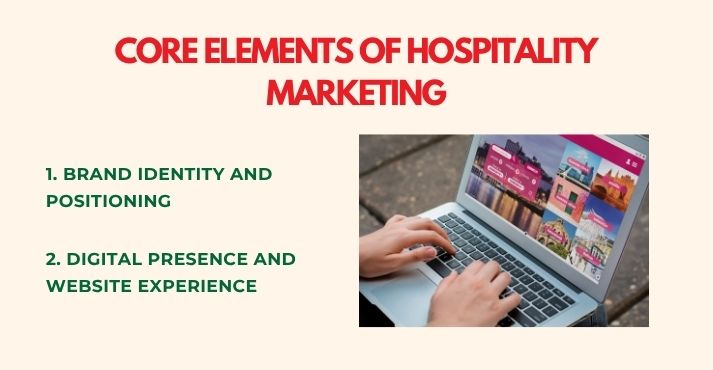
A hotel’s success depends on how well it integrates its brand, online presence, and communication into a single, clear strategy. These elements define a strong marketing plan and directly influence visibility and overall operations.
1. Brand Identity and Positioning
A strong brand identity shows what makes a hotel unique. It’s not limited to logos or slogans but tells a story built on the property’s values and service promise. Emotional branding, through visuals, messaging, and guest interactions, builds trust and loyalty over time.
Positioning the hotel effectively in the market helps guests understand its value from the moment they first encounter it. This might involve focusing on luxury, affordability, local culture, or sustainability — whatever best represents the experience offered.
Reputation management depends on consistent replies to reviews, open communication, and positive storytelling to maintain credibility and influence how travellers view your brand.
2. Digital Presence and Website Experience
A hotel’s website is often the first point of contact for potential guests, so it should be fast, simple to use, and mobile-friendly. Responsive design ensures the same experience on all devices, while solid SEO improves visibility across search engines.
Adding a smooth booking engine allows guests to reserve rooms easily and encourages direct bookings. Including social proof, like testimonials, awards, or media features, builds confidence and helps convert visitors into guests.
All these digital components improve convenience and create one connected system that supports marketing, reservations, and guest service.
Effective Marketing Strategies for Hotels
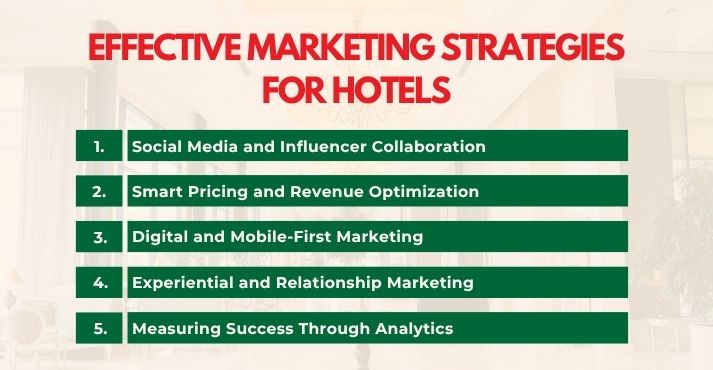
Marketing in hospitality is no longer about visibility alone, but about connection, timing, and personalization. The most successful hotels combine emotional storytelling with data-driven precision to engage guests across every touchpoint, from social feeds to pricing models.
1. Social Media and Influencer Collaboration
Social media remains one of the strongest channels for hotel branding and community engagement. Authentic visuals, real guest stories, and interactive contests help build trust and keep audiences engaged.
Timely responses to comments and messages show attentiveness, while sharing reviews reinforces transparency.
Partnering with micro-influencers adds credibility and reach. Their localized audiences often trust their recommendations, making them ideal for promoting unique stays, dining experiences, or nearby attractions.
Genuine influencer content builds modern word of mouth and supports long-term brand credibility.
2. Smart Pricing and Revenue Optimization
Global hotel occupancy is projected to increase by about 2.5%, while the average daily rate (ADR) is expected to rise by around 4.9% in the coming year. This shows why hotels need flexible, data-driven pricing models to stay competitive.
Pricing is both an art and a science in hospitality marketing. Modern hotels use flexible models such as dynamic, segment-based, and loyalty-based pricing to stay competitive while maintaining profitability.
AI-powered forecasting helps adjust prices in real time based on demand, seasonality, and booking behavior. This ensures higher occupancy rates and improves revenue per available room without compromising guest satisfaction.
Strategic pricing maintains balance by rewarding loyal guests, optimizing returns, and sustaining steady growth.
3. Digital and Mobile-First Marketing
Digital-first marketing defines the guest journey even before check-in. From contactless check-ins and keyless entry to in-app messaging and location-based offers, mobile marketing makes hotel stays smoother and more personal.
Mobile apps and responsive websites allow seamless booking, upselling, and guest communication. Integrating QR codes, push notifications, and personalized offers keeps guests informed while promoting convenience.
These digital experiences enhance engagement and ensure every interaction, whether through an app or booking engine, reinforces the hotel’s branding and commitment to guest satisfaction.
4. Experiential and Relationship Marketing
Experiential marketing focuses on creating memorable moments that stay with guests beyond their stay. Immersive experiences, such as themed stays, local tours, or curated dining, build emotional connections and leave a lasting impression.
Loyalty programs reward returning guests with personalized offers and exclusive privileges. Partnering with local businesses, such as restaurants or event venues, adds depth to the guest journey and strengthens community ties. Together, these efforts create relationships grounded in authenticity and value.
5. Measuring Success Through Analytics
Tracking results is essential for improving hotel marketing performance. Data-driven insights show what’s working, what needs adjustment, and where investment delivers the best returns.
Key Performance Indicators (KPIs)
Core metrics such as occupancy rate, Average Daily Rate (ADR), and Revenue per Available Room (RevPAR) reveal how efficiently rooms generate revenue.
Net Promoter Score (NPS) measures guest satisfaction and loyalty, while ROI evaluates how well marketing spend converts into profit. Together, these KPIs show both financial performance and guest experience outcomes.
Data-Driven Decision-Making
Analytics help hotels understand the impact of every campaign, refine strategies, and optimize ROI. By studying booking trends, engagement data, and feedback, marketers can adjust communication, modify pricing, and allocate budgets more effectively.
This continuous cycle of analysis and improvement ensures smarter spending and stronger guest relationships over time.
Future Trends in Hospitality Marketing
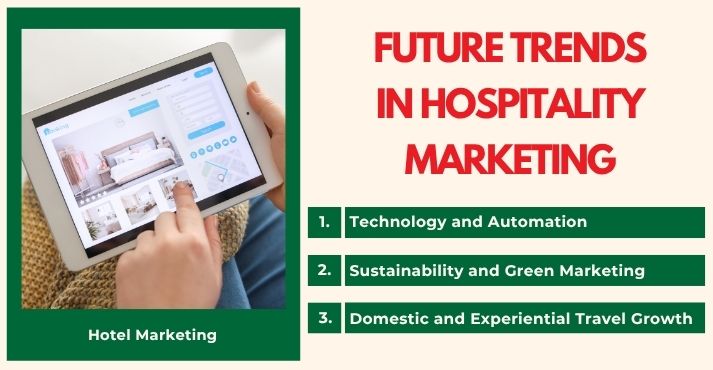
Hospitality marketing continues to change as guest expectations and travel behaviour move in new directions. New technologies, sustainable practices, and growing interest in local experiences influence how hotels plan, promote, and deliver their services.
These trends highlight smarter systems, responsible practices, and more meaningful guest experiences.
1. Technology and Automation
AI enhances personalization, predicts demand patterns, and supports dynamic pricing to improve occupancy and revenue. Chatbots manage guest inquiries 24/7, while predictive analytics help anticipate travel trends.
AR and VR tours allow potential guests to explore rooms and amenities virtually, helping them make confident booking decisions. Cloud-based property management systems (PMS) connect departments more efficiently.
Events like hospitality technology trade shows present the latest innovations in hotel operations, digital systems, and guest experience, giving professionals insight into where the industry is heading.
2. Sustainability and Green Marketing
Eco-branding influences guest choices, as more travellers seek environmentally responsible stays. Energy-efficient systems, water conservation measures, and waste reduction programs show a genuine commitment to sustainability.
Examples include carbon-neutral operations, locally sourced ingredients for dining, and transparent sustainability reports. Green certifications and honest communication strengthen trust among eco-conscious travellers.
3. Domestic and Experiential Travel Growth
Local tourism continues to expand as travellers seek comfort closer to home. Hotels promote cultural experiences, regional cuisines, and partnerships with nearby attractions to appeal to domestic guests.
Staycation offers, flexible pricing, and authentic experiences, such as art showcases or food festivals, encourage guests to connect with their surroundings while enjoying convenience and value.
Conclusion
Success in hospitality marketing depends on integrating technology, creativity, and human connection. Hotels that combine digital innovation with authentic guest experiences build stronger relationships and long-term loyalty.
Continuous improvement, adaptability, and sustainable branding remain essential for lasting growth. As guest expectations continue to change, the future of hospitality will belong to those who stay flexible, data-aware, and committed to delivering genuine, people-first experiences.