
Ever felt bloated after lunch, low on energy by mid-afternoon, or generally off after a meal?
Those small, nagging digestion issues are a sign your gut is asking for kinder treatment, and the good news is you don’t need strict diets or expensive supplements to help it.
Gut health matters because your digestive system does more than break down food: it helps power your immunity, shapes your mood, and controls low-level inflammation that affects energy and long-term health.
Thus, to support digestion naturally, reduce gut irritation, and build a resilient microbiome without making meals feel medical.
To that end, focus on foods that support digestion and benefit your body.
This guide keeps things food-first and practical. Rather than fads, you’ll find everyday tweaks and foods that support the microbiome, seven easy strategies you can start using today while still enjoying real, tasty meals.
Strategy 1: Prioritize Fiber-Rich Whole Foods in Every Dish
Fiber is foundational because it feeds beneficial microbes and keeps digestion moving smoothly.
There are two simple types: soluble fiber (found in oats and beans), which absorbs water and forms a gentle gel that slows digestion and feeds beneficial bacteria.
In contrast, insoluble fiber (found in vegetables and nuts) adds bulk and helps prevent constipation.
Featured fiber-rich foods for gut health:
- Vegetables: leafy greens, carrots, broccoli
- Legumes: lentils, chickpeas, black beans
- Whole grains: oats, quinoa, brown rice
- Nuts & seeds: almonds, chia seeds, flaxseeds
- Easy swaps: white rice → brown rice/quinoa; refined pasta → whole-grain or legume pasta
By choosing gut-friendly foods for digestion, such as lots of vegetables, legumes, and whole grains, you nourish your microbiome and make it part of every meal.
Strategy 2: Add Fermented Foods for Natural Probiotics
Fermented foods are natural sources of probiotics, live microorganisms that help replenish and balance beneficial bacteria in the gut.
During fermentation, friendly bacteria such as Lactobacillus convert natural sugars into acids, creating tangy flavors while preserving the food.
Adding fermented foods to everyday meals is one of the easiest ways to support a more diverse gut microbiome and help maintain a strong intestinal barrier.
Common fermented foods to include:
- Dairy: yogurt with live cultures, kefir
- Vegetables: sauerkraut, kimchi
- Fermented seasonings: miso, tempeh
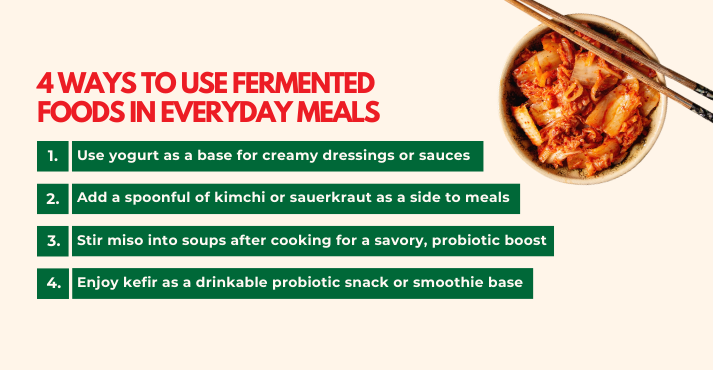
Here are some easy ways to use fermented foods in everyday meals:
- Use yogurt as a base for creamy dressings or sauces
- Add a spoonful of kimchi or sauerkraut as a side to meals
- Stir miso into soups after cooking for a savory, probiotic boost
- Enjoy kefir as a drinkable probiotic snack or smoothie base
When eaten regularly, fermented foods in everyday meals help nourish beneficial bacteria and support long-term digestive balance, without changing how you cook.
Strategy 3: Balance Meals with Prebiotic Ingredients
Prebiotics are indigestible fibers that act as fuel for beneficial gut bacteria, helping probiotics grow and stay active.
Including prebiotic foods for gut health in balanced meals strengthens the gut ecosystem and supports long-term digestive resilience.
Many of these ingredients are already kitchen staples, making them easy to use without changing your cooking routine.
Common prebiotic foods for gut health
- Alliums: garlic, onions, leeks
- Vegetables: asparagus, artichokes
- Fruits: slightly green (less-ripe) bananas
- Whole foods: oats, barley
Here are some smart ways to add prebiotics to meals:
- Roast garlic and onions with root vegetables for grain bowls
- Simmer leeks and asparagus in soups or stews
- Top oatmeal with slices of slightly green banana
- Add sautéed onions or garlic to rice, quinoa, or lentil dishes
For even better results, pair prebiotic foods with probiotic-rich options like yogurt, kefir, or fermented vegetables. This synbiotic approach provides beneficial bacteria with nutrients and supports their natural growth.
Strategy 4: Reduce Gut Irritants with Smart Ingredient Swaps
Many common gut issues come from everyday irritants rather than major health conditions. Ultra-processed foods, excess refined sugar, fried meals, and artificial sweeteners can disrupt gut bacteria and trigger inflammation.
Ingredients like sugar-free gums containing sorbitol or xylitol often cause gas and diarrhea, while high-fructose corn syrup is known to worsen digestive discomfort.
Reducing exposure to these triggers is a practical way to reduce bloating and improve digestion naturally, without overhauling your entire diet.
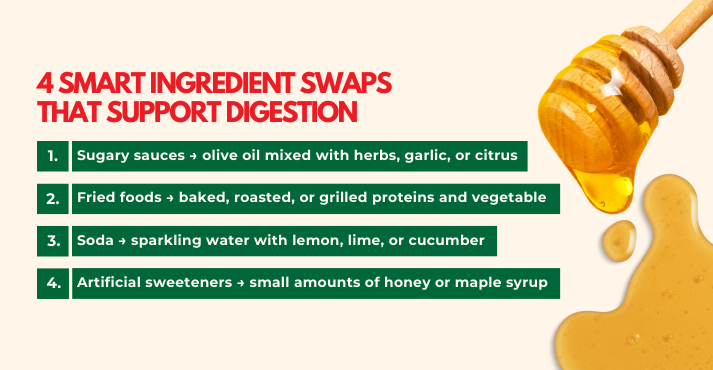
Here are some smart ingredient swaps that support digestion:
- Sugary sauces → olive oil mixed with herbs, garlic, or citrus
- Fried foods → baked, roasted, or grilled proteins and vegetables
- Soda → sparkling water with lemon, lime, or cucumber
- Artificial sweeteners → small amounts of honey or maple syrup
Focusing on minimally processed ingredients and using fresh herbs, spices, and citrus zest for flavor helps lower gut irritation while keeping meals satisfying.
These simple swaps reduce digestive stress and make it easier to improve digestion naturally every day.
Strategy 5: Use Anti-Inflammatory Fats to Support Digestion
Chronic, low-grade inflammation is a common driver of digestive discomfort.
Including anti-inflammatory foods for digestive wellness helps calm the gut, protect the intestinal lining, and create a more balanced microbiome.
One of the most effective ways to do this is by choosing the right fats, specifically healthy fats for digestion that nourish gut bacteria rather than irritate them.
Here’s how to add healthy fats for digestion:
- Use extra-virgin olive oil as a salad dressing or finishing drizzle
- Top salads and grain bowls with avocado and mixed nuts
- Sprinkle chia or flax seeds over yogurt or oatmeal
- Enjoy fatty fish as a main dish a few times per week
Given this, healthy fat sources such as olive oil, avocados, nuts, seeds, and fatty fish (like salmon and sardines) provide monounsaturated fats and omega-3s that help reduce inflammation and support microbial balance.
Also, extra-virgin olive oil is especially beneficial, as its polyphenols encourage gut bacteria to produce anti-inflammatory short-chain fatty acids. Omega-3-rich foods such as walnuts, flaxseeds, and chia seeds also strengthen the gut barrier and support beneficial microbes.
Strategy 6: Focus 1on Variety to Build a Diverse Microbiome
A diverse gut microbiome is stronger and more resilient because different bacteria specialize in breaking down specific fibers and producing beneficial compounds.
The wider the range of fiber-rich ingredients for the gut microbiome you eat, the more microbial “helpers” you support. That’s why variety matters just as much as any single functional food.
To build diversity, rotate what goes on your plate instead of eating the same meals every week.
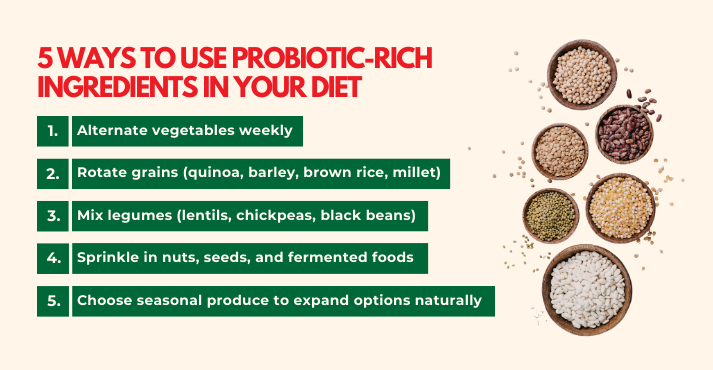
Here are simple ways to use probiotic-rich ingredients in your diet:
- Alternate vegetables weekly (spinach, kale, broccoli, cauliflower)
- Rotate grains (quinoa, barley, brown rice, millet)
- Mix legumes (lentils, chickpeas, black beans)
- Sprinkle in nuts, seeds, and fermented foods
- Choose seasonal produce to expand options naturally
Aim for 20–30 different plant-based ingredients each week. This intentional variety strengthens the microbiome, improves digestive resilience, and supports long-term gut health without complicating your meals.
Strategy 7: Mind Cooking Methods That Preserve Gut Benefits
How you cook your food matters just as much as what you cook. Cooking methods affect nutrient retention and the formation of gut-supportive compounds.
Here are some digestive health cooking tips you can apply:
- Steam vegetables instead of boiling
- Roast or bake foods rather than deep fry
- Lightly sauté with olive oil instead of cooking at high heat
- Cook vegetables until just tender, not mushy
Another way is to cool cooked grains or starchy vegetables before eating or reheating them: cooling increases resistant starch, a gut-friendly fiber fermented by beneficial bacteria into short-chain fatty acids.
For example, cook brown rice ahead of time, let it cool, then reheat it for meals to give your gut an easy, natural boost.
Frequently Asked Questions
What are the best foods for gut health?
The best foods for gut health are those that feed beneficial bacteria, support digestion, and reduce gut inflammation naturally.
- High-fiber vegetables: leafy greens, broccoli, carrots
- Legumes: lentils, chickpeas, black beans
- Whole grains: oats, quinoa, brown rice
- Fermented foods: yogurt with live cultures, kefir, kimchi, sauerkraut
- Prebiotic foods: garlic, onions, leeks, asparagus, slightly green bananas
- Healthy fats: olive oil, avocados, nuts, seeds, fatty fish
How quickly can a diet improve gut health?
Dietary changes can start improving gut health within a few days to a few weeks. Many people notice reduced bloating, better digestion, and more regular bowel movements within 3–7 days of increasing fiber intake and adding fermented foods. More lasting changes, such as a stronger, more diverse microbiome and improved gut resilience, typically take 2–4 weeks of consistent intake of fiber-rich, minimally processed foods and a reduction in common gut irritants.
Are probiotics better than fermented foods?
Probiotics aren’t necessarily better than fermented foods; they serve different roles. Fermented foods provide live bacteria, fiber, enzymes, and nutrients that support digestion, making them ideal for everyday gut health. Probiotic supplements deliver specific strains in higher doses and can be helpful in targeted situations (like after antibiotics), but they don’t replace the broader benefits of whole foods. For most people, regularly eating fermented foods is the better first step, with supplements used only when needed.
Can gut-healthy foods reduce bloating?
Yes, gut-healthy foods can reduce bloating by improving digestion and balancing gut bacteria. Fiber-rich vegetables, fermented foods, and prebiotic ingredients help food move smoothly through the digestive tract, reduce gas buildup, and support beneficial microbes that calm gut irritation. Over time, consistent consumption of these foods leads to less discomfort, improved regularity, and a more settled digestive system.
How much fiber should I eat daily?
Adults should aim to consume about 25–38 grams of fiber per day, with most women needing closer to 25 grams and most men around 38 grams, to support digestion and gut health. This intake supports beneficial gut bacteria, improves regularity, and reduces bloating. Still, it’s best to increase fiber gradually and drink enough water to avoid discomfort as your digestive system adapts.
Conclusion
Improving gut health doesn’t have to be complicated or restrictive.
By focusing on food for digestion, like fiber-rich whole foods, fermented and prebiotic ingredients, anti-inflammatory fats, and gently cooked meals, you give your gut the support it needs to function smoothly.
Reducing common gut irritants, rotating ingredients for variety, and choosing smarter cooking methods all work together to feed beneficial bacteria and strengthen a resilient microbiome over time.
What matters most is consistency, not perfection. Start small with realistic changes: swap refined grains for whole grains, add a spoonful of sauerkraut or yogurt to a meal, or include one extra vegetable at dinner.
These simple, repeatable choices add up. Over time, the right ingredients in your food can help reduce bloating, improve energy levels, and support overall well-being.
This week, try one gentle step: enjoy a fiber-forward meal or introduce a fermented food you actually like. Pay attention to how your body feels afterward.
With steady, mindful choices, everyday meals can become a powerful way to nourish your gut from the inside out and support long-term digestive health.