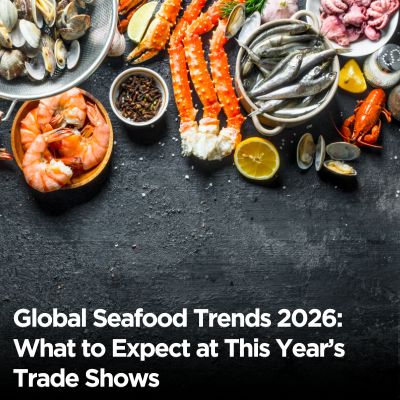
2026 is set to be an important moment for the seafood industry. Changes in sourcing priorities, product development, and buyer expectations are becoming more visible across global markets.
Businesses in foodservice, retail, and hospitality are paying closer attention to how seafood fits into future menus, assortments, and supply decisions. In this context, global seafood industry trends indicate shifting demand, sourcing preferences, and product focus for the year ahead.
Trade shows remain one of the most effective ways to understand these developments early. They bring together producers, processors, distributors, and buyers in one place, allowing direct comparison of products, sourcing approaches, and operational ideas.
Many of the conversations that later influence procurement strategies and supplier relationships begin on the food service trade show floor.
This blog looks ahead to what you can expect in 2026, outlining the themes, innovations, and industry developments likely to stand out at major seafood trade shows and why they matter for informed business planning.
What’s Driving the Seafood Trends in 2026?
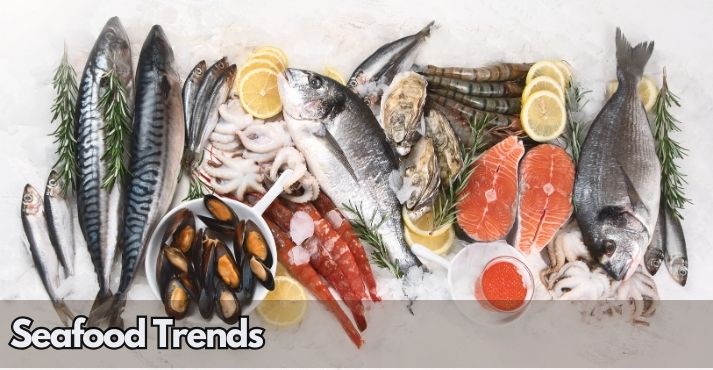
Several forces are defining how the seafood sector is developing as 2026 approaches, and these forces are visible across sourcing, production, and buyer decision-making.
Global seafood market insights highlight the scale of activity across the food and beverage market. The market was valued at $368.98 billion in 2024 and is projected to reach $651.39 billion by 2032, reflecting sustained demand across foodservice, retail, and hospitality.
Sustainability remains a major consideration, though the discussion has become more practical. Buyers are paying closer attention to eco-friendly seafood options, responsible harvesting methods, and production systems aligned with long-term resource management.
These expectations affect how suppliers present product information and how procurement teams evaluate sourcing credibility, especially within sustainable food systems.
Innovation also features prominently in seafood industry trends heading into 2026. Product development is responding to changing preferences, including interest in plant-based seafood and value-added products designed for consistency and operational efficiency.
In parallel, improvements in processing and handling continue to strengthen reliability across supply chains.
Together, these factors inform the seafood market forecast for 2026, guiding sourcing priorities, regional focus, and product planning decisions across the industry.
Key Trends in Seafood for 2026
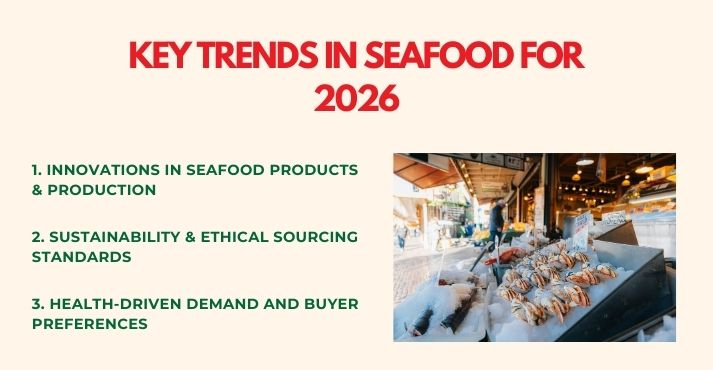
As 2026 approaches, several trends are becoming easier to identify through buyer discussions and trade show exhibits. These developments show how suppliers are adjusting product offerings and sourcing approaches in response to operational and consumer expectations.
Reviewing them helps buyers and sellers assess which directions align with their immediate and near-term needs.
1. Innovations in Seafood Products and Production
Product innovation in 2026 is focused on expanding choice and operational flexibility. Fishing industry innovations are appearing through improved harvesting methods, smarter monitoring systems, and processing upgrades supported by advances in food technology.
Alongside these advances, plant-based seafood alternatives are attracting greater attention at trade shows, particularly among buyers seeking to diversify portfolios and respond to future food trends.
Plant-based seafood product launches increased by approximately 35% globally over the past five years, with continued activity through 2023–2024 as brands refine taste, texture, and cooking performance, reinforcing why this category is gaining space in buyer discussions.
Early-stage cultivated seafood concepts are also appearing in controlled conversations, mainly around future supply reliability rather than immediate volume.
2. Sustainability and Ethical Sourcing Standards
Sustainable seafood vs. traditional practices is now a practical comparison for buyers rather than a marketing debate. Certifications such as MSC and ASC are increasingly referenced alongside broader discussions on sustainably sourced ingredients.
Suppliers are increasingly expected to provide clear documentation covering origin, handling, and compliance, allowing buyers to verify claims efficiently during procurement discussions.
3. Health-Driven Demand and Buyer Preferences
Health considerations continue to guide seafood consumption patterns, especially in retail and foodservice planning. Seafood remains a preferred protein choice for many consumers, aligning with wider interest in health-conscious food choices.
These preferences influence product selection, portion sizing, and menu placement, particularly where nutritional clarity affects purchasing decisions.
Top Seafood Trade Shows to Attend in 2026
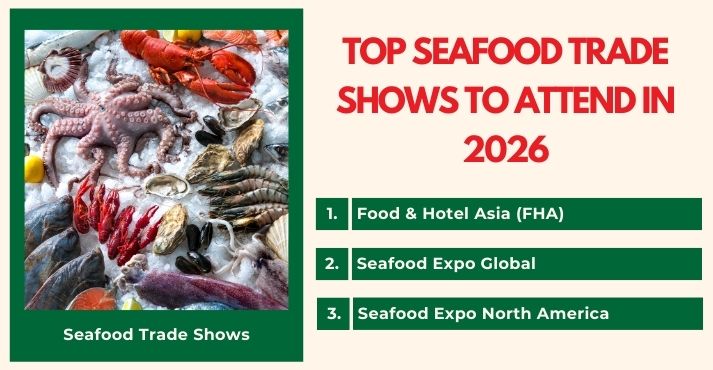
Trade shows offer buyers and suppliers a direct way to assess seafood developments before products enter wider distribution.
For operators across foodservice, retail, and hospitality, these events provide access to products, sourcing discussions, and peer insights that are difficult to replicate through other channels.
In 2026, several major exhibitions stand out for their relevance to seafood sourcing, supplier evaluation, and category planning.
1. Food & Hotel Asia (FHA) – Singapore
For the Asia-Pacific market, Food & Hotel Asia (FHA) remains one of the most relevant platforms for seafood sourcing and evaluation. It connects global suppliers with regional buyers and highlights evolving trade show marketing strategies and procurement practices.
For many attendees, FHA is where global seafood trends are evaluated through the lens of Asian menu preferences, logistics realities, and regulatory requirements, making it especially useful for understanding availability, specifications, and supply alignment within the region.
2. Seafood Expo Global
Seafood Expo Global is widely regarded as a global reference point for sourcing scale, processing capabilities, and sustainability standards.
Buyers who attend or track this event gain early visibility into supplier strategies, certification priorities, and emerging categories that may later be presented at FHA, making it a valuable benchmarking exercise rather than a substitute.
3. Seafood Expo North America
This exhibition provides insight into retail-focused products, traceability practices, and packaging innovations influencing food packaging technology decisions worldwide.
It is particularly useful for understanding traceability practices, packaging approaches, and supplier readiness for regulated markets that often influence global sourcing standards.
Where to Network With Seafood Suppliers
Across these events, networking is not limited to scheduled meetings. Trade show floors allow informal discussions with producers, processors, logistics partners, and certification bodies.
These interactions help buyers compare sourcing approaches, assess supplier reliability, and identify partners that meet operational and compliance needs.
What to See at Major Seafood Trade Shows
In 2026, exhibitors are expected to present responsibly sourced seafood, alternative protein options, processing improvements, and clearer product documentation.
Educational sessions, panels, and workshops often focus on sourcing transparency, supply continuity, and buyer expectations, providing practical context to support procurement and planning decisions.
This mix of regional and global trade shows allows industry professionals to stay informed, compare suppliers, and approach seafood sourcing with greater confidence throughout the year.
How Sustainability Trends Are Shaping the Future of Seafood
Sustainability is becoming a deciding factor in how seafood is produced, sourced, and selected as businesses plan for 2026. The focus is now on sustainable seafood practices that can be verified, measured, and applied consistently across supply chains.
This approach is influencing farming methods, sourcing decisions, and how products are presented to buyers and end customers.
Aquaculture is one area seeing clear progress. New farming approaches are improving efficiency, stock management, and environmental controls, aligning with ongoing aquaculture growth trends across both freshwater and marine systems.
According to the European Fishmeal and Fish Oil Producers (EFFOP), aquaculture production is expected to grow by about 3.3% in 2024, reaching an estimated 100.8 million tonnes, driven largely by increases in farmed shrimp, oysters, carp, and similar species.
This expansion supports supply consistency while addressing resource use, water quality, and long-term viability.
Alternative seafood sources are also part of sustainability planning. Plant-based options continue to draw attention, while cultivated seafood remains a longer-term consideration discussed mainly within innovation-focused forums.
Both are reviewed alongside conventional offerings as buyers compare responsibly produced seafood with traditional supply models.
Traceability is now a standard requirement in sustainability discussions. Buyers expect clear information on origin, handling, and production methods when products are positioned as sustainably sourced.
Certifications such as the Marine Stewardship Council (MSC) and Aquaculture Stewardship Council (ASC) are commonly used as reference points during procurement.
Top Seafood Suppliers and Innovators
As seafood businesses plan for 2026, attention is turning toward suppliers, solution providers, and platforms with proven scale and commercial readiness.
This section focuses on who is executing effectively, rather than revisiting sustainability frameworks, certifications, or trend explanations covered earlier.
Top Seafood Suppliers to Watch in 2026
The following suppliers are frequently referenced at trade events for their operational scale, product breadth, and ability to meet foodservice and retail requirements across multiple markets:
- Thai Union Group: Recognized for extensive product coverage across retail and foodservice, supported by strong global distribution capabilities and consistent supply.
- Mowi: A major aquaculture producer known for vertically managed operations and reliable output across international markets.
- Maruha Nichiro: Active across capture fisheries, aquaculture, and processed seafood, with a strong footprint in Asia and established export markets.
- Trident Seafoods: Often cited for vertically integrated operations and product development aligned with retail and foodservice buyer needs.
Innovators Advancing Seafood Execution
Innovation in seafood includes operational and process improvements. Many companies are investing in food technology to improve processing efficiency, quality assurance, cold-chain reliability, and supply visibility.
These efforts support better inventory control, consistent specifications, and smoother integration into foodservice and retail operations, which buyers closely assess when shortlisting suppliers.
Influencers and Industry Leaders
Alongside suppliers, industry associations, certification bodies, and technical experts continue to inform sourcing criteria, documentation standards, and supplier evaluation processes.
Their guidance often informs procurement discussions and partner selection decisions across global seafood markets.
By tracking these suppliers and innovators, seafood businesses gain a more practical understanding of execution capabilities and partnership options likely to influence sourcing and product decisions in 2026.
Actionable Takeaways: How to Leverage 2026 Seafood Trends
This section translates insight into action. Rather than revisiting trends or market context, the focus here is on what different stakeholders can do next, given the realities discussed throughout the article. Clear documentation, supplier transparency, and alignment with sustainability in restaurants and foodservice standards are becoming essential for long-term partnerships.
How to Position Your Seafood Business for Success in 2026
For Suppliers
- Review your current product mix and identify gaps where buyers are seeking certified, traceable, or alternative seafood options.
- Strengthen documentation on origin, handling, and compliance so procurement teams can quickly assess your offer during evaluations.
- Invest in operational improvements that support consistency, scalability, and delivery reliability, which remain decisive factors in supplier selection.
For Retailers and Foodservice Operators
- Group seafood offerings in ways that make sourcing standards and nutritional attributes easier to understand at the point of choice.
- Test a balanced range that includes responsibly sourced staples alongside newer alternatives, allowing customers to compare options without friction.
- Align assortment planning with clear supplier specifications to reduce variability across locations and menus.
For Consumers
- Look for recognized sustainability certifications when choosing seafood, as these provide clear signals around sourcing and production standards.
- Explore alternative seafood products as complements to traditional choices, especially when availability or preferences vary.
- Pay attention to labeling details related to origin and handling to make more informed purchasing decisions.
Helpful Resources to Get Started
- Certification guidance from recognized seafood standards organizations.
- Supplier compliance and traceability frameworks are shared at major industry events.
- Educational materials from industry associations focused on responsible seafood sourcing.
By applying these steps, suppliers, retailers, and consumers can move from awareness to informed decision-making, using 2026 as a practical reference point rather than a distant outlook.
Conclusion
As 2026 approaches, the seafood industry is entering a phase where informed decisions make a real difference. The developments outlined in this guide show how sourcing priorities, supplier readiness, and product direction are influencing planning across foodservice, retail, and hospitality.
Staying engaged with suppliers, participating in food exhibitions, and tracking seafood trends will help businesses move forward with confidence and clarity.
Looking ahead, the focus should remain on continued engagement with suppliers, careful evaluation of new product options, and active participation in industry conversations.
Whether refining sourcing strategies or exploring new categories, staying connected and informed will support stronger decisions throughout 2026 and beyond.