Today’s guests expect more than good service. They seek fresh, local, and sustainable menu options, and any delay or inconsistency in supply can affect a hotel or restaurant’s reputation.
Chefs and food teams need predictable, year-round produce that is traceable and arrives with minimal food miles.
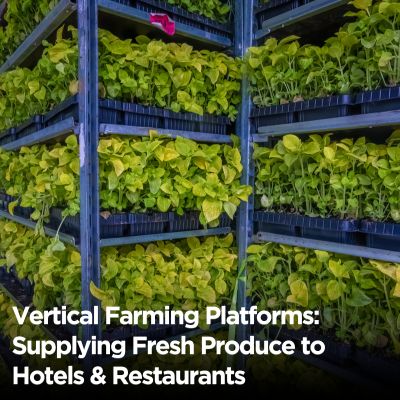
Vertical farming platforms offer a solution. These controlled-environment agriculture systems enable indoor farming and hydroponic production, delivering consistent, high-quality crops regardless of the season or weather.
Hotels can source fresh greens and specialty vegetables efficiently, while restaurants can gain access to locally grown ingredients that support innovative, sustainable menus.
Investing in these platforms can reduce spoilage, shorten supply chains, and improve operational efficiency. Kitchens benefit from consistent quality and menu flexibility, while hotels can highlight sustainability initiatives.
By integrating vertical farming platforms, hospitality operators can deliver fresher menus, satisfy guests, and strengthen resilience across their food supply chain.
What Is a Vertical Farming Platform for Hospitality?
A vertical farming platform uses controlled environment agriculture (CEA) techniques to produce fresh, high-quality crops for hotels and restaurants year-round.
Unlike traditional suppliers, which face challenges from seasonality, variable quality, and long-distance transportation, vertical farming systems deliver consistent, traceable produce.
These platforms rely on stacked grow racks, hydroponics or aeroponics, LED lighting, and precise climate controls to optimize plant growth.
LED PPFD measures the light available for photosynthesis, while nutrient solutions are carefully monitored for EC and pH to maintain plant health. Closed-loop irrigation recycles water and nutrients, increasing efficiency and reducing waste.
For hospitality operators, this approach offers an alternative to wholesale food suppliers, ensuring that kitchens receive locally grown, high-quality ingredients without the unpredictability associated with traditional sourcing methods.
How These Platforms Supply Hotels & Restaurants
Vertical farming platforms support hotels and restaurants through several supply models. On-site microfarms use hydroponic systems to grow herbs and small vegetables directly within the venue, providing immediate access for tasting menus or garnishes.
Near-site metro farms supply nearby hotels and restaurants with weekly deliveries of salad greens and specialty vegetables, reducing transportation time and maintaining freshness.
Distributed modules, such as in-store or venue units, provide flexible production for locations with limited space while maintaining traceability and consistency of produce.
The adoption of these systems is skyrocketing, with the global vertical farming market projected to increase from $8.52 billion in 2025 to $50.10 billion by 2032, reflecting strong industry confidence in a reliable, local food supply for the hospitality sector.
Ordering and logistics are designed to meet the specific needs of the hospitality industry. Produce is managed through harvest-to-delivery windows, ensuring peak freshness. Kitchens can choose cut-to-order options for delicate herbs or packed formats for larger volumes.
Cold-chain handoff preserves quality during transport, supporting a reliable vertical farming supply chain for F&B operations.
Practical examples include daily basil and microgreens for tasting menus, weekly salad greens for banquet operations, and specialty lettuces for seasonal menu rotations.
For instance, Hotel Haarhuis in the Netherlands grows fresh herbs and vegetables on-site using a hydroponic system, allowing their LOCALS restaurant to serve ultra-fresh ingredients directly from the microfarm. These systems support farm-to-table practices while maintaining a consistent supply for kitchens.
Why Hospitality Is Adopting Vertical Farming (Benefits & Outcomes)
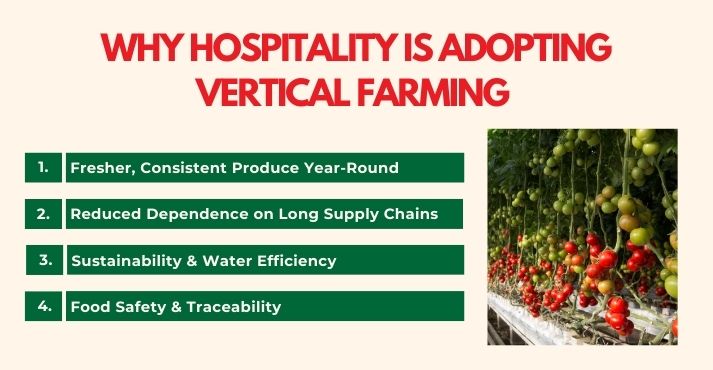
Vertical farming platforms provide hotels and restaurants with year-round access to fresh, high-quality produce, thereby reducing their reliance on traditional suppliers and the associated lengthy supply chains.
This consistency helps maintain menu stability and plate quality even when external factors, such as weather or seasonal variability, affect conventional sourcing.
1. Fresher, Consistent Produce Year-Round
Vertical farming systems allow kitchens to receive daily or weekly harvests, ensuring consistent quality for menus and special events.
This reduces variability in plate presentation, taste, and texture, which is critical for hotels and restaurants that rely on precise standards for guest satisfaction.
Chefs can plan menus confidently, knowing ingredients will meet quality expectations even during off-seasons.
2. Reduced Dependence on Long Supply Chains
These platforms help hospitality businesses buffer against disruptions caused by weather, seasonality, or transportation delays. Local or on-site vertical farms shorten the food supply chain, minimizing spoilage and reducing costs associated with emergency sourcing.
This model also enhances operational efficiency by offering predictable delivery schedules and facilitating easier inventory planning.
3. Sustainability and Water Efficiency
Vertical farms use significantly less water than traditional agriculture and reduce food miles. Studies show they can save up to 98% of water compared to conventional farming, making them an effective solution for sustainability goals and ESG commitments.
By reducing resource consumption, hospitality operators can lower their environmental impact while enhancing operational efficiency and promoting responsible sourcing practices.
An example of this is Stamba Hotel in Tbilisi, Georgia, which grows leafy greens and edible flowers on-site. Daily harvests provide high-quality ingredients for the kitchen while using 75% less water than traditional farming.
This shows how vertical farming can deliver both sustainability benefits and a consistent supply for hospitality operations.
4. Food Safety and Traceability
Using a farm operating system (Farm OS), kitchens can track nutrient levels, growth cycles, and harvest data, which improves traceability and helps meet compliance standards. This structured monitoring prevents contamination and provides records for audits or certifications.
Vertical farming also ensures consistent food safety practices, giving chefs and managers confidence in ingredient quality and regulatory checks.
Sourcing Models (Choose What Fits Your Property)
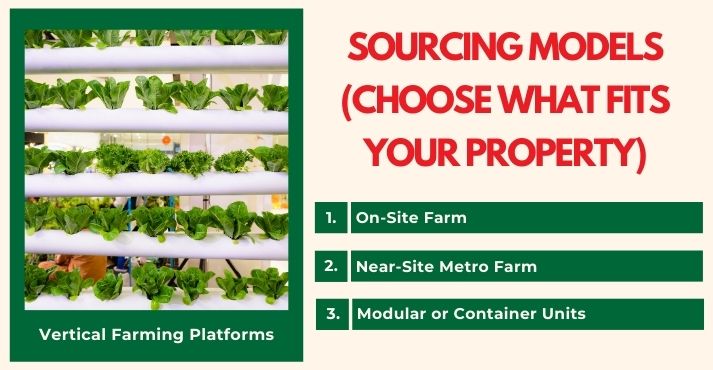
Hotels and restaurants can choose from several sourcing approaches depending on space, budget, and operational needs.
Each model has specific investment levels and staffing requirements, while also providing operators with new ways to incorporate local food production into their daily service.
1. On-Site Farm
On-site vertical farms let properties grow ultra-fresh greens, herbs, and edible flowers directly within or beside the kitchen. Capital expenditure is generally high due to lighting, irrigation, and climate controls, while operating costs remain moderate once systems are established.
They require dedicated staff with horticultural training or cross-trained food and beverage team members to manage planting, monitoring, and harvesting. The required space can be a basement room, rooftop, or converted back-of-house area.
Typical crops include leafy greens, herbs, and garnishing flowers harvested daily for menus. Some properties also adopt aeroponic/fogponic systems to maximize yield in limited space.
2. Near-Site Metro Farm
A metro-based farm serves multiple hotels or restaurants within a single region. This model carries medium capex for the operator managing the farm, while client properties incur only operational expenses tied to procurement.
Staffing requirements are centralized at the metro farm, so hotels and restaurants do not need to hire additional personnel. Space demand at the property is limited to standard cold storage.
Deliveries are often scheduled several times per week, supplying salad mixes, basil, mint, and microgreens. This approach also connects properties to the wider food manufacturing network, streamlining procurement through existing distribution channels.
3. Modular or Container Units
Self-contained container farms can be placed in hotel loading bays, parking areas, or resort outbuildings. Investment levels are generally moderate for both setup and operations, making them suitable for properties seeking flexibility.
Staffing needs are minimal, often handled by a small team or shared with kitchen staff after short training. Space requirements are compact since containers are fully enclosed systems.
Common crops include lettuce, specialty herbs, and compact microgreens, with produce harvested near service points. This model is often highlighted at trade shows featuring fresh produce, showcasing its adaptability for hospitality operations.
Who Is Driving Adoption?
Vertical farm solutions in hospitality include in-line farms built into properties, modular microfarms, containerized units near kitchens, and dashboards that monitor growth and conditions. These formats help hotels and restaurants obtain fresh produce close to the point of service.
The push comes from several kinds of players. There are established vertical-farm brands, agritech startups, and systems integrators that connect indoor farm management software with procurement and reporting workflows.
Requirements from buyers, ESG reporting, and traceability audits are encouraging hospitality groups to consider farms as part of their supply network.
Some sectors are moving the fastest. Fine dining restaurants, business hotels, resorts, cruise lines, and premium quick-service brands are among early adopters.
For example, Greeneration Farm in Dubai supplies more than 70 varieties of microgreens, edible flowers, and specialty leaves to hotels and fine dining venues, while saving up to 98% of water compared to traditional farming methods.
Menu & Operations Fit
For hotels and restaurants, vertical farming platforms prove their worth when the crops fit naturally into menus.
Leafy greens, herbs, and microgreens are common ingredients, used in salads, infused oils, as garnish accents, and on breakfast buffets. Because harvesting happens close to the kitchen, chefs can depend on consistency in flavor and appearance.
Back-of-house routines also become easier to manage. Harvests can be planned around service days, which reduces storage needs and lowers trim waste.
Storage still requires standard humidity and temperature control, but handling is more direct than with long-haul supply chains.
An example of this is SpaceFarms in Tbilisi, which delivers herbs and greens directly to local restaurants, helping chefs access same-day harvests for tasting menus and specialty dishes.
Vertical farms also give operators stronger oversight of their sourcing. According to the USDA, yields can reach 10 to 20 times higher per square metre than open-field farms.
This scalability, combined with transparency in the food sector, makes it easier to maintain detailed records, meet audit needs, and communicate sourcing standards with confidence to guests.
Vertical Platforms vs. Traditional Suppliers — A Comparison
Hotels and restaurants often balance cost, reliability, and sourcing transparency. Below is a directional comparison of vertical farming platforms and traditional produce suppliers.
| Factor | Vertical Farming Platforms | Traditional Suppliers |
| Cost per unit | Higher upfront, competitive over time | Lower but variable |
| Availability | Year-round, predictable | Seasonal, weather-dependent |
| Freshness | Daily harvests, short storage chain | Longer chain, less consistent |
| Logistics | Frequent small deliveries | Bulk, longer intervals |
| Sustainability | Local, fewer transport miles | Higher transport footprint |
| Traceability | Digital crop and input records | Limited beyond invoices |
| Menu stability | Reliable supply reduces risk | Exposed to climate and market risk |
Economics & ROI (What to Measure)
Evaluating the financial case for vertical platforms requires a structured examination of revenue, costs, and operational levers.
On the revenue side, consistency of quality can support menu stability and premium positioning, while cost benefits often come from reduced spoilage, fewer substitutions, and tighter control of par levels.
Operational advantages include predictable delivery windows and less variance in product specifications.
A simple directional model can be applied: (price uplift × covers) + (waste reduction) − (delta ingredient + service fees) − (ops change).
Energy costs, minimum order commitments, and contract length remain essential considerations, especially when comparing on-site systems with vendor-managed models. Predictive AI is also emerging as a factor in ROI calculations, helping operators forecast demand, align harvest cycles with covers, and reduce surplus inventory.
Procurement Checklist for Hotels/Restaurants
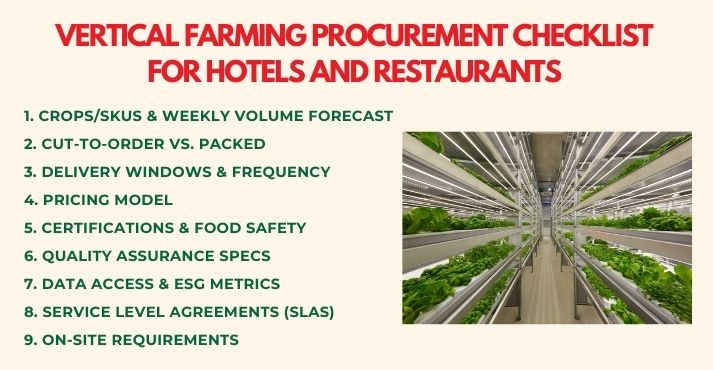
Hotels and restaurants working with vertical farming suppliers should focus on factors that ensure consistency, cost efficiency, and compliance. Procurement teams must consider both operational details and reporting requirements before finalizing agreements.
1. Crops/SKUs & Weekly Volume Forecast
Ensure the supplier can provide the necessary crop varieties and quantities to meet menu demands. Accurate forecasting helps prevent overstocking or shortages, optimizing inventory management and reducing waste.
2. Cut-to-Order vs. Packed; Packaging & Case Sizes
Determine whether produce is harvested to order or delivered pre-packed. Packaging and case sizes impact storage, shelf life, and preparation time, ultimately affecting overall operational efficiency.
3. Delivery Windows & Frequency
Clarify delivery schedules, including lead times and frequency. Consistent and timely deliveries are crucial for maintaining freshness and aligning with kitchen operations.
4. Pricing Model
Understand the pricing structure, whether it is per pound, subscription-based, or tiered. This transparency aids in budgeting and cost forecasting, ensuring financial predictability.
5. Certifications & Food Safety
Verify that the supplier holds relevant food safety certifications and has a clear traceability system in place. Robust traceability supports compliance and guest confidence.
6. Quality Assurance Specs
Review the supplier’s quality assurance standards, including specifications for leaf size, pesticide-free claims, and micro-testing policies. Consistent quality standards help maintain menu integrity and guest satisfaction.
7. Data Access & ESG Metrics
Assess the availability of data dashboards or reporting tools that provide insights into production metrics and Environmental, Social, and Governance (ESG) performance. Access to such data supports informed decision-making and aligns with sustainability goals.
8. Service Level Agreements (SLAs)
Establish clear SLAs that define uptime guarantees, substitution policies, and communication protocols. Well-defined SLAs ensure reliable service and facilitate issue resolution.
9. On-Site Requirements
If using on-site systems, confirm the space, power, and water requirements. Proper infrastructure is necessary to support the installation and operation of vertical farming units.
Challenges & Considerations
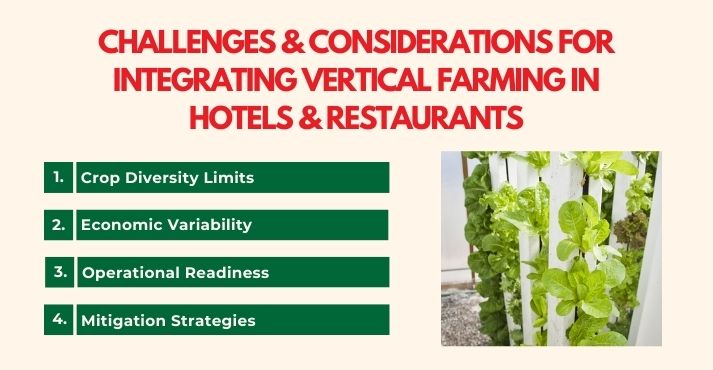
Vertical farming offers numerous benefits, but hotels and restaurants must navigate several operational and financial challenges to ensure successful integration. Understanding these factors helps properties plan more effectively and reduce the risk of supply disruptions.
1. Crop Diversity Limits
Vertical farming currently favors leafy greens, herbs, and microgreens. Fruiting crops, such as tomatoes or peppers, are less common and require more specialized care. These limitations impact menu planning and the range of dishes that can be consistently offered.
2. Economic Variability
Costs vary by location due to factors such as energy prices, labor, and minimum volume commitments. Electricity can account for nearly 60% of a vertical farm’s revenue, leaving fewer than one-third of these operations profitable.
Properties in cities with higher utility rates may face larger operational expenses, making careful budgeting and procurement planning critical.
3. Operational Readiness
Staff coordination is essential for harvesting, receiving, and storing produce. Kitchens must adapt their workflows to accommodate frequent deliveries and monitor quality, ensuring minimal waste and efficient integration into the service.
4. Mitigation Strategies
To reduce risk, properties can start with 2–3 high-turn SKUs, combine vertical farming produce with traditional suppliers, or conduct a small pilot before implementing a full rollout.
These approaches support sustainable agriculture by lowering food miles and resource use while maintaining consistent menu quality.
Future Trends in Hospitality Sourcing
Hotels and restaurants are adopting more data-driven crop planning, using insights from point-of-sale systems and menu performance to guide planting schedules and harvest cycles. This helps match supply to demand, reduce waste, and maintain consistent menu quality.
Modular farm setups are being implemented for multi-property chains and brands, allowing replication across cities. Smaller, flexible units allow properties to adjust their operations based on volume needs and available space.
Crop rotation is incorporated into these systems to maintain nutrient balance in hybrid setups or optimize the growth of hydroponic and aeroponic crops.
Technology also supports operational efficiency. Dashboards provide real-time insights into growth patterns, yield prediction, and waste management.
Integration with ESG reporting allows hospitality operators to showcase sustainable practices to guests, including table-side transparency through QR codes, while maintaining a focus on food quality and traceability.
FAQs Section
What is vertical farming in hospitality?
Vertical farming in hospitality involves growing produce indoors using controlled environments, such as hydroponics or aeroponics. Hotels and restaurants can access fresh, consistent crops year-round. It supports menu quality, traceability, and sustainable sourcing.
How do hotels and restaurants get supplied—on-site, near-site, or container units?
Supply can come from on-site microfarms, nearby metro farms, or self-contained container units. On-site units deliver ultra-fresh produce; near-site farms serve multiple properties; container units offer flexibility in placement.
Each model varies in space, staffing, and investment requirements.
Which crops are best (leafy greens, herbs, microgreens)?
Leafy greens, culinary herbs, and microgreens perform best in vertical farms. Fruiting crops are emerging but are less common. These varieties allow daily harvests, consistent flavor, and quick integration into menus.
Does vertical farming reduce food miles and waste? How?
Yes, sourcing locally reduces transportation and lowers carbon emissions. Frequent, planned harvests minimize spoilage, while controlled growing conditions ensure consistent quality. Waste reduction comes from tighter par levels and cut-to-order deliveries.
Who are notable platform providers for foodservice?
Several established vertical farming brands and startups serve hospitality. They provide indoor farm systems, including hydroponic and aeroponic setups, as well as supply solutions customized for hotels, restaurants, and multi-property chains.
Is it cheaper than traditional purveyors? What drives ROI?
Costs vary by model, energy, and labor, but ROI comes from reduced spoilage, predictable supply, menu consistency, and premium offerings. On-site or near-site farms can offset ingredient costs over time with efficient operations.
How do we handle food safety and traceability records?
Using a farm operating system, kitchens can track nutrient levels, growth cycles, and harvests. Structured monitoring prevents contamination and provides audit-ready traceability for certifications and internal compliance.
Can we scale to multiple properties? What changes operationally?
Scaling requires modular or metro farm setups that serve multiple locations. Operations adjust around delivery frequency, order volumes, and standardized workflows, while centralized staff manage the bulk of growing and harvest operations.
Conclusion
Vertical farming platforms provide hotels and restaurants with a reliable source of fresh, high-quality produce. By supplying leafy greens, herbs, and microgreens year-round, these platforms help maintain consistent menu offerings and enhance plate quality.
They also support sustainability goals by reducing food miles, lowering resource use, and offering traceable, safer produce.
While the strongest benefits are currently seen with greens and herbs, integrating vertical farming with traditional suppliers creates a hybrid approach that balances predictability with variety.
Properties can start small, using on-site or near-site systems, and scale as operational familiarity grows. By complementing existing procurement strategies, vertical farming platforms strengthen supply resilience, reduce waste, and reinforce a hospitality brand’s commitment to freshness, quality, and responsible sourcing.