Food fortification is the process of adding essential vitamins and minerals to everyday foods to improve public health and address widespread nutrient gaps.
This approach has been in use for nearly a century, initially to eliminate diseases such as rickets and goiter by enriching table salt and milk. Today, it’s an essential strategy in ASEAN countries, where many people rely mainly on a few staple foods.
According to the Food and Agriculture Organization, 486 million people in Southeast Asia are at risk of iodine deficiency alone, with millions more affected by vitamin A or iron deficiency.
This shows just how prevalent what’s called “hidden hunger” is, where people get enough calories but lack important micronutrients.
Food fortification in ASEAN has become a crucial component of public health policy. By enriching staples such as rice, flour, and oil, governments and food manufacturers can effectively reach consumers with minimal changes to their diets.
Fortified products are now appearing more often in regional markets, reflecting rising health awareness and new regulations.
As a result, fortification is no longer a niche initiative. It is becoming a standard part of food production, helping to address nutritional gaps across Southeast Asia.
What is Food Fortification?
Food fortification means adding essential vitamins and minerals to everyday foods that people eat regularly. The goal is to fill nutritional gaps and reduce public health concerns, especially in areas where micronutrient deficiency is common.
The World Health Organization has endorsed this practice as a cost-effective way to improve health outcomes with minimal dietary change.
In ASEAN, certain staples are often selected for enrichment because they reach a large number of people. Common targets include salt (with iodine), wheat or rice flour (with iron), and rice (with vitamin A).
Adding these nutrients during processing helps address widespread nutrient gaps without requiring people to change their eating habits.
The WHO recommends large-scale fortification of foods that are widely consumed. Their guidelines suggest choosing effective food vehicles like maize flour, wheat flour, rice, salt, and oil, setting nutrient levels that improve health but remain safe, and establishing strong monitoring systems to ensure quality and compliance.
This method benefits both public health and food manufacturers. Companies can expand fortification programs to meet consumer demand for healthier choices while supporting national health goals. As a result, fortified foods in Southeast Asia are becoming more available and trusted.
Why Food Fortification is Critical in ASEAN
Fortifying staple foods helps improve public health by addressing common nutrient gaps. It targets micronutrient deficiency and supports national health goals in line with ASEAN food regulations, while also meeting rising demand for functional foods.
1. Tackling Micronutrient Deficiencies
Vitamin A deficiency affects up to one-third of children under the age of five in low and middle-income countries. In Southeast Asia, over half of children under six show subclinical vitamin A deficiency and related night blindness symptoms.
Without sufficient vitamin A, children may experience weakened immunity, impaired growth, and even blindness. Adding vitamin A to foods like rice and oil helps prevent these outcomes.
Iron deficiency anemia remains common among women of reproductive age. Globally, anemia affects nearly 1.92 billion people, with iron deficiency responsible for roughly two-thirds of cases as of 2021.
Enriching flour with iron helps improve maternal and child health by supporting energy levels and cognitive development.
Iodine deficiency, especially during pregnancy, diminishes children’s cognitive abilities by as much as 12.45 IQ points. Fortifying salt with iodine has been proven to reduce this risk and support brain development significantly.
2. Enhancing National Public Health Programs
In the Philippines, the salt iodization program showed strong results soon after rollout. According to the Department of Health, 81.1% of households tested positive for iodine using rapid test kits, and 88% of salt samples contained adequate iodine levels, as monitored by the FDA in 2010.
This shows how quickly fortified salt became part of daily use and contributed to reducing iodine deficiency nationwide.
Thailand and Indonesia have introduced mandatory vitamin and mineral fortification of flour and cooking oil. These initiatives have been linked to declines in vitamin A deficiency and iron-deficiency anemia, especially among children and women of reproductive age.
Well-planned fortification programs also help reduce pressure on healthcare systems. A regional review in Southeast Asia found that every dollar spent on food fortification can lead to several dollars saved in medical treatment and productivity losses related to malnutrition.
By including fortified food products in Asia as part of public nutrition policies, ASEAN countries are improving health outcomes, lowering healthcare costs, and promoting long-term nutritional security.
Food Fortification Regulations in ASEAN Countries
Food fortification policies in ASEAN are becoming more structured as governments aim to improve nutrition and support national health goals.
These policies show increased focus on food safety in ASEAN countries, support for sustainable food fortification, and efforts to improve access to essential nutrients for all population groups.
Key Policies and Mandates in ASEAN
-
Indonesia
Indonesia requires the fortification of packaged palm cooking oil with vitamin A. Based on Regulation SNI 7709-2019 and Minister of Industry Regulation No. 46 of 2019, all packaged oil must contain at least 45 IU of vitamin A per gram.
However, unbranded bulk oil is often not fortified. A significant number of small producers continue to fall short of meeting the national standard. This highlights the need for better oversight and support.
-
The Philippines
Salt iodization has been mandatory since the Republic Act 8172 in 1995. According to the 2021 Expanded National Nutrition Survey, only 33.2% of Filipino households are currently using adequately iodized salt.
The Philippines has also required vitamin and mineral fortification of staple foods such as wheat flour, cooking oil, and sugar to support national nutrition goals.
-
Thailand
Thailand has implemented iron fortification of rice through national policy supported by its National Food Institute.
This measure is designed to address high rates of iron-deficiency anemia using a staple food that reaches a significant portion of the population.
Fortified rice is essential for school feeding programs and low-income communities, where access to diverse diets is limited.
Challenges in Enforcement and Compliance
-
Monitoring small producers
One of the biggest hurdles is reaching small and informal food producers. Many operate outside formal markets, making it hard to enforce national fortification rules.
In rural areas, small rice mills and bulk oil vendors often lack the equipment and support needed to meet fortification standards. This limits the reach of fortified products and creates inequality in access to essential nutrients.
-
Lack of regulatory consistency
There is no unified fortification framework across ASEAN. Countries differ in the types of food they choose to fortify, the level of nutrients added, and how compliance is monitored.
This variation makes it harder for regional food manufacturers to operate across borders and creates gaps in coverage. Without greater consistency, it remains challenging to ensure that fortified products effectively meet regional health needs.
Stronger public health food policy, clear regional coordination, and greater investment in monitoring can improve the reach and impact of fortified foods.
As the future of food in ASEAN evolves, fortification can complement efforts to support local producers, introduce organic food options, and encourage innovation in functional foods that meet both health and market needs.
How Food Manufacturers Are Adapting to Fortification Demands
Food manufacturers in ASEAN are adapting their production methods to incorporate essential vitamins and minerals into everyday products. This change comes from new rules and the need to improve community health.
1. Innovations in Fortification Techniques
Some producers are using biofortification, where crops are bred to have higher nutrient content.
A good example is Golden Rice in the Philippines, which is enriched with beta-carotene to help lower vitamin A deficiency rates. It was approved for commercial use in 2021.
Other techniques include microencapsulation, which protects nutrients like vitamin A and iron so they remain stable during storage and cooking. In Bangladesh, companies like HarvestPlus have started offering zinc-enriched rice, which supports better nutrition for local communities.
2. Regulatory Compliance and Costs
Manufacturers must work with certified premix suppliers, install dosing equipment, and conduct factory testing to meet government standards. While these changes require investment, fortification generally adds only 1-2% to total production costs.
These changes are worth it because they improve health, open new market opportunities, and build stronger trust with consumers. The impact of food fortification on health is well-documented, and more manufacturers are recognizing its long-term value.
The Role of Consumers in Food Fortification
Consumers help make food fortification successful through their choices and demand for healthier products.
Consumer Awareness and Demand for Fortified Foods
People in ASEAN are paying more attention to health and looking for products that fill nutrient gaps. Many now check labels for added iron, vitamin A, and other essential nutrients.
This interest comes from more education on micronutrient deficiency through schools, community talks, and health programs.
As shoppers ask for fortified products, food manufacturers in ASEAN add more options to store shelves. This makes it easier for families to include fortified foods in daily meals and supports better nutrition across communities.
Labeling and Transparency
Good labels help people choose products with confidence. Labels should clearly show which foods are fortified and what nutrients they contain.
Food fortification regulations in ASEAN set rules for nutrition labels. Countries like Thailand and the Philippines require details on vitamins and minerals.
For example, Thailand’s updated labeling law lists vitamin A, iron, and other nutrients so shoppers can see exactly what is in their food.
When people get clear and honest information, they are more likely to support fortifying food with iron and vitamin A. Good labeling builds trust and helps families choose foods that support better health.
Future of Food Fortification in ASEAN: Trends and Challenges
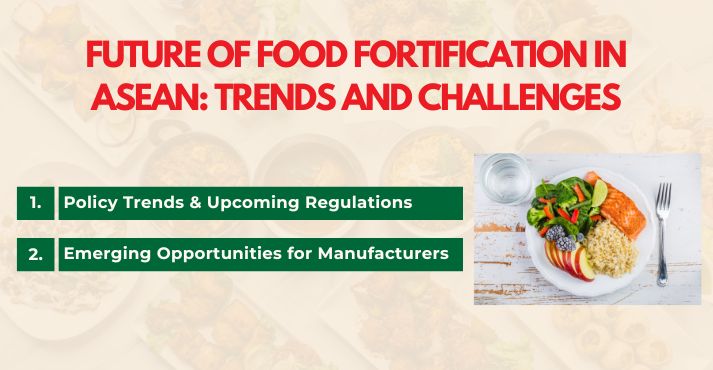
Food fortification will continue to support better health across ASEAN. Governments and producers are already looking at new ways to improve and expand these efforts.
1. Policy Trends and Upcoming Regulations
Several ASEAN countries are planning new regulations to reduce micronutrient deficiencies in the region. This could mean adding more vitamins and minerals to rice, oil, and other common foods.
There is also interest in making current programs stricter and improving checks to ensure all producers follow the rules.
Global health groups like the WHO and UNICEF encourage these updates, which help local governments build stronger food policies for the future.
2. Emerging Opportunities for Manufacturers
Manufacturers now have new opportunities to reach a wider audience. Many are looking at vegan and vegetarian markets by using plant-based fortification, such as adding iron and B12 to meat alternatives and dairy-free products.
There is also more focus on foodservice and ready-to-eat meals. Adding fortified options to restaurant menus and packaged foods helps reach busy consumers and families looking for healthier choices.
By staying active in these areas, producers can support public health, reach new markets, and help improve diets across the region.
Conclusion
Food fortification is an important way to improve public health in ASEAN. It helps fight nutrient deficiencies and supports healthier communities. At the same time, it creates opportunities for businesses to grow and introduce new products to the market.
A strong balance between good rules, smart product development, and clear information for consumers is needed to make this work well.
Manufacturers can take the lead by adding key vitamins and minerals and following local standards. By doing this, they help build trust and support better health for everyone in the region.