In recent years, there has been a noticeable increase in the popularity of low and no alcohol beverages. This trend is driven by various factors, including changing consumer preferences and a growing focus on health and wellness. The no/low alcohol movement originated in Western countries and it is picking up in Asia-Pacific.
Growth of no/low- alcohol products
Global sales for no/low-alcohol products crossed $11 billion in 2022, and the estimated value for 2024 is approximately USD 25.7 billion, nearly doubling in size. No and low-alcohol products including beer/cider, wine, spirits and other ready-to-drink beverages grew by more than 7% in volume across 10 key global markets in 2022, according to the IWSR No- And Low Alcohol Strategic Study. The study also found that no-alcohol products were spearheading the growth in this category, with no-alcohol volumes growing 9% in 2022, with improved taste and production techniques behind the growth. No-alcohol is mostly replacing non-alcoholic drinks (such as soft drinks and water) in the same occasion, presenting an opportunity for producers.
In Asia-Pacific, non-alcoholic drinks market volume indicate strong growth since 2022. While the volume sales were 481 million liters in 2022 with a projected CAGR of 5% to 621 million liters by 2027, the current data for 2025 estimate the market volume at approximately 570 million liters, aligning with the earlier projection trajectory.according to Euromonitor.
Driven by diversifying tastes and conscious consumerism
The growing demand for such beverages is contributed by diversifying tastes in Asia, as economic growth and rising incomes spur consumers to try new products beyond wine, cocktails and other beverages.
The no/low alcohol trend is also closely linked to the broader wellness movement. As more individuals prioritize their health and well-being, they are looking for options that align with their lifestyle choices. Low and no alcohol beverages provide a way to enjoy refreshing and sophisticated drinks without the alcohol content, offering a healthier alternative. Health was cited to be the major factor in reducing alcohol consumption among Asia-Pacific consumers, according to the Euromonitor’s Voice of the Consumer: Health and Nutrition Survey.
Focus on complex flavours and functional benefits
WGSN, a trend forecasting company, foresees a premiumisation of this category, with the emergence of “sophisticated options offering complex flavours, mature drinking experiences, but without alcohol and without imitating alcohol”.
IWSR adds that beverage manufacturers are focusing on innovation in packaging, functional benefits and flavour in new product development. Examples include the use of botanicals to create more intense flavours, added functional benefits such as nootropics, vitamins and adaptogens, as well as a shift of product messaging from the absence of alcohol to functional beverages with health benefits.
In conclusion, trends in low to no alcohol beverages reflect a growing shift in consumer preferences towards healthier and more mindful choices. With beverage producers focusing on new flavours, functional benefits and innovative packaging, this sector is an exciting space to watch.
Looking to expand your business into the Asian market?
FHA – Food and Beverage returns next year on 21-24 April 2026 at Singapore Expo. With a line-up of leading global suppliers, industry professionals can anticipate the most extensive showcase of trending F&B and hospitality products and solutions, cutting-edge technologies for food & drinks manufacturing, and more at the mega event. Contact us to get involved.
What Are Low/No Alcohol Beverages?
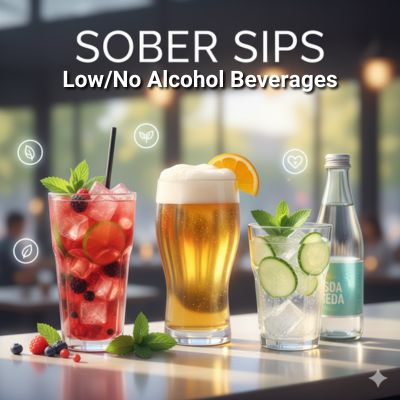
Low and no alcohol beverages are drinks specially crafted to deliver the taste, aroma, and experience of alcoholic beverages without the intoxication.
These beverages typically contain:
- No alcohol (0.0%), or
- Low alcohol (up to 1.2%), depending on the product category.
Common examples include alcohol-free beer, low-alcohol wine, zero-proof cocktails, botanical spirits, mocktails, and ready-to-drink non-alcoholic beverages.
The category has evolved from basic soft drinks to premium, complex and flavour-forward alternatives, appealing to consumers who want the social experience of drinking—minus the alcohol’s effects.
Why Are Low/No Alcohol Drinks Becoming Popular?
The shift toward low and no alcohol beverages is driven by the global growth of mindful drinking, where consumers consciously reduce alcohol intake without compromising on flavour or social enjoyment.
Key reasons behind the rising interest include:
- Health and wellness focus – people want healthier beverage options.
- Lifestyle changes – more consumers prefer hangover-free social events.
- Fitness culture – alcohol disrupts sleep and recovery; low/no alcohol doesn’t.
- Gen Z and Millennials influence – younger generations drink significantly less.
- Workplace, family and cultural preferences – many prefer moderation or abstinence.
This cultural shift is helping no-alcohol beverages go mainstream—from restaurants and bars to home consumption and online retail.
Health & Wellness Benefits of Low/No Alcohol Beverages
Low- and no-alcohol beverages are widely adopted due to their multiple health-driven advantages.
Fewer Calories
Most no-alcohol beverages contain significantly fewer calories than traditional alcoholic drinks, making them ideal for people on weight-control diets.
Better Hydration
Alcohol dehydrates the body. Non-alcoholic drinks preserve hydration levels and support better overall wellness.
Improved Sleep
Unlike alcohol, which disrupts REM cycles, low/no alcohol beverages have no negative impact on sleep quality.
Safe for All Consumption Occasions
These drinks can be consumed before work, at social events, before driving, or during daytime activities without any restrictions.
No Hangover
One of the biggest benefits is that consumers enjoy the taste and social aspect without the next-day fatigue or nausea.
These wellness benefits make the category particularly attractive to fitness-focused and health-conscious consumers in Asia-Pacific.
FAQ’s for Low/No Alcohol Beverages
What are considered low and no alcohol beverages?
Low and no alcohol beverages include drinks with 0.0% alcohol or up to 1.2% alcohol, such as alcohol-free beer, low-alcohol wine, botanical spirits, mocktails, and ready-to-drink non-alcoholic cocktails. They offer a similar flavour experience to alcoholic beverages without intoxication.
Why are low and no alcohol drinks becoming popular?
These beverages are trending due to increasing health awareness, the rise of the mindful drinking movement, demand for hangover-free options, and a growing preference for functional and wellness-focused drinks among Gen Z and Millennials.
Are non-alcoholic drinks healthier than regular alcoholic beverages?
Yes. Low/no alcohol drinks typically contain fewer calories, help maintain better hydration, improve sleep quality, and eliminate the risk of hangovers or alcohol-related side effects, making them a healthier beverage choice.
What trends are shaping the low/no alcohol beverage market in 2025?
Key trends include premium botanical spirits, functional ingredients like adaptogens and vitamins, ready-to-drink (RTD) mocktails, clean-label formulations, and sustainable packaging. These innovations are expanding the appeal of non-alcoholic beverages across global markets.
Which countries in the Asia-Pacific are driving the growth of alcohol-free beverages?
Major APAC growth markets include Singapore, Japan, South Korea, Australia, and India, where rising incomes, wellness culture, and younger demographics are increasing demand for premium low and no-alcohol drinks.
Conclusion
The rise of low and no alcohol beverages reflects a major shift in global and Asia-Pacific consumer behaviour. As more people prioritise health, wellness, and mindful drinking, the demand for alcohol-free and low-alcohol options continues to grow across retail, hospitality, and home consumption. With rapid innovation in botanical flavours, functional ingredients, and premium product development, this category is evolving beyond simple substitutes to become a lifestyle choice of its own. As brands expand their presence in the region and consumers seek healthier, flavour-rich alternatives, the low/no alcohol beverage market is set to remain one of the most dynamic and fast-growing segments in the beverage industry.