The hospitality sector in APAC is seeing significant modernization in how hotels, restaurants, and cafés manage daily operations and customer interactions. Many businesses are adopting systems that simplify processes and improve overall performance.
A hotel tech stack refers to the combination of software and systems, including property management systems, point-of-sale platforms, and customer relationship management software, that support these operations.
Choosing the right stack is essential for delivering excellent guest experiences. It also helps boost efficiency and prepares businesses for future growth.
This blog will explore what a hospitality tech stack is, its main components, integration methods, selection criteria, comparisons of common solutions, best practices, and frequently asked questions.
What is a Hospitality Tech Stack?
A hospitality technology stack refers to the combination of software and systems used to manage daily operations in hotels, restaurants, and cafés.
This integrated suite of solutions supports various functions such as reservations, check-ins, payments, guest communication, and reporting. By adopting a cohesive tech stack, businesses can streamline operations and reduce errors associated with manual processes.
According to NetSuite, AI adoption and investment in the hospitality industry are expected to increase by 60% per year over the decade from 2023 to 2033.
Using hospitality tech effectively allows different systems to communicate seamlessly, ensuring staff have access to accurate information quickly. This integration enhances service delivery and supports smoother workflows across departments.
Additionally, the hotel software stack provides centralized insights that enable management to make informed operational and strategic decisions.
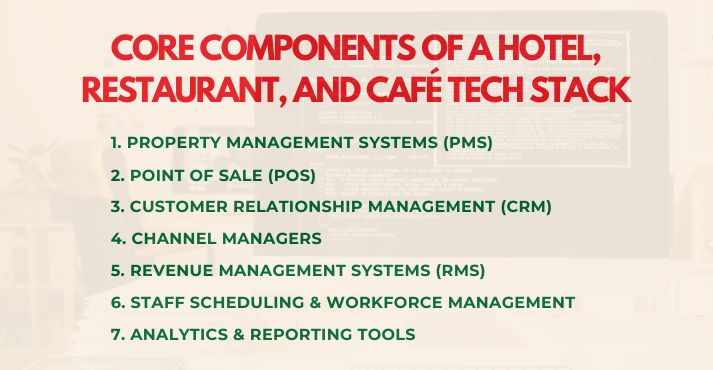
Core Components of a Hotel, Restaurant, and Café Tech Stack
A well-designed tech stack brings together multiple systems to improve efficiency and customer satisfaction. Technology is increasingly seen as an advantage in the hospitality sector.
In fact, 76% of restaurant operators consider it essential for staying competitive, highlighting the importance of choosing the right systems for hotels, restaurants, and cafés.
1. Property Management Systems (PMS)
For hotels and resorts, a property management system is essential for handling reservations, check-ins, and room inventory.
PMS streamlines front-desk operations, maintains accurate records, and ensures smooth coordination between departments. It forms the backbone of technology systems in hotels, supporting both staff and guests.
2. Point of Sale (POS)
POS systems are critical for cafés and restaurants, managing billing, orders, and inventory. Modern POS solutions often integrate with food ordering systems, allowing seamless order tracking and reducing errors in service. They also provide insights into sales trends and inventory management.
3. Customer Relationship Management (CRM)
CRM systems centralize guest data, allowing personalized experiences and targeted communication. By maintaining detailed records of preferences, booking history, and feedback, businesses can enhance loyalty programs and improve overall guest satisfaction.
4. Channel Managers
Channel managers connect online travel agencies, direct bookings, and distribution platforms to ensure consistent availability and pricing.
They reduce the risk of overbooking and simplify the management of multiple booking channels, helping hotels maximize occupancy and revenue.
5. Revenue Management Systems (RMS)
RMS tools optimize pricing strategies based on demand, occupancy, and market trends. By analyzing historical data and forecasting demand, these systems help hotels adjust rates dynamically and improve profitability.
6. Staff Scheduling and Workforce Management
These systems help create employee shifts, allocate tasks, and minimize scheduling conflicts. Proper workforce management ensures that operations run smoothly and that staff resources are used efficiently.
7. Analytics and Reporting Tools
Analytics and reporting solutions provide data-driven insights into operations, sales, and guest behavior. These systems allow managers to make informed decisions, identify trends, and continuously improve service quality and operational performance.
Integration: The Key to an Effective Tech Stack
Integration between systems such as POS, PMS, CRM, and other platforms is essential for smooth and efficient hospitality operations.
When systems are connected, data flows seamlessly across departments, allowing staff to access accurate information without delays or errors.
Many businesses face challenges, such as data silos, manual transfers, and duplicate entries, which can slow operations and create inconsistencies in reporting.
Cloud-based systems can help address these issues by simplifying updates, supporting scalability, and reducing technical barriers.
In fact, in 2024, cloud-based models accounted for 61.92% of the hotel and hospitality management software market and are projected to grow at a 9.17% CAGR through 2030.
Seamless integration provides real-time updates, accurate reporting, and better decision-making. It supports digital transformation by helping hotels, restaurants, and cafés improve internal processes and deliver a more consistent experience for guests.
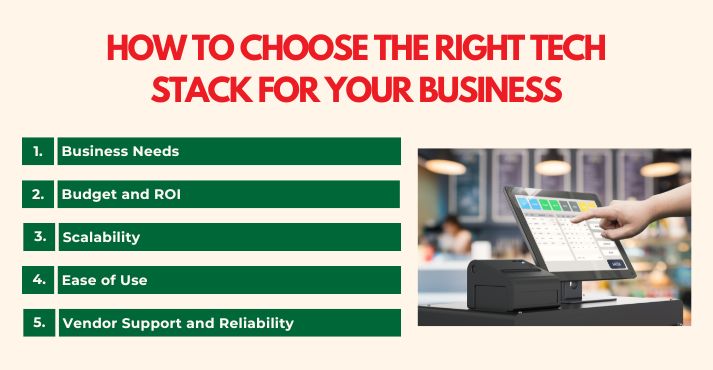
How to Choose the Right Tech Stack for Your Business
Selecting the right tech stack is crucial for hotels, restaurants, and cafes to enhance operations and improve guest experiences.
With so many options available, it is important to evaluate solutions based on the specific needs of your business and ensure they integrate well with existing systems.
Attending a hospitality technology trade show can provide valuable insights into the latest solutions, helping businesses make informed decisions.
1. Business Needs
Identify the most important systems for your type of business. Hotels benefit from a strong PMS, restaurants require a reliable POS, and cafés may prioritize a CRM system focused on loyalty programs and customer engagement.
Understanding these priorities ensures that your investment targets the areas that will have the greatest impact.
2. Budget and ROI
Consider both upfront costs and long-term savings. A digital hotel tech stack that incorporates automation can reduce manual work, enhance efficiency, and deliver a solid return on investment.
Evaluate each solution by weighing its price against the operational benefits and potential revenue growth it provides.
3. Scalability
Choose systems that can grow with your business. Whether expanding to multiple locations or adding new services, scalable solutions help you avoid costly replacements and maintain seamless operations as your business evolves.
4. Ease of Use
User-friendly systems reduce the time needed for staff training and minimize errors. Ensuring that your team can quickly adopt new solutions is essential for maintaining smooth daily operations and providing a high-quality customer experience.
5. Vendor Support and Reliability
Ongoing support and regular updates are essential for maintaining efficient system operation. Reliable vendors help troubleshoot issues, implement updates, and provide guidance on best practices, ensuring your tech stack remains effective over time.
A structured approach makes the selection process manageable: assess your needs, shortlist suitable solutions, test integrations between systems, and then implement the chosen stack.
By following these steps, businesses can ensure their tech stack delivers maximum operational efficiency, improves customer satisfaction, and supports future growth.
Hotels vs. Restaurants vs. Cafés: How Tech Stacks Differ
Hotels, restaurants, and cafés share similar types of systems, but the emphasis on each varies depending on operational needs. Each segment prioritizes technology differently to support its daily activities and enhance customer experiences.
Hotels
Hotels rely heavily on property management systems (PMS) for reservations, check-ins, and room inventory. Channel managers connect with online travel agencies and booking platforms.
Customer relationship management systems track guest preferences, support personalized service, and maintain customer loyalty programs.
Restaurants
Restaurants focus on POS systems to manage billing, orders, and inventory. Reservation and table management systems help handle peak hours efficiently. CRM features may track frequent diners and preferences, but operational efficiency and order accuracy are the primary concerns.
Cafés
Cafés generally use simpler POS systems combined with customer loyalty programs to encourage repeat visits. Basic CRM systems may track customer preferences, but speed of service and ease of use are the top priorities.
Quick Comparison
| Segment | Core Systems | Additional Focus |
| Hotels | PMS, channel manager, CRM | Guest data, loyalty, booking integration |
| Restaurants | POS, inventory, reservation management | Order accuracy, kitchen efficiency |
| Cafés | POS, loyalty programs | Quick service, repeat customers |
Although the types of systems overlap across the hospitality sector, hotels emphasize guest management and bookings, restaurants prioritize order and inventory handling, and cafés focus on fast service and customer retention.
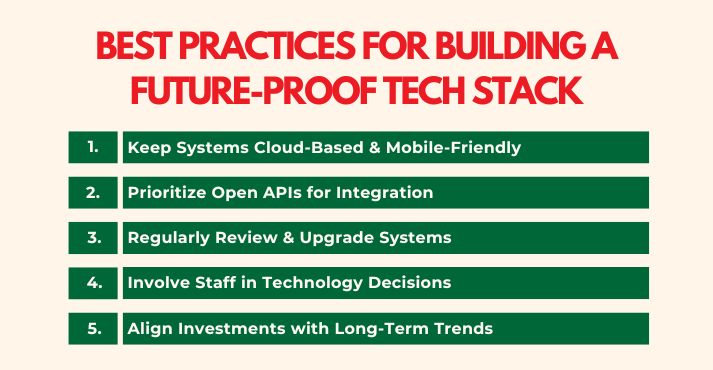
Best Practices for Building a Future-Proof Tech Stack
Creating a tech stack that can adapt to changing guest expectations is essential for long-term success in the hotel industry. Focusing on flexibility, integration, and staff usability ensures that technology enhances both operations and the guest experience.
1. Keep Systems Cloud-Based & Mobile-Friendly
Using cloud-based and mobile-friendly systems allows staff to access important information from anywhere and ensures guests can interact with services on the go. This flexibility supports smooth daily operations and helps hotels respond quickly to changing demands.
2. Prioritize Open APIs for Integration
Choosing solutions with open APIs makes it easier to connect PMS, POS, CRM, and other systems. Seamless integration reduces manual work, prevents errors, and ensures data flows accurately across departments, enhancing operational efficiency.
3. Regularly Review and Upgrade Systems
Technology and guest expectations change rapidly. Regularly reviewing and upgrading systems ensures that hotels stay up-to-date with trends and maintain high standards of service. Updating systems also prevents compatibility issues and helps maximize the return on investment.
4. Involve Staff in Technology Decisions
Staff are the primary users of most systems, so their input is essential. Involving team members in selecting and testing systems ensures usability, improves adoption rates, and reduces the learning curve. Staff feedback also highlights practical challenges that management might overlook.
5. Align Investments with Long-Term Trends
Investing in AI-driven personalization, mobile ordering, and contactless tech solutions helps future-proof operations.
According to a 2024 study, 71% of guests are more likely to choose hotels that offer self-service technology, including contactless check-in and digital room keys. This shows the increasing importance of technology in the hotel industry.
Common Mistakes to Avoid
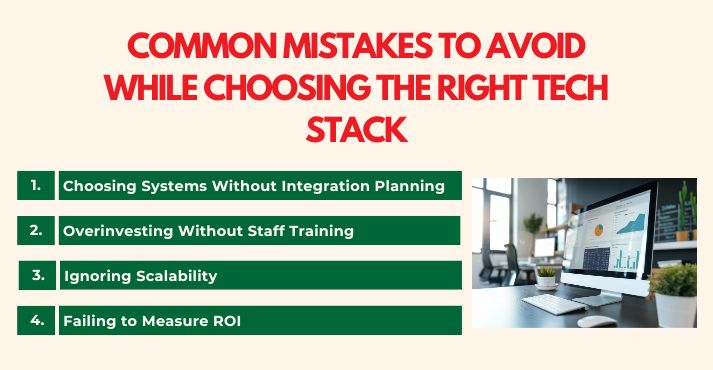
Selecting the right tech stack requires careful planning, but businesses often make errors that reduce the effectiveness of their investments. Recognizing these common pitfalls can help hotels, restaurants, and cafés implement technology more successfully.
1. Choosing Systems Without Integration Planning
Purchasing systems in isolation without considering how they will connect can lead to data silos and manual work. Ensuring that PMS, POS, CRM, and other platforms are compatible from the start avoids inefficiencies and ensures accurate data flow.
2. Overinvesting Without Staff Training
Even the most advanced systems are ineffective if staff are not properly trained to use them. Overinvesting in technology without allocating time and resources for training can lead to low adoption rates and operational challenges.
3. Ignoring Scalability
Selecting software that cannot grow with the business can create costly disruptions when expansion occurs. Scalable solutions allow hotels, restaurants, and cafés to add features, locations, or services without replacing core systems.
4. Failing to Measure ROI
Investments in technology should be tracked using KPIs, such as guest satisfaction, average revenue per guest, or reductions in operational costs.
Without measuring these outcomes, businesses cannot determine whether their tech stack is delivering value or identify areas for improvement.
FAQs
What is a hospitality tech stack?
A hospitality tech stack is the combination of software and systems used to manage daily operations in hotels, restaurants, and cafés. It includes solutions for reservations, payments, customer management, and reporting, helping businesses operate efficiently.
What systems are essential for hotels?
Hotels typically need a property management system (PMS), a channel manager, and CRM software. These systems streamline bookings, manage guest information, and ensure smooth coordination across departments.
How can restaurants integrate POS with inventory management?
Restaurants can connect POS software to inventory management systems so that sales automatically update stock levels. This reduces manual entry, prevents shortages, and helps managers make data-driven purchasing decisions.
Should cafés invest in CRM software?
Cafés can benefit from lightweight CRM systems if they want to track customer preferences, manage loyalty programs, and send personalized offers. However, small cafés may prioritize speed and ease of service over full-scale CRM solutions.
Cloud-based vs on-premise: which is better?
Cloud-based systems offer easier updates, remote access, and scalability, while on-premise solutions provide more control over data and infrastructure. The choice depends on budget, technical resources, and operational needs.
Conclusion
A well-integrated tech stack is essential for enhancing service quality, streamlining operations, and supporting business growth.
Choosing the right combination of systems allows hotels, restaurants, and cafés to manage reservations, orders, inventory, and customer relationships efficiently.
Hospitality segments have different priorities: hotels focus on PMS, channel management, and CRM, restaurants prioritize POS and inventory management, and cafés often emphasize quick service and loyalty programs.
Regularly reviewing and updating systems, testing integrations, and involving staff in decisions keeps the tech stack relevant and effective.
By aligning technology with long-term goals, businesses can maintain smooth operations, improve efficiency, and deliver consistent, high-quality experiences to guests.