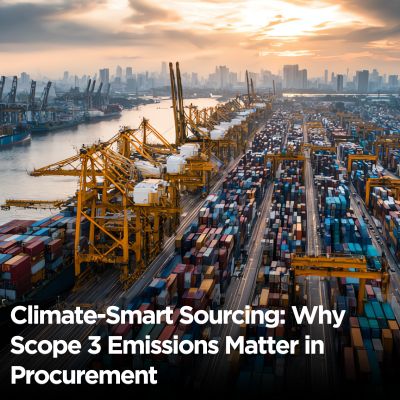
Climate change requires immediate action. Supply chains are responsible for most global emissions, as every stage of production, transportation, and delivery adds to a company’s environmental impact.
Businesses are now expected to take responsibility for emissions across their entire value chain, not just within their direct operations.
A large portion of these emissions comes from what are known as Scope 3 emissions. These are the indirect emissions that occur outside a company’s facilities, primarily from suppliers, logistics partners, and the use or disposal of products.
According to Deloitte’s 2024 Sustainability Report, Scope 3 emissions may account for up to 95% of a company’s total emissions in some cases.
For procurement teams, recognizing why Scope 3 emissions matter is essential. Addressing them helps meet compliance requirements, support ESG commitments, and promote more responsible sourcing practices across the supply chain.
What Are Scope 3 Emissions?
To understand Scope 3 emissions, it is important to examine how greenhouse gas emissions are categorized. Scope 1 emissions are direct emissions that originate from sources owned or controlled by a company, such as fuel used in delivery vehicles or on-site kitchen equipment.
Scope 2 emissions are indirect emissions from purchased energy, such as electricity or steam, used in daily operations.
Scope 3 emissions include all other indirect emissions that occur across a company’s value chain, both upstream and downstream.
In the food and beverage (F&B) sector, this covers purchased goods and services, transportation of ingredients and packaged products, supplier operations, waste management, and the end-of-life treatment of materials.
These categories are especially relevant to procurement, as they are tied to supplier selection, production methods, and logistics decisions.
Scope 3 emissions are often the most challenging to measure because they rely on data from suppliers and partners. However, they remain the most significant to address since they represent the largest share of emissions across the value chain.
Why Procurement is Key to Reducing Scope 3 Emissions
Procurement is one of the most effective ways to manage and reduce Scope 3 emissions, as most indirect emissions come from suppliers and purchased goods.
Every sourcing decision, from material selection to supplier contracts, directly influences a company’s environmental footprint.
According to a report by CDP, Scope 3 supply chain emissions are on average 26 times greater than a company’s direct operational emissions. This shows how procurement decisions can significantly influence overall climate performance.
By embedding sustainability into purchasing practices, procurement teams can create real progress across material selection, supplier compliance, transportation, warehousing, and product end-of-life management.
Partnering with suppliers that use cleaner production methods, minimize waste, or rely on renewable resources can help lower emissions across the supply chain.
Integrating procurement and carbon accounting allows organizations to track emissions data and make informed decisions that support long-term reduction goals.
Challenges in Addressing Scope 3 Emissions
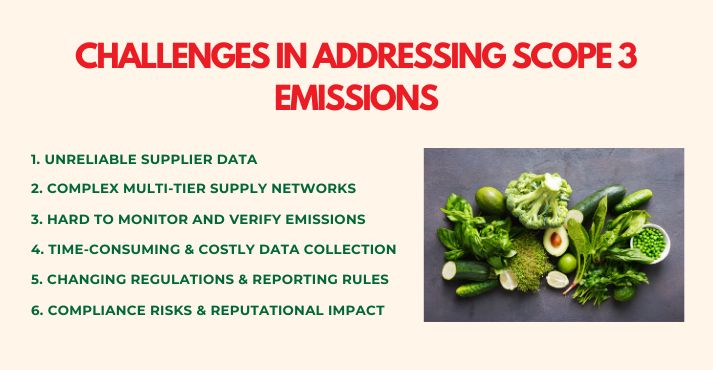
Tackling Scope 3 emissions remains one of the most demanding tasks for businesses that involve multiple suppliers, distributors, and partners.
One of the main challenges is the lack of reliable supplier data, which makes it difficult to calculate and verify the full supply chain carbon footprint. According to a 2024 report, over 80% of companies say that quantifying their Scope 3 emissions is difficult.
Global supply networks often include several tiers of suppliers, each contributing to overall emissions in ways that are difficult to monitor. Gathering data across procurement, distribution, logistics, and production can also be expensive and time-intensive.
On top of that, changing regulations and reporting requirements add further pressure on organizations to maintain transparency.
Ignoring Scope 3 emissions can lead to compliance risks, reputational setbacks, and lower ESG scores, making active management a necessity for maintaining long-term credibility and stability.
Benefits of Managing Scope 3 Through Procurement
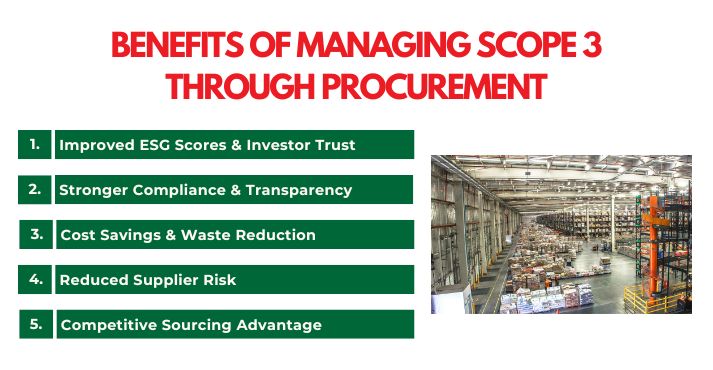
Addressing Scope 3 emissions through procurement is more than a compliance requirement. It helps businesses create long-term value, build stronger supplier relationships, and earn the trust of investors and customers who care about sustainability.
1. Improved ESG Scores and Investor Trust
Managing emissions across the supply chain supports ESG goals and attracts responsible investors. Procurement teams contribute by selecting suppliers that follow sustainable practices and by maintaining transparent reporting on environmental progress.
2. Stronger Compliance and Transparency
As global disclosure standards, such as the GRI and CSRD, continue to expand, accurate data collection has become increasingly essential.
Procurement-led tracking helps companies stay compliant with reporting rules and avoid risks that come from incomplete or inaccurate information.
3. Cost Savings and Waste Reduction
Sustainable procurement decisions often bring direct financial benefits. Reducing excess packaging, improving logistics, and practicing smart waste management cut both costs and emissions.
According to McKinsey, companies can achieve an average reduction of 40 to 50% in logistics emissions using solutions available today, and these improvements often result in cost savings as well.
4. Reduced Supplier Risk
Working with suppliers that use cleaner materials and efficient production methods helps reduce risks related to regulation, market volatility, and brand reputation. It also ensures long-term stability and consistency in the supply chain.
5. Competitive Sourcing Advantage
Companies that invest in sustainable sourcing strategies are viewed as reliable and forward-looking partners. As more buyers prioritize sustainability in procurement, this approach helps businesses gain stronger customer loyalty and better long-term growth opportunities.
Climate-Smart Sourcing Strategies for Scope 3 Emissions

Procurement teams influence how organizations manage Scope 3 emissions through the choices they make each day.
Climate-smart sourcing involves selecting materials, partners, and processes that minimize environmental impact while promoting responsible practices throughout the supply chain.
1. Supplier Engagement
The first step is to work closely with suppliers. Procurement teams can request that partners measure their emissions, share progress updates, and participate in joint reduction plans. Open communication helps both sides stay committed to long-term sustainability goals.
2. Sustainable Sourcing
Choosing low-carbon materials and eco-certified products directly cuts supply chain emissions. For instance, a food producer that switches to recycled packaging materials can lower its carbon output while maintaining quality.
This idea is often highlighted at sustainable food and hospitality trade shows, where responsible sourcing is seen as essential for the industry’s future.
3. Contractual Clauses
Including sustainability requirements in procurement contracts turns environmental responsibility into a clear business standard.
Contracts can outline expectations on energy use, raw materials, packaging, and waste management, ensuring every supplier meets the company’s climate objectives.
4. Data and Transparency
Requesting emissions data from suppliers builds trust and gives companies a better view of their total carbon footprint. Reliable reporting helps identify areas of the supply chain that need improvement and where partnerships can lead to meaningful reductions in emissions.
5. Supplier Incentives
Encouraging suppliers through recognition or long-term partnerships can inspire steady progress in carbon reduction. When suppliers see real benefits, like preferred status or joint project opportunities, they are more likely to invest in cleaner processes.
6. Circular Procurement
Circular sourcing practices, such as reuse and recycling, help limit waste and conserve resources. This not only reduces emissions but also makes procurement more efficient and cost-effective in the long run.
Tools and Frameworks for Measuring Scope 3 Emissions
Accurately measuring Scope 3 emissions depends on structured methods and transparent reporting systems.
The Greenhouse Gas (GHG) Protocol remains the most widely used framework for identifying and categorizing emissions across the value chain. It helps organizations maintain consistency and reliability in their emission disclosures.
The Science-Based Targets initiative (SBTi) guides setting credible emission-reduction goals that align with global climate standards. With this framework, companies can set realistic targets, track progress, and demonstrate accountability to stakeholders.
Frameworks such as CDP, the Corporate Sustainability Reporting Directive (CSRD), and the US SEC climate disclosure rules establish how businesses should report emission data and climate-related risks.
These guidelines ensure transparency and comparability across sectors, building investor and consumer trust.
Having standardized and auditable reporting practices allows procurement and sustainability teams to identify emission hotspots, strengthen supplier collaboration, and maintain compliance with international disclosure requirements.
KPIs to Track Scope 3 Procurement Success
To make Scope 3 reduction efforts effective, procurement teams must monitor performance indicators that measure progress and enhance accountability across the supply chain.
Common metrics include the percentage of suppliers reporting emissions data, reduction in the carbon intensity of purchased goods, and supplier compliance rates with sustainability requirements.
Tracking Scope 3 emissions per product category and progress toward net-zero or Science-Based Targets also helps organizations maintain focus and transparency.
However, many companies are still behind. According to an IBM survey, only 38% of businesses currently track their Scope 3 emissions, showing how much room there is for improvement.
By using procurement data alongside KPIs and monitoring indirect emissions in supply chains, organizations can create closed-loop systems that continuously improve sustainability performance over time.
Future of Scope 3 Emissions in Procurement
The future of sustainable procurement depends on how effectively organizations use technology and collaboration to manage Scope 3 emissions.
Artificial intelligence and big data are allowing businesses to monitor and predict supplier emissions with greater accuracy, turning environmental insights into practical sourcing decisions.
Blockchain is becoming increasingly useful for improving traceability. It helps companies verify supplier data, track product origins, and maintain transparency across global supply networks.
Meanwhile, emissions disclosure regulations continue to expand worldwide, encouraging companies to follow consistent reporting standards.
The circular economy is also influencing sourcing priorities. Low-carbon materials, waste reduction, and circular procurement are steadily becoming standard practices in supply management.
Procurement teams that integrate these principles can build climate resilience, reduce inefficiencies, and support long-term sustainability goals.
FAQs
What percentage of emissions are Scope 3?
Scope 3 emissions often represent the largest share of a company’s carbon footprint, accounting for roughly 70 to 95% of total emissions, depending on the industry. They include all indirect emissions that occur across a company’s value chain.
How do companies measure supply chain carbon emissions?
Businesses typically collect emissions data from suppliers, logistics partners, and throughout the product life cycle. They use recognized frameworks, such as the Greenhouse Gas (GHG) Protocol, to categorize and calculate emissions from purchased goods, transportation, and waste.
What tools can track Scope 3 emissions?
Companies use carbon accounting software, supplier reporting systems, and digital dashboards to gather and analyze data. These systems help visualize emissions patterns and support better decision-making in procurement.
What role does procurement play in Scope 3 reduction?
Procurement teams can influence emissions through their selection of suppliers, sourcing of materials, and contract requirements. Choosing partners that use renewable energy or low-carbon materials can significantly cut Scope 3 emissions.
How do Scope 3 emissions affect ESG scores?
Unmanaged Scope 3 emissions can lower ESG performance by signaling poor supply chain transparency and weak sustainability governance. Reducing them strengthens credibility with investors, customers, and regulators.
What are the best practices for supplier climate engagement?
Effective strategies include setting shared emission targets, offering training or incentives for greener practices, and requiring regular reporting on sustainability progress. Building long-term collaboration helps suppliers stay aligned with corporate climate goals.
Conclusion
Scope 3 emissions make up the largest share of corporate carbon output, and procurement has the greatest influence over how they are managed.
By addressing these indirect emissions, organizations can strengthen compliance efforts, improve ESG performance, reduce operational risks, and build credibility with stakeholders.
Procurement leaders now have the opportunity to turn sourcing into a force for climate progress. Auditing current practices, engaging suppliers, and investing in climate-smart sourcing can help create supply chains that are both resilient and responsible.
Taking these steps today will not only reduce emissions but also secure long-term business value for the future.