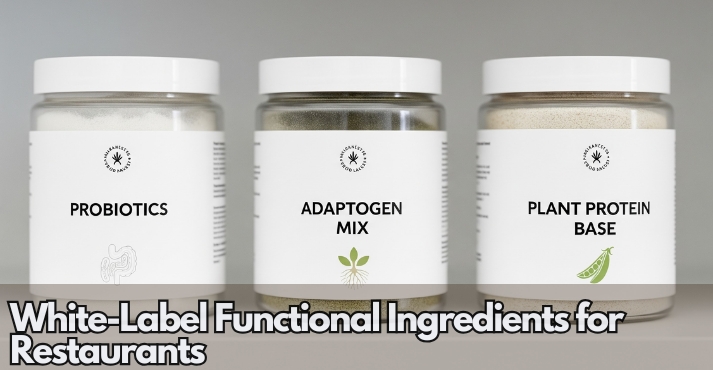
The restaurant industry is witnessing a dramatic shift toward health-conscious dining, with customers increasingly seeking meals that offer both flavor and functional benefits. This is where white-label functional ingredients for restaurants become a game-changer.
These are pre-formulated, ready-to-use ingredient blends (like probiotic powders, adaptogen mixes, or plant protein bases) that restaurants can brand as their own.
Instead of spending months in research and development, chefs and operators can instantly enhance their menus with ingredients that support gut health, boost energy, or improve focus.
This approach allows restaurants to quickly respond to the booming demand for nutrient-dense options and clean-label meals, creating a powerful point of differentiation in a competitive market.
What Are White-Label Functional Ingredients?
White-label functional ingredients are specialized, pre-developed ingredient blends that manufacturers produce for restaurants to purchase and brand under their own name.
Think of it like this: a supplier creates a scientifically-backed “Calm Blend” with ashwagandha and L-theanine, and your café can buy it in bulk, put it in your packaging, and feature it on your menu as “Your Café’s Chill Powder.”
This is different from buying basic bulk ingredients like flour or sugar, as these are turnkey ingredient formulations designed for specific health benefits.
So, what makes an ingredient “functional”?
Unlike standard ingredients that provide basic nutrition and flavor, functional ingredients are chosen for their additional health-promoting properties. They target specific bodily functions, such as:
- Gut Health: Probiotics and prebiotic fibers.
- Stress Support: Adaptogens like reishi mushroom and rhodiola.
- Energy & Focus: Nootropics such as lion’s mane mushroom.
- Protein Enrichment: Collagen peptides or plant-based proteins.
For restaurants, this means offering a latte that reduces stress or a smoothie bowl that supports immunity, all without the complexity of creating these blends from scratch.
Why Restaurants Are Adopting White-Label Functional Ingredients
The move toward white-label solutions is driven by a powerful combination of consumer demand and operational practicality.
Today’s diners aren’t just eating for pleasure; they’re eating with purpose, actively seeking out meals that contribute to their well-being.
This trend is particularly strong among millennials and Gen Z, who see food as a form of preventative healthcare.
From a business perspective, adopting these restaurant-ready functional blends is a strategic decision for efficiency.
Developing a stable, effective, and good-tasting functional blend in-house requires significant expertise, time, and financial investment.
By utilizing white-label foodservice products, restaurants can bypass this entire R&D phase.
This is especially valuable for ghost kitchens and fast-casual chains that need to scale new menu concepts quickly and maintain perfect consistency across multiple locations, ensuring the “Focus Brew” tastes identical whether a customer orders it in Bangkok or Singapore.
Key Benefits of Using White-Label Functional Ingredients
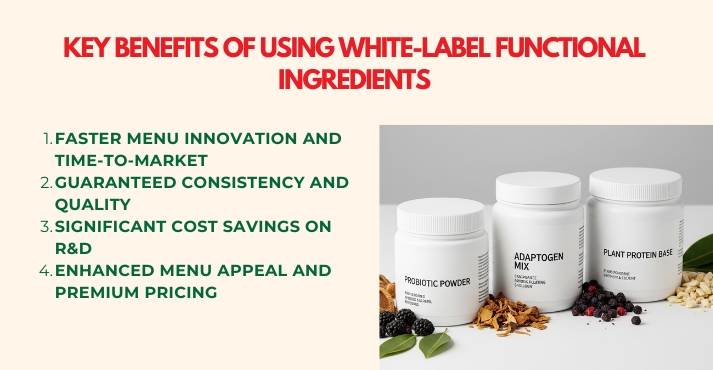
Integrating these ingredients into your operation delivers advantages that impact both the front and back of the house.
Faster Menu Innovation and Time-to-Market
The most immediate benefit is speed. Instead of spending 6-12 months sourcing, testing, and formulating, you can select a proven blend from a supplier and launch a new functional menu item in a matter of weeks.
This agility allows you to capitalize on emerging trends, like the sudden popularity of moringa or ashwagandha, before your competitors do.
Guaranteed Consistency and Quality
Every batch of white-label functional ingredients is produced to the same exacting standard. This eliminates the variation that can occur when chefs manually mix blends, ensuring that every customer receives a product with the same potency, flavor, and texture.
This reliability is crucial for building restaurant brand awareness and customer trust, as patrons know exactly what to expect with every visit.
Significant Cost Savings on R&D
Establishing a food science lab and hiring specialists is expensive for most restaurants. White-labeling transfers these R&D costs to the supplier, who spreads them across multiple clients.
You pay for the final product, not the years of development behind it, making advanced functional nutrition accessible even to independent restaurants and small chains.
Enhanced Menu Appeal and Premium Pricing
Menus featuring functional benefits command attention and justify higher price points. A standard latte might sell for $5, but a “Focus Latte” with lion’s mane and cordyceps can easily sell for $7 or $8.
Customers are willing to pay a premium for meals and drinks that deliver wellness benefits, directly boosting your average check size.
Most Popular Types of Functional Ingredients for Restaurants
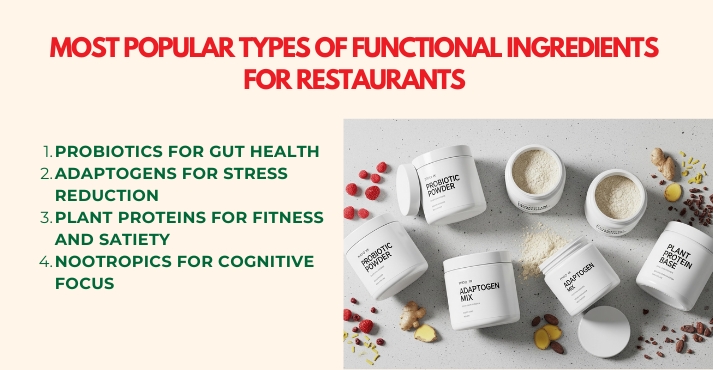
Knowing which ingredients are trending can help you make informed decisions for your menu. Here are the categories seeing the most growth in foodservice.
Probiotics for Gut Health
Moving beyond yogurt and into new formats, probiotic powders are being incorporated into cold-pressed juices, salad dressings, and even chocolate.
They support digestive health, a primary concern for many consumers, and align with the growing understanding of the gut-brain connection.
Adaptogens for Stress Reduction
Ingredients like ashwagandha, reishi, and holy basil help the body manage stress.
They are perfectly suited for warm beverages like golden milk lattes, herbal teas, and even savory broths, offering a calming experience that resonates in today’s high-stress world.
Plant Proteins for Fitness and Satiety
Pea, rice, and pumpkin seed proteins are in high demand for their clean-label appeal.
They are being used to boost the nutritional profile of smoothies, baked goods, and savory items like veggie burgers, catering to the fitness-conscious and those seeking more satisfying plant-based meals.
Nootropics for Cognitive Focus
“Nootropics” like lion’s mane mushroom and ginkgo biloba are appearing in coffee alternatives, teas, and elixirs marketed to professionals and students.
These ingredients are known for their ability to enhance mental clarity and focus without the jitters associated with high caffeine intake.
How White-Label Functional Ingredient Programs Work
Engaging with a supplier is a simple process designed for operational ease.
Step 1: Supplier Selection and Discovery
The first step is to identify a reputable supplier whose expertise and product portfolio align with your menu concept. This involves reviewing their stock blends, certifications, and minimum order quantities.
Step 2: Sampling and Evaluation
Any credible supplier will provide samples. This is where your culinary team tests the blend for flavor, solubility, and how it performs in your specific recipes, whether it’s a smoothie, soup, or baked good.
Step 3: Customization and Branding
While many restaurants start with a stock blend, most suppliers offer a degree of customization. You might adjust the flavor profile, color, or nutrient concentration. Simultaneously, you’ll decide on the packaging, which can be co-branded or feature your restaurant’s branding exclusively.
Step 4: Integration and Staff Training
Once you receive your order, the final step is integrating the ingredient into your menu and training your staff. They need to understand the product’s function, benefits, and preparation method to consistently execute the menu item and confidently answer customer questions.
White-Label vs. Custom Development vs. Bulk Ingredients
Choosing the right sourcing model depends on your restaurant’s goals, budget, and operational capacity.
For the vast majority of establishments, white-label functional ingredients offer the ideal balance. They provide access to sophisticated formulations without the high cost and long timeline of a fully custom project, and with far more reliability and support than sourcing individual bulk ingredients.
Supplier Landscape: Who Provides White-Label Functional Ingredients?
The supplier ecosystem is diverse, ranging from global ingredient giants to specialized wellness-focused startups.
When evaluating potential partners, it’s crucial to look beyond price. Key considerations include:
- Certifications: Do they have GMP, ISO, or organic certifications?
- Transparency: Are they open about their sourcing and manufacturing processes?
- Testing and Compliance: Do they provide third-party lab results for purity and potency?
- Minimum Order Quantities (MOQs): Are their MOQs realistic for your business volume?
A reliable supplier acts as a partner in your menu innovation, ensuring you receive safe, high-quality, and effective functional ingredient solutions.
Cost Structure: What Restaurants Should Expect to Pay
Understanding the cost components helps in budgeting and calculating ROI.
The price of white-label functional ingredients is not just for the raw materials. It also includes the supplier’s investment in R&D, quality control, testing, and packaging.
Costs are typically broken down per kilogram, with volume discounts available for larger orders.
While the per-kilogram cost is higher than buying raw botanicals, the value comes from the saved R&D labor, reduced waste, and the ability to command a premium price on the menu.
A $50/kg blend might only cost $0.75 per serving but allow you to add $2-$3 to the menu price of a beverage or bowl.
How Restaurants Use Functional Ingredients to Innovate Menus
The application of these ingredients is limited only by culinary creativity.
- Functional Beverages: This is the most common starting point. Think adaptogenic lattes, nootropic coffee blends, and probiotic-infused sparkling waters.
- Power Bowls and Breakfast: A sprinkle of a superfood blend on açai bowls, oatmeal, or yogurt instantly elevates their health profile and visual appeal.
- Savory Applications: Functional mushroom powders can be blended into pasta sauces, burger patties, or soup bases to add umami and health benefits.
- Health-Conscious Desserts: Creating brownies with added fiber or energy balls with plant protein turns indulgent treats into guilt-free offerings.
The key for chefs is to start with high-quality, flavor-neutral bases that can be seamlessly incorporated without compromising the taste of the final dish.
Regulations & Compliance for Functional Ingredients
Restaurants must be very careful with the health claims they make on menus.
While you can state that a drink contains “reishi mushroom,” you cannot claim it “fights cancer” or “lowers cholesterol.”
These are drug claims that are strictly regulated by bodies like the FDA, SFA, and EFSA.
The safest approach is to use structure/function claims, such as “supports a calm mood” or “aids digestion.”
A major advantage of working with established suppliers is that they often provide guidance on compliant marketing language and can advise on the status of ingredients considered novel foods.
Common Mistakes Restaurants Should Avoid
A successful launch requires careful planning and execution.
- Prioritizing Trend Over Taste: An ingredient can be incredibly healthy, but if it makes a drink taste bitter or a food gritty, customers won’t come back. Always conduct thorough taste tests.
- Poor Staff Education: If your servers and baristas can’t explain what adaptogens are or the benefit of a product, they can’t sell it effectively. Invest in training.
- Ignoring Operational Workflow: Consider how the new ingredient will be stored, measured, and incorporated during a busy service. A complex, time-consuming process will slow down your kitchen and lead to inconsistency.
- Choosing a Supplier on Price Alone: The cheapest option may compromise on quality, purity, or reliability, which can damage your brand’s reputation.
FAQ’s
What are white-label ingredients?
They are pre-formulated products made by one company but sold by another under their own branding. For restaurants, this means buying ready-made functional blends you can put your name on.
Are they safe for restaurants?
Yes, when sourced from reputable, transparent suppliers who provide third-party testing certificates for purity, potency, and safety.
How do functional ingredients improve menu value?
They allow you to offer unique health benefits that justify premium pricing, differentiate your menu from competitors, and attract a growing demographic of wellness-focused diners.
What are the top functional ingredient trends for 2025?
We can expect continued growth in ingredients for metabolic health (like cinnamon and berberine), mood support (saffron, lemon balm), and advanced plant proteins and prebiotic fibers.
What are the differences between white-label and private-label?
The terms are often used interchangeably, but “white-label” typically refers to a standard product sold to multiple businesses, while “private-label” may imply a more exclusive, custom-developed product for a single retailer.
What regulations apply to functional ingredients?
Regulations govern health claims, labeling, and ingredient safety. It’s essential to avoid making unauthorized disease treatment claims and to ensure all ingredients are approved for use in food in your region.
What margins can restaurants expect?
Margins can be very attractive. While the ingredient cost is higher, the ability to charge a significant premium (often 2-3x the ingredient cost) for functional menu items typically results in strong overall profitability.
Conclusion
The integration of white-label functional ingredients for restaurants is more than a passing trend; it represents an evolution in how foodservice operators approach menu development and customer engagement.
In an era where consumers are increasingly knowledgeable and intentional about their dietary choices, offering meals that provide wellness benefits is a powerful strategy for relevance and growth.
These ready-to-use functional ingredients provide a practical and efficient bridge for restaurants to cross into this new landscape, eliminating the traditional barriers of cost, time, and expertise.
The journey toward a successful functional menu, however, requires a thoughtful approach. It begins with a deep understanding of your target customer and which health benefits (be it energy, calm, or gut health) will resonate most strongly with them.
Ultimately, leveraging white-label solutions is about working smarter, not harder. It allows you to focus on what you do best (creating incredible food and guest experiences) while partnering with experts who handle the complex science of functional formulation.
As the demand for health-forward dining continues to accelerate, the restaurants that proactively innovate with these tools will be the ones that capture new market share, build unshakable customer loyalty, and thrive in the competitive future of the industry.
Implementing the best restaurant marketing strategies to promote these new functional menu items is the essential final step to ensure your innovation gets noticed.