For international businesses seeking to expand in Asia, trade shows are one of the most effective and practical ways to initiate their presence.
They offer a rare opportunity to meet the right people face-to-face, such as buyers, suppliers, and distributors, and to observe the market firsthand.
It’s not just about putting up a booth. It’s about building relationships, gaining local insights, and identifying opportunities that may not be apparent in a market report.
Asia’s role in the global economy is growing fast. By 2040, the region is expected to account for more than 50% of the world’s GDP. That kind of growth is more than impressive. It is a clear indication that companies need to start thinking seriously about their role in Asia’s future.
Markets like China, India, Japan, South Korea, and the ASEAN countries are leading this economic rise. Each market brings its own challenges and opportunities, but across the region, trade shows in Asia are helping businesses take the first real steps toward long-term success.
Why Trade Shows Are Crucial for Entering Asian Markets
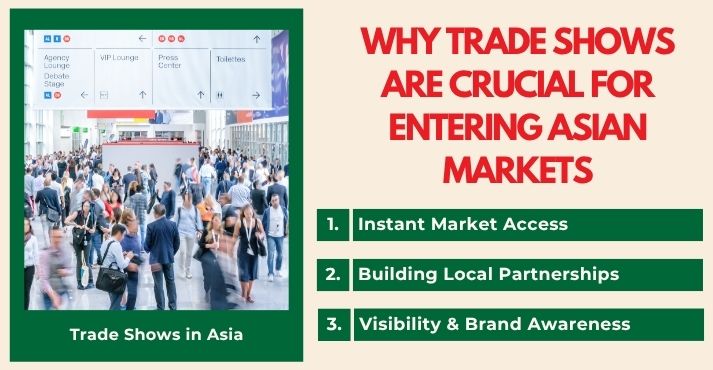
Trade shows remain one of the most effective ways for international companies to understand and enter new markets, especially in a region as diverse as Asia.
These events serve as more than just marketing platforms. They are strategic opportunities for companies to test products, learn from local players, and build long-term relationships that are difficult to develop remotely.
1. Instant Market Access
Trade shows provide immediate access to local buyers, distributors, and government representatives. Rather than spending months trying to secure meetings or navigate local systems from abroad, businesses can meet decision-makers directly on the trade show floor.
This access helps accelerate conversations that might otherwise take a long time to initiate through emails or cold outreach.
For many companies, especially those new to the region, these events provide a practical way to navigate language and cultural differences.
Speaking face-to-face, observing how business is conducted, and receiving feedback on the spot all contribute to a more informed and confident approach to market entry in Asia.
Attending an expo for exporters also helps cut through some of the red tape. Government agencies and trade bodies often have booths or host sessions that offer advice on permits, certifications, and local regulations — information that is vital for anyone planning to sell or operate in these markets.
2. Building Local Partnerships
Strong local partnerships are essential for any international business hoping to succeed in Asia. Trade shows provide a platform where exporters can meet potential suppliers, logistics providers, and distribution partners all under one roof.
These connections help businesses understand how the local supply chain works and what is needed to operate smoothly within it.
Face-to-face interactions at events allow for more than just exchanging business cards. They help companies evaluate potential partners, build trust, and gauge who is serious about long-term business.
Whether it’s connecting with food distributors in Southeast Asia or meeting a warehouse partner in China, the relationships built at these events often become the foundation of successful market entry.
For example, many participants in ASEAN trade events use these opportunities to explore regional networks, especially when looking to expand into multiple markets such as Vietnam, Thailand, or Indonesia.
Having the right local partners in place can reduce risk and provide the local knowledge needed to navigate customs, pricing strategies, and buyer expectations.
3. Visibility and Brand Awareness
Trade shows attract an audience that is already interested in the industry, making them an ideal place to showcase products and services.
Unlike general advertising, the exposure gained at a trade show targets decision-makers, buyers, and other professionals who are actively seeking solutions or partnerships. This focused visibility makes every conversation and product demo more valuable.
Many brands also use trade shows to gather feedback on packaging, pricing, or product features. This real-time input can help businesses fine-tune their offering before launching fully.
Being present at these events also signals commitment to the market, which builds credibility in the eyes of local stakeholders.
In regions where face-to-face interaction still carries weight, standing out on the trade show floor can give a company the edge it needs. Participation helps reinforce a brand’s presence and sets the stage for follow-up conversations, future sales meetings, and long-term growth.
For many companies, this visibility marks the first significant step toward establishing a reputation and securing a foothold in the Asian supply chain.
How Trade Shows Facilitate Export Growth in Asia
Trade shows in Asia do far more than bring buyers and sellers together. They act as engines of growth, helping exporters gain insights, connect with logistics providers, and scale business in ways that are difficult to match elsewhere.
Export Readiness and Market Understanding
Trade shows often feature sessions and booths dedicated to market research and trend spotting. Exhibitors gain valuable insight into local consumer demands, emerging preferences, and pricing trends before committing significant resources.
For example, food industry exhibitions may provide real-time feedback on packaging, flavors, or portion sizes that Asian consumers prefer.
Being on-site also clarifies regulatory requirements. Exporters learn firsthand about local standards and certification requirements, from safety labeling to import permits, allowing them to adapt in advance.
This type of guidance helps companies refine compliance strategies, increasing confidence in their export logistics and avoiding costly setbacks.
Government Support and Incentives
Asian governments frequently consider trade shows as national priorities. They offer incentives that reduce the cost of participation and increase access to export markets. Here are examples from three leading export-promotion bodies:
- Enterprise Singapore channels government aid into SMEs exhibiting at global fairs. The agency also helps brands connect with buyers in Asia through its overseas centers and market-matching services.
- Thailand’s Department of International Trade Promotion (DITP) organizes major expos like THAIFEX – ANUGA ASIA, drawing food and beverage exporters to global buyers. Between one-quarter and one-half of the exhibition space is explicitly reserved for Thai exporters. The DITP also organizes trade missions and business matching events in conjunction with food exhibitions, thereby enhancing export potential.
- MATRADE in Malaysia uses its own trade center and export outreach programs to connect local companies with global buyers. Through events like BuildXpo, it has facilitated hundreds of B2B meetings and secured millions in export leads.
These agencies often subsidize booth fees, organize official country pavilions, and provide training on sustainability in food handling or packaging.
They open doors, curate qualified leads, and enhance trust with international buyers, all of which strengthen export strategies for food manufacturers seeking regional or global reach.
Key Trade Shows in Asia Driving Export Growth
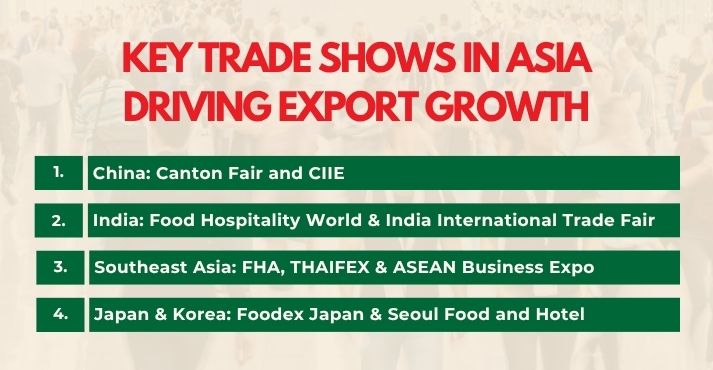
The following flagship events in major Asian markets offer international brands focused platforms to build presence, make deals, and expand business.
1. China: Canton Fair and CIIE
The Canton Fair, also known as the China Import and Export Fair, is Asia’s largest and longest-running international trade fair, held every spring and autumn in Guangzhou.
With over 30,000 export exhibitors and attendance from more than 200 countries, it connects manufacturers with global buyers across a range of industries, from consumer goods to electronics.
International business development often takes place here, as deals are negotiated on-site and global supply chains are strengthened through face-to-face engagement.
The China International Import Expo (CIIE) in Shanghai is a strategic venue dedicated to imports. Its mission is to welcome quality overseas products and services into China by curating exhibits from around the world.
While precise attendance figures vary each year, the focus remains on generating business opportunities for exporters seeking entry to China’s massive consumer market.
2. India: Food Hospitality World & India International Trade Fair
Food Hospitality World is India’s premier event for foodservice and commercial catering. It brings together global food manufacturers, equipment suppliers, chefs, and distributors.
The event features a combination of product demonstrations, seminars on emerging foodtech, and opportunities to connect with pan-Indian operators.
The India International Trade Fair (IITF) in New Delhi covers multiple sectors and attracts thousands of business visitors.
Exporters find it useful for gauging interest in imported products and for establishing regional partnerships across retail, engineering, and agricultural sectors. Its broad scope makes it an excellent springboard for international trade fair exposure.
3. Southeast Asia: FHA, THAIFEX & ASEAN Business Expo
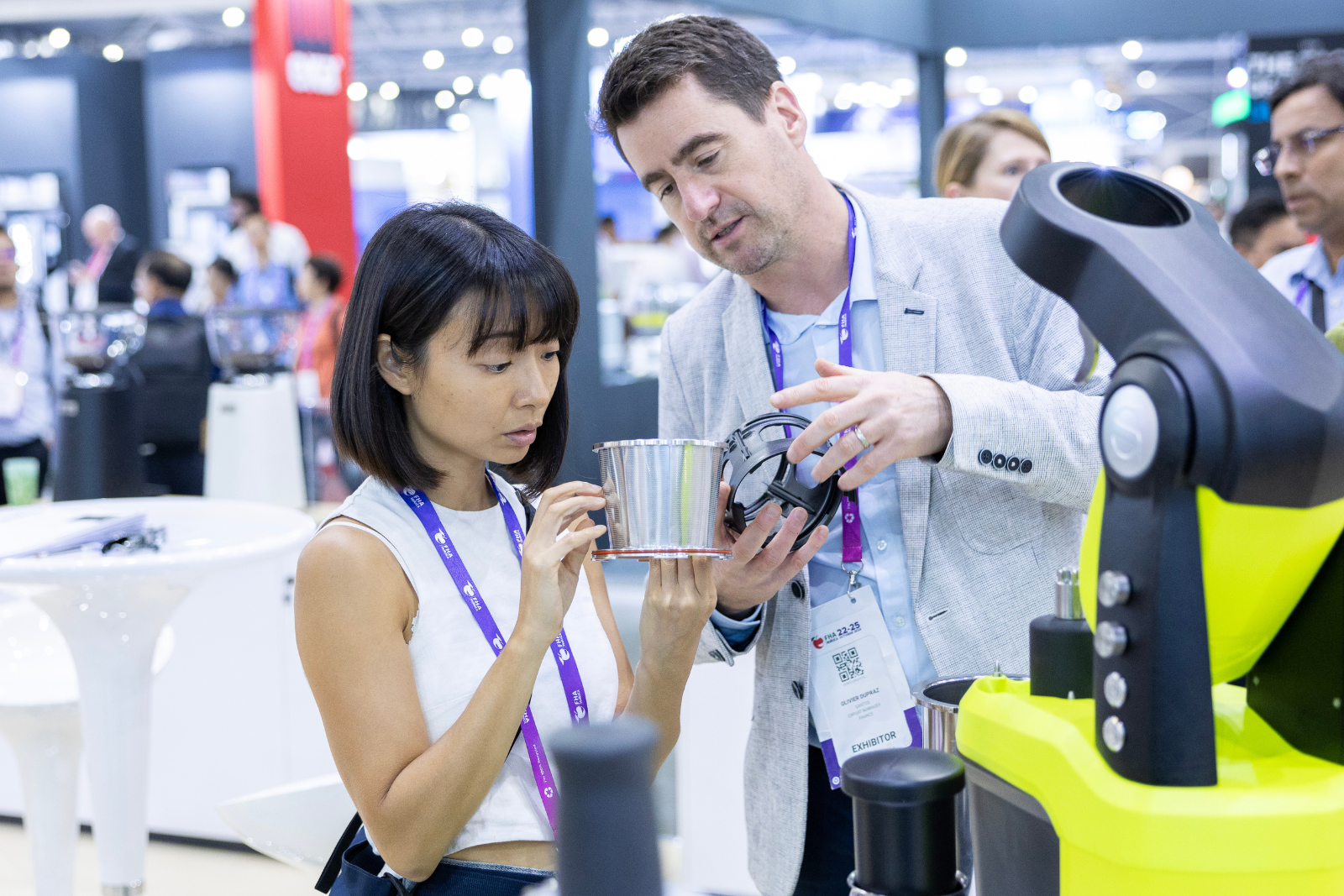
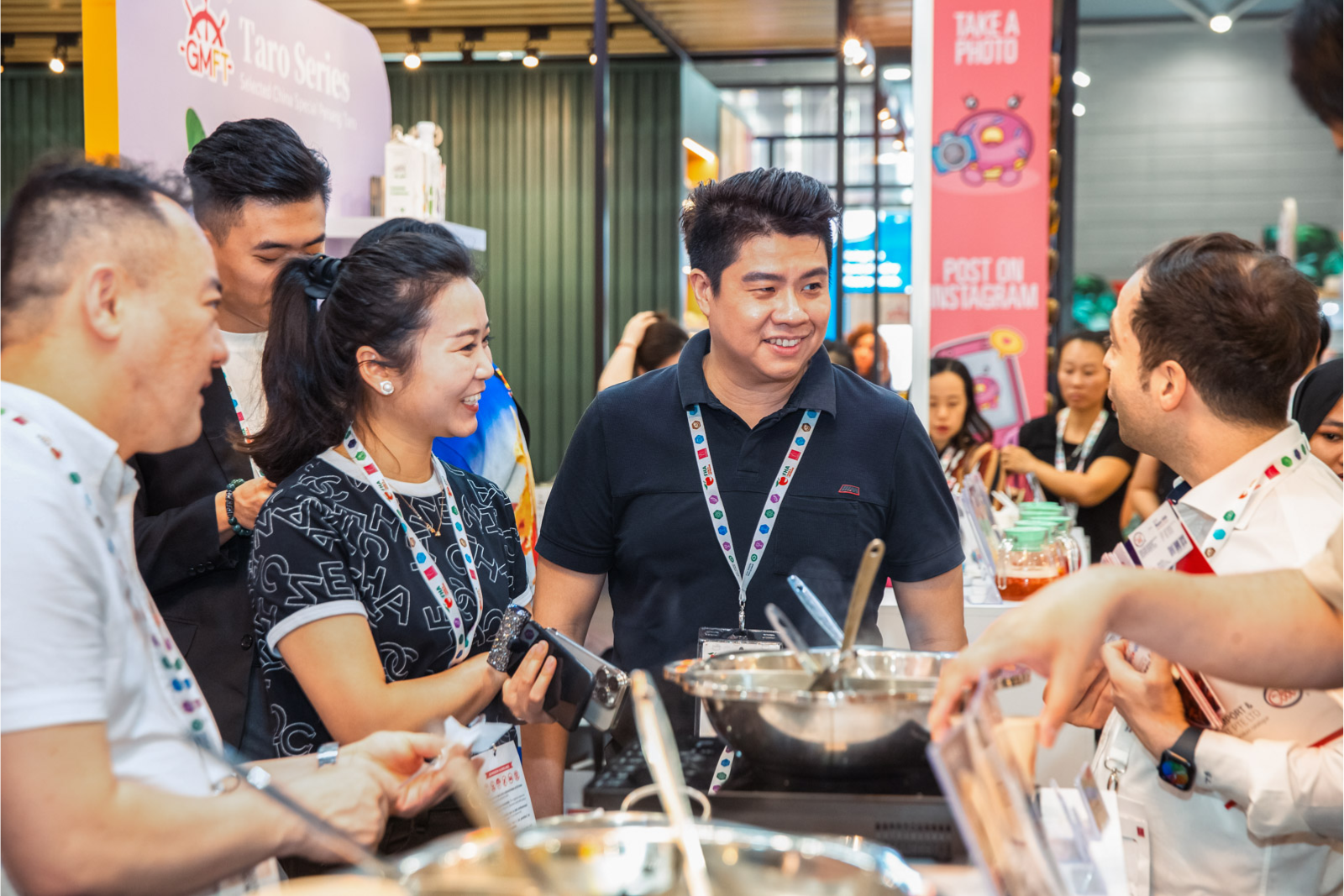
Singapore’s Food & Hotel Asia (FHA) is one of the biggest regional trade events in the food and hospitality space. It brings together chefs, food industry exhibitions, equipment specialists, and hospitality operators from the ASEAN region and beyond.
The show also has a strong emphasis on sustainable sourcing, which directly supports ongoing efforts to improve food security.
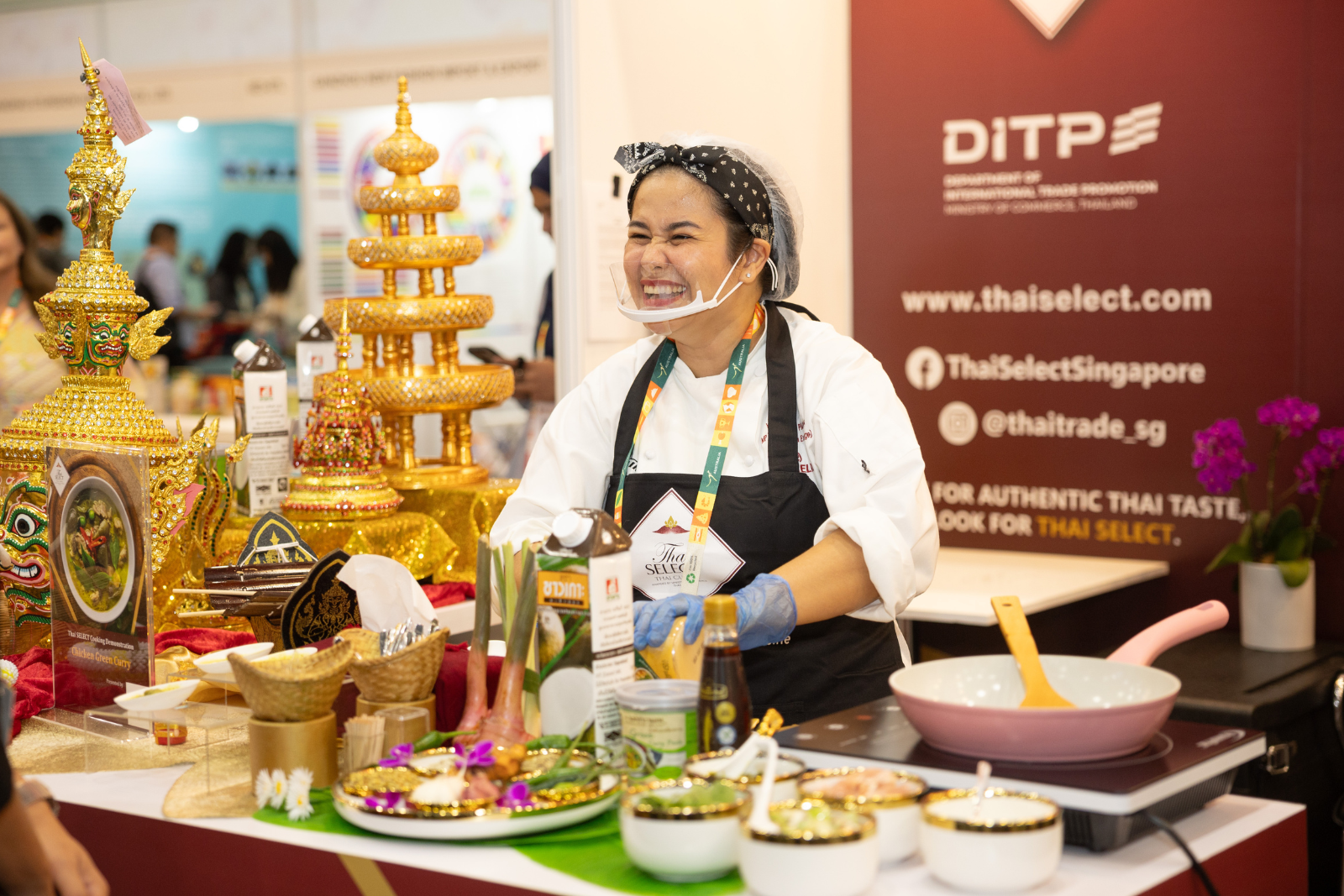
Thailand’s THAIFEX – ANUGA ASIA is a major gathering for food and beverage exporters, importers, and foodservice providers. Organized by Thailand’s DITP, the event is a focal point for companies aiming to enter or grow in Southeast Asian markets.
The ASEAN Business Expo rotates its location among member countries and attracts business leaders from the region.
This platform builds connections in trade, investment, and cross-border collaboration, highlighting the strength of ASEAN trade shows to support regional expansion.
4. Japan & Korea: Foodex Japan & Seoul Food and Hotel
Foodex Japan in Tokyo is Asia’s largest food and beverage trade show, drawing suppliers, buyers, and foodservice professionals.
It offers international brands a chance to trial products in one of the world’s most demanding consumer markets. The fair is also known for hosting seminars on culinary trends and techniques.
Seoul Food and Hotel is South Korea’s leading food industry exhibition. It includes dedicated zones for food exporters and a spotlight on export logistics and cold chain strategies, especially relevant for perishable goods.
Participation enhances brand visibility and opens doors to Korean retailers, distributors, and foodtech innovators.
These international trade fairs serve as strategic platforms for brands seeking to expand their international business in Asia.
From mainstream consumer products to specialized sectors such as hospitality, each event provides exporters with tools to connect, learn, and grow in one of the world’s most diverse and opportunity-rich regions.
Case Studies: Success Stories from Trade Show Participants
Real-world examples demonstrate how companies can use trade shows to facilitate market entry. Here are two compelling stories of export growth driven by effective participation and trade event networking:
1. A European duck meat brand, Silver Hill Duck, used FHA Singapore to tap into Southeast Asia’s lucrative food scene.
During FHA 2018, they signed multiple distribution agreements, including one with Malaysia Food Age Trading, and began discussions for exports into Indonesia.
Key to their success was active engagement on the trade show floor. They participated in live product tastings and culinary demonstrations, drawing large crowds and triggering direct inquiries from buyers.
This visibility turned into concrete results. Silver Hill Duck secured regional partnerships across ASEAN markets, turning their presence at the show into a clear roadmap for growth.
2. Chinese cabinet-maker Suofeiya used the market entry strategy available at the 137th Canton Fair in April 2025 to showcase its “smart home” Alpha Pro, Fayven Master, and Riemann cabinetry ranges.
With its booth placed in the Quality Home zone, Suofeiya used design displays and staff presentations to attract architects, designers, and global project managers.
Results were immediate: they generated dozens of qualified leads and secured meetings with potential partners from over 70 countries during the show.
Suofeiya’s participation emphasized its digital manufacturing strengths, helping to establish trust not only with buyers but also with logistics and sourcing agents. Their follow-up led to projects across Asia, Europe, and the Americas.
Both companies show how trade shows can lead to real business growth when combined with strong networking and solid follow-up.
Silver Hill Duck used tastings and direct talks with distributors, while Suofeiya focused on showing product quality and reliability. Each took the chance to build genuine partnerships and expand steadily into new markets.
These examples show that joining the right international trade fairs isn’t just about being seen. It’s a practical way to meet the right people, open sales channels, and take real steps into new regions.
Challenges of Market Entry in Asia and How Trade Shows Help Mitigate Them
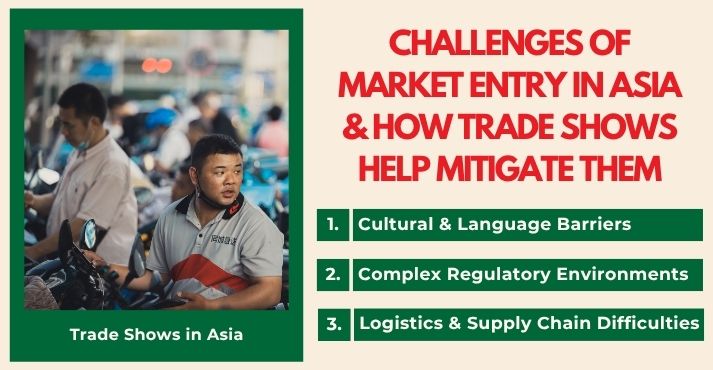
Expanding into Asia brings real potential, but it also comes with challenges that international brands must address early. Trade shows provide hands-on solutions that help companies navigate these roadblocks as part of a focused export growth strategy.
1. Cultural and Language Barriers
Across Asia, language differences and local customs can lead to misunderstandings or missed opportunities. Business etiquette, negotiation styles, and meeting expectations can vary significantly between countries such as Japan, India, and Thailand.
Trade shows allow companies to meet local partners in person. These events often include multilingual support, interpreter services, and hosted buyer programs.
Exhibitors can observe how locals respond to their branding and communication, helping them fine-tune their approach for specific markets.
2. Complex Regulatory Environments
Each country in Asia has its own set of rules for labeling, packaging, documentation, and safety. These regulations are often updated without notice and vary not just by country but sometimes by region.
Many trade shows invite government agencies and trade councils to guide international participants. Seminars and briefings focus on import requirements, registration procedures, and export standards.
Companies can gain firsthand insights into the certifications they need and how to expedite approval processes.
3. Logistics and Supply Chain Difficulties
Managing transport and distribution across Asia can be difficult. Exporters often face long customs clearances, high inland shipping costs, or limited access to cold storage for food products.
Trade shows gather logistics companies, freight forwarders, and warehousing experts in one place. Exhibitors can meet potential service providers who already understand the local terrain.
Specialized zones within the event may feature innovations in storage, tracking, or temperature-controlled delivery, helping businesses plan more reliable operations across different parts of the region.
Leveraging Trade Shows for Long-Term Market Penetration
Trade shows are a strong starting point, but real growth comes from what happens afterward. For international brands entering Asia, consistent follow-up is essential.
A brief meeting on the show floor can lead to lasting partnerships if followed by timely outreach, sample sharing, or product updates. This shows commitment and helps build trust with local buyers who value ongoing engagement.
The visibility gained at trade shows should carry forward. Post-event efforts such as email updates, regional product features, and social media content help brands stay top of mind.
This is especially useful in the food and beverage industry, where decisions often depend on familiarity and long-term presence. A focused F&B marketing approach that includes local success stories or distributor testimonials can add credibility.
Many companies also take steps to establish a local presence. This may include collaborating with regional partners, refining packaging or messaging, or engaging in-market representatives.
These actions show that a company is serious about B2B marketing in Asia and willing to invest in building lasting relationships. By staying active and relevant after the event, companies increase their chances of converting early interest into long-term success.
The Future of Trade Shows and Export Growth in Asia
Trade shows in Asia are changing. While in-person events are still crucial for building trust and securing deals, many now incorporate digital features that allow international companies to connect with more buyers, even when they are not on-site.
Hybrid formats combine physical exhibitions with online participation, making it easier to reach a wider audience.
A major improvement is the ability to schedule meetings in advance. Exhibitors and buyers can now review each other’s profiles ahead of time and set up appointments based on shared goals or product interests.
This helps businesses focus on meaningful conversations and get better results from their time at the event. It also gives smaller exporters a chance to compete on an equal footing with larger brands.
Online directories, product demonstrations, and follow-up options enable companies to maintain visibility after the event concludes. For brands looking to grow in Asia, this extended access supports long-term connections and timely responses to buyer interest.
Today, trade shows are becoming year-round business platforms. They offer more than just exposure — they give companies the chance to learn, meet the right people, and build steady export growth across the region.
Conclusion
Trade shows remain one of the most effective ways for international brands to enter and expand within Asian markets.
These events bring together buyers, distributors, suppliers, and government agencies under one roof, offering direct access to local networks and real opportunities for export growth.
For food and beverage companies in particular, the ability to showcase products, gather real-time feedback, and build relationships face-to-face is unparalleled.
However, success depends on more than just showing up. Choosing the right event makes a significant difference.
Events like FHA in Singapore attract high-quality leads from across Southeast Asia and offer structured matchmaking, seminars, and access to major regional players.
For brands serious about entering the region, early planning is essential. Keeping track of major trade shows, such as FHA, and preparing well in advance increases the chances of achieving strong results.