
In the Asia-Pacific region, food habits are closely linked to religion. Communities across the region follow traditions such as Islam, Hinduism, Buddhism, and Judaism, and each has its own dietary practices.
These practices influence not only what people eat but also how food is produced, certified, and presented in the market. As a result, food companies are paying more attention to these preferences and adjusting their products and labeling to meet consumer expectations.
The commercial impact is significant. According to the Global Islamic Economy Report, the global halal industry reached $2 trillion in 2021 and is projected to grow to $2.8 trillion in 2025.
Halal is a well-known example, but other dietary requirements, such as vegetarian and vegan options connected to Hinduism and Buddhism, are also influencing food production and consumer choices across the APAC region.
For businesses, meeting religious dietary preferences in APAC is now an important step to remain relevant and competitive in this diverse market.
Requirements of Religious Dietary Preferences in APAC
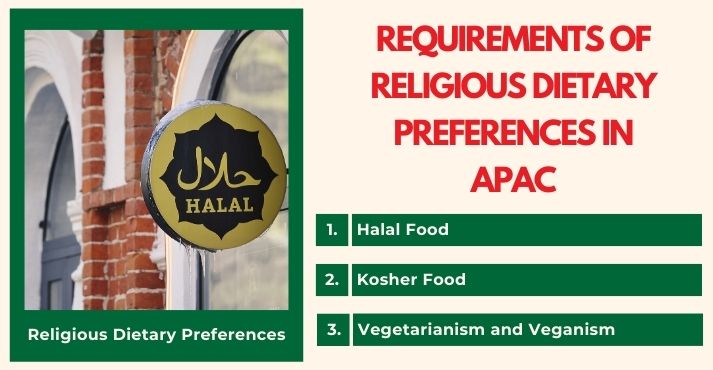
Different faiths across APAC have specific rules about food, from how ingredients are sourced to how they are processed and labeled.
Halal, kosher, and vegetarian certifications are among the most recognized, while some traditions restrict meat, alcohol, or certain additives.
For food producers and retailers, meeting these requirements is essential for building consumer trust and gaining access to large faith-sensitive markets.
1. Halal Food
Requirements for halal food include avoiding pork, alcohol, and any non-halal ingredients. Meat must be processed using a specific method of slaughter, often referred to as dhabihah, and must be free from contamination by non-halal items.
This affects raw materials, logistics, packaging, and hygiene standards throughout the entire supply chain.
The halal food market in APAC is especially significant, driven by large Muslim populations in Indonesia, Malaysia, Pakistan, and other markets.
Approximately 70% of the world’s 1.2 billion Muslims live in the region, giving it the largest share globally. The halal food and beverage market in APAC is projected to expand at a rate of roughly 7.5% annually from 2024 to 2029.
2. Kosher Food
Kosher food guidelines require the separation of meat and dairy, prohibit the consumption of certain animals and shellfish, and involve precise slaughter techniques as mandated by Jewish law.
Certification involves ongoing oversight, ensuring factories and kitchens follow kashrut in everything from ingredient sourcing to equipment use.
In APAC, demand for kosher food is growing as both local Jewish communities expand and companies seek to export products to markets with significant Jewish consumer bases.
Meeting kosher requirements involves careful attention to ingredient sourcing, production processes, and labeling, which encourages higher standards for quality, hygiene, and transparency.
Kosher food trends are opening opportunities for businesses to offer premium products that align with ethical, religious, and consumer expectations while tapping into a specialized and loyal customer base.
3. Vegetarianism and Veganism
Vegetarianism and veganism are deeply rooted in religious practices such as Hinduism and Buddhism. Many Hindus adhere to lacto-vegetarian diets, while Buddhist principles promote plant-based eating as a means of compassion and mindfulness.
These dietary practices have a significant influence on food consumption patterns in countries such as India, Thailand, and Sri Lanka. Notably, India leads globally in meat-free diets, with approximately 38% of its population identifying as vegetarian.
This growing adoption of plant-based diets has prompted food companies to innovate, developing new plant-based proteins, meat alternatives, and ready-to-eat options that align with both cultural and religious expectations.
The increasing demand for these products presents opportunities for businesses to cater to a conscientious consumer base in the region.
Role of Religious Dietary Preferences in APAC’s Food Innovation
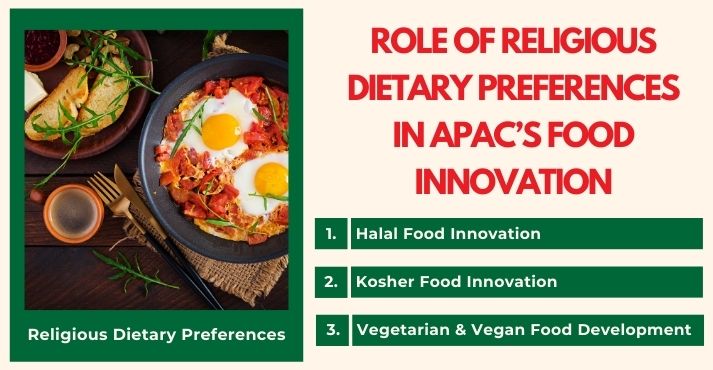
Religious dietary preferences in the Asia-Pacific (APAC) region are influencing food innovation. As diverse religious practices guide consumer expectations, food producers are adapting to meet these needs, leading to the development of specialized products and services.
1. Halal Food Innovation
The demand for halal-certified products is encouraging innovation in the APAC food industry. Companies are developing a variety of halal-certified food items, including plant-based halal meat substitutes, halal dairy alternatives, and halal-certified convenience foods.
These products address the dietary needs of Muslim consumers and ensure compliance with halal dietary laws.
Advancements in halal certification processes are also improving transparency in labeling. This includes the use of traceability systems and digital certifications, which allow consumers to verify the halal status of products. Such measures build trust and improve access to halal markets.
2. Kosher Food Innovation
The growing demand for kosher-certified products in APAC is encouraging innovation in the food sector.
Producers are expanding their range of kosher-certified processed foods, beverages, and snacks to cater to Jewish communities and health-conscious consumers. This includes the development of kosher-certified plant-based and gluten-free options.
Innovations in kosher labeling and packaging are also emerging to meet regulatory requirements and attract a wider range of consumers.
These developments ensure that kosher products are easily identifiable and meet the standards expected by consumers, both within Jewish communities and among those seeking clean-label products.
3. Vegetarian and Vegan Food Development
Plant-based diets are increasingly popular in APAC, influenced by both religious practices and a growing focus on health. This trend has led to a rise in vegetarian and vegan products, including plant-based meat alternatives, dairy-free options, and vegan snacks.
The availability of these products in mainstream supermarkets caters to both religious consumers and those adopting plant-based diets for lifestyle reasons.
Food companies are developing offerings that align with dietary preferences, cultural expectations, and ethical considerations, thereby creating opportunities to meet the diverse needs of a consumer base.
Challenges of Meeting Religious Dietary Preferences in APAC
Food manufacturers in the Asia-Pacific region face several challenges when catering to religious dietary preferences.
These challenges include sourcing compliant ingredients, navigating complex certification processes, and effectively communicating with diverse consumers.
1. Sourcing Ingredients and Supplier Compliance
Sourcing ingredients that meet halal, kosher, or vegetarian standards across diverse APAC markets presents significant challenges. Variations in regional interpretations of religious dietary laws can complicate ingredient traceability and compliance among suppliers.
A study published in PLOS ONE identified issues such as forged halal certificates and expired halal logos as significant problems in implementing halal standards in the United States, highlighting the importance of supplier verification processes.
2. The Certification Process and Costs
Obtaining religious food certifications, such as halal or kosher, involves navigating complex processes that can be particularly burdensome for small and medium-sized enterprises (SMEs).
Approximately 39% of small and medium-sized food producers report challenges in affording third-party kosher certification processes, with regular inspections and ingredient sourcing restrictions leading to increased operational expenses.
3. Consumer Education and Market Communication
Educating consumers about religious dietary claims is crucial in multicultural markets like Singapore, Malaysia, and Indonesia. Clear and honest labeling, along with transparent certification processes, are essential to avoid misunderstandings.
In Indonesia, for instance, a law requiring all food items to carry halal certification was set to take effect in October 2024, aiming to ensure that products are suitable for consumption under Islamic law.
The Future of Religious Dietary Preferences in APAC
Religious dietary preferences will continue to influence the APAC food industry, encouraging innovation across product development, production, and certification. Businesses are responding to consumer demand for ethical, healthy, and culturally appropriate food options.
1. The Growth of Plant-Based and Hybrid Foods
Plant-based products, including halal and kosher-certified alternatives, are gaining popularity. Health-conscious eating, sustainability, and environmental awareness are contributing to this trend.
The Asia-Pacific plant-based meat market was valued at $1,370.8 million in 2023 and is projected to grow at a CAGR of 19.7% from 2024 to 2030.
This interest has led to the development of plant-based dairy alternatives and other offerings that meet religious dietary requirements.
2. Technological Advancements in Certification and Production
Technologies such as blockchain and advanced traceability systems are enhancing halal and kosher certification processes.
These solutions allow manufacturers to monitor ingredient sourcing, ensure compliance with religious standards, and increase transparency for consumers.
Technology also supports the creation of new plant-based foods customized to religious dietary needs, providing high-quality, compliant products.
3. Expanding Global Markets for Religious Foods
Halal, kosher, and vegetarian products are attracting attention outside traditional markets. Consumers in non-religious countries are seeking clean-label, ethically produced foods, opening new opportunities for companies.
In India, 59% of consumers report willingness to try vegan diets, highlighting the region’s interest in plant-based options. Companies can offer products that meet religious and lifestyle dietary preferences to reach these emerging markets.
Case Studies of Religious Dietary Preferences in APAC
Several companies in the Asia-Pacific region are leading the way in food innovation by aligning their products with religious dietary preferences.
Nestlé and Halal Certification
Nestlé has expanded its halal-certified product offerings across Southeast Asia. In Malaysia, the company opened a plant-based production facility in Shah Alam, certified halal, which produces dairy-free meals and beverages.
This move addresses the increasing demand for plant-based options among health-conscious and environmentally aware consumers.
Tata Group and Vegetarian Food Innovation
India’s Tata Group has successfully expanded its vegetarian product range to cater to both religious and health-conscious consumers.
Through its brand, Tata Simply Better, the company offers plant-based meat alternatives, including nuggets, burger patties, and kebabs, which are preservative-free and rich in protein.
This initiative aligns with the principles of vegetarianism in Asia and responds to the increasing demand for plant-based foods.
Osem and Kosher Food Expansion in Asia
Osem, a leading Israeli food company, is expanding its kosher-certified products into the Asian market. The company offers a wide range of kosher products, including snacks, pasta, and sauces, and is expanding its availability in mainstream supermarkets across Asia.
This expansion caters to the growing interest in kosher food among both Jewish and non-Jewish consumers seeking clean-label options.
Conclusion
Religious dietary preferences are becoming increasingly important in the APAC food industry, and religion continues to intersect, influencing product development, certification, and marketing strategies.
Companies that recognize these preferences and develop halal, kosher, vegetarian, or vegan offerings can access expanding consumer segments and meet expectations for ethical, healthy, and culturally appropriate foods.
Clear labeling, reliable certification, and ingredient traceability are crucial for maintaining consumer trust and ensuring compliance with religious standards.
Innovation in plant-based alternatives, ready-to-eat meals, and specialized snacks shows how the region’s diverse dietary requirements inspire new product lines.
Food manufacturers that integrate these practices can grow across multiple APAC markets while addressing both religious and lifestyle dietary needs.