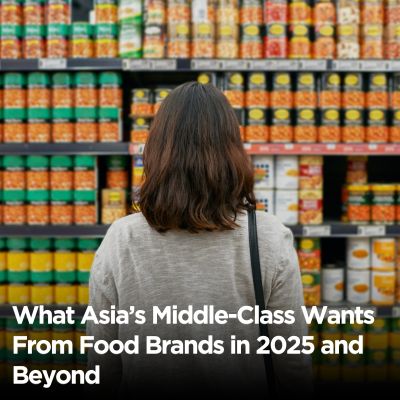
Asia’s economic growth over the past decade has created one of the largest consumer markets in history. A growing middle class is changing how people in the region buy and enjoy food.
By 2030, Asia could be home to a middle class of almost 3.5 billion people. This group has more spending power, exposure to global cuisines, and an increasing interest in food that reflects quality and personal values.
For food brands, understanding the middle-class food preferences in Asia is essential for long-term success. This audience is expanding quickly and becoming more selective about what they buy.
Taste, nutrition, safety, and convenience influence their decisions. Brands that can meet these expectations have a strong opportunity to build trust, increase loyalty, and secure a lasting place in one of the world’s fastest-growing food markets.
Who is Asia’s Middle-Class Consumer?
Asia’s middle class is typically defined by steady disposable income that allows for spending on more than basic needs, though not at luxury levels. This group is concentrated in urban centers, has stable employment, and shops regularly through modern retail channels.
Compared to lower-income segments, they can afford a greater variety of packaged and fresh products, whereas higher-income consumers may opt for premium or imported items.
Middle-class consumer behavior reflects a balance between value and quality, making them a key audience for brands that can deliver both.
In China, approximately 50% of total urban household spending is allocated to food and housing. Similar patterns are found in economies such as India, Vietnam, and Indonesia, where higher incomes and expanding cities are influencing how families plan meals, shop, and dine out.
This segment represents a consistent and influential customer base for food companies across the region.
Economic Growth and Urbanization
Urbanization, rising incomes, and smaller household sizes are changing what and how people eat. Middle-class families in China, India, and Southeast Asia seek variety, higher quality, and convenient options that cater to their busy lifestyles.
Supermarkets, convenience stores, and online grocery services are now the preferred channels, offering a range of both local and international products.
As incomes rise, people buy more ready-to-eat meals, packaged snacks, and restaurant meals while still valuing familiar home-cooked dishes.
The Shift Toward Health-Conscious Eating
Greater awareness of nutrition and wellness is influencing food purchases across Asia’s cities. Consumers want healthier, nutrient-rich, and functional foods that support active lifestyles and long-term health.
This has increased interest in plant-based meals, reduced-sugar drinks, and fortified products. Healthy food in Asia is now part of daily diets for many urban households.
Even health-conscious fast food options are appearing on menus, giving people convenience with better nutritional profiles.
The Influence of Social Media and Technology
Digital platforms are an important source of information about food. Social media influences food trends by introducing new flavors, restaurants, and packaged products through influencers, bloggers, and review sites.
A single viral post can quickly raise awareness of a brand or product. Middle-class consumers often read reviews and compare options online before making a purchase, which shapes their expectations for presentation, taste, and authenticity.
Key Food Trends Among Asia’s Middle Class
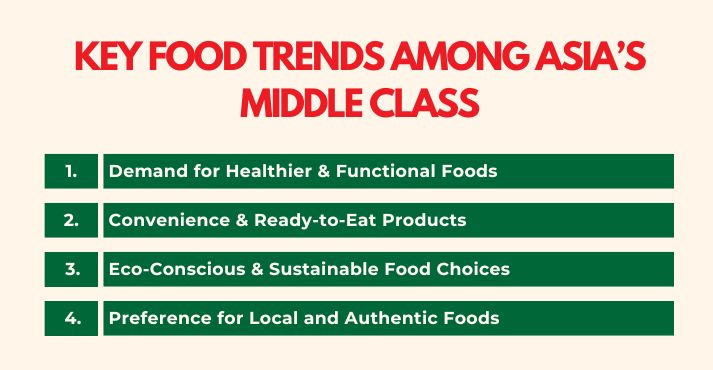
This section highlights the leading food trends expected to guide middle-class food preferences in Asia through 2025 and beyond.
1. Demand for Healthier and Functional Foods
Urban consumers are paying closer attention to the nutritional value of their meals. Foods that support gut health, strengthen immunity, and help manage weight are moving into the mainstream.
Plant-based meat is experiencing steady adoption, driven by growing interest in healthier eating and a desire for lower environmental impact. Functional beverages enriched with vitamins, minerals, or probiotics are also selling well in supermarkets and online platforms.
In 2025, the global meat substitutes market is expected to reach $4.21 billion, with an annual growth rate of 9.97% projected between 2025 and 2030. This rise is supported by the wider availability of products in retail chains and quick-service restaurants across Asia.
2. Convenience and Ready-to-Eat Products
Time-pressed lifestyles in cities have made convenience food an essential category. Working professionals and young families want meal options that can be prepared quickly while still meeting expectations for taste and nutrition.
Ready-to-eat meals, meal kits, frozen options, and pre-packaged snacks are now part of regular household shopping lists.
E-commerce platforms and food delivery apps have also made it easier for middle-class consumers to access these products without visiting physical stores.
3. Eco-Conscious and Sustainable Food Choices
Environmental awareness is influencing purchase decisions more than before. Shoppers are considering the impact of how food is produced, packaged, and transported.
This has created a stronger market for sustainable food choices, including brands that use eco-friendly packaging, reduce food waste in production, and work directly with farmers through ethical sourcing programs.
Products with sustainability certifications are becoming more common in stores, showing a clear commitment to responsible practices.
Government policies promoting waste reduction and the use of renewable materials in packaging are likely to accelerate this trend in the years to come.
4. Preference for Local and Authentic Foods
There is steady demand for organic food and products tied to regional culinary traditions. Many middle-class consumers are interested in food that connects to cultural identity while also being produced to modern quality standards.
This has led to more small-batch and artisanal offerings entering mainstream retail, alongside traditional dishes adapted for convenience formats.
At the same time, imported specialty items are also popular, particularly among younger consumers who view food as a way to explore global culture. This “food-as-experience” approach allows brands to connect with buyers through taste, storytelling, and authenticity.
The Role of Technology and Innovation in Meeting Middle-Class Demands
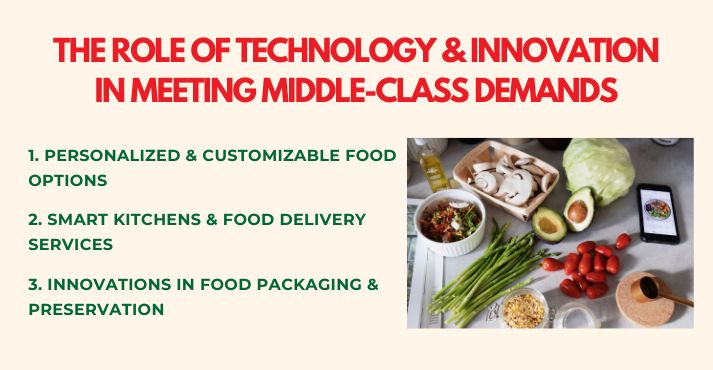
Food brands in Asia are using technology and innovation to keep up with the changing tastes, health priorities, and lifestyles of the growing middle-class population.
From personalized meal options to eco-friendly packaging, these advancements influence how people buy, prepare, and consume food.
1. Personalized and Customizable Food Options
Middle-class consumers are increasingly seeking meals that align with their health goals, taste preferences, and dietary needs. Digital platforms are making this possible by offering precision nutrition through data-driven recommendations.
For example, Habitual in Singapore provides tailored nutrition plans based on health data and lifestyle preferences, while HealthifyMe in India offers custom diet tracking and meal suggestions.
These services also encourage healthier eating habits by making balanced food choices more accessible and convenient.
2. Smart Kitchens and Food Delivery Services
With busy urban lifestyles, middle-class households are turning to smart kitchen appliances and advanced food delivery services. Smart ovens, connected refrigerators, and automated coffee machines help save time while ensuring consistent quality at home.
On the delivery front, GrabFood in Southeast Asia has made important strides in making meal choices more inclusive.
A recent feature allows users to save their dietary preferences, whether halal, vegetarian, or other requirements, so the app automatically filters food options to match those needs. It also adds clear labels to menus, helping users find suitable options at a glance.
This personalization helps middle-class consumers quickly access meals that fit their values and nutritional goals.
3. Innovations in Food Packaging and Preservation
Sustainability is now an important factor in determining food packaging preferences. Brands are focusing on sustainable packaging solutions that extend shelf life, reduce waste, and minimize environmental impact.
For instance, Tipa offers compostable packaging that behaves like plastic but decomposes naturally, while Mitsubishi Chemical, a Japanese brand, has developed plant-based films that help preserve freshness.
These innovations show increasing awareness of eco-friendly choices and contribute to food industry growth in Asia.
The Challenges of Catering to Asia’s Middle-Class Consumers
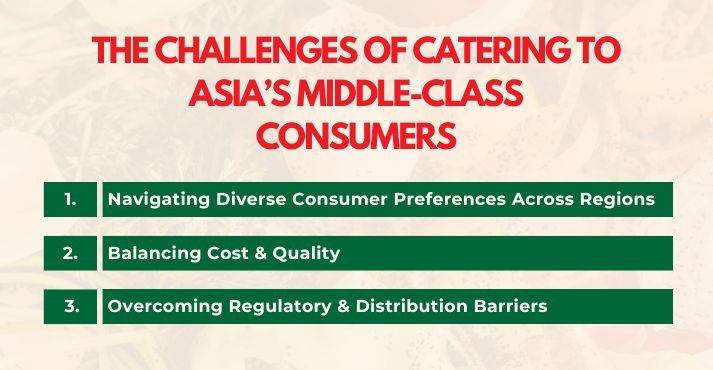
Meeting the increasing demands of Asia’s middle-class consumers comes with considerable challenges. Food brands must navigate diverse tastes, cost pressures, and complex regulations, all while advancing sustainable food in Asia and ensuring nutrient-rich offerings.
1. Navigating Diverse Consumer Preferences Across Regions
Asia spans countless cultures, cuisines, and purchasing patterns. In one market, regional spices or local grains may dominate, while in another, globalized tastes or convenience products prevail.
Brands that succeed understand how to localize products and adapt their marketing to suit regional identities.
For instance, PepsiCo introduced Lay’s chip flavors inspired by regional favorites, such as salted egg yolk in Taiwan and Japanese chicken katsu in Thailand, among others.
These limited-edition releases were developed by in-market chefs and ingredient specialists to closely match local taste traditions.
2. Balancing Cost and Quality
Middle-class consumers expect both nutrients and affordability. Yet high-quality, sustainably sourced ingredients often raise production costs.
Many households feel squeezed. In India, persistent food inflation of over 8% in 2024 compelled families to reduce their spending on fast food and snacks, prompting brands to reassess their pricing or risk losing market share.
Brands must manage ingredient sourcing, packaging, and production to keep prices reachable while preserving nutritional value.
3. Overcoming Regulatory and Distribution Barriers
Food regulations, certifications, and retail systems vary widely across Asia. A product cleared for sale in Southeast Asia may require additional safety documentation in China or face distribution challenges in India.
Understanding and adhering to sustainable food standards in Asia, ensuring clean supply chains, and adapting to fragmented retail networks are crucial for success. The lack of unified food safety frameworks can delay product launches or restrict market access.
What Will Asia’s Middle-Class Consumers Want in 2030 and Beyond?
Asia’s middle-class segment will continue to influence how food brands innovate and adapt. Rising incomes and urban lifestyles mean more consumers will expect nourishment, convenience, and value from their food.
As this segment grows, brands that anticipate these requirements will be best positioned for long-term engagement.
The Next Wave of Sustainable and Ethical Consumption
Environmental awareness is becoming a defining factor in food choices. Middle-class consumers are increasingly showing interest in sustainable products, something that’s also evident at food and beverage trade shows.
They are prioritizing zero-waste, plastic-free, and responsibly sourced options, alongside trends such as sustainable seafood, regenerative farming, and plant-based proteins that reduce environmental impact.
According to PwC, over 80% of Asia Pacific consumers are willing to pay a premium of nearly 9.7% more for goods produced sustainably, even amid cost-of-living pressures.
The Growth of Hybrid Food Categories
Hybrid food categories will cater to the dual need for nutrition and sustainability. These include plant-based meat alternatives fortified with vitamins and minerals, seafood alternatives using algae or fungi, and ready-to-eat meals with clean-label ingredients.
Middle-class households will look for convenient formats without compromising on taste or nutritional value. The popularity of fortified plant-based drinks, dairy alternatives, and functional snacks is expected to continue expanding as health consciousness grows.
Technological Disruptions and the Future of Dining Experiences
Advancements in food technology in APAC will redefine how consumers discover, purchase, and enjoy food. Automated kitchens, robotic servers, and AI-free predictive menu personalization will enhance both speed and customization in dining.
Digital ordering and social media integration will remain vital for food discovery, while immersive experiences such as interactive dining tables and AR menus will appeal to younger consumers.
Food delivery platforms are expected to incorporate more localized flavors and sustainable packaging to meet urban demand.
Conclusion
Asia’s middle-class consumers are driving changes in the food market, with rising demand for healthier, more sustainable, and better-quality products.
Popular choices include plant-based proteins, fortified drinks, functional snacks, and foods made with responsibly sourced ingredients. These preferences are influencing the latest food trends in Asia, where convenience, taste, and ethical values go hand in hand.
For food brands, the years ahead hold strong potential for growth by introducing eco-friendly packaging, expanding healthier product ranges, and incorporating regional flavors in innovative ways.
Success will depend on understanding consumer priorities, acting on sustainability goals, and adapting products to match evolving lifestyles in this dynamic and fast-growing market.