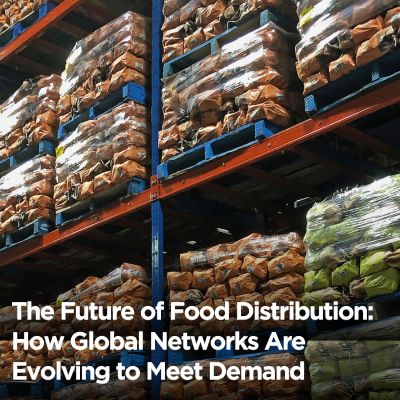
Food distribution is crucial to how the modern F&B industry operates. As consumers demand fresher products, faster delivery, and more responsible sourcing, global food networks are under pressure to adapt.
Year-round demand, expanding international trade, and rising environmental concerns are adding complexity to the movement of food from origin to consumer.
Supply chain disruptions now cost businesses $184 billion annually, exposing weaknesses in older systems. Meanwhile, cross-border trade and emerging technologies are changing the way food is stored, monitored, and delivered.
The future of food distribution involves several major trends, including smarter logistics, stronger sustainability efforts, regional developments in Southeast Asia, and increased collaboration between companies.
Food distributors and brands need to prepare for these changes to remain competitive and resilient.
Key Drivers of Change in Food Distribution
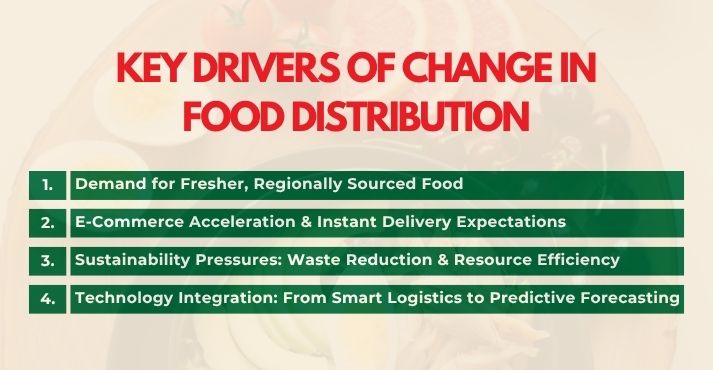
Food distribution networks in Southeast Asia are undergoing significant changes as consumer preferences change, technology advances, and businesses and governments place greater emphasis on sustainability.
1. Demand for Fresher, Regionally Sourced Food
Urban consumers are prioritizing food freshness, safety, and traceability. In response, governments and producers are investing in local agriculture and shorter distribution paths to improve food quality and security.
In Singapore, the “30 by 30” initiative seeks to produce 30% of the country’s nutritional needs domestically by 2030.
This effort reduces dependence on imports and strengthens food security. It has led to increased investments in urban farming and agri-tech innovations that bring food production closer to consumers.
In Vietnam, cooperatives are connecting small-scale farmers directly to city markets, increasing efficiency and reducing post-harvest losses.
2. E-Commerce Acceleration and Instant Delivery Expectations
E-commerce growth has been a game changer for food distribution in Southeast Asia. Consumers increasingly expect fast and convenient delivery options, prompting platforms like GrabMart and LazadaFresh to offer same-day or even instant delivery in urban centers.
This change has necessitated that distributors and retailers enhance their last-mile logistics and inventory management to meet demand.
Alibaba’s Taobao Instant Commerce in China is a notable example, achieving over 40 million daily orders within a month of its launch, showing how rapidly consumer expectations for faster delivery are increasing across the region.
3. Sustainability Pressures: Waste Reduction and Resource Efficiency
Environmental concerns have sparked new efforts to cut food waste and reduce carbon footprints throughout Southeast Asia’s food supply chains.
Indonesia, for instance, suffers significant food loss, estimated between 23 and 48 million tonnes annually from 2000 to 2019. To combat this, cold chain logistics are being modernized with real-time temperature monitoring and better storage systems.
In Thailand, these investments are already helping reduce spoilage, preserve food quality, and lower overall waste before products reach consumers.
4. Technology Integration: From Smart Logistics to Predictive Forecasting
The use of digital technologies is helping food logistics in the region become more efficient and transparent.
In Vietnam, for example, smart warehouses are using IoT-enabled refrigerated trucks to maintain temperature control throughout the supply chain.
At the same time, blockchain technology is being tested for traceability, especially for exports, where food safety certification is crucial.
Innovations Revolutionizing Food Logistics
New technologies are changing the way food is handled, transported, and delivered, especially in Southeast Asia’s complex environment. These innovations enhance efficiency, minimize losses, and enable fresher products to reach consumers more quickly.
Cold Chain Technology
Maintaining temperature control is crucial for preserving perishable foods, especially in the hot and humid climates prevalent across Southeast Asia. Advances in refrigeration systems now allow for more reliable and consistent cooling during storage and transit.
Temperature sensors embedded in cold storage units and refrigerated trucks provide real-time data on conditions throughout the supply chain. When deviations occur, alerts enable quick action to prevent spoilage.
For example, Thailand’s expanding cold chain infrastructure includes smart refrigerators and improved freezer facilities at ports and distribution centers, significantly reducing food loss.
This technology not only preserves quality but also extends the shelf life of fresh produce, dairy, and seafood, allowing these goods to reach markets farther from production sites.
The result is a more connected and efficient global food logistics system that can support the region’s increasing demand for fresh imports and exports.
Last-Mile Delivery Solutions
Delivering food from local warehouses to consumers’ doorsteps is one of the most challenging aspects of food distribution. The last mile accounts for a significant portion of delivery costs and delays.
In Southeast Asia, companies like GrabMart and LazadaFresh have optimized delivery through route planning software and localized hubs, enabling faster same-day service in crowded cities.
To overcome traffic congestion and accessibility issues, some startups are experimenting with electric bikes and small cargo vehicles.
Beyond vehicles, smart lockers are becoming popular in urban residential areas. These lockers provide secure, contactless pickup points for food orders, reducing failed deliveries and enhancing convenience.
Globally, drone deliveries are being tested in remote areas where traditional transportation is challenging, offering the potential to reach customers more quickly while reducing carbon emissions.
These solutions, when combined, are making last-mile food delivery faster, more reliable, and more sustainable.
Blockchain and Traceability
Traceability is crucial for ensuring food safety, quality assurance, and maintaining consumer trust. Blockchain technology enables the secure recording of each step a food item takes, from farm to fork, in an immutable digital ledger.
In Southeast Asia, blockchain is increasingly used to track seafood exports. Indonesia’s fisheries sector has integrated blockchain to comply with Global Dialogue on Seafood Traceability (GDST) standards, ensuring that products are sustainably sourced and legally caught.
This technology helps prevent fraud and illegal fishing while facilitating market access for exporters.
Consumers also benefit from blockchain food traceability through apps that enable them to verify product origins and handling conditions, thereby increasing transparency and confidence in the food they purchase.
This technology supports a more transparent and accountable digital supply chain, improving safety and compliance across the entire food distribution network.
Sustainability in Food Distribution
The food distribution sector faces increasing pressure to reduce its environmental impact while continuing to deliver fresh, safe products.
Across Southeast Asia, companies and governments are adopting sustainable solutions to tackle waste, reduce emissions, and optimize resource utilization throughout the supply chain.
Packaging Innovations to Reduce Waste
Packaging is essential for protecting food, but it often creates significant waste. Many businesses are transitioning to biodegradable, recyclable, or reusable materials to reduce plastic pollution.
For example, some fresh produce suppliers use compostable bags and boxes made from plant-based fibers instead of single-use plastics. Others focus on minimal packaging that protects food with less material.
This supports the growing organic food market, where customers often expect environmentally friendly packaging. These changes reduce landfill waste and help promote a circular economy by encouraging recycling and the reuse of materials.
Route Optimization for Emissions Cuts
Transportation accounts for a large portion of carbon emissions in food distribution. Careful planning of delivery routes helps lower fuel use, costs, and pollution.
Logistics providers use software to identify the quickest and most fuel-efficient routes that avoid traffic. In busy cities like Jakarta and Bangkok, this can significantly reduce emissions while still ensuring food arrives fresh and on time.
Moving to cleaner vehicles, such as electric trucks, is also becoming more common, especially for last-mile food deliveries. Combining better routes with greener transport helps reduce environmental impact without sacrificing speed or quality.
Circular Economy Models and Food Redistribution
The circular economy aims to use resources more fully and minimize waste. In food distribution, this means finding ways to keep edible food in the supply chain rather than discarding it.
Programs across Southeast Asia focus on redistributing unsold but safe food to charities, shelters, and community kitchens. Digital platforms connect suppliers and retailers with groups that can quickly collect and distribute these items.
This reduces methane emissions from food waste in landfills, helping to address hunger and food insecurity. Circular economy efforts also include recycling food packaging and turning organic waste into compost or bioenergy, helping to close the loop and support sustainability.
Regional Focus: Southeast Asia’s Unique Challenges and Solutions
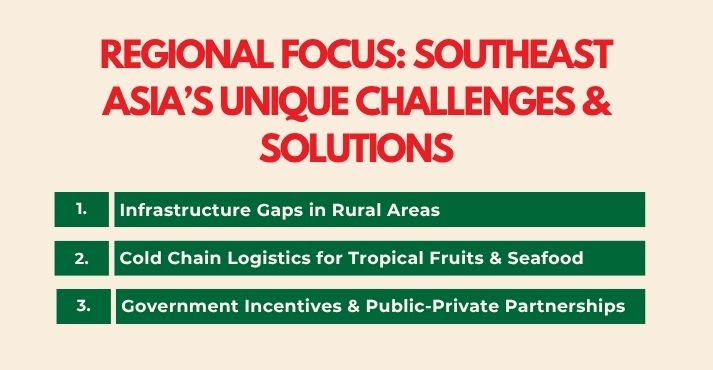
Food distribution in Southeast Asia faces unique challenges due to the region’s varied geography, infrastructure gaps, and tropical climate. Finding effective solutions requires approaches that focus on sustainability and innovation throughout the supply chain.
1. Infrastructure Gaps in Rural Areas
Many rural communities lack access to good roads, cold storage facilities, and reliable transportation options. This makes it hard to move food from farms to cities quickly and safely, leading to food spoilage and lower earnings for farmers.
To address this, governments and businesses are investing in the improvement of rural infrastructure. This includes building better roads, expanding electricity access for refrigeration, and creating local hubs where farmers can gather their produce before shipment.
Improving infrastructure supports sustainable logistics by reducing waste and cutting transport costs. It also helps connect small farmers to bigger markets, strengthening local food systems and economies.
2. Cold Chain Logistics for Tropical Fruits and Seafood
Southeast Asia’s hot and humid climate creates special challenges for keeping perishable items like tropical fruits and seafood fresh. Reliable refrigeration during transport is crucial to prevent spoilage and maintain high quality.
Cold chain systems are experiencing rapid growth, with an increase in refrigerated trucks, storage facilities, and temperature monitoring along major routes.
Countries such as Thailand and Vietnam have invested in better cold storage to meet export standards and reduce local losses.
Better cold chain logistics encourage food supply chain innovation by allowing for tracking and monitoring food conditions during transit, ensuring freshness and safety.
3. Government Incentives and Public-Private Partnerships
Governments in the region are supporting improvements in food distribution through incentives and partnerships with private companies. These collaborations fund infrastructure projects, new technologies, and training for workers involved in logistics.
Singapore’s promotion of urban farming and agri-tech is one example of encouraging local food production and sustainable logistics. Indonesia and the Philippines are also developing programs to strengthen cold chain infrastructure and reduce food waste.
By joining efforts, governments and businesses address significant challenges and promote solutions that improve food distribution in Southeast Asia, helping build stronger, more reliable supply chains that can meet consumer needs.
The Role of Partnerships and Collaboration
In Southeast Asia, partnerships among food suppliers, technology companies, and government bodies are crucial for overcoming the region’s significant challenges in food distribution networks.
These collaborations often involve shared investments in infrastructure such as cold storage facilities and transport hubs, which are expensive for individual companies to build alone.
One notable example is the Singapore Food Agency’s collaboration with private firms to create a nationwide network of food distribution centers.
These centers improve the speed and reliability of delivering fresh produce across the island, helping both small-scale farmers and retailers. By pooling resources, stakeholders reduce overall costs and minimize food spoilage during transit.
At the regional level, ASEAN member states have collaborated to standardize food safety regulations and enhance cross-border logistics.
This cooperation streamlines the movement of goods, especially perishable items like seafood and tropical fruits, ensuring that products maintain their quality upon reaching markets in neighboring countries.
Shared digital platforms connect producers, distributors, and retailers, making it easier to coordinate inventory, schedule deliveries, and reduce delays across the food supply chain. This not only saves money but also supports sustainable logistics by cutting carbon emissions.
Furthermore, partnerships help create systems that redirect surplus or near-expiry products to charities or secondary markets. This reduces waste and supports circular economy practices across the food sector.
Overall, collaboration in Southeast Asia helps build more reliable food distribution systems that can respond better to consumer needs and environmental challenges.
What Food Brands and Distributors Should Prepare For
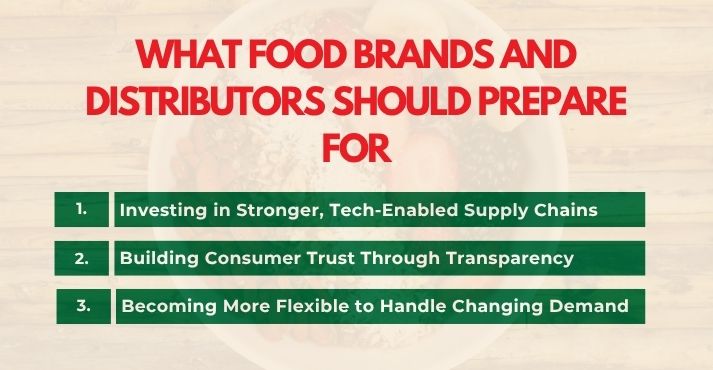
Food companies across Southeast Asia are facing increasing pressure to deliver fresher products faster and more responsibly. To stay competitive and meet rising consumer expectations, brands and distributors must focus on three main areas.
1. Investing in Stronger, Tech-Enabled Supply Chains
As demand for perishable goods, such as seafood, dairy, and fresh produce, continues to grow, reliable cold storage and efficient inventory management systems are essential.
In Singapore, companies are upgrading their logistics by using temperature-controlled warehouses and real-time tracking to keep products fresh during transport.
Food freshness technology, including humidity control and shelf-life monitoring, helps reduce waste and maintain consistent quality throughout the supply chain.
2. Building Consumer Trust Through Transparency
Today’s buyers want to know more about the origin, safety, and handling of their food. Brands that communicate how and where products are sourced are more likely to gain long-term loyalty.
Traceability systems, especially those that highlight practices like organic farming or sustainable sourcing, are becoming important in markets like Vietnam and Malaysia.
Labels with QR codes or digital access to product history can provide reassurance and meet the growing demand for transparency among consumers.
3. Becoming More Flexible to Handle Changing Demand
Unpredictable changes in consumer habits, weather disruptions, or supply gaps require operations that can adjust quickly. Businesses are moving toward modular distribution models that allow them to scale services and stock based on need.
Omni-channel food delivery is helping brands reach customers through multiple channels, including mobile apps, local marketplaces, and direct-to-home services.
This approach reduces risk and provides better access to both fast-moving urban markets and slower-paced rural zones.
Preparing for these changes is not just about technology. It also involves listening to market signals, being honest with consumers, and building systems that can respond without delay.
Food brands and distributors that move early will be better prepared for Southeast Asia’s growing food market.
Conclusion
Food distribution is changing fast, especially in Southeast Asia, where new consumer habits, climate concerns, and modern logistics are influencing how food moves from producers to consumers.
Companies that prioritize freshness, reliability, and open communication will be better prepared to meet future expectations. Cold chain systems, digital supply chains, and sustainable logistics help maintain food quality and reduce waste.
Government programs and partnerships across sectors are helping improve infrastructure and support innovation. With rising competition and demand for transparency, brands and distributors must focus on smarter ways to manage supply and delivery.
Staying prepared means acting early, staying flexible, and building strong systems that can handle both day-to-day needs and long-term challenges.