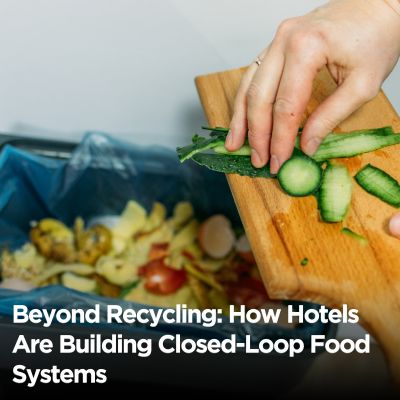
More hotels are starting to look at food waste differently. Instead of just separating recycling or donating leftovers occasionally, they’re trying to eliminate waste from the beginning. That means rethinking how food is ordered, used, and what happens to scraps.
Some turn waste into compost. Others use it as a source of energy or animal feed. It’s a more complete way of working, with less going to landfill.
Even though hotel meals make up less than 0.5% of the world’s total, they still cause 1% of food-related emissions and 3% of all food waste. That’s a big impact for such a small share.
This matters now more than ever. Guests are looking for hotels that act responsibly. Sustainability isn’t just a bonus anymore. It’s part of the decision when booking a stay.
For hotels, transitioning to a closed-loop food system is one way to reduce waste, lower costs, and meet the expectations of today’s consumers.
What Are Closed-Loop Food Systems?
Closed-loop food systems operate by maximizing the use of food and minimizing the generation of organic waste.
In hotels, this means finding ways to reduce waste from the start and making sure that anything left over is reused, composted, or turned into energy. The goal is to keep materials moving through a cycle rather than ending up in landfills.
This differs from traditional waste practices, where leftover food is often discarded. In a closed-loop setup, hotels weigh and track food waste, carefully plan menus, use leftover ingredients in other dishes, and send scraps for composting or bioenergy production. These actions help reduce both waste and costs.
In 2024, Marriott hotels in the UK, Ireland, and Nordic countries reduced food waste by 25% across 53 kitchens after introducing real-time tracking tools.
This kind of system supports a circular economy in foodservice. It also helps improve hotel sustainability by using resources more efficiently and cutting down on unnecessary waste.
Why Closed‑Loop Food Systems Matter for Hotels
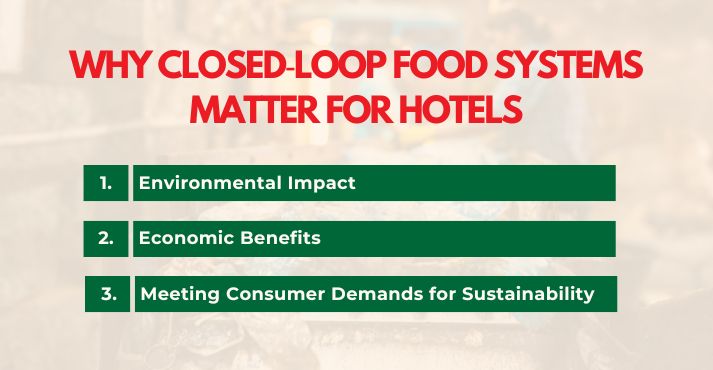
Hotels generate large volumes of food waste every day. Closed-loop systems offer a structured way to manage this waste by turning leftovers, scraps, and organic waste into useful resources.
Instead of sending waste to landfills, hotels can reduce disposal costs, minimize environmental harm, and enhance guest perception through sustainable hotel practices.
Environmental Impact
Food waste has a lasting environmental cost. When organic material ends up in landfills, it produces methane, a greenhouse gas significantly more potent than carbon dioxide.
Closed-loop food systems help reduce this impact by converting food scraps into compost, renewable energy, or ingredients for reuse within the hotel’s operations.
According to the UNEP Food Waste Index Report 2024, the world wasted 1.05 billion tonnes of food in 2022. Of that, 290 million tonnes came from the food service sector, which includes hotels.
This makes food waste solutions in hotels a necessary part of climate action. These systems reduce pressure on landfill capacity and help limit greenhouse gas emissions from rotting organic matter.
Economic Benefits
Hotels that reduce food waste see real financial benefits. Cutting overproduction and reusing trimmings means purchasing fewer ingredients and paying less for disposal.
Some properties also reduce hauling costs by composting on-site or partnering with nearby farms that accept food scraps.
Upcycled food practices, such as using overripe fruits for sauces or turning vegetable peels into stocks, can stretch ingredients further without compromising quality.
These approaches not only lower costs but also support zero-waste hotels that focus on efficient and sustainable operations.
Meeting Consumer Demands for Sustainability
Eco-conscious travelers now expect more than linen reuse cards. Many guests actively seek out hotels with effective food waste solutions. Visible efforts, such as composting stations, local sourcing, or on-site gardens, contribute to a better guest perception and stronger brand loyalty.
Hotels that adopt sustainable practices not only reduce impact but also appeal to the values of today’s travelers, many of whom are willing to pay more for responsible stays.
How Hotels Are Implementing Closed‑Loop Food Systems
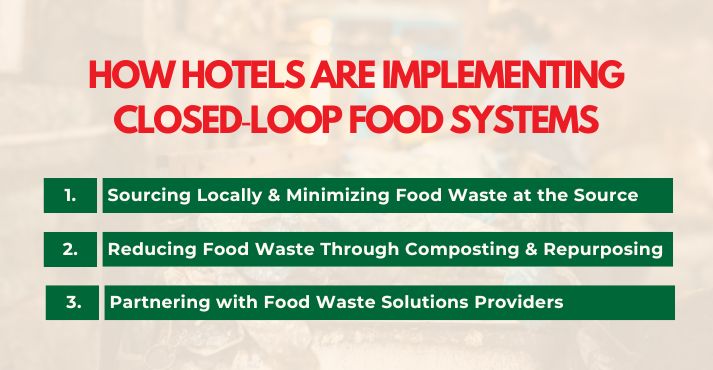
Here’s how hotels bring closed‑loop food systems to life, using smart sourcing, repurposing waste, and partnering with expert providers.
1. Sourcing Locally and Minimizing Food Waste at the Source
Many hotels build relationships with local farms and sustainable suppliers. This cuts transportation emissions and reduces packaging waste by focusing on fresh, seasonal ingredients.
Menu planning is important as well. By adjusting menus based on guest numbers and demand, chefs can reduce spoilage and control portion sizes.
Efficient portion control and accurate purchasing from trusted local suppliers help reduce unnecessary deliveries and minimize food waste.
2. Reducing Food Waste Through Composting and Repurposing
Some hotels install on‑site composting units to turn kitchen scraps into nutrient-rich soil. That compost often finds a second life in hotel gardens or landscaping.
When composting isn’t possible, many hoteliers repurpose food waste directly in their kitchens: stale bread becomes breadcrumbs, while vegetable trimmings are used in stocks or sauces.
These steps support food waste valorization and reinforce a no‑waste mindset in kitchens.
3. Partnering with Food Waste Solutions Providers
Hotels also collaborate with third-party providers to enhance kitchen efficiency. For instance, the Sheraton Grand Hotel & Spa in Edinburgh partnered with Leanpath and cut food waste by 58% in weight and 64% in cost after installing real-time tracking tools in 2018.
Radisson Hotel Group in Europe teamed up with Too Good To Go to return surplus meals to the public. More than 49 hotels now participate, rescuing thousands of meals, reducing waste, and generating extra revenue.
These examples display evident progress in hotel food waste management through the use of technology and collaboration.
Each stage, from local food sourcing in hotels to advanced waste tracking, is part of a winning formula that delivers both environmental benefits and cost savings.
Real‑World Examples: Hotels Leading the Way in Closed‑Loop Food Systems
Here are three hotels that have successfully built closed‑loop food systems. These cases show practical steps in sourcing, composting, biogas production, and waste tracking, supported by measurable results.
The Fairmont Chateau Whistler (Canada)
Fairmont Chateau Whistler sources local, organic ingredients and participates in the Ocean Wise program. The hotel uses on-site composting and has partnered with local farms to incorporate food scrap compost into its gardens.
Their sustainability initiatives include composting in hotels, using the resulting compost for on-site landscaping, and prioritizing sustainable food sourcing aligned with industry best practices.
Hotel Verde (South Africa)
Hotel Verde at Cape Town International Airport achieved Net Zero Waste certification by diverting 93% of operational food waste from landfills between March 2023 and February 2024.
Their system includes waste separation with composting bins and sustainable purchasing from local suppliers within about 160 km. The hotel converted over 46,803 kg of food waste into compost for landscaping and gardening use.
They also partner with solution providers, such as Zero to Landfill Organics and The Don’t Waste Group, to effectively manage food waste valorization.
The Raffles Hotel Singapore
Raffles Hotel Singapore collaborated with Orbisk to implement real-time food waste tracking in its kitchen operations. Within six weeks, the property reduced food waste by 29% in weight, saving approximately 1,097 kg of food, equivalent to 2,437 meals and over €9,000 in food costs.
Carbon emissions were also reduced by approximately 3,220 kg CO₂, equivalent to taking 700 cars off the road for a day. Their efforts focus on reducing kitchen waste through the use of technology, improved menu planning, and efficient disposal strategies.
Overcoming Challenges to Achieving Closed-Loop Food Systems in Hotels
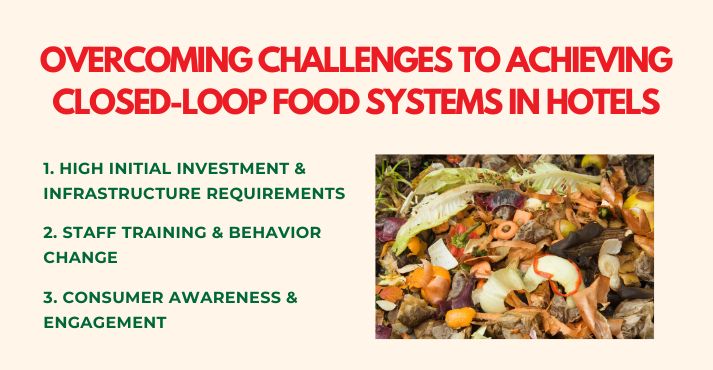
While the benefits of circular food systems in the hospitality industry are well established, implementation often presents operational and financial challenges.
Hotels must balance sustainability with cost-efficiency, food safety, and guest experience, often with limited resources.
1. High Initial Investment and Infrastructure Requirements
Establishing closed-loop systems can require a significant investment of capital. Hotels may need to invest in composting units, biodigesters, and digital waste tracking tools. Sourcing from sustainable suppliers may also come with premium pricing.
Solutions:
- Partnering with waste management companies to share infrastructure.
- Applying for local and national subsidies that promote sustainability in agriculture and circular economies.
- Piloting scalable systems that can expand over time.
2. Staff Training and Behavior Change
For any closed-loop strategy to succeed, hotel staff must understand and consistently apply new food handling, sorting, and repurposing procedures. Challenges arise when staff are unfamiliar with or resistant to these changes.
Solutions:
- Launching role-specific training programs tied to food safety and waste protocols.
- Encouraging teamwork through internal sustainability campaigns and recognition programs.
- Assigning departmental sustainability leads to overseeing food waste reduction in hotels.
3. Consumer Awareness and Engagement
Even the best systems can fall short if guests aren’t aware of or engaged in the hotel’s sustainability efforts. Many travelers expect luxury and convenience, and may be unfamiliar with practices such as mindful food portioning or reuse systems.
Solutions:
- Clear signage and digital communication explaining sustainability programs.
- Offering incentives for eco-friendly behavior (e.g., meal credits for zero-waste dining).
- Hotels can host on-site experiences, such as composting demos, to encourage guest participation and offer insight into their circular food system.
The Future of Closed-Loop Food Systems in the Hotel Industry
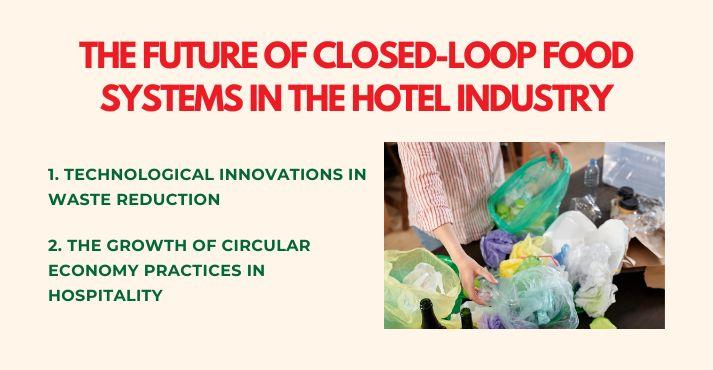
Hotels are finding new ways to reduce waste and reuse resources within their operations. Closed-loop systems are expected to grow as regulations tighten and guests demand stronger sustainability efforts.
Over the next decade, more hotels are expected to invest in smarter tools, improved materials management, and stronger circular food systems.
1. Technological Innovations in Waste Reduction
Some hotels now use sensors and tracking setups to monitor where and why food is discarded. This helps kitchens identify inefficiencies and reduce unnecessary waste.
Still, only 1% of waste is monitored in most materials recovery facilities, and even in advanced economies, 40% of sorting is still done by hand.
Improved waste analytics and real-time tracking can bridge this gap. Other advances, such as smart food storage, improved inventory systems, and shelf-life-extending preservation, are helping to reduce waste before it occurs.
2. The Growth of Circular Economy Practices in Hospitality
Hotels are beginning to manage food, water, and energy as connected systems. In food service, this includes turning leftovers into compost or bioenergy, using sustainable packaging, and partnering with local suppliers to reduce overproduction.
By 2030, more hotels across Southeast Asia are expected to operate closed-loop systems as part of hotel sustainability initiatives, driven by both compliance needs and consumer expectations.
Conclusion
Closed-loop food systems enable hotels in Southeast Asia to reduce waste, lower costs, and support local communities.
Efforts such as composting, better food planning, and collaborating with nearby farms make a significant difference, both environmentally and financially.
Hotels can start small. Whether it’s using trimmings more efficiently or tracking what gets thrown out, each step adds up. Over time, these changes can lead to more efficient operations and a more responsible approach to doing business.