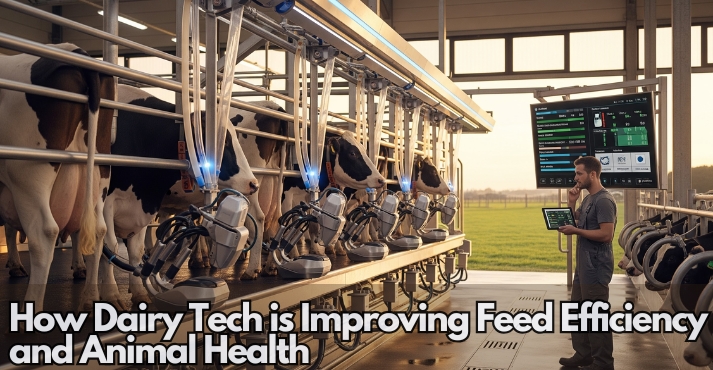
The global dairy industry faces increasing pressure to produce more milk while managing rising feed costs and maintaining high animal welfare standards.
This challenge has sparked a technological revolution on farms worldwide, where innovative solutions are dramatically improving feed efficiency and animal health.
Modern dairy technology goes beyond simple automation; it represents a complete transformation in how farmers care for their herds and manage resources.
From sensors that monitor each cow’s nutritional needs to genetic tools that build healthier herds, these advancements are making dairy farming more sustainable, profitable, and humane.
For farmers looking to optimize their operations, understanding these technologies is essential for staying competitive in the agricultural field.
What is Dairy Technology in Farming?
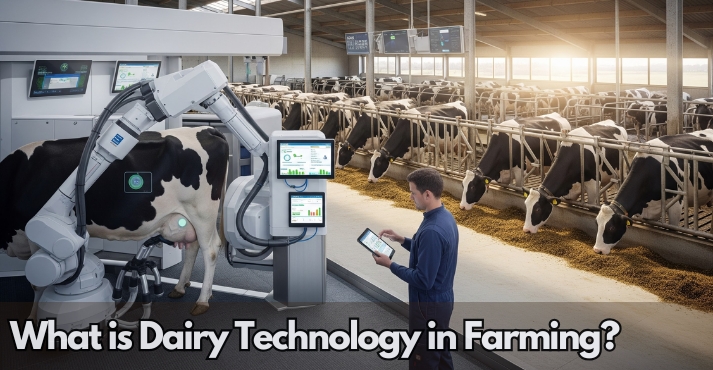
Dairy technology includes the combination of digital tools, sensors, and data analytics platforms that help farmers manage their herds with unprecedented precision.
Rather than treating all cows the same, these technologies allow for individualized care based on each animal’s specific needs, health status, and production potential.
The core purpose of dairy tech innovations is to optimize every aspect of farm operations, from feeding to healthcare, ultimately leading to healthier animals and more efficient resource use.
The key components driving improvements in feed and health management include:
- Precision feeding systems that customize rations
- Automated health monitoring that detects illness early
- Genetic selection tools that build resilient herds
- Automated milking systems that track performance in real-time.
Together, these technologies create an effective approach to smart dairy farming where data-driven decisions replace guesswork. This results in significant improvements in both animal welfare and farm profitability.
Precision Feeding Systems: Tailoring Nutrition for Optimal Performance
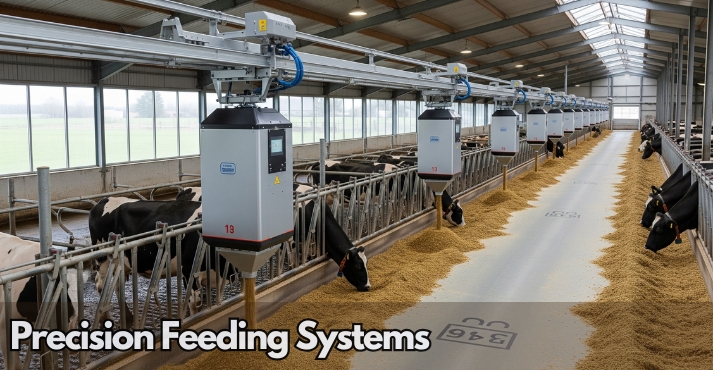
Precision feeding systems represent a fundamental shift from traditional “one-size-fits-all” feeding approaches to customized nutrition plans for individual cows.
These systems use sensors and data analytics to monitor each animal’s weight, milk production, health status, and even eating behavior, then adjust feed rations accordingly to maximize feed efficiency and support overall health.
How Precision Feeding Works in Practice
Advanced systems like TMR (Total Mixed Ration) monitoring technology track exactly how much feed each cow consumes, while body condition scoring cameras automatically assess nutritional status.
For example, a high-producing cow in early lactation might receive an energy-dense ration with additional supplements, while a late-lactation cow would get a maintenance-level diet.
This tailored approach ensures optimal nutrition without waste, significantly improving feed efficiency across the herd.
The benefits extend beyond simple cost savings. Research from leading animal health companies shows that precision dairy farming approaches can reduce feed costs by 10-15% while simultaneously increasing milk yield by 5-8%.
More importantly, properly nourished cows experience fewer metabolic disorders, stronger immune function, and better reproductive performance; all contributing to improved animal health and longevity in the herd.
Automated Health Monitoring: Early Detection and Prevention
Automated health monitoring systems use wearable sensors and smart technology to continuously track cows’ vital signs, activity levels, and behavior patterns.
These systems provide early warning of health issues long before symptoms become visible to the human eye, enabling proactive intervention that dramatically improves animal health outcomes.
The Technology Behind Early Detection
Modern monitoring systems track a wide range of health indicators, including rumination time, resting behavior, activity levels, body temperature, and even specific movements that indicate lameness.
For instance, systems from companies like MSD Animal Health can detect subtle changes in behavior that signal the onset of mastitis up to 48 hours before clinical signs appear.
This early detection allows farmers to treat animals sooner, reducing antibiotic use and improving recovery rates.
The impact on herd management is exceptional. One dairy operation reported reducing clinical mastitis cases by 30% after implementing automated monitoring, while also cutting veterinary costs by 25%.
By identifying sick animals earlier and isolating them promptly, these systems also help prevent disease spread throughout the herd, contributing to overall improvements in animal health and productivity.
Genetic Selection Tools: Breeding for Health and Efficiency
Genetic selection tools have evolved dramatically with advances in genomic testing, allowing farmers to make more informed breeding decisions that improve both feed efficiency and animal health.
By analyzing the DNA of young animals, farmers can identify those with a genetic predisposition for efficient feed conversion, disease resistance, and overall robustness.
Implementing Genetic Improvement Programs
Progressive dairy operations now use genomic testing to select heifers based on their genetic potential for feed efficiency and health traits.
For example, herds utilizing the Clarifide Plus program from Zoetis have demonstrated measurable improvements in disease resistance and productivity.
These genetically superior animals convert feed to milk more efficiently while requiring fewer veterinary interventions, directly improving feed efficiency and animal health simultaneously.
The long-term benefits accumulate with each generation. Farms that consistently use genetic selection tools report herds with stronger immune systems, reduced incidence of common ailments like mastitis and lameness, and better overall feed conversion ratios.
This genetic progress represents a sustainable path toward more resilient, efficient dairy operations that are better equipped to handle economic and environmental challenges.
Improved Feed Additives: Enhancing Digestion and Feed Conversion
Advanced feed additives represent another technological feat in improving feed efficiency and animal health.
Modern additives, including probiotics, enzymes, and specialized minerals, work at the molecular level to enhance digestion, support immune function, and optimize nutrient utilization from every pound of feed.
Science-Backed Additive Solutions
Companies like DSM-Firmenich have developed targeted feed additive programs that demonstrate significant improvements in dairy operations.
Their research shows that specific enzyme blends can improve fiber digestion by up to 15%, allowing cows to extract more energy from the same amount of feed.
Meanwhile, advanced probiotic formulations support gut health and immune function, reducing disease incidence and improving overall animal health.
The economic impact is substantial. Farms implementing optimized feed additive programs typically see feed cost savings of 8-12% alongside reductions in veterinary expenses and improvements in milk component quality.
By enhancing the nutritional value of existing feed resources, these advanced additives deliver a clear return on investment while supporting more sustainable farming practices through better resource utilization.
Automated Milking Systems (AMS): Boosting Milking Efficiency and Cow Comfort
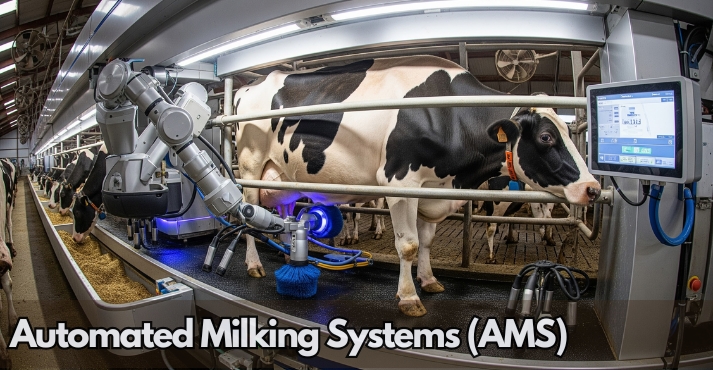
Automated milking systems (AMS) represent one of the most visible dairy tech innovations, but their benefits extend far beyond labor savings.
These sophisticated systems collect valuable data on each cow’s milk production, composition, and milking behavior, providing insights that directly contribute to improving feed efficiency and animal health.
Beyond Automation: Data-Driven Management
Modern AMS units from manufacturers like Lely and DeLaval track individual cow performance multiple times daily, detecting subtle changes that might indicate health issues or nutritional imbalances.
This kind of advanced agricultural technology is an example of the innovation seen in the novel foods sector, which is constantly evolving to improve efficiency and sustainability.
For instance, a sudden drop in milk yield or changes in milk composition can trigger alerts for early intervention.
This continuous monitoring allows farmers to adjust feeding strategies in real-time, ensuring each cow receives optimal nutrition for her production level and health status.
The impact on cow welfare is equally significant. Research shows that cows using AMS experience less stress than those in conventional milking parlors, as they can choose when to be milked according to their natural rhythms.
This improved welfare leads to better animal health, with studies documenting reduced lameness and lower somatic cell counts in AMS herds.
The combination of better data and improved cow comfort makes these systems a powerful tool for modern dairy operations.
The high-quality, consistently produced milk from these systems then becomes a key raw ingredient for the consumer packaged goods market, ensuring traceability and quality from farm to shelf.
Conclusion
The integration of these dairy technology solutions represents nothing less than a revolution in how we approach animal agriculture.
What emerges from examining these innovations is a clear picture: the future of profitable, sustainable dairy farming lies in smart technology adoption.
For dairy farmers, the message is clear: embracing these technologies is no longer about gaining a competitive edge; it’s about future-proofing your operation.
The data is compelling: farms implementing comprehensive dairy tech innovations report 15-20% improvements in feed efficiency, 25-30% reductions in disease incidence, and significant gains in overall productivity and sustainability.
These aren’t marginal improvements; they’re transformational changes that redefine what’s possible in dairy farming.
The path forward requires investment, both financial and educational, but the returns extend beyond simple economics.
By improving feed efficiency and animal health through technology, farmers create more resilient operations that can withstand market volatility while meeting rising consumer expectations for animal welfare and the requirements of climate conscious consumers.
The dairy farms that will thrive in the coming decades are those that see technology not as an expense, but as the most valuable tool in their barn.