Effective risk management is essential for hotel operators and procurement managers. Hotels rely on a network of suppliers for food, amenities, and services, and any disruption can impact operations, guest satisfaction, and reputation.
Ensuring that purchases meet quality, safety, and ethical standards helps minimize financial and operational risks.
Environmental, social, and governance (ESG) practices are now a critical part of procurement, as hotels are expected to minimize environmental impact, uphold fair labor standards, and maintain transparent supply chains.
Compliance with food safety regulations is equally important to protect guests and avoid legal or reputational issues.
Automating ESG compliance in hotel procurement helps simplify these complex processes. By tracking supplier certifications, monitoring sustainability metrics, and ensuring regulatory adherence, hotels can reduce errors, improve efficiency, and meet both operational and sustainability goals more effectively.
What is ESG in Hotel Procurement?
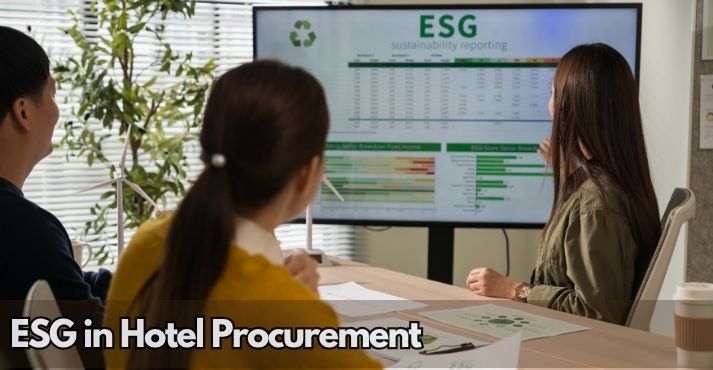
ESG stands for Environmental, Social, and Governance, and it provides a framework for assessing how businesses operate responsibly. In hotel procurement, ESG is used to select suppliers and products that meet sustainability and ethical standards.
Environmental considerations include sourcing products that reduce waste and lower carbon emissions, and that come from renewable resources.
Social aspects include fair labor practices, community involvement, and support for diverse vendors. Governance ensures transparency, compliance, and ethical business practices throughout the supply chain.
Using ESG metrics in procurement helps hotels evaluate supplier performance across these areas. In 2023, over 70% of customer accounts included ESG-related questions in their requests for proposals (RFPs), showing a stronger focus on sustainability in supplier selection.
As a result, sustainable sourcing has become part of hotel procurement strategies, ensuring products and services meet operational requirements while supporting environmental and social standards.
How Automation Helps Manage Food Safety in Hotel Procurement
Maintaining food safety in hotels can be challenging when relying on manual processes. Tracking certifications, logging inspections, and verifying supplier compliance often takes time and is prone to errors, leading to operational disruptions or regulatory issues.
ESG compliance automation allows hotels to keep accurate records of supplier practices and food safety audits without manual entry. Automated systems can schedule and record inspections, track expiration dates, and ensure suppliers meet required standards.
They can also verify adherence to green hotel certifications, ensuring that products and processes meet recognized sustainability standards.
Procurement automation for hotels links compliance data with vendor management, giving procurement teams visibility into supplier performance.
This reduces administrative work, maintains consistent quality, and allows staff to focus on providing safe and sustainable services.
How Non-Compliance Affects Hotel Reputation and Operations
Failure to comply with food safety regulations and requirements can lead to significant legal and financial consequences. Hotels that neglect these obligations risk fines, legal actions, and damage to their reputation.
For instance, in 2022, the Crowne Plaza Terrigal Pacific in New South Wales experienced a severe food poisoning outbreak during a conference.
Approximately 70 attendees fell ill, with 27 confirmed Salmonella cases. The hotel’s kitchen was voluntarily closed, and authorities investigated the cause of the outbreak.
Such incidents result in legal repercussions and reduce guest trust. Guests expect a safe, compliant environment, and failure to meet these standards can lead to negative reviews, reduced bookings, and long-term brand damage.
Following ESG standards in hotel procurement is essential to minimize these risks and maintain smooth operations.
The Key Benefits of Automating Procurement in Hotels
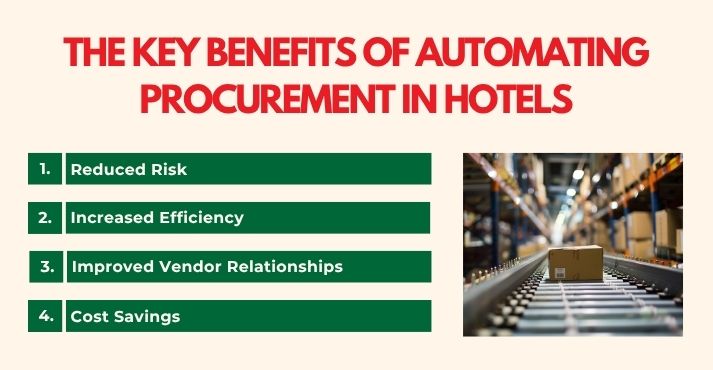
Automating procurement processes in the hotel industry offers several advantages, particularly in ESG compliance, food safety, and operational efficiency.
1. Reduced Risk
Automation minimizes human error and ensures adherence to standards. Digital food safety programs help hotels comply with regulations by automating processes and providing real-time data, significantly improving food safety compliance.
Automated alerts and reports allow procurement teams to quickly identify potential issues before they escalate, lowering the chance of non-compliance or costly mistakes.
2. Increased Efficiency
Automated systems shorten procurement cycles and reduce time spent on manual checks. According to a report, automated purchasing improves productivity gains by 10-30% and raises purchasing compliance to more than 80%.
By removing repetitive tasks, staff can focus on strategic planning, supplier communication, and other tasks that improve overall workflow.
3. Improved Vendor Relationships
Automation ensures suppliers meet sustainability and regulatory standards. Integrating ESG criteria into procurement processes helps hotels work with vendors committed to ethical and sustainable practices.
Attending events such as a sustainable food trade show helps hotels identify new suppliers and strengthen procurement partnerships.
4. Cost Savings
Reducing fines, penalties, and costly errors results in measurable cost savings. Automated systems help prevent compliance issues and streamline operations.
Accurate procurement data also allows better budgeting, forecasting, and inventory management, which lowers waste and operational expenses.
Implementing sustainable hotel procurement practices through automation improves efficiency while meeting environmental and social governance objectives, benefiting both the hotel and its stakeholders.
Best Tools for Automating ESG and Compliance in Hotel Procurement
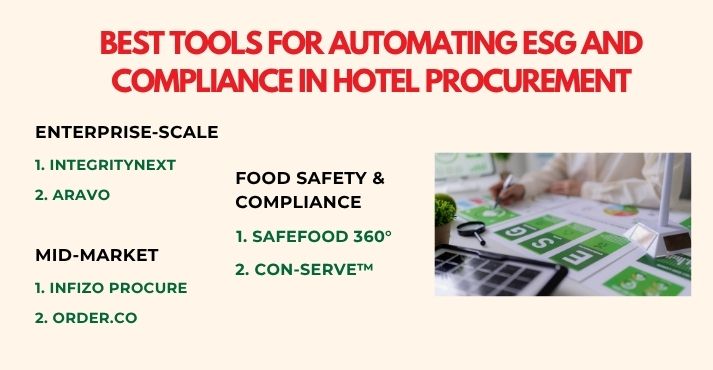
In modern hotel procurement, selecting the right software is a strategic decision. Below is a breakdown of leading platforms that address ESG compliance, food‑safety checks, and procurement workflows, along with recommendations based on hotel type, size, and budget.
1. Enterprise‑Scale Platforms (Large Hotel Chains or Global Portfolios)
- IntegrityNext: This platform embeds supplier ESG risk assessment, real‑time monitoring, and integration into procurement flows.
- Features: Supplier pre‑qualification based on ESG criteria; alerts for incidents; API integrations with ERP and sourcing tools.
- Best fit: International hotel groups or large resort chains with complex supply chains.
- Aravo: A compliance and governance tool oriented around third‑party risk and extended enterprise.
- Features: Supplier scorecards, ESG risk intelligence, and governance dashboards.
- Best fit: Hotel groups that need to manage layered vendor networks, from food suppliers to service contractors.
2. Mid‑Market Procurement Tools (Regional Brands, Boutique Chains)
- Infizo Procure: Procurement software for hospitality that combines vendor management, menu‑specific ordering, and compliance features.
- Features: Centralized vendor database, order templates by menu item, and inventory‑procurement linkage.
- Best fit: Mid‑sized hotels or resort groups looking to move away from manual workflows.
- Order.co: Cloud‑based purchasing platform used by hotels, resorts, and vacation rentals.
- Features: Recurring orders, budget control, vendor portal, and spend visibility.
- Best fit: Independent hotels or small chains seeking control over purchasing without a heavy IT footprint.
3. Food‑Safety & Compliance Focused (All Property Sizes)
- Safefood 360°: A specialist food‑safety management platform offering modules for HACCP, audits, supplier quality, and traceability.
- Features: Inspection checklists, training records, and supplier certification tracking.
- Best fit: Hotels with significant F&B operations, large kitchens, or multiple dine‑outlets.
- Con‑Serve™: An ESG data platform designed specifically for hotels and resorts.
- Features: Consumption tracking (water, energy, waste), guest‑cover and room‑night metrics, customizable KPIs.
- Best fit: Hotels or resorts with sustainability targets that need reporting aligned with ESG frameworks.
Recommendation Summary
- For an international or high‑volume portfolio with diverse vendors and global supply chains → consider IntegrityNext or Aravo.
- For regional chains or boutique groups focused on streamlining procurement workflows → Infizo Procure or Order.co are cost‑effective choices.
- For food‑heavy operations or hotels where compliance and safety are mission‑critical, Safefood 360° fits the niche.
- For hotels that view sustainability as strategic and require ESG data for stakeholders → Con‑Serve™ delivers hospitality‑specific ESG metrics.
When choosing a tool, evaluate: integration capability with existing systems (ERP, POS, vendor portal), scalability across locations, ease of onboarding for vendors and internal teams, and whether the tool aligns with your compliance standards and sustainability ambitions.
Case Studies
The examples below show how hotels are using automated procurement and compliance tools to improve operations, reduce risks, and meet sustainability goals.
Case Study 1: Hyatt Hotels
Hyatt rolled out a cloud-based procurement system across over 850 properties worldwide to manage purchase orders, suppliers, and inventory.
By automating approvals and tracking compliance, the system helped staff focus on strategic tasks instead of manual checks. It also made it easier to maintain ESG standards consistently across all locations.
The results were notable: invoice-processing labor costs dropped by 40%, purchasing compliance reached around 80%, and total procurement spending fell by about 20%.
This shows how automation can make hotel operations more efficient while keeping suppliers accountable.
Case Study 2: Vendor Performance in Australia and New Zealand
Hotels in Australia and New Zealand adopted digital vendor‑scorecard systems and central procurement platforms to track supplier performance, certifications, and delivery schedules.
This made it easier to monitor quality, ensure food safety, and reduce waste across multiple properties.
For example, a luxury hotel in Melbourne implemented a vendor scorecard in early 2024 to track on-time deliveries, product quality, and temperature controls from food suppliers. The initiative led to noticeable reductions in food waste and higher guest satisfaction.
Meanwhile, a Sydney‑based hotel group introduced a centralised vendor‑management platform in mid‑2024, standardising supplier evaluations across its portfolio. Within eight months, the group achieved consistent service levels and lowered procurement costs.
These examples show how digital tools can streamline processes, strengthen vendor relationships, and support sustainable hotel procurement practices.
FAQs
What are the ESG requirements in hotel procurement?
ESG requirements in hotel procurement focus on sourcing suppliers and products that meet environmental, social, and governance standards. This includes reducing carbon footprint, ensuring fair labor practices, and maintaining transparency across the supply chain.
How do hotels manage food safety compliance?
Hotels manage food safety by implementing standardized protocols, conducting regular inspections, tracking supplier certifications, and training staff. Digital systems can help monitor these processes efficiently across multiple properties.
What tools automate hotel procurement compliance?
Software like vendor management platforms, procurement automation tools, and ESG monitoring systems help hotels track compliance, manage supplier data, and ensure adherence to regulations like HACCP and FDA standards.
How can automation improve vendor risk management?
Automation provides real-time insights into supplier performance, flags non-compliance, and streamlines audits. This reduces human error, identifies risks early, and helps hotels maintain consistent quality and safety standards.
Why is procurement automation important for sustainability?
Procurement automation enables hotels to prioritize sustainable sourcing, monitor ESG metrics, and reduce waste. It supports responsible decision-making while ensuring suppliers meet environmental and social standards.
Conclusion
Automating procurement in hotels helps streamline ESG compliance, food safety tracking, and risk management.
Digital systems allow hotels to monitor supplier performance, enforce regulatory standards, and reduce human error, leading to more efficient operations and improved vendor relationships.
Looking ahead, hotel procurement will increasingly use predictive analytics and AI-powered vendor management to identify trends and optimize decision-making while integrating sustainability metrics into daily processes.
Hotels seeking to reduce risks, enhance operational efficiency, and achieve sustainability goals should explore automation solutions that simplify procurement and improve overall performance.