Discover how smart waste management helps hotels reduce costs, meet sustainability goals, and attract eco-conscious guests in Singapore and APAC
Hotels today face a growing challenge. Food waste accumulates in buffets, bins overflow, and disposal costs put pressure on operational budgets.
Managing waste efficiently is becoming essential not only for controlling costs but also for meeting the expectations of environmentally conscious guests.
Smart waste management offers a solution through CleanTech innovations, including Internet of Things sensors, automated sorting systems, and data analytics. These technologies enable hotels to monitor waste in real-time, reduce unnecessary disposal, and streamline operations.
In Singapore and across the APAC region, where sustainability targets are rising, smart waste management is becoming a major focus for hotels.
This blog will explore the concept, benefits, technologies, real-world examples, cost savings, and practical approaches for implementing these solutions, ensuring both operational efficiency and environmental responsibility.
What is Smart Waste Management in Hotels?
Smart waste management in hotels refers to the use of technology to enhance waste handling efficiency and sustainability.
Instead of relying on manual processes, it uses systems such as smart bins with sensors, automated waste collection systems, and digital platforms that track disposal patterns.
These systems allow hotels to monitor waste levels, sort materials for recycling, and optimize collection schedules, reducing unnecessary costs while promoting eco-friendly waste management practices.
This is especially important because the hotel industry generates substantial volumes of food, packaging, and operational waste daily. With stricter regulations and higher expectations for sustainable hospitality, hotels need reliable methods to reduce waste.
Automated waste management allows operators to stay compliant, cut costs, and show environmental responsibility in ways that resonate with guests.
Key CleanTech Solutions for Hotel Waste
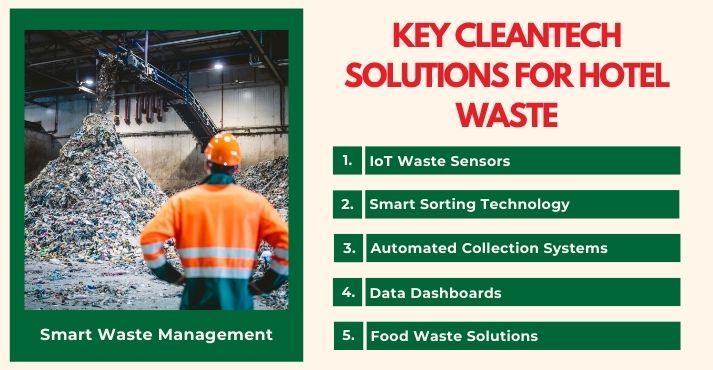
Smart waste management in hotels is supported by a range of CleanTech technologies that help reduce costs, minimise environmental impact, and improve operational efficiency.
These solutions can be applied across various types of hotels, from luxury resorts to eco hotels focused on sustainability.
1. IoT Waste Sensors
IoT-enabled sensors installed in bins or collection points measure fill levels in real time. This allows hotels to schedule pickups only when necessary, preventing overflowing bins and reducing transportation costs.
By integrating these sensors with digital waste management systems, staff can monitor waste patterns, adjust collection schedules, and improve planning across kitchens, banquet halls, and other high-waste areas.
2. Smart Sorting Technology
Sorting waste accurately is a major challenge in hospitality. Smart sorting technologies can identify and separate recyclable, organic, and non-recyclable materials automatically.
This not only improves recycling rates but also helps hotels comply with local environmental regulations, supporting eco-friendly waste management practices.
3. Automated Collection Systems
Robotic or pneumatic collection systems reduce the need for manual handling, making back-of-house operations safer and more efficient.
Automated systems can transport waste from kitchens or service areas directly to storage or processing points, keeping operational spaces cleaner and reducing staff labor requirements.
4. Data Dashboards
Digital dashboards consolidate information from sensors and collection systems in real time. Hotels can track waste streams, measure progress against sustainability KPIs, and generate reports for internal review or regulatory compliance.
Integrating these dashboards with existing property management systems helps operators make data-driven decisions for overall resource efficiency.
5. Food Waste Solutions
Food waste is particularly significant in buffet dining and large kitchens. Biodigesters and composting units can convert organic waste into usable energy or soil nutrients.
Redistribution platforms allow surplus food to be donated, reducing waste while supporting community initiatives. These solutions can help hotels of all types reduce operational waste and improve sustainability performance without relying on specific vendor implementations.
Benefits of Smart Waste Management for Hotels
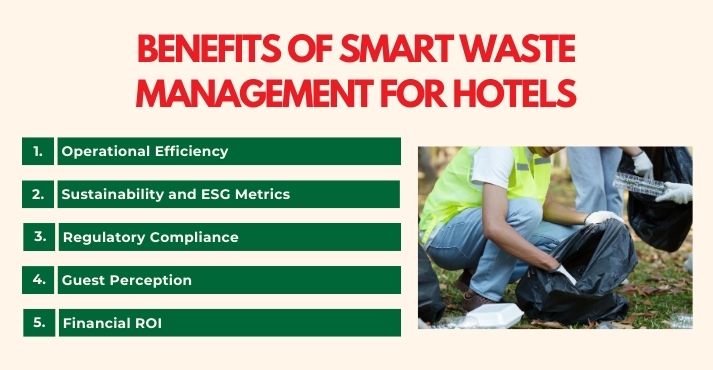
Implementing smart waste management delivers measurable results for hotels, improving both operational efficiency and sustainability performance. The benefits span cost reduction, regulatory compliance, and stronger engagement with eco-conscious guests.
1. Operational Efficiency
Advanced waste management technology provides real-time insights into waste levels, reducing manual handling and unnecessary pickups. This lowers labor and fuel costs, streamlines back-of-house areas, and supports smoother hotel operations.
2. Sustainability and ESG Metrics
Digital systems help track key indicators such as waste intensity, recycling rates, and diversion from landfill. For instance, Frasers Hospitality Trust reported an 8.1% drop in waste per occupied room night in FY2024 while recycling tonnage rose by 7.1%.
These results support ESG reporting and compliance with Singapore’s Green Plan 2030 and APAC sustainability standards.
3. Regulatory Compliance
Automated data collection simplifies reporting on waste volumes and disposal methods. Hotels can submit accurate records to authorities with confidence, meeting regional environmental requirements efficiently.
4. Guest Perception
Hotels that manage waste responsibly can attract customers who value eco-friendly operations. Transparent waste practices, including recycling and composting, build trust and enhance brand reputation.
5. Financial ROI
Efficient waste management reduces disposal fees and optimizes collection schedules. Waste-to-energy solutions, such as biodigesters, convert organic waste into usable energy or nutrients, turning waste into a valuable resource while improving cost efficiency.
Traditional Waste Management vs. Smart Solutions
Hotels have long relied on traditional waste practices, such as fixed collection schedules and manual monitoring of disposal areas. While simple, these methods often lead to inefficiencies, including overflowing bins, unnecessary labor, and limited tracking of recycling performance.
These gaps raise costs and make it harder for hotels to meet sustainability expectations in Singapore and across the APAC region.
Smart waste solutions replace guesswork with accurate, real-time data. Sensors and automated alerts inform facilities teams exactly when waste needs collection, reducing wasted trips and fuel consumption.
Data dashboards track recycling rates and disposal volumes, helping hotels meet sustainability targets. For full-service and eco hotels, where waste streams are larger and more complex, these systems improve efficiency and support sustainable practices that guests appreciate.
Manual vs. Smart Waste Systems
| Factor | Manual Waste Management | Smart Waste Systems |
| Cost Control | Fixed collection schedules lead to wasted trips and higher labor costs. | On-demand collection lowers operating expenses and reduces fuel use. |
| Compliance | Limited tracking makes it harder to meet reporting requirements. | Automated reporting ensures accuracy and supports regulatory compliance. |
| Sustainability | Recycling is often inconsistent, with little visibility on performance. | Data-driven monitoring improves recycling rates and waste diversion. |
| Guest Experience | Overflowing bins or visible waste areas can hurt guest perception. | Cleaner facilities and visible eco-practices enhance guest trust. |
Industry Examples & Case Studies
Smart waste initiatives are already being adopted by leading hotel groups worldwide, resulting in significant reductions in both cost and environmental impact.
Hilton – Green Breakfast pilot (UAE, 2023)
Hilton partnered with Winnow and ne’ma, the UAE National Food Loss and Waste initiative, across 13 hotels. In just four months, the program cut food waste in breakfast operations by 62%.
This project has since been expanded to more properties, reinforcing Hilton’s global food waste reduction goals.
Radisson Hotel Group – Winnow & Too Good To Go (Germany)
At Radisson Blu Dortmund, food waste decreased by 34% over ten months, resulting in a 836 kg reduction and significant CO₂e reductions. The program also helped the property streamline kitchen processes and improve staff awareness on waste handling.
Grand Hyatt Singapore – Biodigester System
The Grand Hyatt Singapore has installed a Biomax Thermophilic Digester, which processes 500 kg of food waste daily into organic fertiliser. The initiative saved around SGD 100,000 annually in haulage and operational costs.
It also positioned the hotel as a frontrunner in Singapore’s waste reduction targets under the Green Plan 2030.
Hilton Singapore Orchard – Eco-Wiz ecoDigester
Hilton Singapore Orchard processes kitchen waste into organic fertiliser while sourcing from on-site herb gardens and vertical farms.
The redistribution of surplus food further reduces its environmental footprint. This combination of technology and circular practices enhances the property’s positioning among eco-conscious travellers.
Hilton Tokyo Bay – Winnow Vision
Using Winnow Vision tracking, Hilton Tokyo Bay cut food waste by 30% in just four weeks. The system enabled chefs to adjust menu planning and portion sizes, directly reducing waste and food costs.
These results have encouraged Hilton to replicate the system in other locations across the Asia-Pacific region.
In short, vendors like Winnow, Biomax, Ecube Labs, Bigbelly, and CleanRobotics are increasingly supporting hotel operators in these transitions, providing technology for both large resorts and city-based hotels.
How Smart Waste Solutions Support Hotel Sustainability Goals
Waste management in hotels is part of sustainability and ESG strategies. Smart waste solutions allow operators to accurately measure food and material waste, track progress for stakeholders, and meet environmental reporting requirements.
Singapore’s Zero Waste Masterplan sets a national target to reduce waste sent to the Semakau Landfill by 30% and to achieve an overall recycling rate of 70% by 2030.
Hotels that use technology to monitor and reduce waste contribute directly to these national goals while preparing for stricter reporting requirements.
The Singapore Hotel Association (SHA) and the Singapore Tourism Board have also published the Hotel Sustainability Roadmap, which sets hotel certification targets for 2025.
Waste management is one of four focus areas, and operators are encouraged to track waste streams alongside energy and water use.
Guests who care about the environment choose hotels that show real results in reducing waste and managing resources responsibly. Intelligent hotels that publish their sustainability performance stand out in marketing, especially for those seeking sustainable stays.
Best Practices for Implementing Smart Waste Management
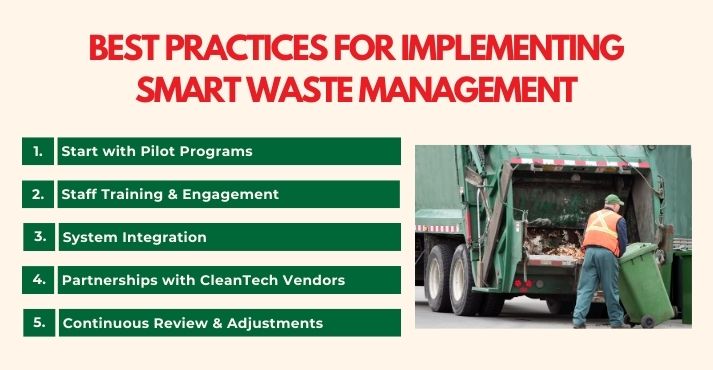
Hotels that want to introduce smart systems can follow structured steps to make the process practical and effective.
1. Start with Pilot Programs
Launching small projects in high-waste areas, such as kitchens, banquet halls, or F&B outlets, helps hotels test new methods before scaling them up. A pilot makes it easier to identify quick wins, such as reducing buffet leftovers or improving recycling rates, without disrupting full operations.
2. Staff Training and Engagement
Employees are essential for intelligent waste management. Training staff on how to track waste, separate items correctly, and use monitoring systems ensures the technology delivers results.
Recognition programs for teams that reduce waste can further build commitment.
3. System Integration
Waste monitoring dashboards should connect with existing hotel management systems. This integration allows operators to track waste alongside energy, water, and procurement data, providing management with a comprehensive view of resource efficiency.
4. Partnerships with CleanTech Vendors
Working with specialised providers helps hotels design solutions that fit their size, location, and type of operation. Whether through waste sensors, biodigesters, or composting units, a personalized setup ensures better returns and fewer operational challenges.
5. Continuous Review and Adjustments
Regularly analysing waste data enables the refinement of policies and ensures performance remains on track. For example, insights from a dashboard may highlight the need to change purchasing practices or adjust portion sizes in the kitchen.
Industry platforms, such as a hospitality technology trade show, also provide opportunities to benchmark against peers and explore emerging solutions.
Challenges and Considerations
While smart waste management offers multiple advantages, hotels must address certain challenges before implementation. These include upfront investment in technology, integration with legacy property systems, and ensuring staff are equipped to operate new tools effectively.
In 2024, UOL Group reported that its commercial and hospitality properties in Singapore generated 7,397 tonnes of non-hazardous waste, with only 452 tonnes recycled.
These figures show the scale of the issue and emphasize the need to address barriers systematically.
1. High Initial Costs
The installation of sensors, tracking software, and automated collection systems can require significant investment.
Hotels can overcome this by starting with phased rollouts in high-waste areas, such as kitchens and banquet halls, and by exploring government incentives and grants available in Singapore to offset costs.
2. Integration with Legacy Systems
Many properties still rely on older property management platforms, which may not align seamlessly with modern CleanTech tools.
Working closely with vendors that provide integration support reduces disruptions and ensures waste data can be incorporated into existing dashboards.
3. Staff Readiness
Introducing new technology without proper hospitality training can limit its effectiveness. Hotels can build readiness by scheduling targeted workshops, offering clear guidelines on waste sorting, and appointing departmental champions to reinforce practices.
Continuous engagement helps ensure the system operates as intended.
FAQs
What is smart waste management in hotels?
Smart waste management in hotels refers to the use of technology to optimise the collection, sorting, and disposal of waste materials.
By using connected devices and data platforms, hotels can monitor waste streams more accurately, reduce unnecessary pickups, and improve recycling performance.
How do IoT waste sensors work?
IoT waste sensors are installed in bins or collection points to track fill levels in real time. The data is sent to a central dashboard, allowing hotel managers to schedule collections only when needed.
This prevents overflowing bins, lowers collection costs, and improves operational efficiency.
Can smart waste systems reduce food waste?
Yes, smart systems can track food waste generated in kitchens or buffets, helping hotels identify patterns such as overproduction.
With this data, properties can adjust portion sizes, redistribute surplus food through donation apps, or process organic waste using biodigesters and composting systems.
What are the cost savings for hotels using smart waste management?
Savings depend on hotel size and waste volume, but many properties report reduced disposal fees and lower labor costs.
For example, biodigesters can reduce food disposal costs, while optimised collection schedules decrease the need for frequent waste pickups. Over time, investments in technology often pay back through recurring savings.
Which CleanTech companies provide these solutions?
Several CleanTech vendors specialise in hospitality-focused waste solutions. Examples include Enevo and Ecube Labs, which offer IoT-enabled waste sensors; CleanRobotics, with automated sorting bins; and Bigbelly, known for its smart waste stations used in public and commercial spaces.
Hotels in Singapore and across the APAC region are also partnering with local providers to offer tailored solutions for food waste management.
Conclusion
Smart waste management allows hotels to reduce costs, comply with regulations, and strengthen their sustainability commitments.
For Singapore and the wider APAC region, where environmental targets and guest expectations are high, these systems are no longer optional but essential for long-term competitiveness.
By using technology such as IoT sensors, automated collection systems, and food waste solutions, hotels can manage resources more efficiently while enhancing their reputation among eco-conscious travellers.
Hotel leaders should begin by exploring partnerships with CleanTech vendors and considering phased rollouts in areas with high waste.
Taking these steps today positions hotels to meet rising sustainability standards and achieve stronger financial and operational outcomes tomorrow.