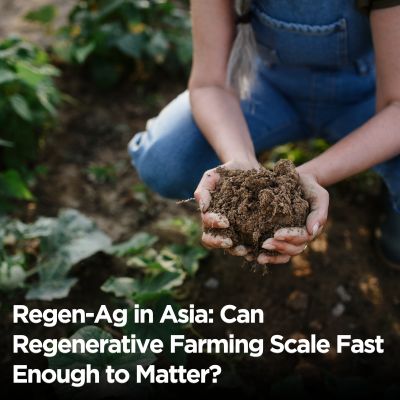
Asia feeds more than half the world’s population, yet its food systems are under increasing pressure. Soil fertility is declining, water resources are strained, and farmers across the region are facing rising temperatures, floods, and changing rainfall patterns.
Many of these challenges are linked to intensive farming practices that have exhausted the land over time.
Regenerative agriculture in Asia offers a different path. Rooted in traditional knowledge and guided by ecological principles, it focuses on rebuilding soil health, increasing biodiversity, and drawing carbon back into the ground.
Techniques such as cover cropping, composting, mixed farming, and reduced tillage help farmers restore the land’s natural balance, rather than relying solely on chemical inputs.
This is more than just theory. The World Economic Forum estimates that if just one in five farmers adopts practices such as regenerative farming, global agricultural emissions could decrease by 6% annually by 2030.
For Asian countries where agricultural growth is rapid but climate risks are rising, the move toward regenerative agriculture isn’t only timely but also becoming essential.
What is Regenerative Agriculture?
Regenerative agriculture is a farming method that focuses on restoring soil health and enhancing the long-term productivity of the land. It emphasizes natural processes, such as improving soil structure, increasing water retention, and enhancing nutrient cycles.
Unlike conventional farming, which often relies on chemical inputs and intensive tillage, regenerative farming uses techniques like no-till planting, cover cropping, agroforestry, and rotational grazing. These methods help protect soil from erosion, improve fertility, and support natural ecosystems.
In many parts of Asia, farmers are turning to regenerative practices based on traditional knowledge to ease pressure on land and adapt to changing climate conditions.
This transition supports the growth of sustainable farming in Asia, where there is increasing urgency to maintain food production while protecting natural systems.
As soil health improves, so does the land’s ability to store carbon and support diverse crops. Regenerative agriculture can also produce better-quality food and meet the increasing demand for organic products.
Principles of Regen-Ag
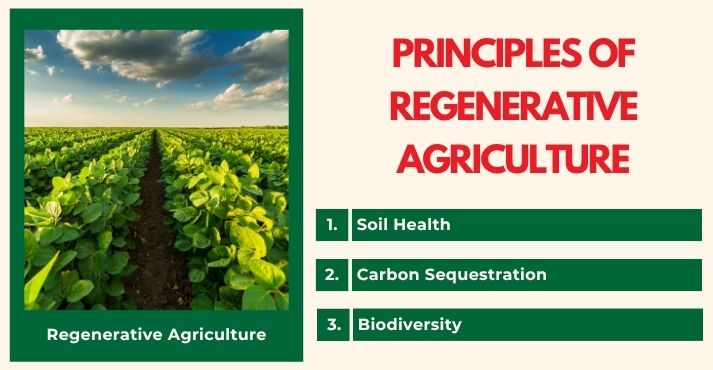
- Soil Health: Healthy soil is the foundation of productive farming. Regenerative farming builds soil fertility by encouraging organic matter, microbial activity, and root systems. Practices such as composting, reduced tillage, and natural ground cover help restore soil life and reduce dependence on synthetic fertilizers.
- Carbon Sequestration: Regenerative agriculture supports the natural process of drawing carbon dioxide from the atmosphere and storing it in soil. Techniques such as cover cropping, perennial planting, and rotational grazing increase the soil’s ability to retain carbon while improving moisture and nutrient retention.
- Biodiversity: A diverse farm system is more resilient to pests, disease, and climate stress. By growing multiple crops, integrating livestock, and maintaining natural vegetation, regenerative agriculture creates an environment where beneficial insects, soil organisms, and native species can thrive. This leads to stronger ecosystems and better long-term yields.
Why Regenerative Agriculture Matters for Asia
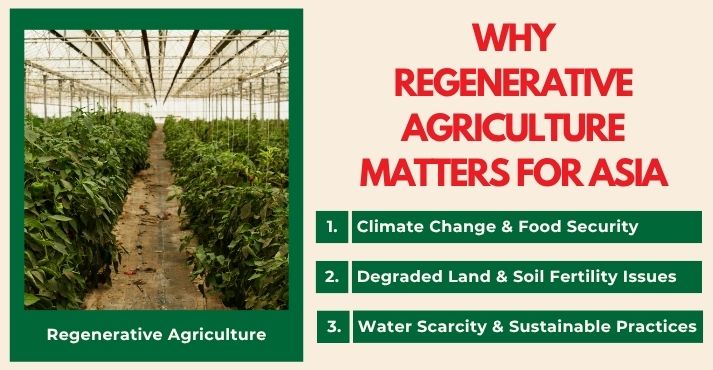
Agriculture across Asia is facing serious challenges. Soils are losing fertility, water is becoming scarce, and farmers are under pressure to feed growing populations with fewer resources.
Much of the land has been pushed beyond its limits by years of intensive farming, leaving ecosystems strained and productivity falling.
As the global population is projected to reach 9.7 billion by 2050, Asia’s food systems will need to meet this higher demand with smarter, more sustainable methods.
Regenerative agriculture can help restore balance by improving soil health, conserving water, and building resilience against extreme weather. It also supports more stable rural livelihoods and strengthens the food supply chain from the ground up.
Instead of focusing only on short-term yields, regenerative farming works with nature to rebuild what’s been lost.
This shift is not only about improving yields. It is about protecting land, water, and farming livelihoods for the long term. With the right support, regenerative practices can offer a practical path toward sustainable farming across Asia.
1. Climate Change and Food Security
Asia’s farmers are already dealing with more frequent floods, longer droughts, and rising temperatures. These changes are making it harder to plan planting seasons or maintain reliable harvests.
The impact of climate on food security is becoming clearer every year, especially in regions dependent on rice, wheat, and other staple crops.
Regenerative agriculture helps farms adapt by improving soil structure, increasing organic matter, and promoting diverse cropping systems. These practices help reduce crop loss during extreme weather and make local food systems more resilient.
In a region where millions depend on farming for food and income, building this resilience is crucial to sustainable food security.
2. Degraded Land and Soil Fertility Issues
In large parts of China, India, and Southeast Asia, the land is losing its ability to grow healthy crops. Years of heavy fertilizer use, deep tillage, and monoculture have left soils compacted and lifeless. This has led to falling yields, higher input costs, and increasing risks for farmers.
Around 24 billion tons of fertile soil are lost worldwide each year, much of it from regions using intensive farming methods.
Regenerative agriculture helps turn this around by rebuilding topsoil, restoring nutrients, and increasing microbial activity. Rebuilding soil health in Asia is not just possible but essential for ensuring long-term food production and rural stability.
3. Water Scarcity and Sustainable Practices
Many Asian regions now face water stress, especially during dry seasons. Farmers in regions such as northern India and central Vietnam rely on groundwater, which is being depleted at a faster rate than it can recharge. In others, rainfall is becoming unpredictable, affecting irrigation.
Regenerative methods help conserve water through improved soil structure, mulching, and organic matter that holds moisture longer. Fields managed with compost or no-till farming often need less water compared to conventional ones.
As water pressure increases, these techniques will be vital to maintaining farm productivity and promoting sustainable farming in Asia’s most vulnerable areas.
Can Regenerative Farming Scale Quickly Enough in Asia?
Asia faces a critical question: can regenerative farming scale fast enough to restore soils, protect biodiversity, and meet food demands in time?
While the region is home to nearly 60% of the world’s population and some of the most degraded farmland, regenerative practices are still in early stages across much of Asia. Rapid growth is possible, but not without overcoming several practical and economic challenges.
Barriers to Scaling Regen-Ag in Asia
One of the biggest hurdles is awareness. In many parts of Asia, regenerative agriculture is still a new concept, and most smallholder farmers lack access to training or demonstration models. These knowledge gaps make it difficult to move away from conventional techniques.
The financial side is equally challenging. According to a Deloitte study, upfront investments for adopting regenerative methods range from €2,000 to €5,000 per hectare (pre-incentives).
Even at the lower end, farmers may face a nine-year payback period with just a 4% internal rate of return over ten years, making the transition hard to justify without strong policy or market incentives.
There’s also the issue of cultural and institutional resistance. In regions where monocropping and chemical-heavy farming have been the norm for generations, change isn’t just technical.
It requires undoing deeply rooted habits, particularly in large-scale operations where productivity and predictability have long taken priority.
These factors present a complex set of challenges to the adoption of regenerative agriculture, slowing its widespread uptake across the region.
Opportunities for Scaling Regen-Ag in Asia
Despite the challenges, support for regenerative farming is expanding across the region. In countries like India, China, and Thailand, government-backed incentives, pilot projects, and subsidies are encouraging more farmers to adopt sustainable methods.
These programs also support ideas tied to the circular economy, such as reducing waste, restoring soil, and cutting input costs.
Private companies are also making commitments. Food producers and agricultural businesses are building regenerative supply chains to meet both environmental goals and consumer expectations for responsibly grown products.
At the same time, regenerative practices are benefiting from modern farming methods. Satellite imaging, soil monitoring, and digital platforms are helping farmers track soil health, adjust techniques, and measure outcomes more effectively.
With combined support from public programs and private investment, the path to scaling regenerative agriculture in Asia is becoming more practical and urgent.
Examples of Successful Regen-Ag Initiatives in Asia
- China’s “Three Red Lines” policy protects farmland while managing water use and restoring ecological function. The policy supports farming systems that reduce environmental strain and encourage soil renewal. This framework encourages farmers to adopt nature‑positive methods.
- India’s Zero Budget Natural Farming (ZBNF) has expanded in Andhra Pradesh since 2016. Over 500,000 farmers have adopted techniques such as home‑made microbial amendments and mulching. Controlled trials across six districts showed yield increases of 21% in maize, 30% in ragi, and 34% in groundnut compared to conventional farming. Widespread adoption could save an estimated ₹2,100 crore per year in fertiliser subsidies.
- Thailand’s Sustainable Rice Platform (SRP), in partnership with Khon Kaen University, is scaling low-emission rice farming across central provinces. Farmers adopted practices such as low-tillage, the use of biofertilizers, and alternate wetting and drying. Early results show over 30% higher yields, 30% lower production costs, and a complete halt in rice straw burning.
The Economic and Environmental Benefits of Regenerative Agriculture in Asia
Regenerative agriculture delivers real benefits for farmers across Asia. From small plots to large commercial farms, these practices help reduce costs, improve land productivity, and limit environmental damage.
It’s not about chasing trends; it’s about making farming more resilient, affordable, and ready for the future.
Long-Term Economic Benefits
- Lower input costs: By reducing the use of synthetic fertilizers and pesticides, farmers incur lower expenses over time. Composting, crop rotation, and natural pest controls reduce the need for expensive chemicals.
- More stable yields: Practices such as cover cropping and mulching enhance soil health and improve moisture retention. This helps crops withstand droughts and erratic weather, which is particularly significant in a changing climate.
- Better income options: Regenerative products like chemical-free vegetables or rice grown with minimal tillage can fetch higher prices in local and export markets. Some farmers are already tapping into demand for sustainable food.
- Resource recycling: Many farms are transitioning to circular farming systems, where animal waste is converted into compost and crop leftovers are repurposed. This keeps costs low and systems efficient.
Environmental Benefits
- Healthier land: Regenerative methods restore soil structure, reduce erosion, and increase water-holding capacity, especially in dry or overworked areas.
- More biodiversity: Reducing chemical use and planting a variety of crops invites birds, insects, and pollinators back into fields. This makes the farm environment more balanced and productive.
- Lower carbon footprint: Practices such as planting trees between fields or reducing tillage help with carbon sequestration in farming, locking carbon into soils and plants instead of releasing it into the atmosphere.
The Role of Technology in Scaling Regen-Ag Across Asia
For regenerative agriculture to grow across Asia, farmers need tools and knowledge they can use day to day.
Better data on soil and weather helps them plan smarter, avoid waste, and grow food in ways that protect the land. It’s about giving farmers the confidence to make changes that work for their fields and their future.
1. Precision Agriculture and Digital Monitoring
Drones, soil sensors, and satellite systems are helping farmers make informed choices about when and where to irrigate, plant, or rest fields. These technologies provide accurate field-level insights that reduce the need for guesswork and manual observation.
In India, SatSure uses satellite imagery to monitor rainfall patterns, crop performance, and moisture levels across large areas. This supports timely interventions, especially during periods of erratic weather.
With better visibility into soil and crop health, farmers can reduce water usage, minimize nutrient loss, and avoid overuse of inputs, all of which support the advancement of circular farming systems.
These improvements also reduce operating costs and support more consistent yields under changing climate conditions.
2. Data-Driven Approaches to Regen-Ag
Farms that use regenerative methods benefit from tracking their outcomes over time. Data platforms can measure changes in soil carbon, biodiversity, and input costs, helping farmers adapt their strategies and share results with buyers or lenders.
These systems promote climate-smart agriculture in Asia by connecting local practices with long-term resilience objectives.
3. Sustainable Supply Chains and Market Access
Farmers adopting regenerative practices often face challenges in accessing fair markets. Online marketplaces now connect them directly with consumers and retailers who prioritize sustainable food.
Blockchain systems are also helping to verify the food production process, improving traceability from the field to the shelf. These technologies support farm-to-table sustainability and reward practices that restore soil, reduce emissions, and protect biodiversity.
Challenges and Opportunities for Government and Policy Support
Government support is essential to expand regenerative agriculture from isolated initiatives to widespread adoption across Asian farming sustainability.
Many countries are still fine-tuning national strategies, but consistent policy direction, access to affordable financing, and targeted public-private partnerships can accelerate adoption.
By aligning subsidies, education programs, and investments in agricultural technology, governments can reduce barriers for farmers transitioning to soil-first, low-input methods.
This is especially crucial in regions where smallholders predominate and heavily rely on government support for inputs and training.
Policy Recommendations for Scaling Regen-Ag
- Governments can introduce tax incentives or offer direct subsidies to farmers who adopt regenerative practices such as cover cropping, reduced tillage, or organic amendments. These financial measures reduce the upfront cost of transition, making adoption more viable across farm sizes.
- Research and development (R&D) should focus on localized regenerative methods suited to different agro-climatic zones across Asia. Public funding for soil health research and climate-resilient cropping systems can help tailor interventions at scale.
- Education campaigns and farmer training programs are equally important. Agricultural universities and extension officers can collaborate to provide field demonstrations, knowledge hubs, and peer-learning models, thereby enhancing farmer confidence and capability.
Public-Private Partnerships for Sustainable Farming
Collaborations between governments, NGOs, and private-sector players are creating integrated support networks that promote long-term adoption of regenerative methods.
These partnerships can offer bundled solutions, such as agronomic advice, financial access, and supply chain integration, that smallholders and commercial farms would struggle to access independently.
In Singapore, for example, the government has partnered with companies like Netatech and Archisen to pilot controlled-environment and regenerative farming approaches, aiming to boost food security and sustainability.
These collaborations combine tech expertise with policy frameworks to reduce water and chemical use in urban and peri-urban farming.
Private investment in agricultural technology is also on the rise, with startups and multinationals alike contributing tools that help verify sustainable practices and improve supply chain transparency.
Such partnerships, when supported by coherent public policy, can help anchor regenerative agriculture as a long-term pillar of food production in Asia.
Conclusion
Regenerative farming has significant potential to enhance the way food is grown across Asia. It can lead to healthier soil, lower input costs, and better protection against droughts and floods.
But farmers cannot make this shift alone. They need clear policies, hands-on training, and access to solutions that match their land and crops. Scaling these practices will take time, and approaches will vary across regions.
With long-term support and cooperation across sectors, regenerative methods can move from small pilot efforts to mainstream farming.
This transition is not about chasing trends. It is about helping farmers grow food in a way that works with nature and supports future generations.