
Restaurants across Southeast Asia are expanding rapidly, from street food spots in Bangkok to luxury hotel kitchens in Singapore. This growth is exciting for the region’s economy and food culture, but it also comes at a significant environmental cost.
Kitchens rely on large amounts of energy, use imported ingredients, and generate significant food waste, all of which contribute to increased carbon emissions.
The UN Climate Change Secretariat reports that food loss and waste alone are responsible for approximately 8 to 10% of global greenhouse gas emissions, costing the world around $1 trillion annually.
In Southeast Asia, where dining out is a major part of daily life and tourism, these emissions accumulate quickly.
A carbon-neutral kitchen means a restaurant reduces and offsets all carbon emissions from kitchen operations, including energy use, equipment, materials, and waste.
For restaurants in Southeast Asia, moving toward carbon-neutral kitchens is more than just a marketing claim. It is a crucial step to reduce environmental impact, meet growing regulatory requirements, and show diners a genuine commitment to sustainability.
What is a Carbon-Neutral Kitchen?
A carbon-neutral kitchen does not generate additional carbon emissions. It focuses on reducing emissions from daily kitchen activities and then balancing out any remaining impact by supporting environmental projects.
For restaurants in Southeast Asia, this means examining energy use, equipment, ingredients, and waste management closely.
Many kitchens in the region rely on gas, have high electricity usage, and import products. Together, these factors contribute to the increased carbon footprint in restaurants. By rethinking how kitchens run, restaurants can lower their emissions and set an example for others.
Key Components of Carbon-Neutral Kitchens
A carbon-neutral kitchen requires clear and practical steps to reduce its impact:
- Energy Efficiency: Using energy-saving appliances and renewable energy can lower power consumption. Newer ovens and refrigerators, for example, can use up to 20% less energy than older models.
- Waste Reduction: Minimizing food waste is one of the biggest steps. Careful planning, proper storage, and composting help keep waste out of landfills.
- Sustainable Sourcing: Choosing locally grown and sustainably sourced ingredients cuts transport emissions and supports local farmers. Diners also appreciate knowing the origin of their food.
- Carbon Offsetting: Any leftover emissions can be balanced by investing in projects that protect forests or support clean energy.
Together, these steps create strong sustainable kitchen solutions. They help restaurants save money, build a better image, and meet the increasing demand for responsible dining.
The Environmental Impact of Kitchens in Southeast Asia
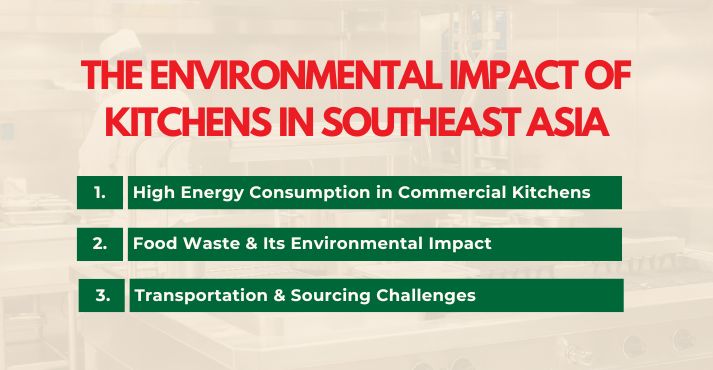
Kitchens in Southeast Asia are a big part of daily life, but they also create serious environmental challenges.
High energy use, food waste, and the need to import ingredients from distant locations all result in carbon emissions. These issues require genuine solutions if restaurants are to transition toward carbon-neutral kitchens.
1. High Energy Consumption in Commercial Kitchens
Many restaurants in Southeast Asia rely on gas and electricity for heavy cooking methods like deep frying, grilling, and boiling. Old equipment makes this even harder since it uses extra power and is more expensive to operate.
Switching to energy-efficient appliances is one of the easiest ways to reduce energy consumption. Using solar power or other renewable energy can also help lower emissions and save money in the long run.
2. Food Waste and Its Environmental Impact
The food waste problem is a big issue for restaurants. Buffets, large servings, and strict rules on freshness often lead to food being thrown out. When food waste ends up in landfills, it releases methane, a gas that is even stronger than carbon dioxide.
Restaurants can reduce this by planning menus carefully, storing food properly, composting scraps, and donating any excess food. These steps help lower emissions and also show customers that the restaurant cares about the community.
3. Transportation and Sourcing Challenges
Many restaurants use ingredients that travel long distances to reach the kitchen. Moving food across countries or even continents adds to emissions through fuel use and cold storage.
Choosing local and seasonal products can cut down these emissions. It also supports local farmers, providing customers with fresher, better-tasting meals. This approach helps build a stronger connection with the community and reduces the overall environmental impact.
How Can Restaurants in SEA Achieve Carbon-Neutral Kitchens?
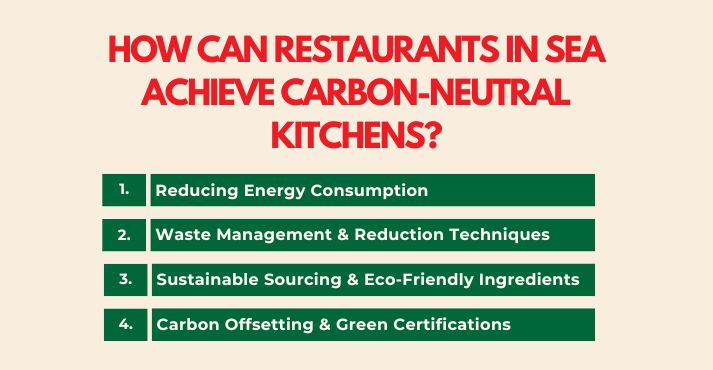
Restaurants in Southeast Asia can take various steps to move toward carbon-neutral kitchens. While it may seem challenging at first, breaking down the process into energy, waste, sourcing, and offsetting makes it easier to manage and more impactful.
1. Reducing Energy Consumption
Many kitchens still use outdated, power-hungry appliances. By switching to energy-efficient kitchen equipment, such as induction cookers and low-energy ovens, restaurants can reduce power consumption and lower their costs.
Designing a smarter kitchen layout and improving workflow also helps reduce wasted energy.
Moving to renewable energy sources, such as solar panels or green energy tariffs, further supports this effort.
According to the International Energy Agency, using modern, efficient appliances can reduce kitchen energy use by up to 30%. Focusing on these areas is crucial for significantly reducing the kitchen’s carbon footprint.
2. Waste Management and Reduction Techniques
Food waste is a significant issue, but there are effective ways to address it. Zero-waste practices like composting, upcycling, and recycling ingredients, as well as minimizing packaging, can make a huge difference.
Restaurants can also use food waste tracking software to understand where losses happen and take action faster.
Training staff and involving them in these efforts builds a stronger team commitment to sustainability. Choosing sustainable food packaging further supports waste reduction and shows diners that the restaurant cares about every detail.
3. Sustainable Sourcing and Eco-Friendly Ingredients
Using local, seasonal, and organic products cuts emissions from long transport routes. It also supports local farmers and offers fresher meals to customers. Partnering with suppliers who share the same values helps create a more reliable and sustainable supply chain.
Restaurants that focus on sustainably sourced ingredients stand out to guests who care about their food choices. By choosing local and responsible suppliers, they support carbon-neutral foodservice and build stronger connections with the local community.
4. Carbon Offsetting and Green Certifications
After reducing as many emissions as possible, restaurants can balance the rest by buying carbon credits. These funds support projects such as forest restoration and renewable energy development.
In addition to offsets, restaurants can pursue certifications such as Green Key or LEED, which show a strong commitment to the environment and help attract eco-conscious guests.
These efforts show that the restaurant is serious about achieving a carbon-neutral kitchen and creating a more responsible business.
Real‑World Examples of Carbon‑Neutral Kitchens in SEA
In Southeast Asia, some restaurants and venues show that carbon‑neutral kitchens are achievable with clear, local actions.
Singapore: The Kitchen at The Fullerton
The Fullerton Hotel Singapore has pursued a range of sustainability goals, including reducing the use of single-use plastics and enhancing energy and water efficiency across its properties.
They rolled out energy-efficient kitchen equipment, replaced bottled water with refillable systems, and switched to biodegradable straws.
Moreover, they increased purchases from local farms to reduce imports, upgraded kitchen equipment to save energy, and improved waste handling by sending organic waste to biogas or compost facilities.
Thailand: Haoma, Bangkok
Haoma, located in Phrom Phong, won the Sustainable Restaurant Award at Asia’s 50 Best Restaurants in 2024. The restaurant grows much of its produce on a 17 km² organic farm.
It aims for a zero-waste kitchen, diverting nearly all food scraps for compost or animal feed. Staff also recycle oil into soap and reuse materials, investing in solar panels and rainwater collection systems to reduce energy demand.
Indonesia: Ijen at Potato Head, Bali
Ijen, a restaurant at Potato Head Beach Club in Seminyak, holds the distinction of being Indonesia’s first zero‑waste kitchen. They use hand‑reeling for line‑caught fish, cook over wood fire instead of gas, and serve food on banana leaves rather than disposable plates.
Scraps are sent to local pig farms or composted, while plastics are recycled into new products. This model combines local sourcing in foodservice with serious waste reduction, showing how sustainable restaurants in SEA can also be creative and engaging.
These examples show what’s possible when restaurants apply local sourcing in foodservice, invest in green energy, and commit to being among the most sustainable options in Southeast Asia.
The Challenges of Achieving Carbon-Neutral Kitchens in SEA
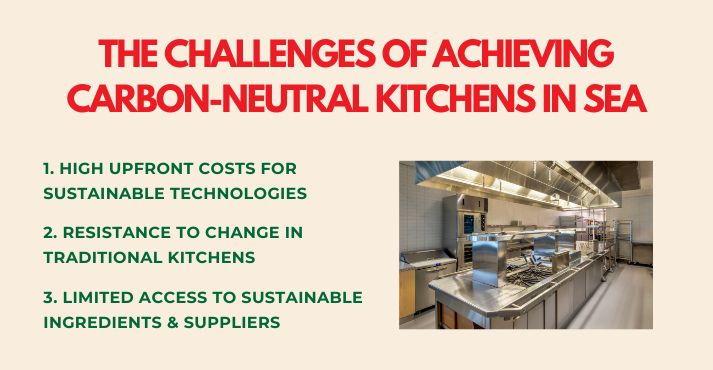
Moving toward carbon-neutral kitchens in Southeast Asia offers many benefits, but restaurants still face real barriers. Costs, habits, and supply chain issues make it challenging for many food service operations to adapt quickly.
1. High Upfront Costs for Sustainable Technologies
Switching to energy-efficient kitchen equipment or installing solar panels can be expensive. Many restaurants operate on tight budgets and may not have the extra funds to invest in these changes immediately.
The return on investment often takes years, making it a tough choice for smaller businesses focused on daily costs rather than long-term savings.
2. Resistance to Change in Traditional Kitchens
Many kitchens in the region use traditional cooking methods and long-standing habits. Changing these ways of working and training staff to think about waste and energy use can be a challenging task.
Some chefs may feel that new equipment or methods could affect food quality. Overcoming this resistance is a big step toward reducing kitchen emissions.
3. Limited Access to Sustainable Ingredients and Suppliers
In some parts of Southeast Asia, it can be hard to find local farms or suppliers who meet sustainability standards. Many restaurants still depend on imported goods to meet customer expectations, which increases transport emissions.
Building stronger local supply chains takes time and support, but it is important for lowering the footprint of food service operations.
The Future of Carbon-Neutral Kitchens in Southeast Asia

In Southeast Asia, carbon-neutral kitchens are likely to become more common in the next few years. Better technology, new customer habits, and government support are all making this change possible.
1. Technological Advancements in Kitchen Efficiency
New kitchen equipment makes it easier to save energy and cut waste. Induction cookers, smart ovens, and automatic controls help reduce power use without changing how food is prepared.
Good waste tracking systems also help manage scraps and stop them from going to landfills. All of this is part of foodtech, which focuses on making kitchens cleaner and more efficient.
2. Changing Consumer Demand for Sustainable Dining
More people want to know where their food comes from and how it is made. Many now choose farm-to-table meals and look for places that support local farmers and use eco-friendly practices.
A recent survey reveals that 69% of global consumers now consider sustainability more important than it was two years ago. This demand is leading more restaurants to explore carbon-neutral restaurant solutions.
3. Government Support and Policy Changes
Governments in Southeast Asia are starting to introduce rules and programs to help restaurants go green. Some offer tax breaks for solar energy, while others promote better recycling and reduced food waste.
Policies that support a circular economy in food help lower emissions, reduce waste, and make kitchens more sustainable over time.
Conclusion
Carbon-neutral kitchens can become a real option for restaurants in Southeast Asia. By using less energy, cutting waste, and picking local ingredients, restaurants can lower their impact and meet the increasing demand for greener meals.
These steps also help save money and build stronger connections with guests who care about the planet.
There are still hurdles, but more owners and chefs see the value in making these changes. New systems, local food sources, and stronger support from diners make it easier to move forward.
As equipment improves and more people opt for eco-friendly food, carbon-neutral kitchens will become a more common and realistic choice in the region.