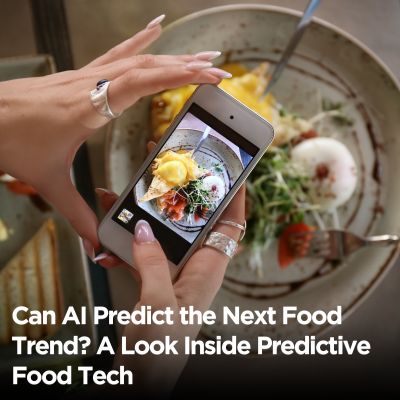
The way food companies understand what people want to eat is changing. Instead of relying solely on surveys or sales reports, they are now using smarter systems to analyze patterns in grocery receipts, restaurant menus, online searches, and social conversations.
This method, known as predictive food technology, helps brands make more informed decisions about what to create next.
By reading signals from everyday behavior, these systems can highlight early signs of interest in certain ingredients, flavors, or eating habits. This helps food manufacturers, startups, and retailers stay prepared and respond more quickly to changing consumer preferences.
This kind of technology is becoming more valuable across the industry. In fact, the market for smart systems in the food and beverage industry is expected to reach $311.6 billion by 2033.
The number indicates the industry’s increasing commitment to using data to inform product development and future planning. Food trend prediction technology is no longer just an experiment. It is becoming part of how modern food companies plan their next move.
What is Predictive Food Tech?
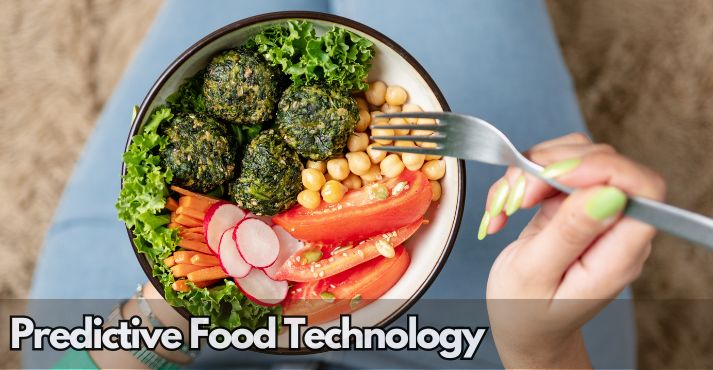
Predictive food technology is the use of data to understand what people might want to eat in the near future. It helps food companies recognize patterns in behavior by studying aspects such as shopping habits, restaurant menus, social media posts, and online recipes.
With this information, businesses can make smarter choices about which products to develop, which ingredients to focus on, and how to meet changing consumer tastes.
The process involves gathering extensive amounts of real-world information. For example, when a new flavor starts appearing more often in home cooking videos or shows up repeatedly on restaurant menus, that pattern can be spotted early.
This provides manufacturers with an opportunity to respond with timely ideas for product development. It’s also beneficial when tracking changes, such as Gen Z food trends or wellness-based eating habits.
As trends in the F&B industry keep changing, this kind of food trend forecasting is becoming a regular part of how companies plan. It brings more accuracy to decisions that were once based on instinct or slow-moving reports.
Key Technologies Behind Predictive Food Tech
Several technologies are now being used to help food companies make sense of large amounts of information. They collect data from sources like online searches, restaurant menus, and shopping trends, then organize it in a way that reveals patterns companies can act upon.
- Machine learning helps systems recognize past trends and use that history to suggest what might come next. This is becoming more common in product development and menu design as teams look for a competitive edge. Machine learning in the food industry is helping shorten the time between spotting a trend and acting on it.
- Natural language processing (NLP) looks at how people talk about food online. It scans blogs, reviews, and social posts to understand what flavors or experiences are gaining positive attention.
- Big data analytics takes huge collections of information and organizes them in a way that reveals clear patterns. This helps food teams focus on what matters most, rather than guessing.
Each of these methods supports better decision-making at a time when the market is changing quickly.
How Predictive Food Tech Identifies Emerging Food Trends
Spotting a food trend early gives brands a major advantage. Predictive food tech helps companies recognize signals before they become widespread.
Instead of waiting for quarterly reports or relying on trendspotters alone, businesses now analyze digital behavior, search data, and shopping patterns to understand what consumers are beginning to care about.
This approach makes it easier to keep up with fast-paced changes in preferences and lifestyles. From popular recipe videos to new ingredients starting to appear more often, this process helps teams focus on ideas that are starting to grow.
Analyzing Consumer Behavior and Social Media Trends
Much of what people like or are curious about first shows up online. Platforms like Instagram, TikTok, Twitter, and personal food blogs have become early indicators of consumer interest.
By examining which dishes are being shared, what recipes are going viral, and how people talk about their meals, businesses can detect subtle changes in taste and behavior.
Sentiment analysis helps track not just what people are talking about, but how they feel about it. A surge in positive comments around a particular ingredient or food type can suggest it’s on the rise.
These signals, when supported by additional data, provide early guidance for product planning and marketing. Predictive analytics for food now ties online behavior to real-world interest more quickly than ever before.
Ingredient Innovation and the Role of AI
Consumer interest in health, sustainability, and performance influences which ingredients begin to appear more frequently on store shelves. Predictive models help identify what’s next by studying long-term patterns in health trends, cultural shifts, and purchasing habits.
This is especially useful when tracking interest in functional ingredients, such as adaptogens, mushrooms, or botanicals, that are connected to energy and stress relief.
One major area of food innovation is the rise of plant-based proteins. Predictive systems review thousands of data points, including retail sales, product launches, and health research.
This helps identify which sources, like pea protein, fava beans, or even algae, are starting to appear more frequently across new products.
These insights support better planning for R&D teams looking to create products that are both relevant and ahead of the curve.
This approach to forecasting ingredients doesn’t replace food professionals but gives them a stronger starting point.
As more companies look to connect with health-conscious and environmentally aware consumers, the use of data in spotting AI food trends is becoming a regular part of product strategy.
Predictive Food Tech in Action: Real‑World Examples
Here are two compelling examples that demonstrate how predictive food technology helps brands stay ahead of emerging trends:
IBM’s Watson and Food Trend Forecasting
IBM’s Chef Watson worked with the Institute of Culinary Education to explore thousands of recipes and chemical flavor profiles.
The system suggested unusual combinations, like Vietnamese apple kebabs and smoked salmon ice cream, which were later developed in collaboration with ICE chefs. It also helped food companies create plant-based versions of familiar favorites.
For example, Kraft Heinz used these methods in its joint venture with NotCo to develop plant-based cheese and macaroni recipes that replicate authentic taste and texture.
This case is a strong example of data-driven food innovation, using deep flavor analysis and trend data to guide product development and help brands connect with changing consumer preferences.
Spoonshot and Data‑Driven Food Innovation
Spoonshot gathers information from menus, scientific papers, CPG launches, and foodie communities. Their Ingredient Networks model highlights new flavor pairings and ingredient combinations that might not yet be common.
In one instance, they helped a snack company introduce seaweed crisps ahead of broader market awareness.
Their insights helped brands plan with confidence, reducing risk and increasing speed to market. This shows how predictive analytics can help companies respond more quickly and make informed choices as trends in the F&B industry continue to change.
The Benefits of Using Predictive Food Tech for Forecasting Trends
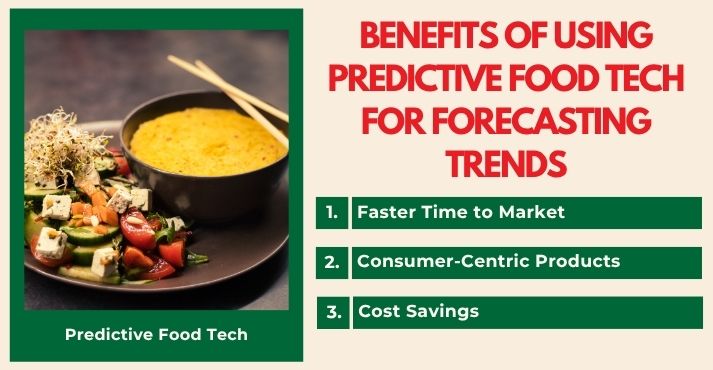
More companies are relying on data to anticipate food trends with greater accuracy. This helps them respond faster, create products that people actually want, and avoid wasting resources on ideas that don’t work. Below are three clear benefits of using this approach in trend forecasting:
1. Faster Time to Market
Timing is crucial when new food trends emerge. Brands that spot these changes early can act quickly and be the first to offer something new.
By analyzing consumer searches, recipe patterns, and market activity, teams can streamline their research process and proceed directly to development.
With the help of food product development technology, businesses can test concepts earlier and reduce delays. This results in quicker launches and more opportunities to meet demand as it grows.
Whether it’s a novel spice blend or a new global dish, getting to market faster makes a difference.
2. Consumer-Centric Products
Products that feel relevant often come from understanding what people value before those needs become widespread. Trend forecasting allows companies to explore emerging preferences in flavor, function, and lifestyle.
For example, the growing interest in organic food first appeared in niche communities and wellness blogs.
By tracking signals like these, teams can design products that resonate with current values, such as health and sustainability. This creates stronger alignment between what’s offered and what shoppers want.
3. Cost Savings
Developing a new product involves time, testing, and money. When ideas are based on outdated research or general assumptions, the risk of missing the mark increases.
Using detailed consumer and market data helps reduce that risk. It supports better planning, smarter investment, and fewer failed launches.
Whether identifying the next plant-based protein or spotting early signs of a flavor trend, food technology helps direct resources toward concepts that show real promise.
Even small improvements in direction can prevent costly missteps. That’s why more brands are turning to data-backed forecasting as part of their process.
Challenges and Limitations of Predictive Food Tech
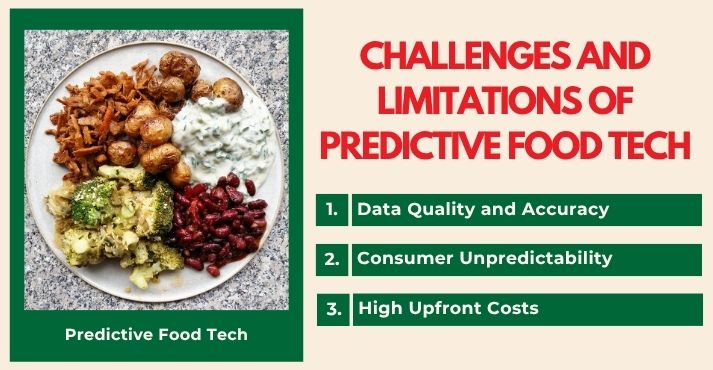
While predictive food technology offers clear advantages, it also comes with real-world challenges. Understanding these limits helps brands make smarter decisions about when and how to use it effectively. Here are three primary considerations:
1. Data Quality and Accuracy
The success of predictive systems depends on having reliable and well-organized data. Inaccurate or inconsistent information, from fragmented sales reports, mislabelled ingredients, or noisy social media content, can lead to misleading insights.
Companies need to invest time and effort in cleaning, organizing, and validating their data sources to ensure accuracy and reliability. Without this groundwork, trend forecasts may not align with real-world consumer behavior or purchasing patterns.
2. Consumer Unpredictability
People’s food choices are influenced by culture, mood, and social contexts in ways that data can only partly capture. A sudden viral recipe trend or a shift in social mood can occur overnight and not be reflected in historical data.
Even strong systems can miss sudden changes in taste or local food habits, which makes it harder to spot completely new ideas. Food professionals still need to apply judgment to balance data signals with intuition and real-world feedback.
3. High Upfront Costs
Implementing predictive food technology requires investment in systems for collecting data, in-house expertise, or partnerships, as well as ongoing maintenance. A recent survey found that approximately 53% of SMBs incurred unexpected costs when implementing this type of system.
Building the right systems and finding the right talent often costs more and takes longer than expected.
For restaurant menu development, for example, this means chefs and operators may need time to adapt recipes, sourcing plans, and kitchen workflows, adding to the time and budget required.
These challenges don’t outweigh the benefits, but they do require realistic planning. Food brands that want to use predictive analytics successfully must be prepared with clean data, flexibility to respond to sudden shifts, and sufficient resources to support implementation.
The Future of Predictive Food Tech: What’s Next?
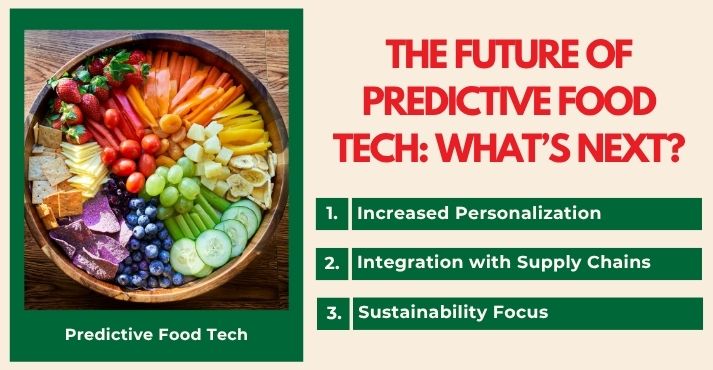
Looking ahead to 2030, predictive food technology is expected to change how companies develop products, manage supply chains, and promote sustainability.
1. Increased Personalization
Soon, food offerings will be increasingly personalized. By using individual preferences and health data, brands can create products that resonate on a personal level. The personalized nutrition market alone is projected to reach $33.7 billion by 2030.
This level of understanding will allow food tech platforms to suggest snacks or meal kits that match dietary habits, taste preferences, or wellness goals like muscle recovery or stress management.
2. Integration with Supply Chains
Predictive food technology will soon be integrated directly into supply and distribution systems. Forecasting demand more accurately will reduce excess orders, cut spoilage, and prevent stock shortages.
Advanced planning like this supports better routing, smarter ordering, and more sustainable logistics.
3. Sustainability Focus
Ecological concerns will lead to more innovation in how food is produced and managed. Predictive methods will flag opportunities to reduce waste and emissions.
For example, a recent pilot at a Nestlé factory using waste reduction management techniques reduced edible waste by 87% in just two weeks, equivalent to approximately 1.5 million meals saved, while potentially reducing 1,400 tonnes of CO₂ emissions.
In the years ahead, these approaches could help ensure that systems are built to deliver both efficiency and environmental benefits.
By 2030, foodtech will bring AI-powered food trends, waste reduction management, and seamless supply chain intelligence together.
Brands that invest now will benefit from faster launches, stronger connections with consumers, and more environmentally responsible operations.
Conclusion
Predictive food technology is helping companies make better decisions by showing what people are starting to look for in food. It takes real information from what shoppers buy to what they talk about online and turns it into useful direction for product planning.
As interest in personal nutrition, sustainable choices, and faster delivery grows, this approach is becoming more common across the industry. Whether it is helping teams develop new recipes or manage supply with less waste, the benefits are practical and timely.
For food brands, retailers, and manufacturers, using this kind of insight is quickly becoming part of staying prepared in a market that keeps changing.