Food companies are using technology in new ways to create recipes. Instead of depending only on chefs or food labs, many now turn to systems that suggest ingredients, flavors, and combinations.
This helps speed up product development, lower costs, and reveal ideas that might not have come from people alone.
Platforms like IBM Chef Watson, NotCo, and Spoonshot are already being used to generate recipes for plant-based foods, sauces, snacks, and more.
As this method becomes more common, the market around it is expanding. The global AI in food and beverages market is estimated to be worth $15.36 billion in 2025 and is expected to reach $263.80 billion by 2034, with a compound annual growth rate (CAGR) of 37.30%.
But while AI-generated recipes offer convenience and creativity, they also raise important questions. Who owns a recipe written by a machine? Can it be protected? And what does this mean for chefs, food scientists, and the future of innovation?
This blog explores these questions and their implications for ownership, ethics, and the future of food innovation.
What Are AI-Generated Recipes?
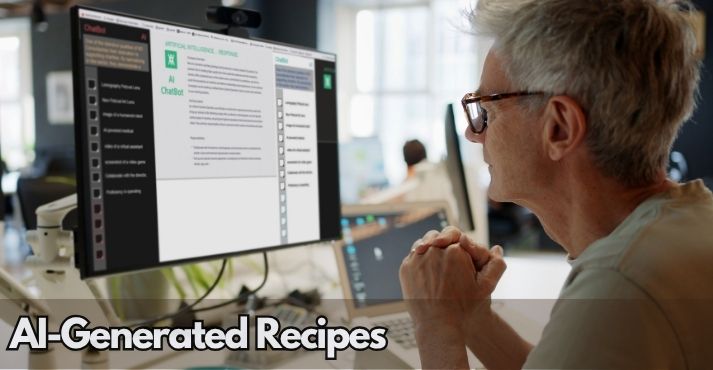
AI-generated recipes are created using advanced computer programs that analyze large amounts of food data. These systems learn from existing recipes, ingredient combinations, and consumer preferences to suggest new ideas.
They use ingredient pairing algorithms, which identify which flavors work well together, and model consumer trends to predict what might be popular next.
This process enables food companies to innovate faster and more efficiently through food R&D automation, thereby reducing the time and cost associated with developing new products.
By combining data on ingredients, cooking methods, and market trends, these programs can create recipes customized to specific needs, whether it’s for plant-based foods, allergen-free options, or regional specialties.
This food technology uses AI to boost culinary creativity, helping brands develop innovative and exciting recipes.
How AI “Thinks” About Flavor
AI “thinks” about flavor differently than humans. Instead of relying on taste, it works with data, such as flavor pairings, molecular profiles of ingredients, and regional taste preferences. It uses this information to make connections that might not be obvious, but still make sense in a recipe.
Some AI systems, for instance, analyze the chemical compounds in foods to find unusual yet compatible matches, like pairing beetroot with chocolate or miso with caramel.
Systems like Spoonshot use scientific databases and consumer behavior insights to suggest ideas based on what people are currently eating or searching for.
Plant Jammer focuses more on home cooking and substitution logic, helping users build recipes based on what they have in their kitchen. Google’s AI kitchen models go even further, studying how recipes are written and how cooking methods change flavors over time.
By using data on ingredients and local tastes, these systems help create flavors that people enjoy and introduce combinations that feel fresh yet familiar.
Legal Grey Area – Can You Copyright a Recipe?
Recipes are part of daily life, yet the laws protecting them are limited. While branding, packaging, or storytelling may be protected, the recipe itself often isn’t. This leaves chefs, companies, and developers with more questions than answers.
What the Law Actually Protects
When it comes to intellectual property in food, the rules are not as straightforward as people might think.
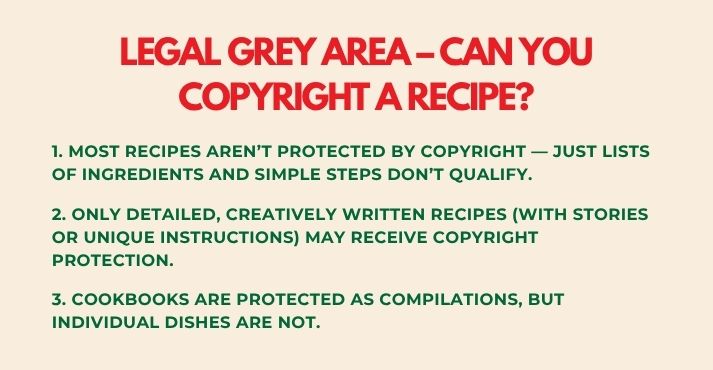
In most countries, including the United States and those under the European Union Intellectual Property Office (EUIPO), a basic recipe, consisting only of a list of ingredients and simple steps, is not protected by copyright law.
The US Copyright Office clearly states that recipes “consisting of mere listings of ingredients” do not qualify for protection.
However, recipes written with more detail, such as those including creative descriptions, background stories, or unique instructions, may be protected as literary works.
Collections of recipes, like those in cookbooks, are usually protected as a compilation. But that still doesn’t protect the dish itself.
Trademarks can protect product names, logos, and packaging. In rare cases, a cooking process or formulation might be protected by a patent, though the bar is high. This makes intellectual property for recipes harder to secure compared to other types of creations.
Who Owns the Flavor?
As food development changes, so do questions about recipe ownership. What happens when a dish is co-developed, for instance, when a chef works alongside a data-driven system that recommends ingredients and structure? Who owns the result?
Current laws don’t offer clear answers. Copyright law still requires a human author, and many legal systems haven’t yet addressed recipes developed through shared input.
Some legal experts argue that the human collaborator, the chef, should hold the rights, while others suggest that ownership depends on the extent of original input each side contributed.
This uncertainty raises more significant questions about the ethics of food innovation and the fairness of using recipes derived from shared or automated processes without clear attribution.
As recipe development increasingly relies on data, discussions around transparency and privacy in the food industry are also gaining attention, mainly when systems utilize third-party data, consumer insights, or cultural flavors.
For now, the future of food depends on clearer rules and honest partnerships. Until there are stronger protections, recipe developers, whether working alone or with technology, must rely on contracts and confidentiality to safeguard their work.
The Ethics of Ownership in AI Cuisine
Software is now part of how recipes are created, from pairing ingredients to adjusting for taste or nutrition. However, as this becomes more common, a crucial question arises: Who owns the outcome?
If a chef relies on a system that recommends combinations or structures a dish, is the result theirs, or is it shared?
Ownership isn’t just a legal issue. It’s also about fairness, credit, and accountability. As food development involves more digital input, the need to clarify rights and roles becomes more urgent.
Credit, Royalties & Human Oversight
When credit is due, who gets it, and how much? In many cases, companies rely on teams: developers who build the system, chefs who test and refine the recipes, and analysts who interpret the data. Yet legal systems and industry norms haven’t caught up to this new structure of collaboration.
The discussion is similar to debates happening in other fields. In Andersen v. Stability AI, visual artists sued platforms like Midjourney and Stability AI, claiming their original work had been used without permission to train image-generating systems.
The case brought to light the lack of clear frameworks for credit and compensation in technology-assisted creation.
In another example, OpenAI’s ChatGPT has been the subject of legal and academic scrutiny regarding co-authorship in writing. When content is generated based on a prompt, is the prompt-writer the sole author, or is the system’s designer also a contributor?
These questions are now appearing in recipe development, where food tech ethics demand more clarity around who truly “creates” a dish.
In functional foods and products customized for dietary restrictions, the stakes are even higher. These products usually require detailed nutritional knowledge and use specialized data.
If software is involved in this development, any lack of transparency or fair crediting could undermine consumer trust and create legal risks.
Without clear policies, decisions often fall to private contracts, NDAs, and licensing agreements.
But as demand grows for accountability in food innovation, especially around recipe ownership and credit, stakeholders will need more precise standards that balance innovation with ethical oversight.
Southeast Asia’s Food Innovation Ecosystem and IP Landscape
Food innovation is growing fast in Southeast Asia. Singapore aims to produce 30% of its own food by 2030 through its “30 by 30” goal.
The Singapore Food Agency oversees new food products to ensure safety and quality. Many startups, including those supported by Temasek, focus on innovative ideas such as alternative proteins and sustainable ingredients.
Temasek’s funding and support have helped accelerate the process of bringing new food ideas from the lab to the market across the region.
Countries like Thailand and Malaysia are also developing food tech hubs, creating new food products and smarter ways to produce food.
With all this innovation, there are challenges around protecting ideas and recipes. IP laws in Southeast Asia vary from country to country, and some have yet to keep pace with the rapid advancements in new technology.
This makes it hard for companies to protect their recipes, food formulas, or new processes. Singapore’s Intellectual Property Office (IPOS) has strong protections, but working across different countries can cause confusion and delays because of different rules.
As technology becomes more common in food creation, clear rules about ownership and credit will be needed. Stronger, clearer IP laws and regulations, like those linked to Singapore Food Agency’s rules, will help Southeast Asia’s food innovation scene grow and succeed.
Brand Case Studies: Who’s Using AI in Recipe Development?
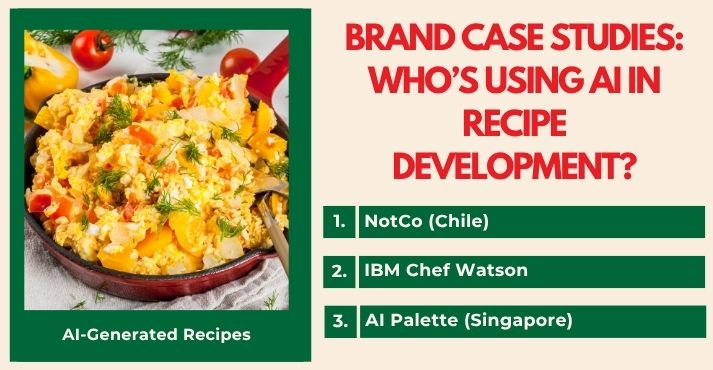
Some companies around the world are using technology to develop innovative recipes and change how food is produced.
1. NotCo (Chile):
NotCo uses smart software to create plant-based recipes that taste like traditional foods. Their system analyzes numerous plants to identify the best combinations for burgers, milk, and other products, all with a focus on sustainability.
As one of the leading food-tech startups, NotCo is changing the way plant-based foods are developed by combining science and AI-driven insights.
2. IBM Chef Watson:
IBM’s Chef Watson was one of the first to try using technology to suggest new recipes. It combined information about ingredients, flavor compounds, and cooking methods to generate creative, and sometimes bizarre, combinations.
While the results weren’t always appetizing, the project showed how generative food technology could explore ideas outside typical human intuition.
3. AI Palette (Singapore):
AI Palette, based in Singapore, uses consumer data to assist food companies in developing recipes that align with current trends and preferences. Their platform helps both startups and established brands create products that resonate with local markets.
These companies demonstrate how new technology is enabling food businesses, both large and small, to create innovative recipes more quickly and efficiently.
What the Future Holds: Policy, Innovation & Ethics
As food innovation grows, the industry needs clearer rules to protect those who create new recipes and ideas.
One possibility is a “flavor rights” registry, a way for creators to claim ownership of unique flavors or recipes officially. This could help avoid confusion and legal disputes, much like trademarks protect brand names.
There’s also a question of whether things created mainly through technology should be free for anyone to use unless a person adds enough original input. This raises important questions about who truly owns a creation and what constitutes genuine originality.
Going forward, it will be crucial for chefs and tech developers to work closely together. Combining human creativity with new tools can lead to exciting innovations, but it’s crucial to make sure credit is given fairly.
Clear guidelines and open cooperation will help the food industry grow in a way that’s both creative and fair.
Conclusion
As technology becomes part of creating new recipes, it raises questions about who owns the final dish and who receives credit.
This changes how we think about creativity and fairness in the kitchen. It’s not just about inventing new flavors but also about respecting the people behind those ideas.
Chefs, food companies, and policymakers must collaborate to establish clear guidelines on ownership and credit.
Should there be a registry for recipe rights? How much human involvement is needed to claim ownership? These are questions that need answers as the food world evolves.
Finding the right balance between encouraging innovation and respecting creators is important. The way these issues are handled will affect the future of food and how new ideas reach our plates.
It’s a topic that warrants further discussion and careful consideration as the industry evolves.